The first MedTech hackathon in Kazakhstan took place in Astana: who won and what the teams created
The winners developed an AI assistant for MRI patients, an outpatient consultation assistant, and a personalized check-up builder. All three projects share one principle: artificial intelligence assists the doctor and the patient but does not replace medical decision-making.
The Tech AI
Get the key points in seconds - a short summary from The Tech AI.
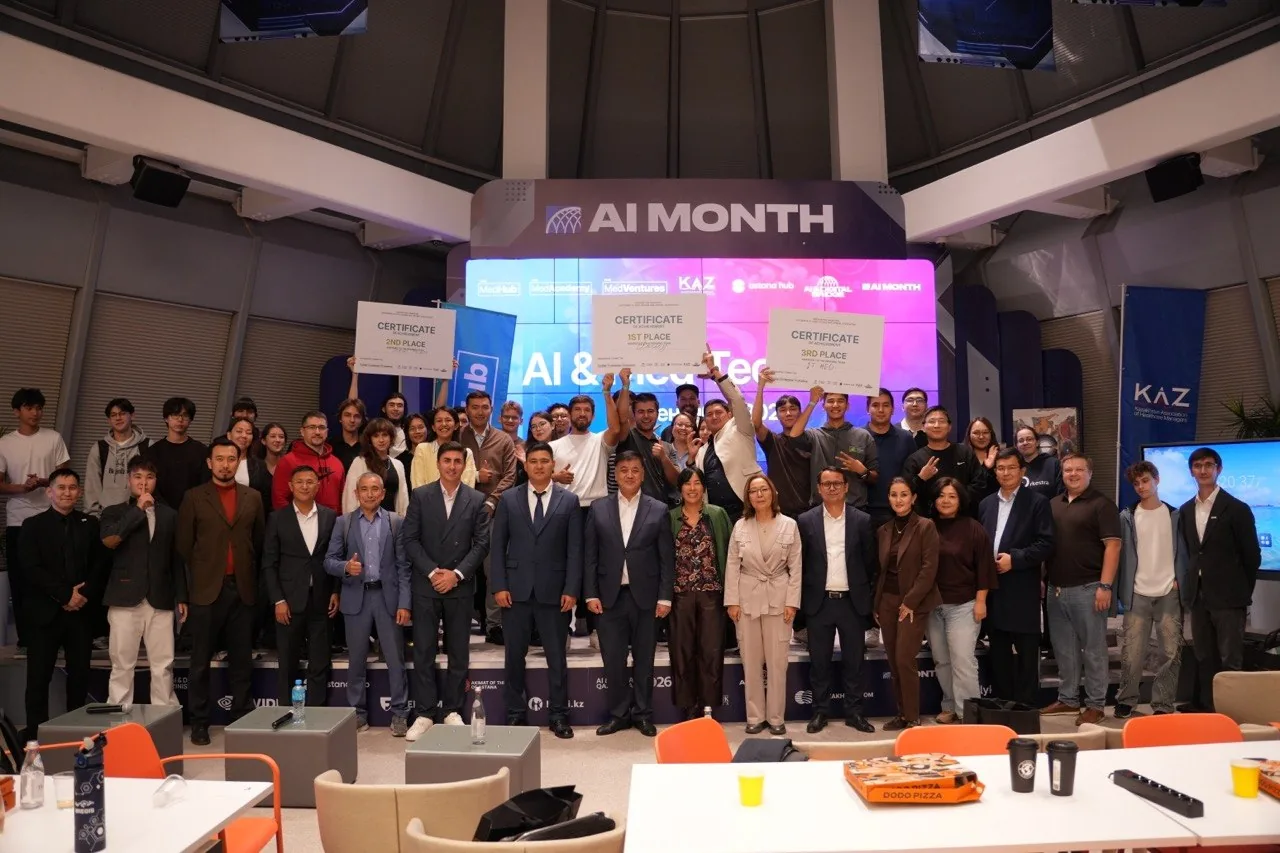
On September 30, 2026, the MedTech hackathon MedHub HAQ concluded at Astana Hub. The first place was taken by the Clarity team with the "Arzhan" assistant, second place by MEMS Team with TyndAI, and third place by ITMed with Check-up Intelligence. The organizers' goal was to integrate AI into real medical processes, not just to demonstrate technologies.
On September 30, 2026, the MedTech hackathon MedHub HAQ concluded at Astana Hub, held as part of the AI & Med Tech Day. Instead of abstract technological cases, participants received tasks related to the real work of clinics and the patient journey. In one day, teams went from problem definition to prototype and final defense before an expert jury. As a result of the hackathon, the first place was taken by the Clarity team, second place by MEMS Team with the TyndAI project, and third place by ITMed with the Check-up Intelligence solution.
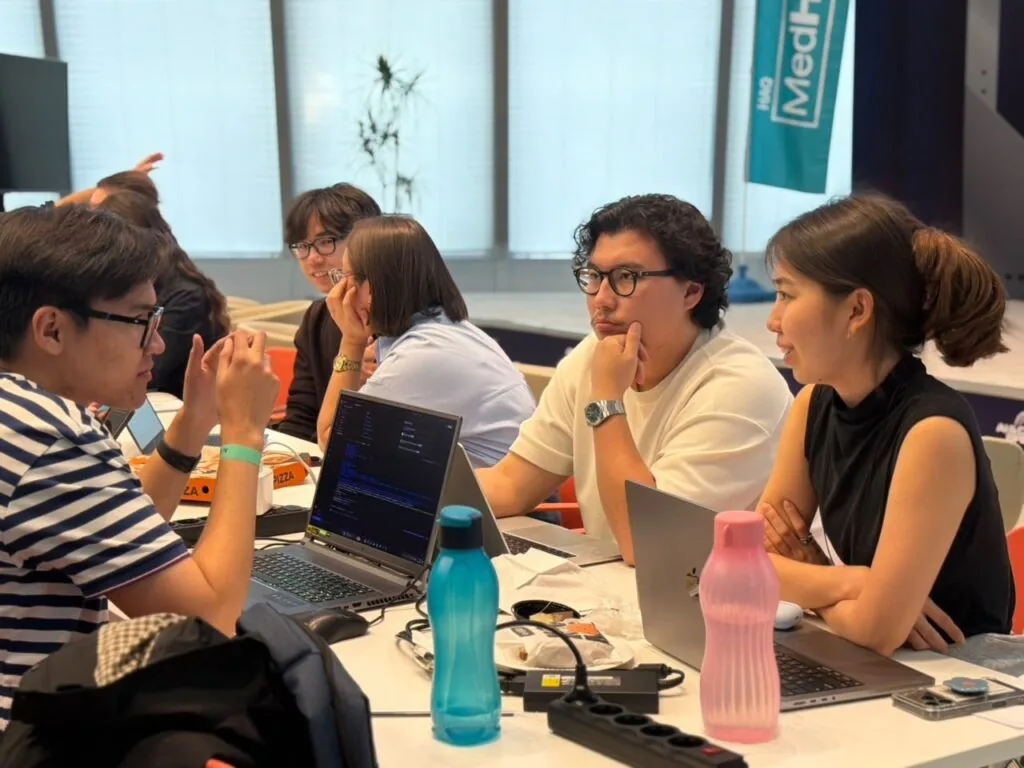
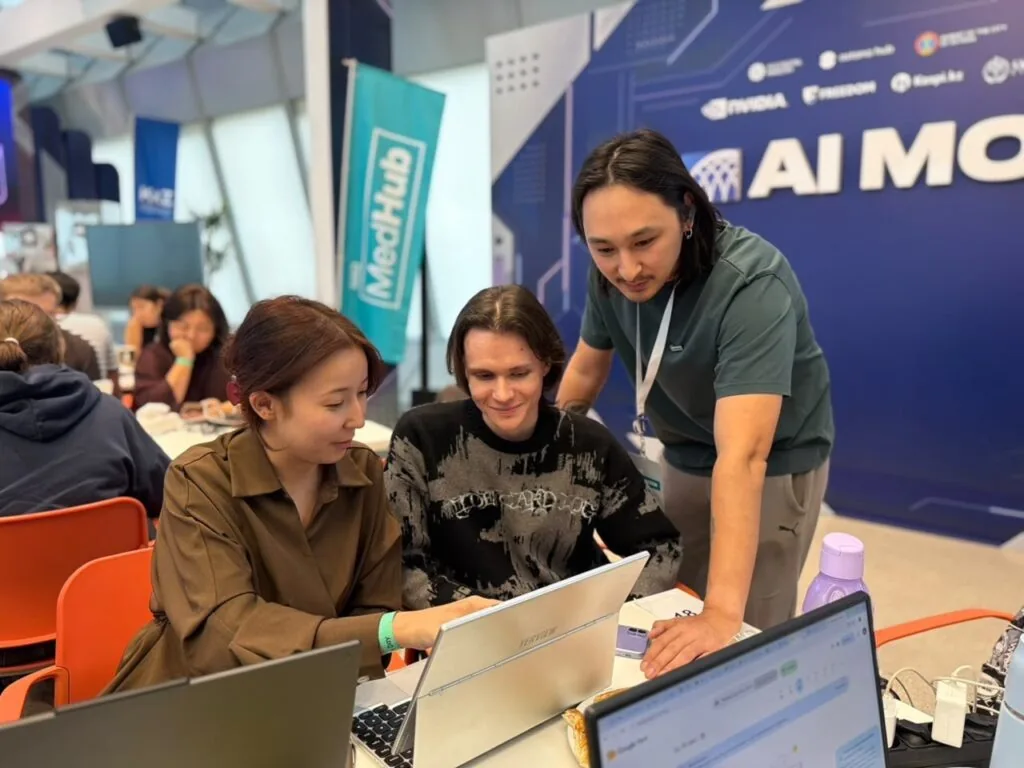
The hackathon format was built around the practical link between "clinic — technology team." The organizers tasked participants not just to demonstrate AI capabilities, but to show how technology can be integrated into a specific medical process: preparation for diagnostics, outpatient visits, or preventive check-ups. On the same day, teams presented working concepts and answered questions from the jury. In parallel, the AI & Med Tech Day program included the MedTech Vibe Coding Lab and an exhibition of medical startups.
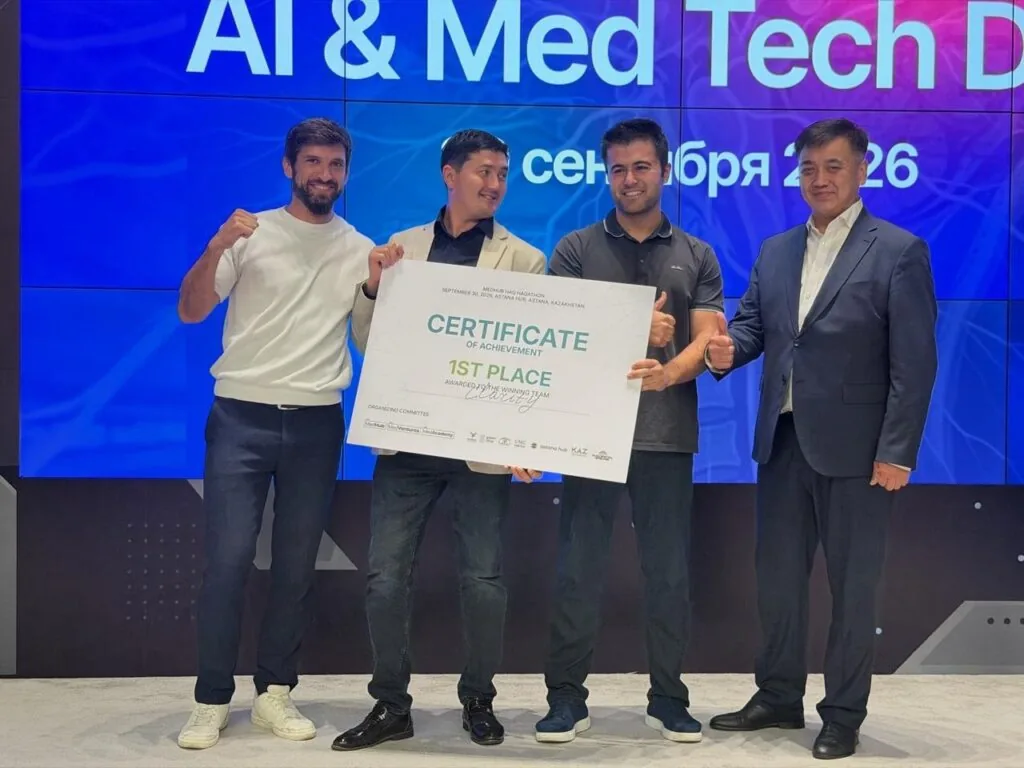
First place — Clarity: "Aruzhan" accompanies the patient before and after MRI
The winner was the Clarity team with an AI assistant for patients undergoing diagnostic procedures, specifically MRI with contrast. At the core of the solution is the digital assistant "Aruzhan," which guides the person through the entire journey: from checking contraindications to explaining results after the procedure.
Before the examination, the assistant verifies necessary data and tests, including calculating eGFR using the CKD-EPI formula, creates a clear preparation instruction with specific dates, and reminds about the visit. After receiving results, the system helps explain conclusions and laboratory indicators in simple terms. If alarming signs are detected, the solution provides for further routing to a specialist.
The team placed special emphasis on accessibility: "Aruzhan" can interact with the patient by voice in Kazakh and Russian. At the same time, the developers deliberately left the medical decision to the doctor and clinic rules — the AI does not diagnose and does not replace a specialist.
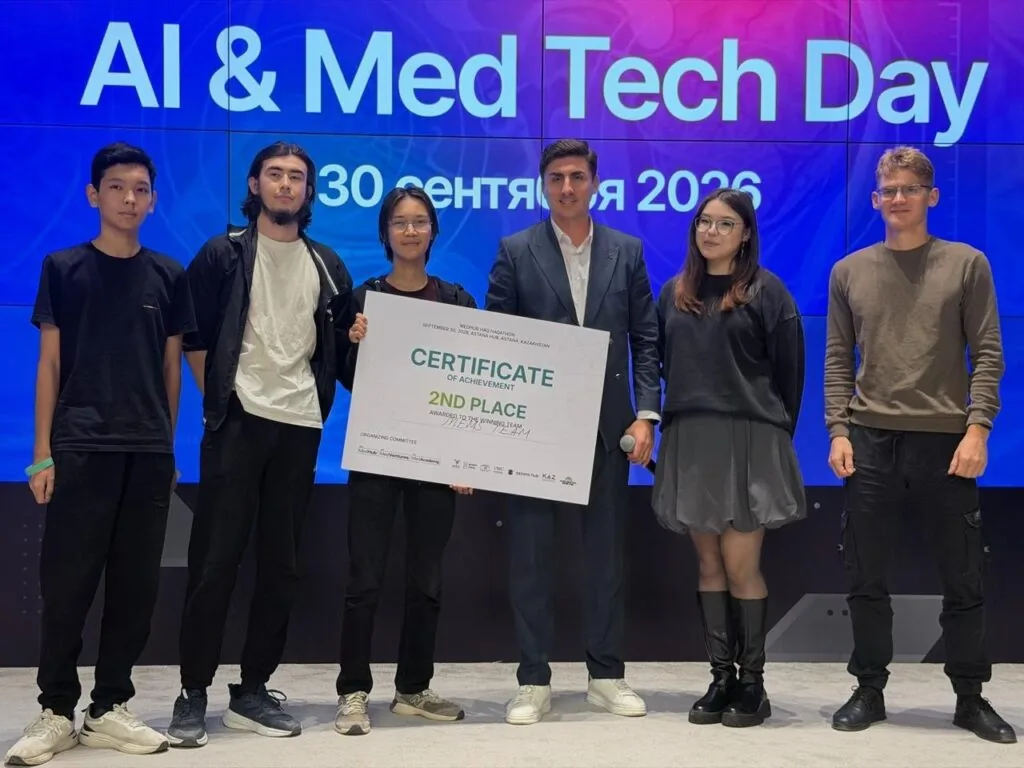
Second place — MEMS Team: TyndAI reduces the doctor's paperwork burden
The second place was taken by MEMS Team with the TyndAI project — an AI assistant for outpatient visits for medical information systems. Its task is to turn the doctor's conversation with the patient into a structured draft of a medical record, without taking away the doctor's right to the final decision.
During the consultation, speech is converted to text, after which the AI structures the information according to form 052/u. The doctor receives a ready-made draft, checks it, edits it if necessary, and only then confirms and signs it with an electronic signature. The system recognizes Russian, Kazakh, and mixed speech, can suggest ICD-10 codes and prescriptions within the protocols of the Ministry of Health of the Republic of Kazakhstan, and then return the data to the HIS via API.
One of the key elements of the project is the privacy architecture. Audio and local speech-to-text remain within the clinic, and only masked text without full names and personal identification numbers is sent to the external language model. There is no automatic sending of medical records without doctor confirmation, and actions are logged in the audit.
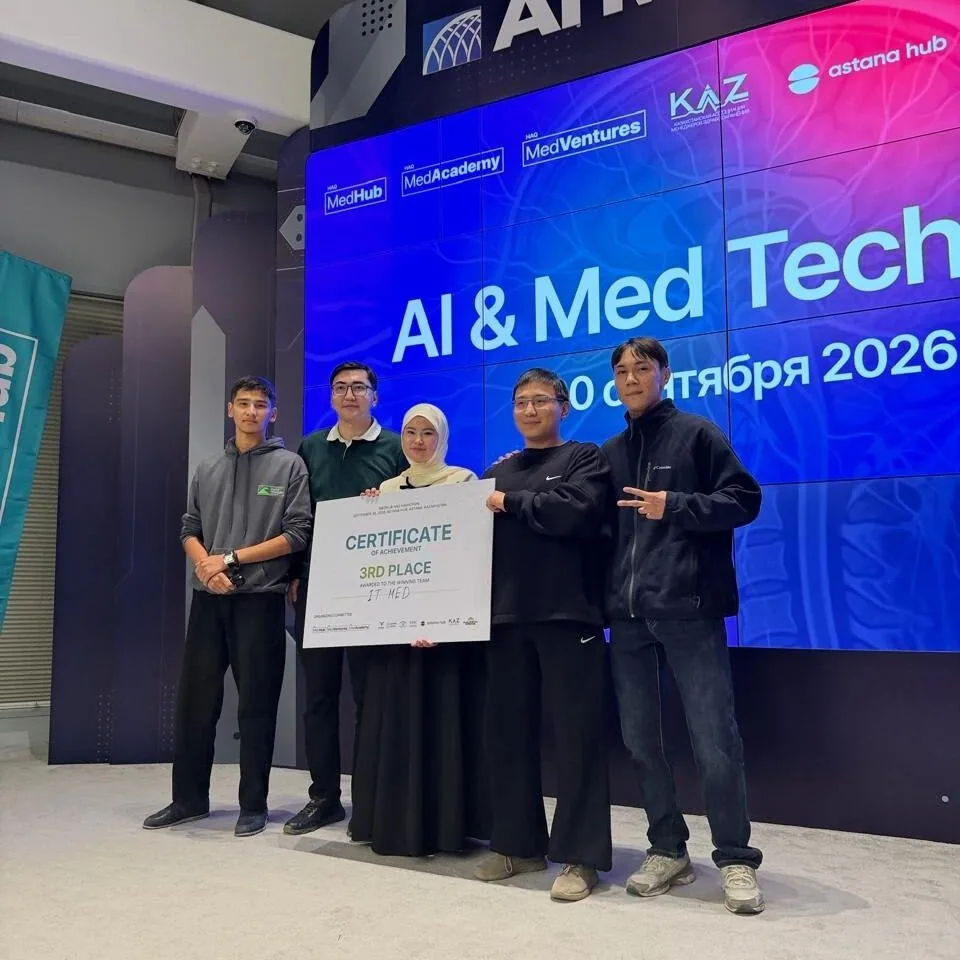
Third place — ITMed: personalized check-up instead of a universal package
The third place was won by the ITMed team with Check-up Intelligence — a personal account and intelligent constructor of examinations for the PRIME packages of Green Clinic.
The idea of the solution is to move away from identical analysis packages for all patients and to form an examination based on individual data, questionnaires, and complaints. The user goes through a path from profile and initial survey to a personalized check-up, application, examination route, results, and subsequent reminders.
For the clinic, this approach turns a check-up from a set of disparate services into a managed digital route. For the patient, it makes preventive examination clearer and more personal. As in the projects of other finalists, the AI here does not diagnose: the technology helps collect and organize information, while medical conclusions remain the responsibility of specialists.
From hackathon to real implementations
MedHub HAQ positions its work as a platform for interaction between clinics, doctors, researchers, and technology teams in the field of safe and responsible use of artificial intelligence in healthcare. The conducted hackathon became a practical test of this approach: medical tasks were translated into the language of development, and developers had the opportunity to test their ideas for real-world application.
The next question for the winners and organizers goes beyond a single day: which of the prototypes will be able to undergo pilot testing in clinics, integration with medical information systems, and compliance with data protection requirements. It is at this stage that MedTech stops being a demonstration of technology and becomes infrastructure used daily by doctors and patients.
About MedHub HAQ
MedHub HAQ is a non-profit organization founded on July 1, 2026, in Kazakhstan. The organization fosters collaboration between clinics, doctors, researchers, and technology teams for the safe and responsible use of artificial intelligence in healthcare.
The Tech on Telegram Follow The Tech on Telegram
Keep up with the latest technology and startup news.
Related reading




More from this author

Article Useful
How to protect your accounts from hacking: 8 settings you should check today
The Tech

Article Useful
500 Global: How the Accelerator Works and Who Can Receive Investments
The Tech

Article Interviews
Game Development in Central Asia: Arkady Moldavski on Developing Reverb and the Growth of the Industry
The Tech

Article Useful
Google, Tesla, BlackRock, and the IMF: Where to Apply for an Internship in Fall 2026
The Tech

News IT
Tesla unveiled the flying electric car Roadster
The Tech

News IT
Intero Biosystems startup won the Startup Battlefield at TechCrunch Disrupt 2026
The Tech