From a women's community to a venture fund: Asel Seitova on Sisters Capital VC and women investors
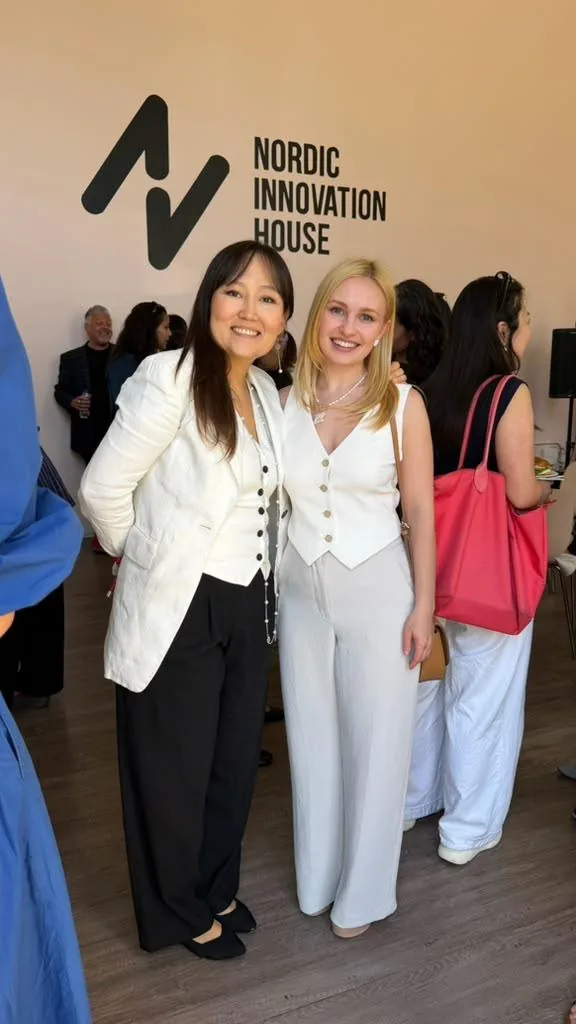
Aysel Seitova, founder of the Sisters — Female Founders Initiative community, is launching Sisters Capital VC, a venture fund focused on startups founded by women. In an interview with The Tech, she explains why she decided to transition from community development to creating a fund, how she aims to democratize venture investments, and increase the number of female investors in Central Asia.
The Tech AI
Get the key points in seconds - a short summary from The Tech AI.
Asel Seitova, founder of Sisters Capital and the Sisters — Female Founders Initiative, is launching the first venture fund in Central Asia focused on startups led by women founders. The platform is built on the foundation of Start Fund Decile Group, enabling investors to participate with checks starting from $10,000. To enhance capital accessibility, an educational program called Women Backing Women is being conducted, which includes an online school and the Her Silicon Valley Tour in October.
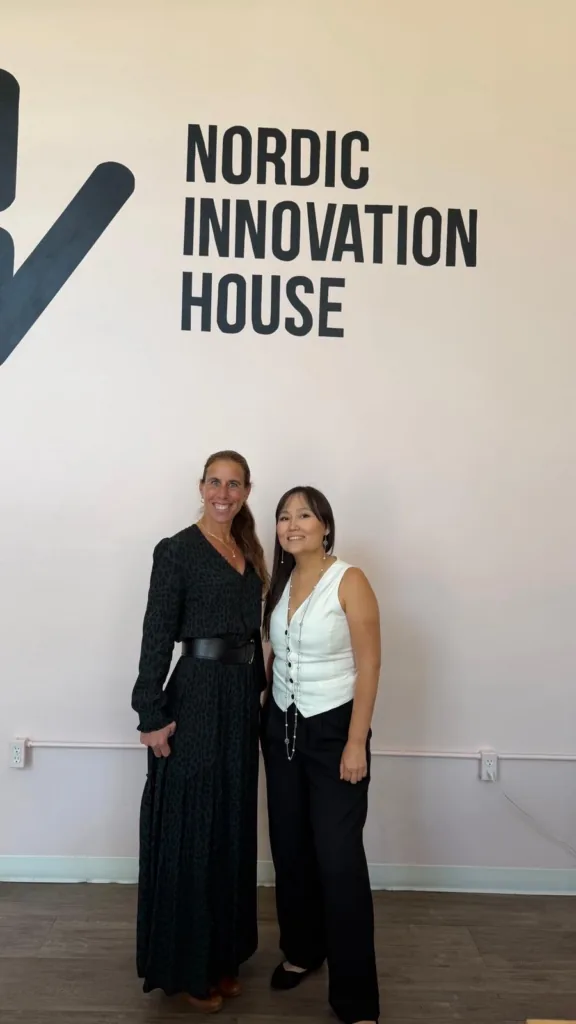
Assel Seitova, City — Palo Alto, Founder of Sisters — Female Founders Initiative, LinkedIn
Why there are so few women in venture capital
Many women believe that venture capital requires large sums of money, specialized experience, and deep knowledge. In reality, this is not the case.
In the US, new models are emerging that significantly lower the traditional barrier to entry for venture funds. For example, Start Fund allows working with LP commitments starting from $10,000, which is substantially lower than the traditional level. In our region, these amounts are much more significant.
We strive to make access to venture investments possible for investors with significantly smaller checks than traditionally expected — to give more people the opportunity to try. Instead of investing in a single startup, an investor receives a diversified portfolio — we plan to create a portfolio of approximately 40 companies.
Previously, with a small check, one could mainly enter a single project as an angel investor. Investing a small check of $5,000–$10,000 in one startup is risky because at early stages, a significant portion of projects do not return capital to investors. Therefore, for me, a fund is also a way to make venture capital more accessible.
The first fund in Central Asia focused on women
In Central Asia, in Kazakhstan, most funds are managed by first-time fund managers because the ecosystem is still young and new funds are constantly appearing. We aim to create the first venture fund in Central Asia systematically focused on startups founded by women.
This is a logical continuation of my work: I am the founder of the Sisters — Female Founders Initiative community and see a large number of projects from Central Asia, Silicon Valley, and the US that are already scaling in the local market and in America.
The fund invests in women-led startups at the Pre-Seed and Seed stages, with at least half of the portfolio consisting of founders from Central Asia who are scaling their projects in the US.
And this is not just impact investment or support for women — we are talking about real investment performance. Experience from the US and other markets shows that funds focused on women-led startups can be successful.
How the fund is structured
It was important for me to launch the fund not alone, but within professional venture infrastructure. Sisters Capital is built on the Start Fund platform by Decile Group — an American platform specializing in launching and developing emerging venture managers. In early 2026, I completed the VC Lab — an international program by Decile Group for future venture managers, passing a rigorous selection process.
Decile Group is not just VC Lab. Through their programs and platform, more than 900 venture firms have been launched in over 90 countries, and the total volume of LP commitments associated with their ecosystem exceeds $1.5 billion. They have programs for future and current VC managers, LPs, and specialized infrastructure for fund management. Decile Group founder Adeo Ressi is a well-known entrepreneur and investor, as well as one of the creators of SAFE — a tool widely used by startups today to raise early capital. For me, the value of this ecosystem lies in its combination of education, technology, operational infrastructure, and an investor network. Therefore, Sisters Capital has the opportunity to be built from the start using institutional infrastructure, allowing us to focus on the main things — investment strategy, working with LPs, and finding the best companies for the portfolio.
Why women need access to venture capital
It is important to develop the entire ecosystem. It is not enough to support women through mentoring — capital is needed, and for that, investors are required. A venture fund essentially acts as a bridge between investors and startups, allowing them to invest through us.
Therefore, it is important to increase the number of women investors who invest directly in funds. In the US, there are already large funds focused on women-led startups, and a significant portion of their investors are women.
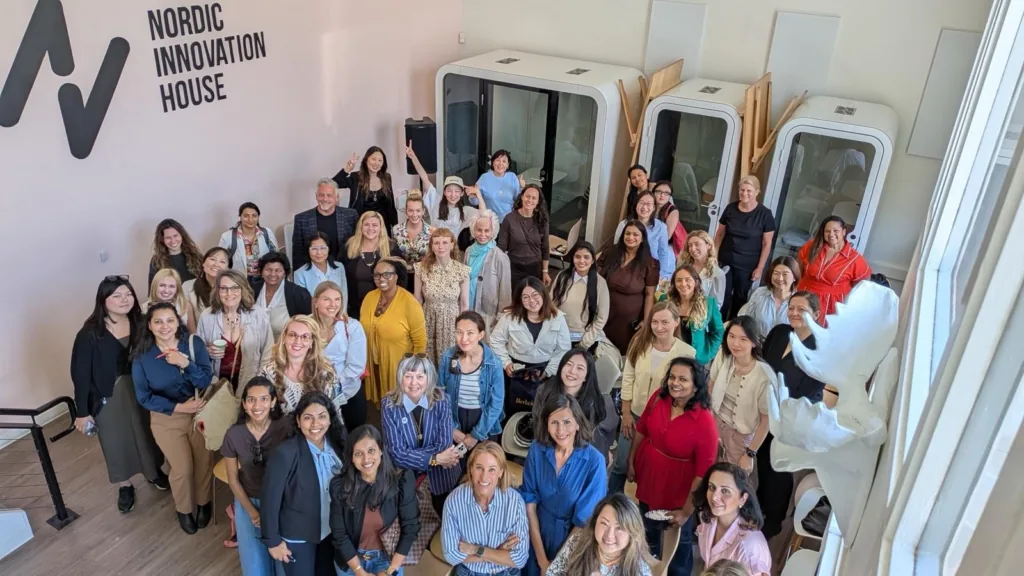
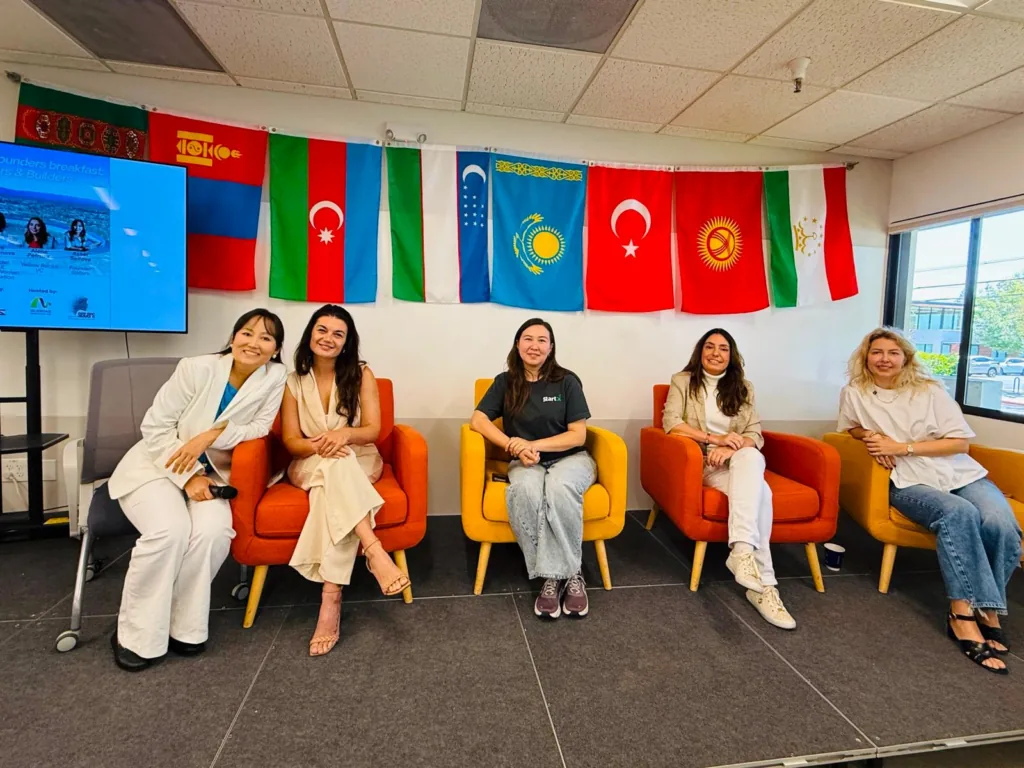
Hence the theme of the event — Women Backing Women: women investors supporting women-led startups.
If we want more women founders, it is not enough to increase the number of women in support programs. We need more women among those who make investment decisions and allocate capital. Therefore, women backing women is not only about support. It is about participating in the economy of capital creation.
On August 27, Women Backing Women will take place in Almaty, dedicated to women in venture investments. The panel will represent all sides of the ecosystem: a successful startup founder from Silicon Valley, Ardak Kusainova (Atarino AI), venture investor Nazerke Kalidolda (Sturgeon VC), and LP Dana Kunanbaeva, who has invested in 15 startups and joined all Kazakhstani funds. She will share her experience and show how women can participate in venture investments.
There are many interested women investors who want to join the fund. But I want this to be a conscious choice, so we guide them through an educational program — an online school for investors.
The first cohort has already passed, and the second starts in September. The school is held online so that learning is accessible regardless of country, visa, time, and other restrictions.
This is a five-week program with practical sessions with experts from Silicon Valley: we learn to analyze pitch decks and startups, make investment decisions, and also examine how venture funds work, investment theses, and what to pay attention to when investing in a fund — for those who want to become LPs.
There are different categories of investors. Those without experience want to understand first and go through the educational program. Those who have already invested understand how everything works and are ready to join the fund immediately.
In the US, investment culture is already established, so many people there do not need anything explained. In our region, it is important to first give people knowledge, and then they make their own decision — whether they want to invest with us.
My task is not to convince a woman to invest specifically in Sisters Capital. My task is to give her knowledge, tools, and access to the ecosystem so that she can make her own decision: invest in our fund, choose another fund, invest directly in startups, or not invest at all. What is important to me is that a woman has a conscious choice.
Create an environment where it is not scary to start
There are several myths about venture capital: that it requires large sums of money, is difficult, and requires deep immersion. Therefore, a logical continuation of the women founders community for me was the development of the women investors category.
We created the Women Investors Club and a school where we teach women about investing. Because often the problem is precisely a lack of knowledge and experience. It is important to provide the opportunity to learn, share experience, and invest together.
When I talk to potential women investors, they often say: “We are interested, but we do not understand.” And this is normal — our ecosystem is still quite young. At the same time, among investors in large funds, women are still few.
I know women who are interested in venture capital but are afraid to admit that they do not understand something, especially in the circle of well-known and experienced people. Although this is absolutely normal — to ask questions and learn. The main thing is to be in an environment where you feel comfortable doing so.
I myself went the path from finance and investments to a venture fund, so I understand how closed this industry can seem to an outsider. When I joined VC Lab and found myself among hundreds of people who were also creating their first funds, I realized an important thing: many barriers exist not because a person is incapable of investing, but because they simply do not know where to start and need the right environment.
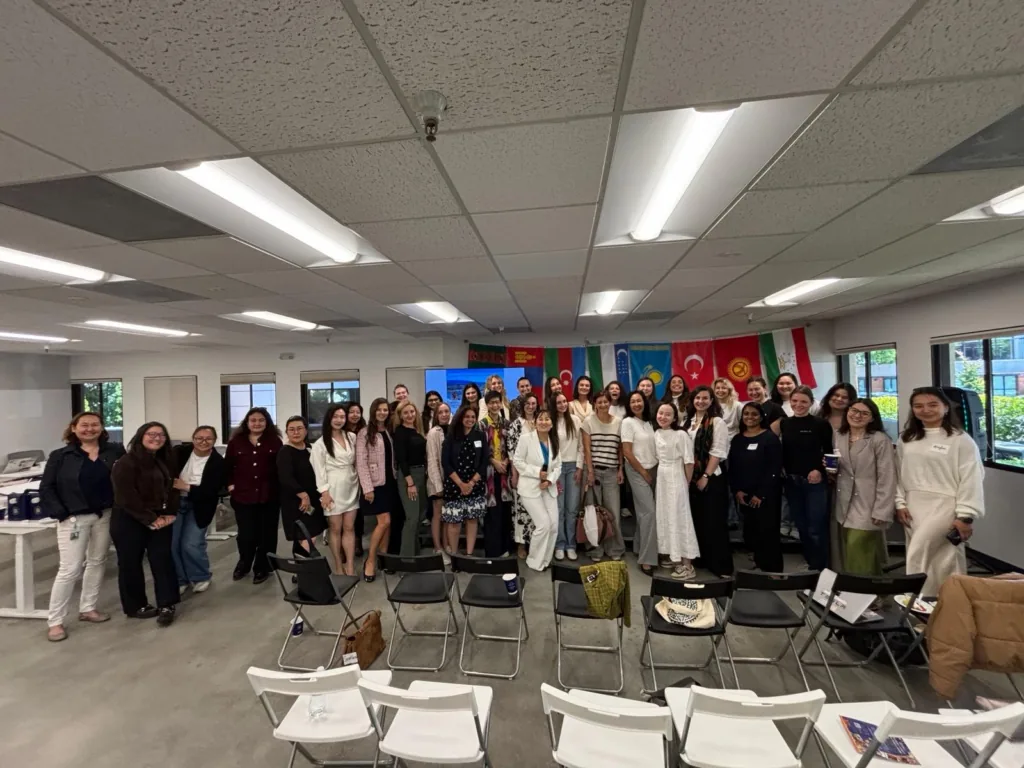
Her Silicon Valley Tour — an educational trip to San Francisco
Therefore, we hold educational events and organize trips — not just as tourism, but to introduce women to founders, conduct workshops, and show the venture ecosystem from the inside.
We plan to hold the tour in October — this is an active period in San Francisco: TechCrunch, San Francisco Tech Week, and many side events.
I would call this more of an educational program on venture investments. This is an alternative to our online course, but with live immersion: workshops, pitches, meetings with founders, and networking.
Participants will also visit Big Tech companies to better understand what is happening today in technology and AI. We will separately hold a workshop at Stanford University campus on the topic of women and leadership with a university professor.
For those visiting Silicon Valley for the first time, a cultural program is provided. The main program is designed for seven days, and then we offer an optional three-day trip to Yosemite — as a kind of retreat and an opportunity to recharge after an intensive program. I think it is important to maintain this balance between technology, learning, and rest.
Venture is not only about money
I think this is the essence of venture: unlike other types of investments, it is not only about earning but also about contributing to the development of humanity. Here, projects are created that want not just to make money, but to improve people's lives and change entire industries.
We know Uber, Lyft, Airbnb, and other startups that have significantly changed our way of life. By supporting such projects, you yourself become part of this history. Therefore, for many, venture is not only a money-making mechanism but also an opportunity to realize their values.
Every fund has its own investment thesis, and it is important to me that the fund is focused on women founders. We do not have an industry focus, but I see a large social effect specifically in supporting women-led startups — including in such areas as women's health. These investments create value not only financially.
For me, this approach also has an impact component: we want to create financial returns while simultaneously increasing women's access to capital and supporting projects that solve real problems. And I would like women investors to see this not just as another financial instrument, but as an opportunity to support projects and people they believe in.
Why now
What I like about America is that there is a strong focus on values. Investors and funds should share values, and then investments become not only a financial decision but also a contribution to what you believe in.
I consider the ability to take risks and see value in them important. For example, for $10,000, you can not just buy something for yourself, but invest in a startup that has the potential to change the lives of future generations. And this, in my opinion, is much more than just a financial investment.
Therefore, I want to convey this idea to women: venture is an opportunity to be part of the changes happening right now. For this, openness to the new, a desire to develop, learn, and try is needed.
I think now is a particularly suitable moment for this. In our region, women already invest in real estate and securities, but many want to look for new opportunities. Against the backdrop of AI development and the tech market, venture is becoming an even more interesting tool.
Where to start for those who want to invest
You just need to try and start somewhere. I am for self-development and believe that it is best to first invest in yourself, learning, and education. There is never too much knowledge. To understand whether venture interests you and whether this asset class is promising, you first need to study the question.
Equally important is the environment. When like-minded women are around who share their experience, you realize that you are not alone.
Ultimately, my task is not to convince a woman to invest. My task is to give her knowledge, tools, and access to this ecosystem so that she can make her own decision.
The Tech on Telegram Follow The Tech on Telegram
Keep up with the latest technology and startup news.
Related reading



More from this author

Article Useful
How to protect your accounts from hacking: 8 settings you should check today
The Tech

Article Useful
500 Global: How the Accelerator Works and Who Can Receive Investments
The Tech

Article Interviews
Game Development in Central Asia: Arkady Moldavski on Developing Reverb and the Growth of the Industry
The Tech

Article Useful
Google, Tesla, BlackRock, and the IMF: Where to Apply for an Internship in Fall 2026
The Tech

News IT
Tesla unveiled the flying electric car Roadster
The Tech

News IT
Intero Biosystems startup won the Startup Battlefield at TechCrunch Disrupt 2026
The Tech