From the First Technical Interview to Program Director: Marat Urmanov on His Career in IT
Marat Urmanov is the director of the SDU University educational program and a Unity developer at CodiPlay. In an interview, he shared how he got his first job in IT, what challenges he faced at the beginning of his career, why a diploma alone is no longer enough for students today, and what truly helps in finding a job.

Marat Urmanov, city — Almaty, Educational Program Director at SDU University, Unity Developer at CodiPlay, LinkedIn
About Me
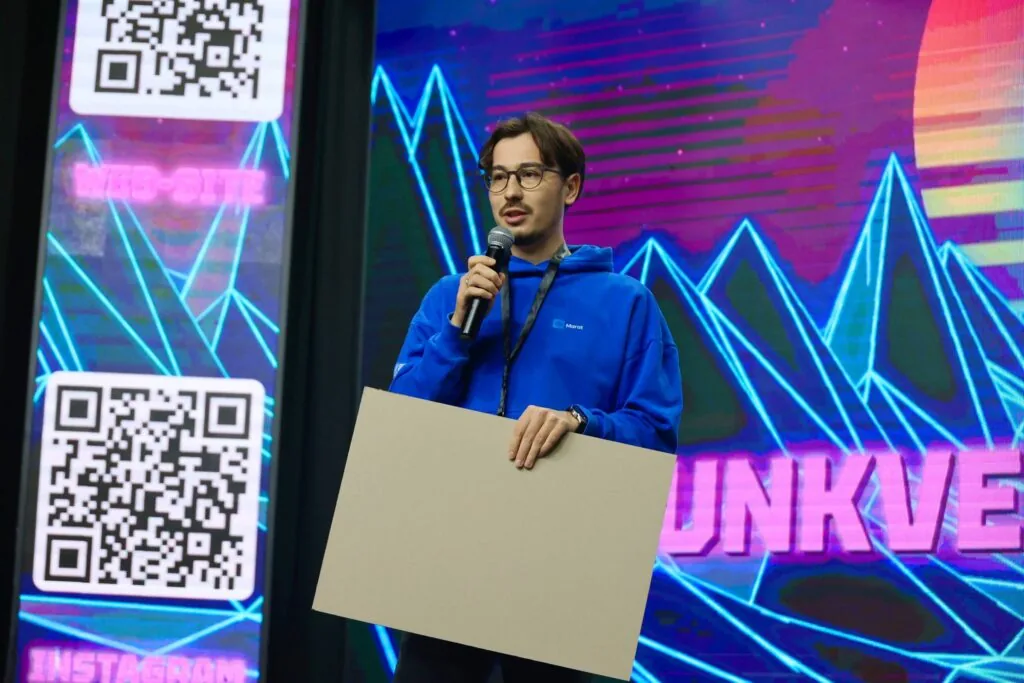
I serve as the Program Director at SDU University. Together with my team, we are developing a new educational program in Multimedia Science, which combines IT and creative disciplines. My primary specialization is game development. I aim to advance the gaming industry at the university level, which is why I am involved in this work at SDU and collaborate with other higher education institutions. At the same time, I work as a Unity developer at the educational startup CodiPlay.
I received my higher education at SDU. In 2015, I graduated with a bachelor’s degree in Computer Science — at that time, the major was called “Computing Technology and Software.” After graduation, I entered the industry, and three years later, I returned to the university to pursue a master’s degree, obtaining my degree in Computer Science in 2020.
My professional path has been diverse. I started my career as a Fullstack developer at greetgo!, but after just six months, I moved into game development, where I worked until 2019.
Then, I decided to dedicate myself to education. I wanted to contribute to the development of my university because, during my studies, I clearly saw what students lacked. I wanted to share my experience and strengthen the educational process. Since then, I have continued to work in the academic sphere while participating in various projects and startups. During this time, I have worked with Kazakhstani game companies, Accenture (a consulting firm), and CodiPlay.
Additionally, I strive to develop the game development community in Almaty: I serve as a jury member and organizer for various events and initiatives.
Sometimes I wish to focus on just one direction, but fully transitioning into education is difficult because it does not generate the same income as the IT industry. At the same time, I do not want to leave the university — it is a cause close to my heart. Therefore, today I combine both directions: I help develop game development in universities while simultaneously participating in industrial projects.
About My First IT Job
My journey in IT began even in school. I enjoyed programming, and it came naturally to me, so by the eighth grade, I decided to apply for a Computer Science program.
I got my first job at greetgo!, a company that developed internal software for banks. I was 21 years old and in my fourth year of university. At that time, I started looking for a job due to a lack of funds.
Before that, I had completed internships, but I realized there were no prospects for employment there. So, I opened HeadHunter and started applying for various vacancies. After one of my applications, I received a test assignment for a Java developer position: I needed to connect a database, work with SQL, and display the data in a browser. After completing the test, I was invited to the first technical interview. I was slightly late due to the remote office setup, and the first question was precisely about this. It became clear even then that discipline is highly valued by employers.
During the interview, they asked about SQL, asked me to write a query, and presented logical problems. The question that stood out the most was: “How many intersections are there in Almaty?” The exact answer was not important; what mattered was the reasoning process. We even had a slight debate with the technical director about my solution, and I believe that my ability to argue my position worked in my favor.
I received the job offer that same evening. I worked at the company for about six months. It was there that I first saw how work processes, discipline, and teamwork are structured — experience that proved useful later, especially in startups.
Everything was different at CodiPlay. There was no formal interview — my experience and resume spoke for themselves. We discussed my background, the technologies used, and what I might need to learn.
It was similar in many other companies. Sometimes they asked technical questions, but more often, networking played the decisive role: I was invited by acquaintances or recommended internally. Therefore, the most challenging technical interview for me remains the first one at greetgo!.
When applying for your first job, you often do not understand what knowledge employers expect. University gave me a strong foundation: first, the fundamentals, and then the opportunity to try different directions and understand what truly interests me.
After my first job, networking began to play a major role. My favorite field is game development. When I transitioned into it, I had almost no experience in the gaming industry, so I was initially afraid. However, I was invited by acquaintances with whom I had worked on projects during university. When I joined the company, I realized there was nothing to fear. We quickly found common ground, worked effectively together, and started closing tasks rapidly.
Challenges
When I was looking for my first job, I sometimes encountered strange offers: I was invited for a programmer position, but then offered to take paid courses, with a promise of help with employment only after completion. Such schemes existed back in 2014–2015.
At that time, it was important for me simply to start working and earning money. Thanks to networking, many opportunities appeared on their own: I was invited by acquaintances or recommended within companies. At the same time, I did not know how to conduct interviews. Sometimes I declined interviews because I was already working, and when I did agree, I realized I was completely unprepared and did not know what questions to expect. Over time, I went through many interviews and understood that each one is unique in its own way. After each, you learn something new and better understand what knowledge and skills are truly valued by employers.
Rejections also happened. It was especially frustrating when the process consisted of several stages: first, a conversation with HR, then a technical interview, and all of this took a lot of time. After such situations, fatigue sets in.
However, I never had a period where I was unemployed and forced to urgently search for a new job. Therefore, I took rejections more calmly. If something did not work out, I analyzed the reasons. Sometimes companies provided feedback themselves; sometimes I had to request it myself. This is especially useful after technical interviews: it seems you answered normally, but then you realize that somewhere you answered hesitantly or simply did not know something.
Over time, I understood that each company has its own requirements and evaluation criteria. It is impossible to prepare for everything, but each interview helps you better understand what employers pay attention to.
If we talk about difficulties after getting hired, the main challenge at my first job was discipline. I thought it was enough to perform tasks well, but the company placed great emphasis on work schedules, punctuality, and internal rules.
I remember how I was sharply reprimanded because I did not notify them of my absence. At that time, I was a student and did not understand how important this was. That was when I realized that corporate culture and discipline are just as much a part of the job as professional skills. Later, in other companies, the attitude toward this became more flexible, but at my first job, the requirements for all newcomers were the same.
The main difficulty for beginners is high competition. Employers’ requirements have increased significantly. If previously basic knowledge was sufficient, now students are expected to have a full portfolio, an active GitHub, participation in hackathons, personal projects, and the ability to demonstrate not only that you can program but also how you think and solve problems.
Therefore, I advise starting to build a portfolio and gain practical experience as early as possible. Today, a diploma alone is no longer enough.
At the same time, the most important factor for me remains networking. In IT, you can quite successfully build a career without a diploma — most startups and large technology companies primarily evaluate a person’s skills. However, it is equally important to participate in joint projects, meet people, and build professional connections.
These people can later recommend you, invite you to a company, or provide a referral. This has happened to me more than once. Networking is especially valuable in strong IT universities, where many graduates later work in large companies.
3 Tips to Help You Find a Job in IT
1. Show initiative and do not be afraid to be bold. When I recall my first interview, I always think that it was the right decision. I argued with the technical director, proving that my solution would be better because it would save time. These were minor details, but somewhere it is precisely the ability to defend one’s point of view, analyze the situation, and argue one’s decisions that can play an important role. If during an interview you feel you can offer something of your own, do not be afraid to do so. The main thing is to understand the line between constructive discussion and toxic arguing.
2. Develop soft skills. They are now heavily scrutinized. If previously the main focus was on technical knowledge, today employers care about how a person communicates. I sometimes hear candidates speak poorly about former colleagues during interviews. No one likes that. If a person speaks poorly about their previous team, one wonders how they will speak about the next one. Therefore, it is important to know how to communicate properly, watch your speech, speak to the point, and maintain a respectful attitude toward people.
3. Start interacting with other people as early as possible. If you are a student, do not do everything alone. In the future, you will inevitably work in a team. Participate in hackathons, IT events, and other professional gatherings. There, you can start building your career earlier, learn about new trends, and meet people. It was networking that helped me in my career: thanks to acquaintances, I was invited to companies, recommended, and offered new opportunities. Therefore, the earlier you start building professional connections, the better.
The Tech on Telegram Follow The Tech on Telegram
Keep up with the latest technology and startup news.
Related reading



More from this author

Article Useful
How to protect your accounts from hacking: 8 settings you should check today
The Tech

Article Useful
500 Global: How the Accelerator Works and Who Can Receive Investments
The Tech

Article Interviews
Game Development in Central Asia: Arkady Moldavski on Developing Reverb and the Growth of the Industry
The Tech

Article Useful
Google, Tesla, BlackRock, and the IMF: Where to Apply for an Internship in Fall 2026
The Tech

News IT
Tesla unveiled the flying electric car Roadster
The Tech

News IT
Intero Biosystems startup won the Startup Battlefield at TechCrunch Disrupt 2026
The Tech