From Almaty's wholesale market to venture capital in London: the journey of investor Sohiba Mukhitdinova
Sohiba Mukhitdinova, VC Principal based in London and a business angel, shares her journey from working at an wholesale market in Almaty to venture capital in the US and Europe. In an exclusive interview with The Tech, she discusses strategies for selecting startups, attracting smart capital, building investor networks, and supporting women entrepreneurs.
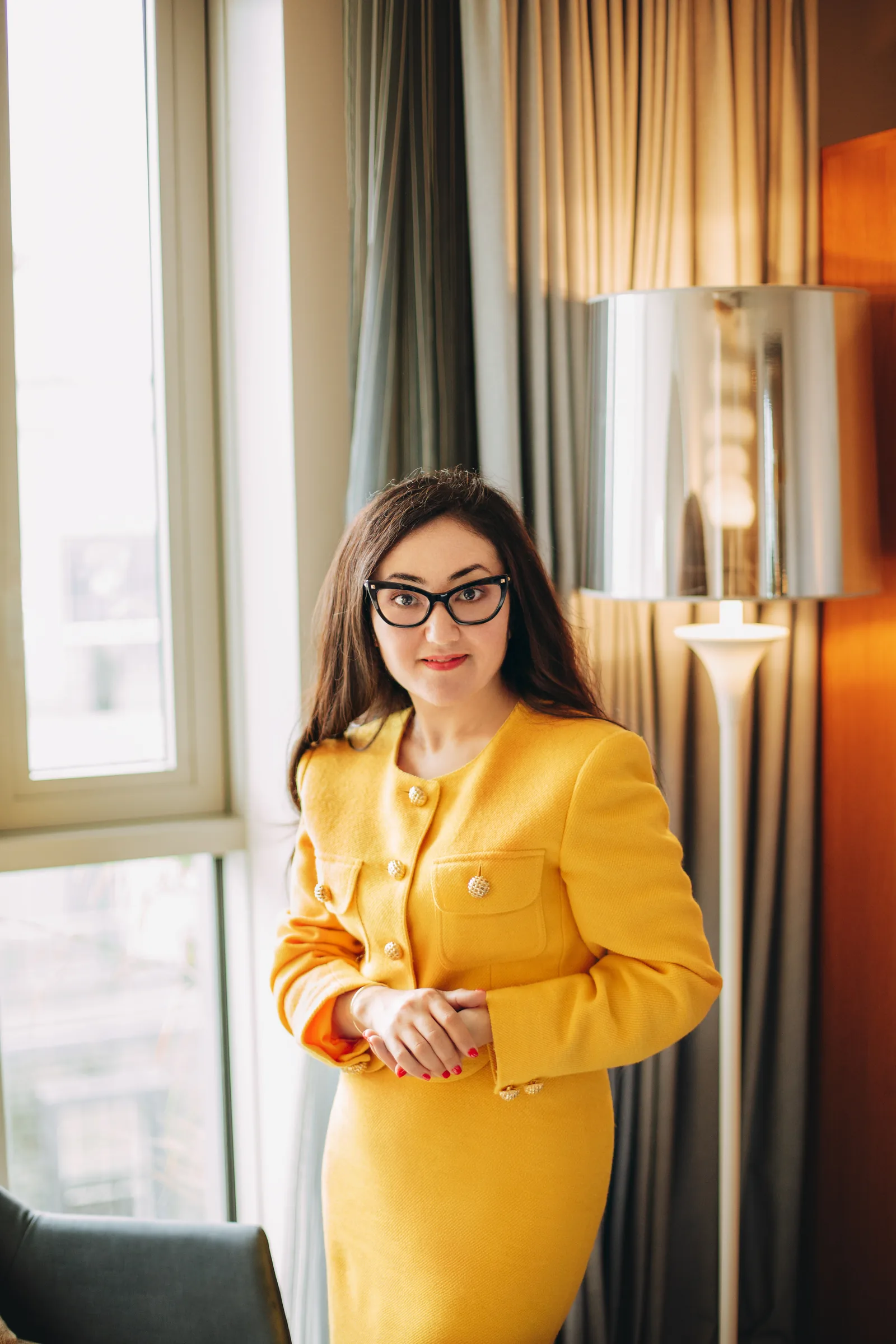
Sokhiba Mukhitdinova, City — London, Investment Director/VC Principal, LinkedIn
About Me
I am from Taraz. Many years ago, I moved to Almaty to live with my aunt and worked for a while at the wholesale market on Rozybakiev Street. This business still exists today, and for me, it became a launching pad. I didn’t have money for education: I came from a humble family in search of opportunities.
I worked for my aunt for a long time, then enrolled in the evening department of a university and started applying for secretary and assistant positions in offices. That’s how I landed an internship at Kazkommertsbank: I distributed flyers and worked there for seven months without pay. After that, I was hired full-time in the small business lending department. Later, I moved to Sberbank’s corporate finance department, where my career growth began.
Since childhood, I dreamed of studying in England and saved money for a master’s degree, cutting costs everywhere. Eventually, my whole family helped raise the funds, and I moved to England. There, after completing my master’s, I worked as an analyst at Sumitomo, a large Japanese conglomerate.
In 2017, I accidentally learned about angel investing and gradually immersed myself in this world. Four or five years later, one of my mentors suggested I study venture capital. I completed the Venture Capital certification at the University of Oxford and started working at a fund in New York.
I now have over four years of experience in venture capital. I hold the position of VC Principal — one step below partner — and am responsible for investments. I was the fund’s first employee, and during this time, we closed 22 deals, 16–17 of which were fully under my supervision.
At the same time, I continue my activities as a business angel. I am a member of the UK Angel Investors Association and four angel clubs in Europe, and I primarily invest in England and European countries.
About Investments
In the startup world, beginners in angel investing often make many mistakes — I was one of them. I was lucky to meet a mentor, a well-known business angel, who immediately gave clear advice: “You work in a bank — invest in FinTech because you know this field well.” That’s how I started investing in FinTech.
At the same time, it was important to me that my investments brought real value to the world. My mentor honestly said that impact investing yields less money but suggested balancing the portfolio: keep half in FinTech and direct the other half into impact. That’s how I started investing in women entrepreneurs and climate projects — the topic closest to me. As a result, my portfolio became evenly split: FinTech and impact — women and climate.
At the fund where I work, we invest exclusively in insurance projects, and right now, several key trends in this sector are particularly interesting to us:
- Application of AI to optimize processes. Insurance is a complex industry, especially in the US. The main focus here is digitalization, automation of operational processes, and reducing fraud levels.
- The second trend relates to natural disasters: fires, floods, and other extreme events. Insurance companies are increasingly investing in startups that deal with predicting such risks. This direction is known as natural catastrophe models. Given my experience investing in climate projects, this niche is especially close to me, and I am often invited to provide expert opinions on this topic.
- Health and medical insurance. After COVID-19, people have paid more attention to health protection, and companies in the West offer employees expanded voluntary insurance options, including coverage for IVF procedures, to retain talent. Our accelerator already has several startups working in this direction.
Startup Selection Strategy
At the fund, we invest at the Seed stage. Companies already need revenue — at least $100,000. Investment geography: USA, Canada, and England.
We carefully look at the founders’ background. In an insurance startup, at least one of the founders must have relevant experience — in actuarial science or risk management. The second, as a rule, is responsible for technology and has experience building AI models. For us, the key factors are the team, product progress, and its scalability.
Since we are insurance specialists ourselves and see hundreds of deals a year, we understand the market and competitors well. I often start supporting strong teams even at the idea stage. It’s not uncommon for employees of large insurance companies to come to us to discuss future startups. I consult them until the project becomes investment-ready.
One successful case came from my London angel investor network. We were the only US fund that invested. The startup was acquired by a major player just 18 months later. The key factor for success was the team: one founder was an actuary and a member of a professional guild, the other was responsible for sales. The technical team was hired later, and that was enough for a quick exit.
Investment Size
We currently have two funds: the first is fully invested, so all new investments come from the second. The average check ranges from $350,000 to $750,000, averaging around $500,000, depending on the project stage.
Today, I invest as part of syndicates, usually together with angel clubs. I don’t yet have deals in Central Asia, but I see great potential and am ready to help founders who are scaling in the US or Europe.
It’s important to understand that entering foreign markets requires knowledge and experience working under local rules. Mistakes at this stage can be costly. I had a case with a founder from Central Asia who entered the US market incorrectly and lost significant funds.
At the same time, it’s pleasing to see more Kazakhstani and regional founders building businesses from the US and Europe. Strong startups are emerging, talented teams are appearing, and Kazakhstan already has its own unicorn. I haven’t invested directly in the region yet, but I am closely watching promising projects.
I invest only as smart capital, in sectors I understand well. It’s important to me not just to invest money but also to bring value through expertise, network, and advice. For example, I can help a startup find a client, conduct interviews with experts, or advise on risk management issues.
My main value is the investor network I’ve built over the years. I have a VC network in London, Europe, and the US, and when I see a promising deal, I immediately understand which investors might be interested.
One example is the Spanish climate startup Cycle Platform. I found this project through acquaintances at the idea stage. The idea was strong, but the market was still too early, and the law hadn’t come into force yet. We went through all possible contacts and found a suitable Family Office in my network. The deal was passed jointly: my club, the Family Office, and a small VC.
The project is developing slower than desired due to regulatory restrictions, but it’s already attracting customer interest. I supported the team from the very idea, introducing them to suitable investors.
It’s important to me to attract smart capital — people who understand the industry. Therefore, besides FinTech, Climate, and women’s projects, I don’t invest in other areas, even if the project is good.
Investor Advice
Fundraising has a deadline: the process takes 6 to 12 months. Often, startuppers start looking for money three months before they need it, and that doesn’t work. It takes time to build relationships — usually, four or five meetings are required. Fund due diligence takes another three to four weeks, so it’s important to start preparation in advance: gather documents and think through the strategy.
Building a network is equally important: meeting founders, mentors, participating in accelerators and events. Even without pitching, it’s important to build a network in the ecosystem because connections and warm intros are critically important. For Pre-Seed rounds, local business angels usually work. International investors should be attracted at the Seed stage and later.
Accelerators like MOST, Plug and Play in Uzbekistan, and 500 Global Eurasia are useful — they provide structure, courses, and demo days, which helps with scaling. The first Pre-Seed round is usually closed with internal funds, Seed — already with international investors. Scaling abroad makes sense only after Seed.
Startups are high-risk, so it’s better to invest small amounts, up to 10% of capital, attracting experienced investors to the syndicate for support. Founders need to be themselves, work with enthusiasm, and genuinely believe in the project. Rejections aren’t always personal. It’s important to quickly get back on track, make pivots, and look for new opportunities. Keep knocking on different doors, and one of them will definitely open, and an investor will be found.
Plans
I always look for unicorns. For example, during an interview with a portfolio FinTech company, I was as honest as possible and admitted that I don’t have an exit yet. Two weeks later, the fund’s portfolio company was acquired — this shows that transparency and honesty in relationships with founders and investors are important.
I keep a notebook, writing down ideas and observations. There are already notes for future unicorns. My goal is to find startups with growth potential and support them on their path to success. I study the experience of those who have invested in several unicorns and learn from their approach to founder selection. One of the key criteria is laser focus: the founder must be fully focused on the project, without distractions.
In 2026, my plan as a fund and business angel is to optimize internal processes using data and AI, systematically scout the best startups, support portfolio companies, and help them scale.
My mission is to support women investors and women entrepreneurs. Women usually analyze projects more carefully, especially in areas of children, health, and social initiatives. Currently, only 3% of founders worldwide are women, and their projects are often underfunded. I strive to pass on the knowledge I received from Western and experienced business angels so that there will be more women investors, which will ultimately affect the number of funded projects.
The Tech on Telegram Follow The Tech on Telegram
Keep up with the latest technology and startup news.
Related reading






More from this author

Article Useful
How to protect your accounts from hacking: 8 settings you should check today
The Tech

Article Useful
500 Global: How the Accelerator Works and Who Can Receive Investments
The Tech

Article Interviews
Game Development in Central Asia: Arkady Moldavski on Developing Reverb and the Growth of the Industry
The Tech

Article Useful
Google, Tesla, BlackRock, and the IMF: Where to Apply for an Internship in Fall 2026
The Tech

News IT
Tesla unveiled the flying electric car Roadster
The Tech

News IT
Intero Biosystems startup won the Startup Battlefield at TechCrunch Disrupt 2026
The Tech