Common mistakes made by founders or what to pay attention to when selecting projects for investment
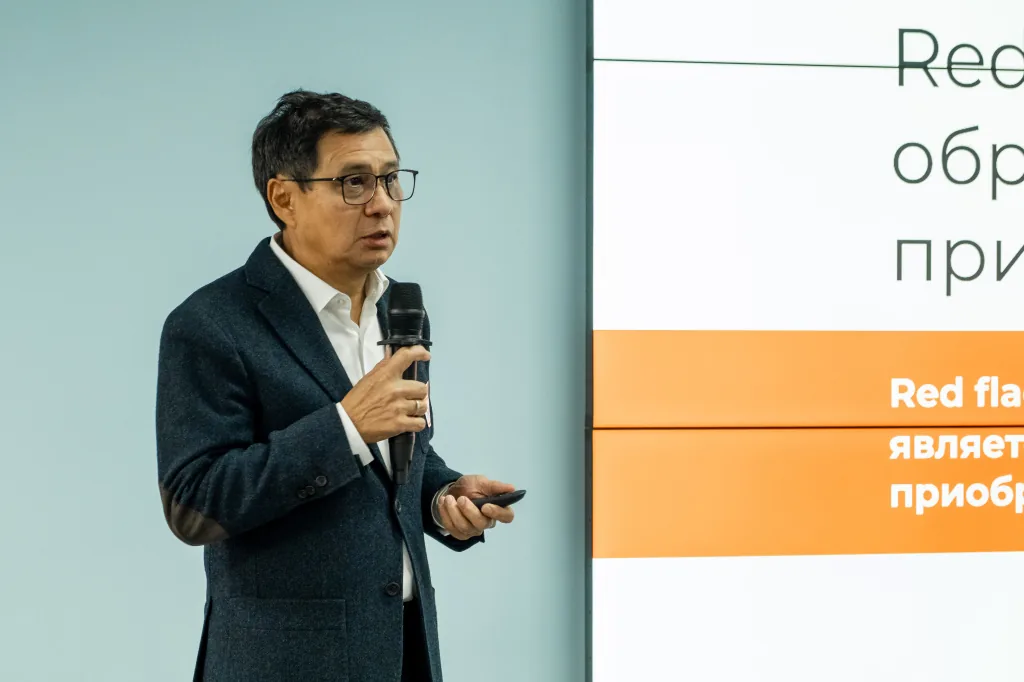
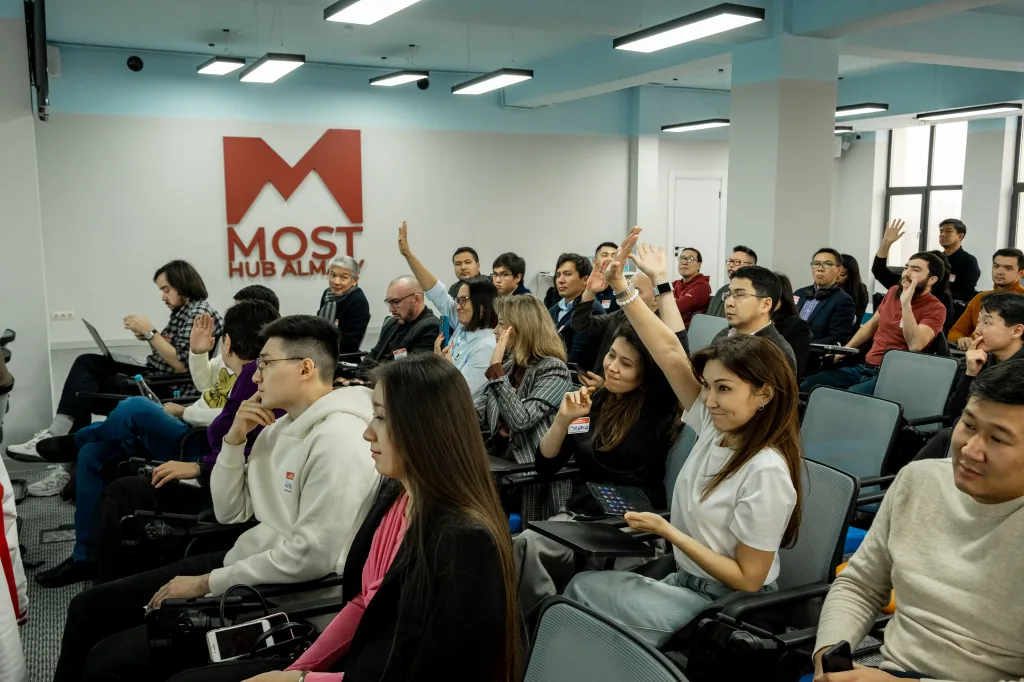
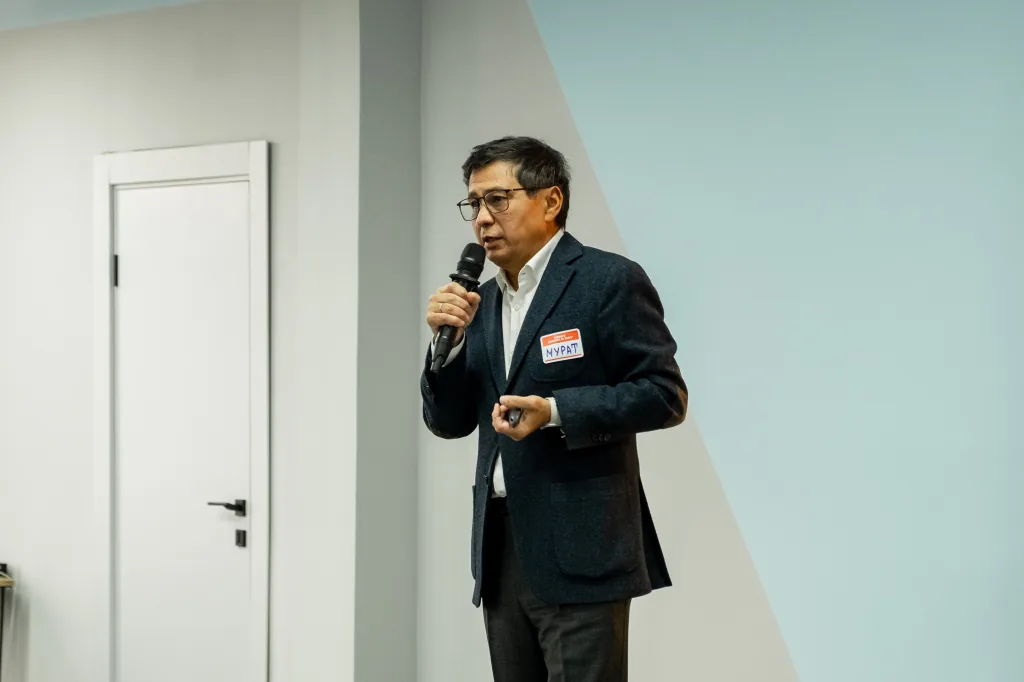
On December 9, Murat Abdrakhmanov spoke at Umay Angels Day, where he discussed the mistakes made by startup founders and why it is important to monitor project metrics.
Author - Mansur Ismagulov
The Tech AI
Get the key points in seconds - a short summary from The Tech AI.
Venture investor Murat Abdrakhmanov from Almaty has identified key "red flags" for startups: lack of competitors, a small market, an unclear problem, and weak traction. The optimal team consists of two founders, and the share of early investors should not exceed 10%. Unit economics (LTV/CAC of 5), customer retention, and revenue growth of at least double annually are important.
Murat Abdrakhmanov, city — Almaty, venture investor
In the Kazakh venture industry, people step on every rake possible. I often see mistakes made by investors and startup founders, not only beginners but also experienced ones. All of this severely harms projects.
These are basic, well-known, and even structured problems. I have added my personal experience to them: I will talk about red flags—negative signals that you need to know before investing.
“Unique” ideas
The first thing to pay attention to at the beginning of a dialogue between a startup and an investor is the market. Often, founders come with an idea they consider genius. They are even afraid to share it because I might steal it. In the early stages of my career, I even signed special agreements. But over time, I realized that there are many ideas. Genius ideas exist, but rarely. According to statistics—in 1% of cases.
Therefore, the first red flag: When a startup founder comes and says that their unique project has no analogues in the world and no competitors exist. I don’t even want to discuss this. I personally knew such “unique” projects. Nothing came of them. And I have no successful cases like that.
Small market
Another challenge is a small market. This is a major issue in Kyrgyzstan. In Uzbekistan, there is a potentially large market, but at the moment, it is two to three times smaller than Kazakhstan’s. And we don’t even consider Kazakhstan a large market. Suppose a startup targets the Kazakh market. They succeed. But what next? There will be no one to buy this project.
The market develops over time. More investors, angels, and funds appear. There is a shortage of strategists—corporate professionals in the venture market. I only see Kaspi.kz in the market. I hope that in the future, corporations will build their own accelerators and keep a finger on the pulse of the industry.
Oversaturated market
Sometimes this also applies to Kazakhstan. Sometimes people come with the idea of opening a marketplace: in a market where OLX, Kaspi.kz, and Wildberries already exist. For some reason, they think they will achieve success in an oversaturated market. The only thing you can do is enter with niche models that are not yet occupied.
Non-obvious problem
Another red flag is a non-obvious problem that the project solves. It is important to remember that companies close precisely because the pain point or acute need for which they were created does not exist in the market. Or it is solved in another, simpler way.
Therefore, you need to look at competitors. If there are none, this is a bad sign. It means no one has tried to bring such a genius idea to life. Or they failed.
The presence of competitors is a good thing. Moreover, they do not necessarily have to be in our market. You can target other countries. Look for information about them: how many employees work there, how many funding rounds they have gone through. This means that similar models have already been validated.
Traction
Traction is the validation of a startup’s model. Often, founders say that they have small volumes, and therefore weak traction. And that if you invest a million dollars and increase turnover, the economics will immediately fall into place. This is not true. If it didn’t work at the bottom, it won’t work at the top either. One of the most common mistakes is scaling an unvalidated model.
Only traction can confirm that a startup has found its niche. Usually, we look at revenue. If people are voting with their dollars or tenge, this is already a basis.
It is clear that at the pre-revenue or MVP stages, there may be no sales. But if a project comes to the seed stage without revenue, you need to find out why. It is best to ask about the sales director. If there is no such professional—this is a serious red flag.
Sometimes startups say: we are losing money because we are growing. There is such a concept as unit economics. It allows you to assess the profitability of operations at the moment. The LTV/CAC ratio shows how financially beneficial a customer is to the project. A ratio of less than three should be very alarming. For me, the minimum ratio is five.
Another important indicator is the retention rate. If people used the product and left, it means it is not good. Or it became unnecessary or uninteresting to them. Therefore, it is important to look at the retention level.
Team
If a startup founder is under 25 years old, they likely lack life and entrepreneurial experience. This may be their first project, in which they will learn from mistakes. At your expense. There is a chance that everything will work out for them, but in most cases, it does not.
Experience also has its downsides. Usually, if a founder is over 45 years old, they are reluctant to admit their mistakes. They react painfully to criticism. And for a startup, especially at the pre-seed stage, it is important to find product-market fit. To do this, you need to quickly test models, hypotheses, admit your mistakes, and move on.
Often, startup founders who have graduated from top universities or business schools come to us. But for me, this does not matter. Because theoretical knowledge without entrepreneurial experience is not enough. Without deep knowledge of the industry, it is impossible to find product-market fit.
The optimal size of a startup team is two people
For example, if the founder is entering the medical field, they must definitely have an expert who knows the industry inside out. Otherwise, the necessary experience may take five years to acquire. At this stage, it is important to check CustDev. If the procedure was not conducted or was done poorly—this is a red flag. Talking to two restaurant owners is not enough. Demand 30-50 interviews across different cohorts with results in the form of a table and analytics.
The optimal size of a startup team is two people. Usually, this is the project head—a business-oriented person—and the technical director. According to statistics, 60% of successful projects have two founders. In teams with five or six founders, internal conflicts will eventually arise.
A red flag is if the team outsources the technical part. I do not invest in such startups because the technical project must constantly change. This is impossible to handle properly on an outsourced basis.
Low pricing
Often, people think: I will set low prices, and everyone will come to me. However, low cost is not always a competitive advantage. For me, this means that the service or product has little value.
Inaccurate data
Data must always be verified. Direct deception is rare. But often, information is withheld or calculated incorrectly. For example, there is such a concept as recurring or regular revenue. Some startups want to inflate it to get a higher valuation. To do this, they include other income sources: payment for equipment installation or work performed before providing the service. All of this needs to be carefully checked.
Valuation
People often ask why venture investors give money for such high figures. The answer is simple: We are not buying today, but the future. It can be predicted through growth dynamics. If a project grows by 20-30% per year, this is a good business. But not a venture one. Because for us, the pace is important. Startups should grow by at least two times a year. And preferably three times. At a small start—by 5-10 times.
Growth dynamics can be tracked through the indicator of monthly growth in the volume of services sold. It should be around 20-30%. It is great if it is 50-100%. This means the startup has found its product-market fit, and clients come to it on their own.
Cap table
Sometimes at an early stage, a large investor enters the project and takes a 30% stake. And when the founder comes to the seed stage with a 70% stake, this will be a red flag for other investors. Because by the Series A round, when the startup’s valuation is from 50 million dollars, the founder should come with a minimum ownership stake of 50%. Otherwise, large funds will not enter. Startup founders, remember: Do not give away more than 10% at an early stage. It is better to sell your car.
It is not worth giving a large stake in the project to a corporate strategist. Because the goals of the founder and the venture investor are roughly similar. And the startup itself is of little interest to the strategist. They are interested in increasing the corporation’s revenue. If they have a large stake, they will have influence, which is not always in the interests of the project.
There are toxic investors that are better to avoid. These are people who do not pass compliance. It is unclear where their finances come from. They have no clear background or image. The concept of a “toxic investor” is subjective; everyone has their own. The main thing is that your value scales align.
Round conditions
An inflated valuation during the round is also bad. For an investor at the next stage, this is a red flag. You need to be careful: give enough money so that the project survives until the next stage. Usually, this is $150,000-$200,000, but no more than 10% of the company’s value.
Some investors, like MOST Ventures, may have perks that individual angels do not have. Nevertheless, during the round, conditions should be equal for everyone. This is fair.
Sometimes at early stages, investors enter with unclear conditions, which the founder agrees to in order to survive. Therefore, before entering the project, conduct due diligence to know all the conditions.
Jurisdiction
For investors from foreign countries, the CIS jurisdiction can become a red flag. Including Kazakhstan, with the exception of the International Financial Center (IFC) with English law.
The team should be registered with a purpose. Often, founders do this in Delaware because everyone goes there. However, this is more of a problem for Kazakh investors, because this is an offshore zone where tax is paid on every transaction. Therefore, if you are not going to the US market, register elsewhere: Europe, Singapore, Dubai.
The Tech on Telegram Follow The Tech on Telegram
Keep up with the latest technology and startup news.
Related reading







More from this author

News
zypl.ai begins operations in Japan and focuses on next-generation risk models
Mansur Ismagulov

News
Elon Musk's net worth has exceeded $700 billion for the first time
Mansur Ismagulov

Article Interviews
"Central Asian countries should build a joint ecosystem," — Bekhzod Ismoilov on the development of AI in the region
Mansur Ismagulov

Article Interviews
Bloom's Taxonomy and Engineering Levels: A Practical Growth Model
Mansur Ismagulov

Article Useful
How the IT industry in Azerbaijan developed in 2025: key events
Mansur Ismagulov

News
Tajikistan has become a new member of the regional innovation alliance Central Asian Innovation Hubs.
Mansur Ismagulov