Nano SIM — the smallest SIM card: everything you need to know
In a world where every millimeter of the chassis matters, even the SIM card has ceased to be just a piece of plastic with a chip. The Nano SIM became a step forward—the smallest communication format that made smartphones lighter, more powerful, and more technologically advanced.
Author - Mansur Ismagulov
What is it
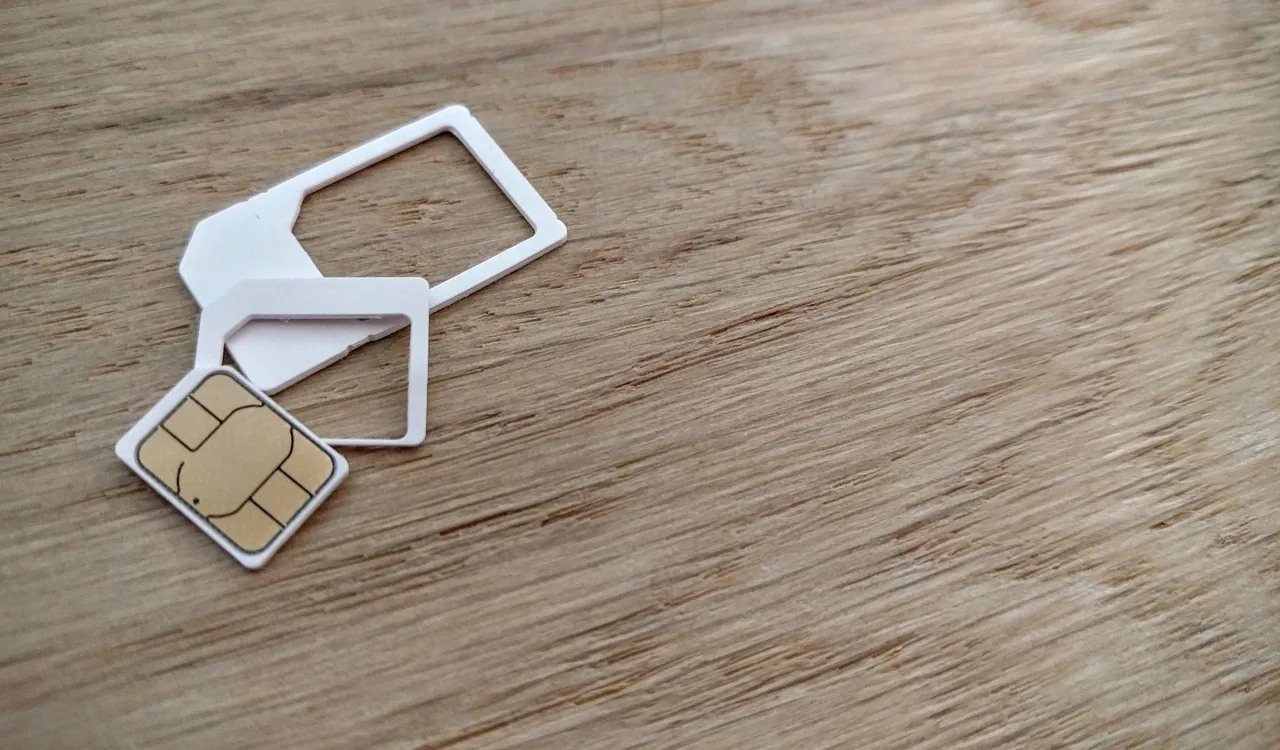
A Nano SIM is the fourth generation of SIM cards, introduced in 2012. Essentially, it is the same chip as in older versions, just without the extra plastic surrounding it. Its main task remains the same: to store the subscriber's unique data and provide access to the operator's network. The Nano format allowed for not changing the communication technology, but making phones thinner, and internal components more compact and powerful.
What is it useful for
The Nano SIM became a response to the trend of miniaturization. The smaller size gave manufacturers more freedom: the freed-up millimeters could be used for the battery, camera, or communication modules. For the user, this means devices with greater autonomy, better cooling, and a thinner design. At the same time, the card itself fully retains the functionality of previous formats—no compromise in connection quality.
Sizes and differences
The Nano SIM has dimensions of 12.3 × 8.8 mm and a thickness of 0.67 mm—almost three times smaller than a standard SIM. It differs from the Micro SIM not only in area but also in thickness: a reduction of several tenths of a millimeter made it impossible to simply cut an old card without special equipment. This is the minimum possible physical format, after which the era of embedded eSIMs began.
Usage
Almost all modern devices use the Nano SIM, from the iPhone 5 to the Samsung Galaxy S24, from Xiaomi Redmi to Google Pixel. If the phone is old and designed for Micro or standard SIM, you can use an adapter—a small plastic frame that returns the card to its previous format.
However, adapters should be used with caution: careless installation can damage the slot contacts.
Replacing a SIM card with a Nano format takes a few minutes. Any operator: Beeline, Kcell, Tele2, Altel offers free replacement in offices or courier delivery. After activation, the card automatically synchronizes with the number and tariff, without the need to change settings. Cutting an old card manually remains a risk: even a slight deviation can damage the microchip.
Brands and prices
The Nano SIM has already become a standard for all communication operators. In Kazakhstan and neighboring countries, it can be obtained from:
— Beeline — free replacement or delivery for 300 tenge
— Kcell / Activ — free replacement, city delivery from 400 tenge
— Tele2 / Altel — free issuance when switching or connecting a new number
— MTS, MegaFon, Tele2 — replacement from 100 to 200 rubles, depending on the region.
You can also buy a separate Nano SIM at electronics retail points—a set of "SIM + adapters" will cost approximately 1000-1500 tenge, but without number activation, such a card will not work. Also, replacement or obtaining a new SIM card from an operator in Kazakhstan will most likely cost around ~1000-2000 tenge. If the card is purchased through an intermediary or with additional packages included—the price may be significantly higher.
The Tech on Telegram Follow The Tech on Telegram
Keep up with the latest technology and startup news.
Related reading







More from this author

News
zypl.ai begins operations in Japan and focuses on next-generation risk models
Mansur Ismagulov

News
Elon Musk's net worth has exceeded $700 billion for the first time
Mansur Ismagulov

Article Interviews
"Central Asian countries should build a joint ecosystem," — Bekhzod Ismoilov on the development of AI in the region
Mansur Ismagulov

Article Interviews
Bloom's Taxonomy and Engineering Levels: A Practical Growth Model
Mansur Ismagulov

Article Useful
How the IT industry in Azerbaijan developed in 2025: key events
Mansur Ismagulov

News
Tajikistan has become a new member of the regional innovation alliance Central Asian Innovation Hubs.
Mansur Ismagulov