MyMind — a startup that helps doctors detect Alzheimer's disease
The Tech AI
Get the key points in seconds - a short summary from The Tech AI.
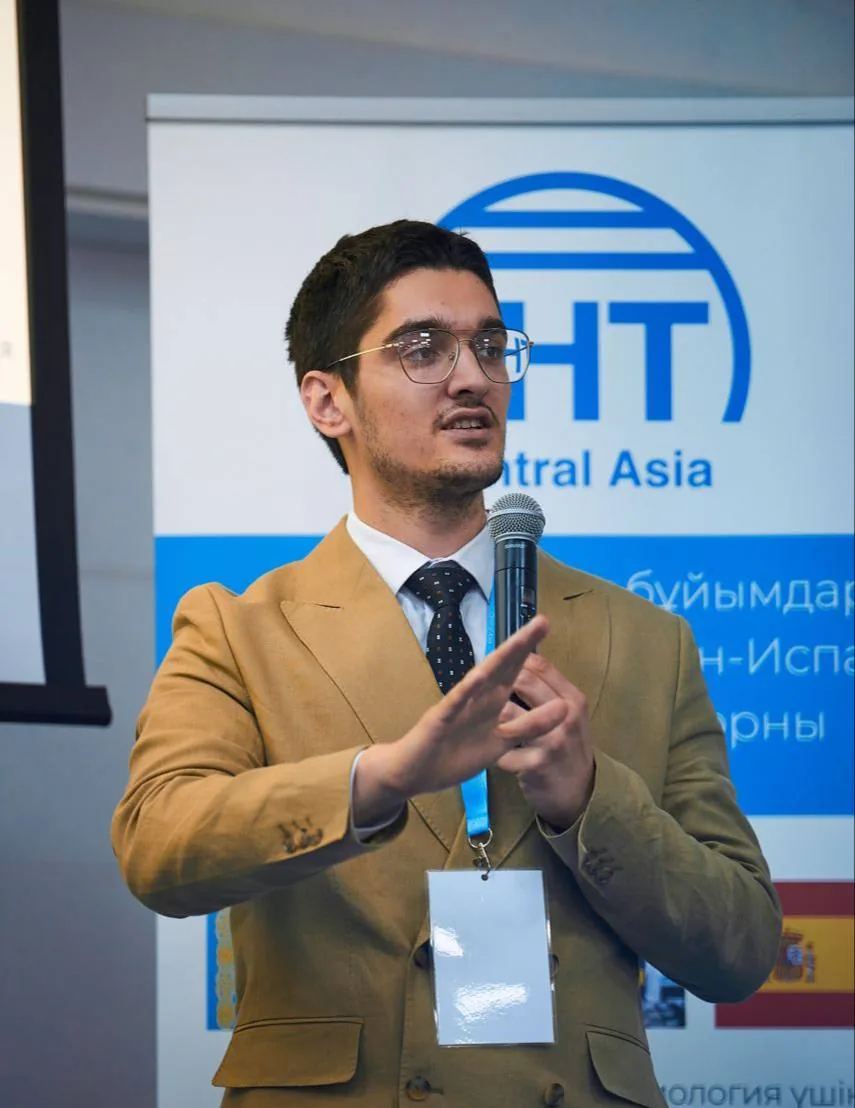
Yusup Tumgoev, CEO of the startup MyMind, shared insights on the development of a virtual clinic designed for the early detection of Alzheimer's disease. The project operates in clinics in Aktobe, Kokshetau, and Esik, assisting physicians in screening patients over the age of 50. The company has participated in accelerators such as Astana Hub, received grants from "Sabi" ($50,000) and Astana Hub Battle ($25,000), and plans to expand into the markets of the United States and Saudi Arabia.
We are sharing an interview with Yusup Tumgoev, CEO of the MedTech startup MyMind. He talked about how the project developed in its early stages and shared his impressions of the top Kazakhstani acceleration programs.
Yusup Tumgoev, 25 years old, city — Astana, CEO of MyMind
About himself
I graduated from Nazarbayev University with a degree in Computer Science.
Before MyMind, I worked on a project in the field of radiation technology, which failed because we outsourced it. I co-created a FoodTech startup together with KFC. The foundation was a platform that allowed ordering food via a mobile phone. We planned a meeting with the territorial director, but it was canceled due to the pandemic. Then the startup became unnecessary.
About creating the startup
I was disappointed after the failures of previous projects. At that time, my partners met in Almaty and decided to create a test for detecting Alzheimer's disease. They offered me to become CEO and take responsibility for the technical part of the project.
I analyzed the market and realized that the problem was relevant. I decided to join the project. Later, I found out that my grandmother suffers from Alzheimer's. Therefore, the project became personal, especially after research in the Kazakhstani city of Esik. We saw that the startup helps people. This motivated us.
Over three years, we refined the product from a test version to a virtual clinic. The platform helps doctors detect Alzheimer's disease in its early stages. The project is particularly relevant in Kazakhstan, as about 90% of doctors here do not know how to identify it.
Launching the startup
We started the startup without experience. We did not conduct Customer Development or identify the market. One of the co-founders, a professional doctor, provided the methodology by which we began creating the technology. A close friend became the developer and created the first prototype of the project.
Next, we tested the tool. This took about a year. When we were convinced that the mechanism worked, we decided to sell the product. Then we realized that the Kazakhstani public was not informed on this topic. People do not know what "dementia" and "Alzheimer's disease" are, and are not ready to use this product. Therefore, we created a product for doctors who can conduct screening and identify the disease. We created a virtual clinic where doctors monitor patient results, leave comments, and download medical histories.
Then we faced another problem. Not all doctors could use the product due to their qualifications. Some did not understand what they needed to do. Therefore, in the third pivot, we made a clear interface and tutorials with detailed explanations on how to use the platform. We began developing our own cognitive test, but realized it was a mistake: there are many competitors worldwide with extensive experience, making it difficult to compete with them.
In the latest version, we use ready-made cognitive tests. This is one of the four main stages of detecting dementia. Currently, we are working in three clinics in Kazakhstan — in the cities of Aktobe, Kokshetau, and Esik.
Target audience
MyMind is a B2B2C product. Our target audience consists of medical clinics and doctors who do not know how to detect dementia. They then interact with the client.
The target audience of the clinics is people over 65 years old who are at risk. We recommend screening for everyone over 50 years old. Our research showed that pre-dementia is detected in one out of eight representatives of this age group.
We also work with state clinics.
Acceleration programs
We completed two Kazakhstani programs from Astana Hub: Google for Startups and Hero Training.
During the Google for Startups program, we expanded our thinking. Previously, we could not imagine scaling to Saudi Arabia or the USA. Here, we managed to communicate with Americans and conduct calls with nursing homes. The accelerator showed us the geographical opportunities of the startup.
We completed the Hero Training program in Silicon Valley. The acceleration gave us a good understanding of the US market. We learned how companies and investors interact with startups. Now we have networking and an approximate action plan. Hero Training focuses on the personal development of the founder and only then on metrics.
MyMind is funded by angel investments. Previously, there was no need to attract venture capital. At the moment, the project is at a stage where it needs to be reworked to raise investments.
We also won the "Build Your Business" contest from the "Sabi" Fund and received $50,000, as well as won the Best Social Impact nomination at the Astana Hub Battle, earning $25,000.
Difficulties
As CEO, it is hard for me to work without results. Usually, after developing software, you can start selling immediately. In the MedTech sector, this is not possible. It is difficult to create a commercial story here. You need to work a lot with people and diagnoses, proving that the product works. Development and research cycles take a lot of time. For example, research with 2,000 patients took six months.
Achievements
We were selected for two top acceleration programs in Kazakhstan, to which many startups applied.
Receiving a grant from the "Sabi" Fund is an important achievement, the first financial result, and cash inflow into the company.
For the MyMind project, I received a medal from the President of Kazakhstan.
Plans
I see the development of our product in Kazakhstan, scaling in different cities. It is not possible to make big money here, but it is important for me to help my fellow citizens.
We plan to enter the USA and Saudi Arabia. In these countries, there is greater awareness of dementia and good financial attractiveness.
The Tech on Telegram Follow The Tech on Telegram
Keep up with the latest technology and startup news.
Related reading






More from this author

Article Useful
How to protect your accounts from hacking: 8 settings you should check today
The Tech

Article Useful
500 Global: How the Accelerator Works and Who Can Receive Investments
The Tech

Article Interviews
Game Development in Central Asia: Arkady Moldavski on Developing Reverb and the Growth of the Industry
The Tech

Article Useful
Google, Tesla, BlackRock, and the IMF: Where to Apply for an Internship in Fall 2026
The Tech

News IT
Tesla unveiled the flying electric car Roadster
The Tech

News IT
Intero Biosystems startup won the Startup Battlefield at TechCrunch Disrupt 2026
The Tech