MENA for Startups: How to Enter the Market, Find Clients, and Avoid Losing Money
Together with Rinata Ilyubaeva, CEO of Tumar Innovation Hub and Lead Female Founders at Women in Tech, we conducted a broadcast about startups from Central Asia entering the MENA market.
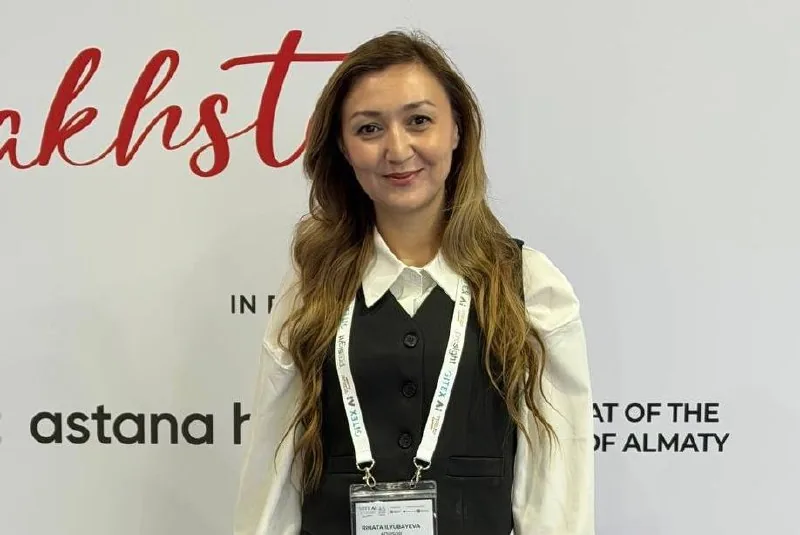
We discussed why now might be the right time to scale, where to start when entering the market, how to find initial clients and partners, what mistakes founders make, and what is important to consider regarding regulation.
You can watch the recording of the broadcast via the link.
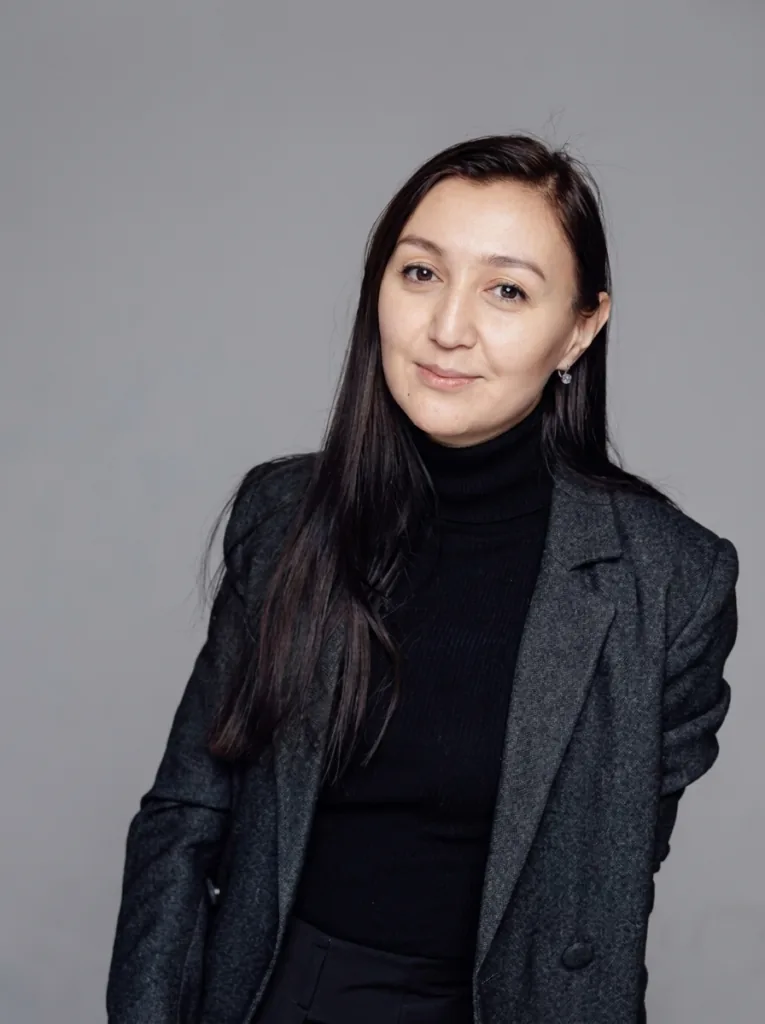
Rinata Ilyubaeva, CEO of Tumar Innovation Hub. Lead Female Founders at Women in Tech
About herself
I am the Managing Director of Astana Hub and oversee the Tumar Innovation Hub. In 2024, we implemented a program in Saudi Arabia, last year we conducted our first program in Dubai, and now we are launching the second batch.
I am involved in scaling startups — currently not only within the MENA region but also by attracting startups from various regions to Kazakhstan. However, today’s topic is specifically about MENA.
We have been working in this direction for three years. During this time, we have encountered numerous challenges, accumulated expertise, and learned how to properly scale startups into new markets.
About the MENA market
Six months ago, I would have answered this question completely differently. Against the backdrop of a tense political situation, many ask: why go to MENA now? Maybe it’s better to wait a year or two and look at other markets?
But there is an interesting trend here. The Arab world is known for its resilience. This is part of the national philosophy. Another important feature is trust: if they trust you, you cannot betray that trust.
Those who remain in the Emirates and Saudi Arabia, who continue to develop startups and projects there, are precisely demonstrating this resilience. Therefore, in my opinion, now is a good time to test the market: those who were hesitant have already left or did not arrive — only the most resilient remain, and competition has decreased.
Investments continue: Saudi Arabia leads in the volume of venture capital, while the Emirates lead in the number of deals at the scale-up stage. Perhaps B2B sales have slowed down somewhere, but it is now easier to find partners — if you used to be twentieth on their list, today you might end up third or fourth.
Also, the most active season for tech events is beginning. The largest tech events in the region will take place from August to December. Therefore, this is exactly a good time to come, look at the market, and test your hypotheses.
The region itself is quite digitized — especially in e-commerce, FinTech, and GovTech. Yes, some projects have paused development or left, but the innovation ecosystem continues to operate. Acceleration programs are not closing; new cohorts are announced by Mohammed bin Rashid Investment Fund, Hub71, and Oraseya Capital.
Entering the market
If a founder from Central Asia does not yet have partners or initial contacts in the region, I would first recommend starting with market research and studying the market. Gulf countries do not like it when a startup simply arrives and pitches its story from another market. They want you to speak specifically about them and understand their needs.
Therefore, you need to adapt your pitch deck to the local market, add an English interface, and having an Arabic interface will be a big plus. It is also worth studying family offices and business angels who invest at your stage, as well as large corporations developing the innovation ecosystem. Most banks, telecoms, government agencies, and large companies have IT divisions, so it is important to prepare a specific proposal for them.
After that, you can apply to acceleration programs, including ours, or come for a week or two, attend IT events, and try pitching. Such an introductory trip will help you understand the market, its key points, and arguments.
The need for a local partner depends on the specifics of the business. For B2C, a local partner is not so important, while in B2B, a good English-speaking sales specialist may be sufficient. For large B2G projects, a local partner is practically necessary. For fundraising, it is not mandatory — there are many cases of attracting investment without one.
In the UAE, a Kazakh citizen can register a company without a local partner. In Saudi Arabia, requirements are stricter — there are certain requirements for hiring local employees.
But at the start, you essentially do not need anyone — the main thing is not to be afraid to start. And for scaling into the government sector or large corporations, it is worth attracting a sales specialist who knows Arabic and understands the local market well.
About Tumar Innovation Hub
Tumar Innovation Hub has existed for a little over a year. Before that, in Saudi Arabia, we launched Al-Farabi Hub. The main mission of our international hubs is the development of IT exports: we help startups from Central Asia enter foreign markets — from preparing pitches to warm introductions and finding partners.
We conduct one large acceleration program per year and many smaller activities. We bring investors, representatives of corporations, and government agencies to Central Asia, for example, to GITEX and Digital Bridge, and vice versa — we help startups schedule meetings in Dubai and Saudi Arabia. We also provide legal consulting, particularly regarding company registration in the region.
Participation in the acceleration program involves a selection process. Currently, applications are accepted until August 24: applications undergo filtering based on five main criteria, then they are evaluated on a ten-point scale and reviewed by a committee with representatives from Astana Hub, IT Park Uzbekistan, MarHub, and other partners. Ten participants enter the program, although there are usually more than a hundred applications.
There is no separate selection for residents yet. We either find active startups ourselves, or they contact us. We have a Telegram community of startups from Central Asia entering the MENA market, where we share programs, opportunities, and useful contacts. There is also a monthly newsletter from Tumar Venture Fund.
All graduates of our acceleration programs automatically become residents and portfolio projects. We do not charge a residency fee — on the contrary, we are interested in their development and help with contacts and expertise.
Currently, during the program in Dubai, we are also opening an office where residents and graduates will be able to come. In addition, we have partnerships with AWS — startups registered in MENA can receive credits of up to $10,000. We also help get fast-track access to other hubs in the region, including Hub71, Oraseya, and Founders HQ, and can recommend startups to Arab partners.
Product and clients
In MENA, cold emails and fully online sales do not work as well. It is better to come offline at least once and meet potential clients and partners in person. Depending on the sector — AI, crypto, fintech, and others — the relevant companies are usually concentrated in the same business zones, so they can be found via LinkedIn and meetings can be scheduled in advance.
Word-of-mouth works well further on: after each meeting, it is worth asking for contacts of other potential partners. Hub residents have it easier in this regard because they go through acceleration and gain access to the necessary network.
Another effective tool is community: Slack and Telegram chats, Founders HQ communities, Dubai Silicon Oasis, DTech, and others. After the first visit, it is important to actively join these communities and independently search for new contacts.
And, of course, offline events work — GITEX and other tech events. It is not necessary to spend money on expensive booths: it is enough to register, attend events, participate in startup and investor programs, pitch, meet at coffee breaks, and collect contacts.
In essence, initial sales in MENA most often come through personal presence, networking, and recommendations — unless you initially have an investor or partner who introduces you to the market.
One thing often underestimated when entering MENA is regulation. The region has quite strict requirements and a large number of licenses for different types of activities. Therefore, especially if you are building a B2B project or working with payments, it is important to study compliance in advance. Many models that work in Kazakhstan or Uzbekistan will require localization.
Currently, most laws and requirements can be studied preliminarily online. For example, if you provide services in the UAE, you should pay attention to UAE Pass and other local systems that may be required for user authorization.
It is important not just to register an IT company, but to understand which specific license and free zone suit your business. Different free zones have their own areas of activity and requirements.
As for the product, at the start, an English interface is much more important than Arabic. Moreover, the entire product must be translated, not just the main page. Presenting a product with a Russian interface immediately creates a bad impression.
The Arabic language is especially important for B2G projects — if you want to work with the government, it is better to implement it immediately. For B2B and B2C, English is quite sufficient at the start. And only after gaining good traction and initial clients can you localize the product into Arabic — including for marketing and greater trust from local users.
At the start, two things are sufficient: an English interface and good research on compliance.
What mistakes do startups from Central Asia make when entering MENA
The very first mistake is thinking that the founder does not need to know English and that all negotiations can be handed over to a salesperson. In the long term, this does not work. You must pitch yourself and participate in negotiations with investors and partners. Good English is generally necessary for entering any export market.
Another common mistake is underestimating the importance of trust. In Arab countries, the deal and negotiation cycle can be longer precisely because you first need to earn the trust of the client or investor. You cannot enter with the thought that you will sell everything quickly in six months and move on. Someone from the team must be constantly present in the market.
It is also important to comply with compliance and local legislation. Some teams try to save money and work without the necessary status, licenses, or documents. For some time this may work, but when it comes to investments or large deals, such things are quickly uncovered and can cost you trust.
At the same time, you should not overpay for services. Company registration, licenses, and visas should not cost a fortune — main government fees can be checked independently. If you found a service provider, request two or three more commercial proposals and compare the terms.
And, perhaps, the main mistake is underestimating the market. In MENA, it is not possible to quickly “solve everything” and leave. It takes time, constant presence, and an understanding of local specifics. It is important to show partners: “I am here, I am one of you,” — and demonstrate that your business truly aligns with the strategy and priorities of Saudi Arabia or the UAE.
Advice for founders
- Market research. Not every product is suitable for every market. The idea that your product is needed by everyone in all countries of the world is a utopia. Therefore, it is better to choose a specific region — MENA, Southeast Asia, or America — and focus on it for a certain period without scattering your efforts.
- English language. If your English is weak, do not count on a hired employee to fully cover this competency. Learn yourself, do not be afraid to speak and communicate with investors directly. As a founder, you must be able to independently present your product and answer questions.
- Do not be afraid to go into exports. Many work only within the region for years, and then discover that the business has become too large and unwieldy for entering new markets. Therefore, it is better to build a global product from the start — incorporating the ability to scale into other countries and regions.
The Tech on Telegram Follow The Tech on Telegram
Keep up with the latest technology and startup news.
Related reading




More from this author

Article Useful
How to protect your accounts from hacking: 8 settings you should check today
The Tech

Article Useful
500 Global: How the Accelerator Works and Who Can Receive Investments
The Tech

Article Interviews
Game Development in Central Asia: Arkady Moldavski on Developing Reverb and the Growth of the Industry
The Tech

Article Useful
Google, Tesla, BlackRock, and the IMF: Where to Apply for an Internship in Fall 2026
The Tech

News IT
Tesla unveiled the flying electric car Roadster
The Tech

News IT
Intero Biosystems startup won the Startup Battlefield at TechCrunch Disrupt 2026
The Tech