Mark Zuckerberg on Muse, open-source AI, and the future of personal agents
Mark Zuckerberg discussed Meta's philosophy in the field of artificial intelligence, the personal agent Muse, open models, AI safety, and the development of its own AI laboratory. He explained why he believes it is important to disseminate technologies as widely as possible, how personal agents can change everyday life, and why Meta is focusing on its own infrastructure and models.
The Tech AI
Get the key points in seconds - a short summary from The Tech AI.
Meta is investing in open AI and developing a personal agent called Muse, ensuring security through isolated environments and minimal privileges. The company is focusing on creating its own models (such as Watermelon) for full control of the technology stack. The infrastructure includes new data centers with training programs, and smart glasses are equipped with recording indicator lights.
Why Meta Talks About Open AI
I wrote a large text about the future of artificial intelligence because Meta invests heavily in this area, and it was important to me to explain why we do this and what principles we adhere to. I believe that the development of AI has three important principles. The first is that technologies should empower people. It is precisely the ability of people to create new things and use tools to solve tasks that ultimately drives the economy and society forward.
The second is that the main task of AI should not be limited to automating existing work. It is much more interesting if it allows people to create things that did not exist before.
The third principle relates to safety. Safety should be built not only on restricting access to technologies. An important role is played by the balance of power, competition, and the ability of different companies and researchers to check and develop technologies.
Therefore, I am skeptical of the situation where the most powerful AI systems are controlled by a small number of organizations. The more people and companies can work with the technology, the greater the opportunities for competition, verification, and new ideas.
This is exactly why Meta continues to develop open Llama models. At the same time, we do not believe that all work should be open. We have closed research as well, but we want developers to be able to use our models and create their own products based on them.
Personal Agents Should Work for the Person
One area that particularly interests me is personal AI agents. I think the next stage of AI development will differ from familiar chatbots.
Today, you ask a question, get an answer, and continue the dialogue. A personal agent should work differently. You can give it a goal or describe a project, and then it works on the task independently.
I use Muse in my daily life. For example, my family and I experiment with baking, and Muse helps find ideas and develop projects. In another situation, it helped me figure out permission for my daughter to go hiking.
I also like the ability to use it for training. For example, cameras in our gym allow analyzing movements during workouts and providing feedback.
In the future, a personal agent will be able to work almost constantly. It will be able to learn your preferences, remember context, suggest new ideas, and independently continue working on projects.
AI Will Be Able to Help People Earn and Save Money
Personal agents will not only save time but also help people earn money. For example, an agent can find ways to reduce expenses, discover new business opportunities, or help a person launch their own projects.
We want basic Muse capabilities to be widely available. In the future, we may create business models related to transactions between users and companies.
There is another interesting effect. If people have personal agents, they will be able to interact with each other. Subject to privacy requirements, such systems will be able to exchange generalized knowledge and ideas.
As a result, one person's agent can help them discover an opportunity that another person has already used in their work.
Safety and Privacy
Safety is especially important for a personal agent because it gains access to a large amount of information about the user. We are building Muse so that even Meta cannot see the contents of its virtual environment. This is achieved using isolated computing environments and secure data storage.
Another principle is least privilege. An agent should not automatically have access to everything the user has. It should receive only the permissions necessary for a specific task.
We also use additional systems that monitor the agent's actions and try to detect potential attacks, data leaks, or attempts to inject malicious instructions. For sensitive actions, such as logging into an account or making a payment, human confirmation may be required.
I think this will become especially important as agents gain more capabilities.
Why Meta Is Again Investing in Its Own Models
Meta has long been engaged in machine learning, but modern large language models require a different approach. We realized that we must seriously strengthen our AI laboratory. Therefore, we are now focusing on a small team with high talent density and significantly increasing computing power.
We are also building large AI clusters. This is necessary if we want to create models that are at the forefront of technological development.
We have new models with working names related to fruits. For example, avocado and watermelon. Watermelon is a larger and more advanced model.
It is important to me that Meta can control the entire technology stack — from the base model to the final product. This is especially important for personal agents. It is not enough for them to simply answer questions well. They must be able to program, understand context, make decisions, and adhere to constraints related to privacy and security.
About Data Centers
Building AI infrastructure requires huge investments, and dissatisfaction sometimes arises around large data centers.
I understand these concerns, but it is important to distinguish between short-term projects and long-term investments. Large infrastructure projects create jobs, tax revenues, and demand for specialists.
We also need people who can build and maintain this infrastructure. Therefore, we are developing specialist training programs — from fiber optic installers and electricians to construction specialists.
AI requires not only programmers and researchers. We need a large ecosystem of people who can physically create the infrastructure for this technology.
What Will Happen with Smart Glasses
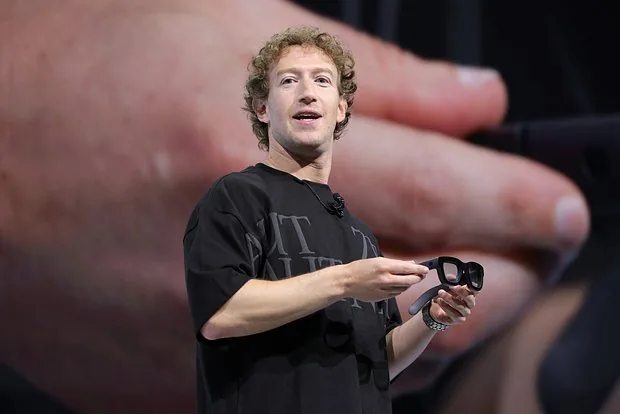
Smart glasses can become one of the main ways to interact with AI. But here privacy is especially important. The glasses have a visible indicator that shows when the camera is recording. We also take additional measures to prevent a person from simply turning off this indicator and continuing covert recording.
As such devices become more common, we will have to constantly explain to people how they work and what protection measures are used.
Teen Safety
We are also working hard on teen safety. For example, Meta is developing Teen Accounts with restrictions on usage time, notifications, and other features. It is important that such rules do not exist on only one platform.
If one company introduces restrictions on its own, teens may simply switch to another platform. Therefore, I believe a broader approach is needed here, which could establish common rules for the industry.
The Tech on Telegram Follow The Tech on Telegram
Keep up with the latest technology and startup news.
Related reading




More from this author

Article Useful
How to protect your accounts from hacking: 8 settings you should check today
The Tech

Article Useful
500 Global: How the Accelerator Works and Who Can Receive Investments
The Tech

Article Interviews
Game Development in Central Asia: Arkady Moldavski on Developing Reverb and the Growth of the Industry
The Tech

Article Useful
Google, Tesla, BlackRock, and the IMF: Where to Apply for an Internship in Fall 2026
The Tech

News IT
Tesla unveiled the flying electric car Roadster
The Tech

News IT
Intero Biosystems startup won the Startup Battlefield at TechCrunch Disrupt 2026
The Tech