A Kazakhstani left the bank after 10 years of work and created an AgroTech laboratory

A Kazakhstani entrepreneur, who previously worked for about 10 years in the banking sector, launched a venture lab in the AgriFoodTech sphere at Nazarbayev University. The new project became a logical continuation of the development of my startup COWMAS — a technological solution for remote monitoring and management of livestock farms.
Askhat Zhanibek, city — Astana, Co-founder & CEO COWMAS, Facebook, LinkedIn
How it all began
A turning point in my career was 2017, when I moved to the Netherlands to study agribusiness economics. Upon returning to Kazakhstan, I founded COWMAS — a system aimed at digitalizing processes in animal husbandry.
The key value of COWMAS lies in automating labor-intensive operations and reducing human intervention. Traditional processes of livestock identification and counting require significant resources and cause stress to animals, which directly affects their productivity.
The COWMAS solution allows for real-time collection of behavioral analytics, providing farmers with data on animal health and operational efficiency — previously unavailable when using traditional methods. At the moment, the startup is in the stage of active scaling.
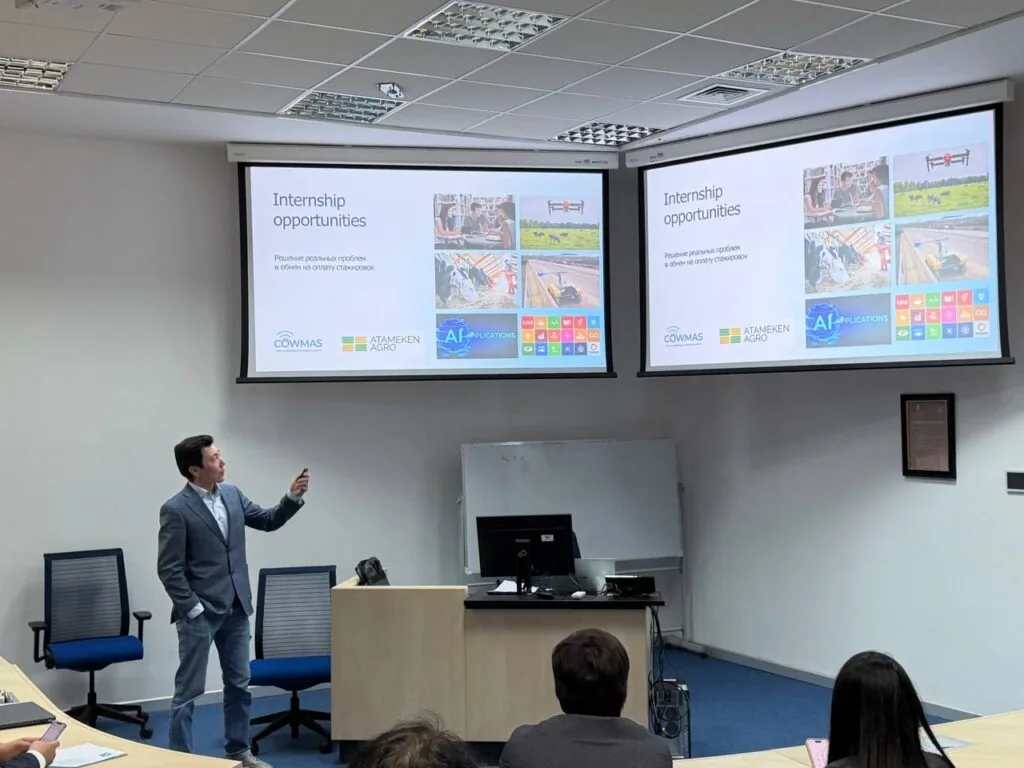
Startup Launch
As COWMAS developed, new technological directions began to form around it — from hardware solutions to robotics and remote monitoring systems based on autonomous technologies.
This became the foundation for launching the AgriFoodTech Venture Lab at Astana Business Campus, an innovative cluster of Nazarbayev University.
I am developing the Venture Lab in three key directions. First, creating startups, where I act as a co-founder of projects and provide them with resources for accelerated commercialization. The second direction is academic consulting, within the framework of which I involve researchers and students of Nazarbayev University, as well as external partners, to solve business applied tasks. The third direction is the valorization of scientific developments, that is, bringing promising technological solutions from the research environment into the format of independent companies.
This approach allows for a systematic reduction of the gap between science and the real sector. As a result, the platform forms an ecosystem that unites scientific expertise, entrepreneurship, and investment.
Target Audience
The solution is aimed at farms and agribusinesses that need to monitor the condition of animals, optimize operational processes, and improve herd management efficiency using precise analytics.
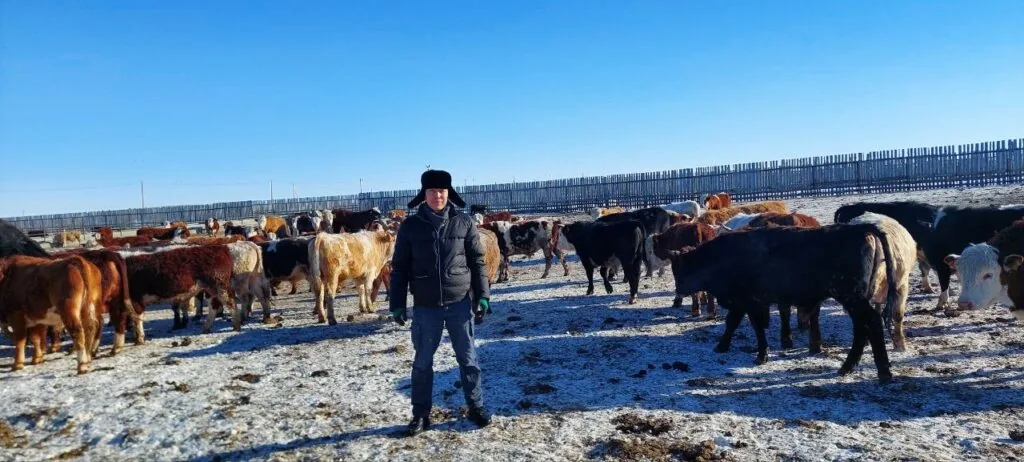
Incubation Programs
A significant role in the development of the project was played by the NURIS technopark at Nazarbayev University, where my startup has been based for the second year. Access to research infrastructure and collaboration with university scientists allowed my team to go beyond software. In particular, together with the Tactile Robotics Laboratory, we are implementing projects in the field of robotics and computer vision involving students.
On Difficulties
Despite the technological potential, the development of my project was accompanied by systemic barriers. Key problems included low quality of source data in the industry, limited infrastructure, including access to the internet and electricity in remote farms, as well as the lack of fast and effective tools to support technological initiatives.
Achievements
As the project developed and technological directions expanded, I came to the launch of the AgriFoodTech Venture Lab — a new platform at Astana Business Campus, an innovative cluster of Nazarbayev University. I view this laboratory not just as an incubator, but as a mechanism for transforming scientific developments into commercially viable solutions.
Global challenges, such as food security and climate change, require fundamentally new approaches. At the same time, in Kazakhstan, there remains a significant gap between science and agribusiness. I am creating the Venture Lab to unite scientific potential and entrepreneurial expertise.
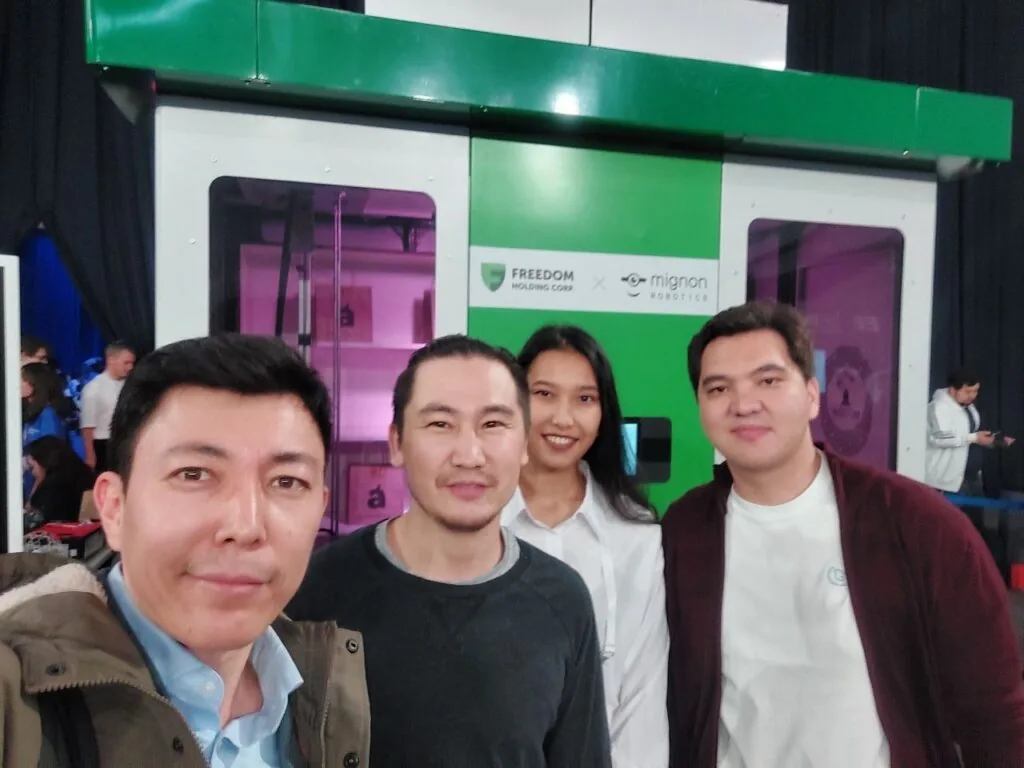
Plans
The resources of one startup are no longer sufficient to unlock the potential of all these directions. Each of them can become a separate business. The Venture Lab will allow for the systematic development of such spin-offs — based on scientific expertise and with a clear focus on commercialization.
With this approach, we aim to reduce significant and often inefficient costs associated with the commercialization of scientific developments. The innovation environment should be flexible, fast, and business-oriented. It is exactly such an ecosystem that we are forming today within the new venture lab in the agricultural sector.
The Tech on Telegram Follow The Tech on Telegram
Keep up with the latest technology and startup news.
Related reading






More from this author

Article Useful
How to protect your accounts from hacking: 8 settings you should check today
The Tech

Article Useful
500 Global: How the Accelerator Works and Who Can Receive Investments
The Tech

Article Interviews
Game Development in Central Asia: Arkady Moldavski on Developing Reverb and the Growth of the Industry
The Tech

Article Useful
Google, Tesla, BlackRock, and the IMF: Where to Apply for an Internship in Fall 2026
The Tech

News IT
Tesla unveiled the flying electric car Roadster
The Tech

News IT
Intero Biosystems startup won the Startup Battlefield at TechCrunch Disrupt 2026
The Tech