Kazakhstani developers have created an AI platform that is transforming the operations of medical clinics in the United States.
Rette is an AI startup that helps medical organizations automate the handling of insurance claims and navigate the complex rules of insurance companies. The solution reduces the administrative burden on doctors and increases clinic efficiency through intelligent processing of medical documentation.
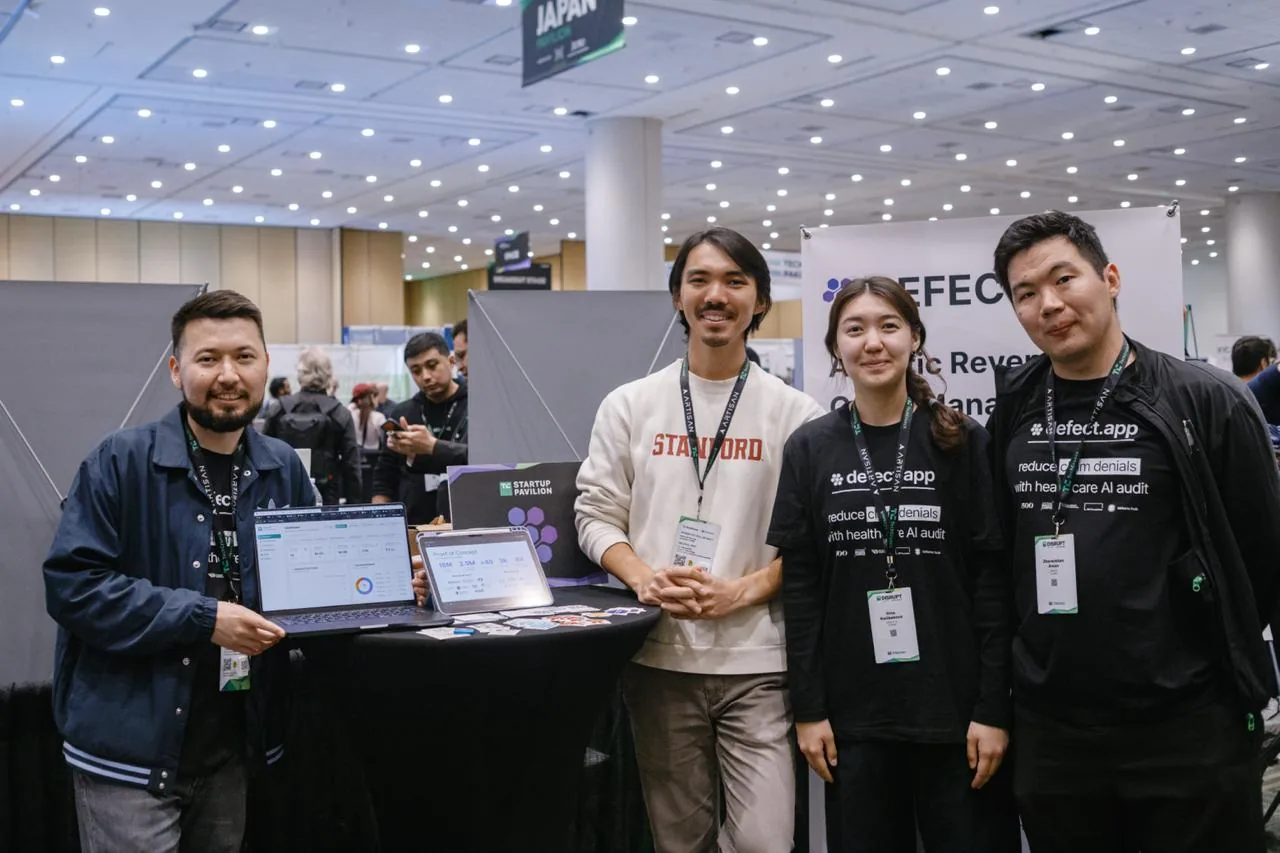
Read more about how the project was created, what problems it solves, and how the team is building the product in the Kazakhstan and US markets — in our interview.
Sanzhar Myrzagalym, City — Palo Alto, CEO and Co-founder of Rette, Instagram, LinkedIn
How It All Started
I am the CEO and co-founder of Rette, an AI platform for healthcare organizations that helps properly prepare insurance claims and navigate the complex rules of insurance companies. Before this, I worked at Microsoft for nine years, developing artificial intelligence and data processing solutions, and then enrolled in a master’s program at Stanford University to rethink where I wanted to apply my accumulated expertise.
The idea for Rette was born not only from market analysis but also from personal experience. If you look at the problem we are solving, it lies not in diagnosis or treatment, but in how clinics get paid for services already rendered. Medical organizations provide care, but they receive payment from insurance companies that have complex rules and criteria. If documentation is prepared incorrectly, payment is denied.
In Kazakhstan, up to 30% of medical services may go unpaid due to documentation errors, and in most cases, the cause is incorrect formatting. This leads to lost revenue for clinics and overloads doctors with administrative work. This problem exists in all countries, just on a different scale. Therefore, we started in Kazakhstan and realized this is a global problem where AI can genuinely reduce the burden on the system.
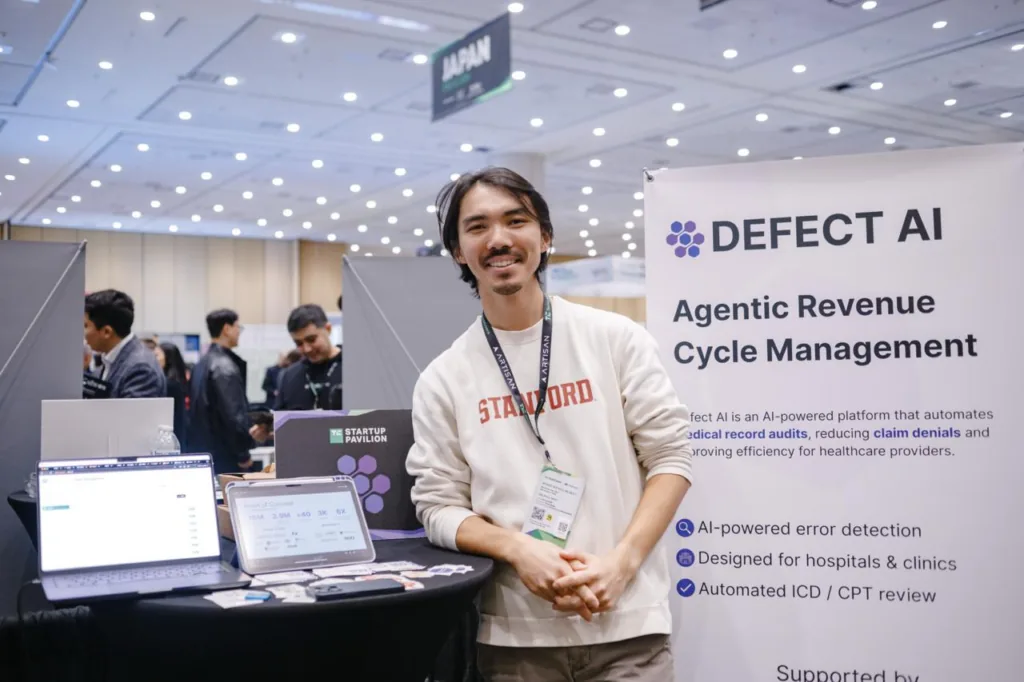
Startup Launch
The project launch was not about quickly releasing a product, but about deeply immersing ourselves in the problem. In the first few months, we talked extensively with billers, doctors, and clinic administrators, studying the rules of insurance companies, which span thousands of pages and are constantly updated.
Before this, in Kazakhstan, we developed the Defect AI project. Its goal was to reduce the administrative burden on doctors by auditing medical documentation. Doctors not only treat patients but are often forced to organize paperwork late into the night after their shifts. Many of us have relatives who are doctors, and it was hard to watch them burn out from this burden. We decided to try solving this problem with AI and achieved good results: today, our solutions are used by about 30 clinics, including large medical organizations.
However, the Kazakh market is limited in scale. Therefore, we began thinking about the next step — expanding into the global market. We considered various directions: neighboring countries, Southeast Asia, Europe, and the US. After extensive research, we realized a simple truth: entering any new country requires enormous effort, so it is better to go where the market is large.
During that period, I was studying in the US and encountered a personal experience that heavily influenced our direction. Due to health issues, I ended up in the emergency room at Stanford Medical Center and spent about eight hours there. The medical care was high-quality, but from the perspective of understanding processes — expectations, costs, and insurance — everything turned out to be extremely complex.
Later, I received a bill for $30,000 for that visit. At that moment, I sharply understood the scale of the American healthcare problem: a huge number of insurance rules, policies, and exclusions makes the system practically opaque to patients.
It then became clear that healthcare in the US accounts for nearly 20% of the country’s economy, with annual expenses of about $5 trillion. One of the system’s biggest problems is the complex interaction between clinics, hospitals, and insurance companies. Medical organizations often cannot quickly and correctly receive payments for services already rendered. We saw a huge opportunity here: we already had expertise gained in Kazakhstan, and we understood we could apply it in a much larger market. Thus, our development in the US began.
We raised our first Friends & Family angel round in 2025.
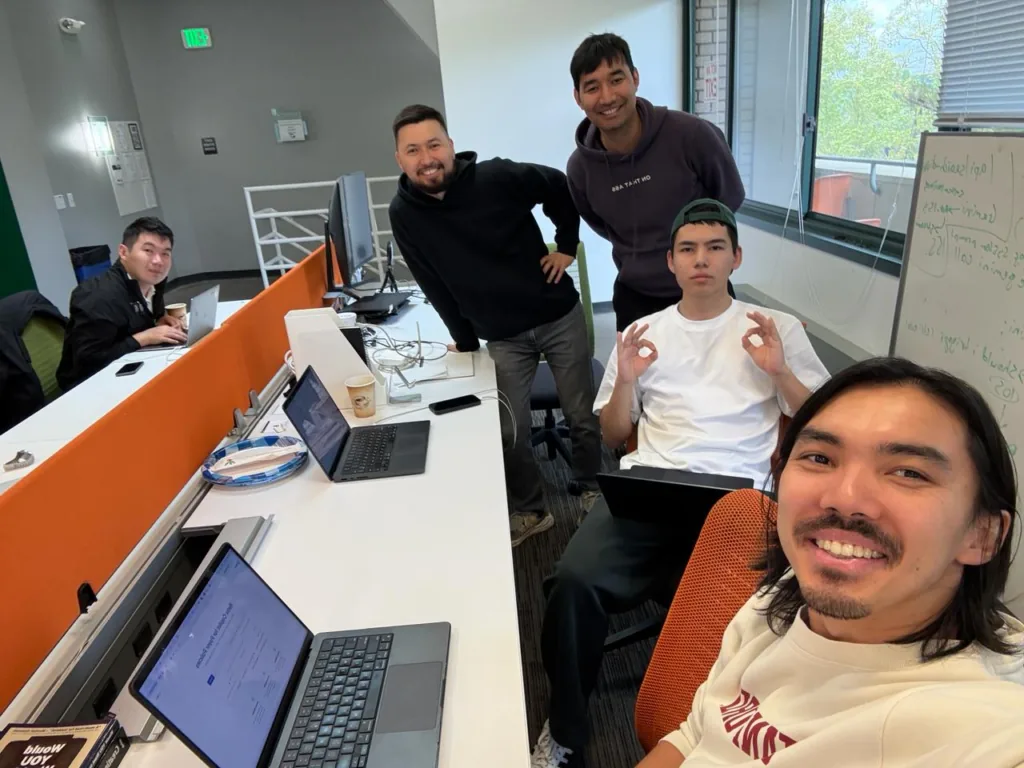
The Team
We are three co-founders: myself, Quanys Idrisov, and Zharaskhan Aman. We have worked together for a long time and understand each other’s strengths well. Quanys is a product leader with over 10 years of experience in product management. He worked on products used in Kazakhstan and abroad. For the last three years, he worked at the YC-backed startup Alem Health, where he managed products for healthcare workers in more than 40 countries. Zharaskhan is one of the strongest engineers in Kazakhstan, a two-time finalist of the ACM ICPC. He worked as an engineer at Meta, handling infrastructure for Facebook, WhatsApp, and Instagram.
In the team, I am responsible for strategy, fundraising, and partnerships. At Microsoft, I was an AI solutions architect and big data processing systems architect, and I also led engineering teams.
We built the team on the principle of “people first, roles second”: we looked for those willing to navigate the complex and heavily regulated healthcare sphere and who would not leave at the first sign of turbulence. Some employees came and went, but the core of the team remained unchanged.
In the US, we operate with founder-led sales — we handle sales ourselves, communicate with clients, and build partnerships. In Kazakhstan, a Commercial Director works, responsible for developing the local market.
The team is distributed globally: we have a product analyst in London, a developer in Berlin, and another in Tokyo. Therefore, daily calls sometimes turn into a separate quest, but this is exactly how we managed to gather strong people from different parts of the world.
And perhaps most importantly, the team is truly motivated by the mission. We are building not just a technological product, but a system that can reduce the administrative burden on doctors and make healthcare more efficient. Our first public product — the free tool policy.rette.ai — was launched specifically to learn faster from real users and continuously improve the solution.
Target Audience
We have two key markets — Kazakhstan and the US — and each has its own audience.
In Kazakhstan, we work with medical organizations that want to improve the quality of clinical documentation. Our AI helps doctors quickly find gaps in records, highlights what is missing, and reduces hours of manual review to targeted edits. The main users are expert physicians and documentation quality specialists.
The US market is more specialized, so we have focused on two ICPs (Ideal Customer Profiles) and consciously avoided trying to cover everyone at once.
The first direction is orthopedic and specialized clinics, where the high cost of procedures and frequent insurance denials make the process particularly sensitive to errors.
The second is billing outsourcing companies that handle coding and invoicing for small clinics. Previously, they reduced costs through outsourcing to countries with cheap labor, but now AI is increasingly taking over these tasks.
We enter the market as a partner, providing these companies with tools to transition to an AI format and maintain competitiveness. The main users are coders, billers, and medical practice managers, as well as users of our free product, policy.rette.ai, across the United States.
Incubation Programs
Our journey began in Kazakhstan — within the ecosystems of Nazarbayev University and Astana Hub. We participated in incubation and acceleration programs, receiving comprehensive support from Astana Business Campus and the NU Impact Foundation.
These programs provided not only infrastructure but also consistent traction — helping us build product, sales, and growth strategies at an early stage.
One of the key leaps was the Silicon Valley Residency: the team was able to relocate to Silicon Valley and work closer to the market, users, and investors, which significantly accelerated development.
We also completed the GoAbroad program by 500 Eurasia — a bootcamp in Georgia, where we honed our investor relations skills: from preparing for meetings to pitching and negotiations.
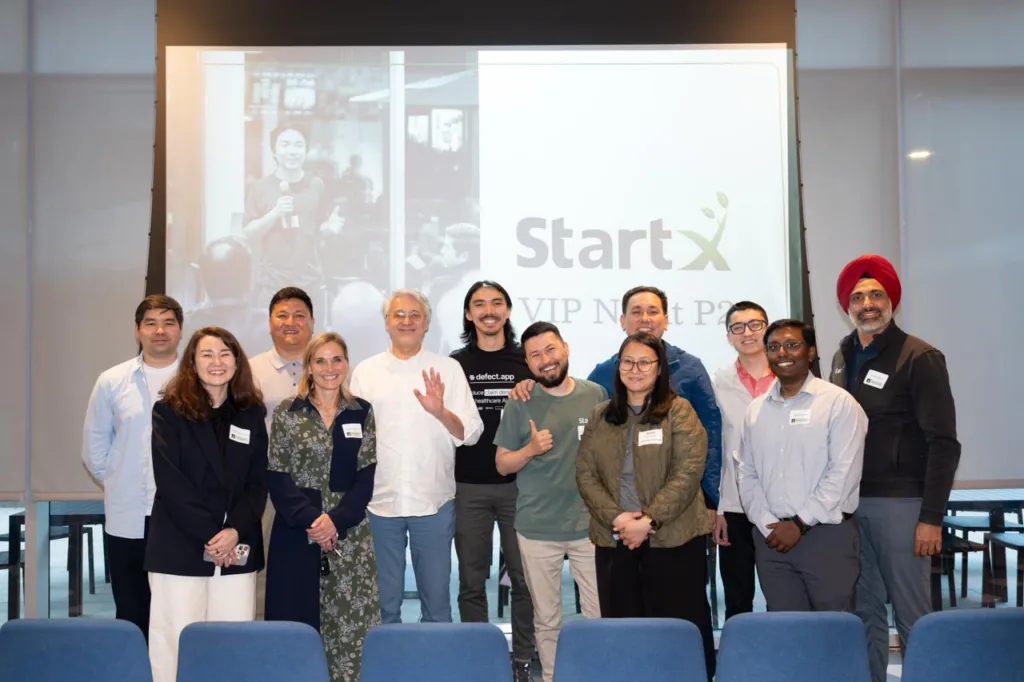
But the main highlight was the StartX program at Stanford University, which we recently completed. We long understood that this was the ideal environment for us, because StartX is particularly strong in healthcare and medical devices. We only got into the full-time program on our fourth attempt.
These 10 weeks were incredibly intensive. We had a separate fundraising track: every two weeks we pitched, constantly meeting with mentors and investors. We were also helped to assemble a Board of Advisors consisting of experienced specialists in our relevant field. In our case, it included two physicians affiliated with Stanford University, representatives of healthcare VCs, founders of companies that have already completed the path we are only about to embark on in the coming years, as well as experts with decades of experience in healthcare integrations. Such a level of expertise is difficult to find anywhere else.
Additionally, the program included a Demo Day and meetings with investors. After the recent Demo Day, about 15–18 investors showed interest in us — we are currently in the phase of active discussions with them.
Regarding funding, we are currently between rounds. The angel round is already closed; we were supported by funds and investors such as AHV, Jas Ventures, and 500 Eurasia.

On Difficulties
The main challenge in HealthTech is trust and speed. Medicine is conservative, and the cost of error is high, so a significant portion of our work went into certifications. First, ISO 27001 — confirming responsible data storage and processing, then HIPAA, without which it is impossible to work with medical data in the US. We are also currently undergoing SOC 2 Type I — a stricter certification with continuous security monitoring. This is a large body of invisible work that rarely makes it into pitch decks, but it is impossible to build a healthcare company without it.
Additionally, there is the complex legal and operational structure between the US and Kazakhstan: corporate processes and regulations.
Another difficulty for international founders is entering the US market when you are not “one of your own” in that ecosystem. Teams like ours are often treated with caution. In our case, affiliation with Stanford University helped significantly. The conversion rate from cold emails to meetings rose sharply as soon as we started writing from a Stanford email address. Mentioning that I studied under a well-known professor also changed attitudes. This helped not only in developing the business but also in working with investors — showing that we are building a global company, not limiting ourselves to the Kazakh market.
Recommendations
Build relationships with people long before you need them. Networking and reputation stay with you for life.
It is especially important to preserve relationships with co-founders — these are some of the most important and simultaneously most difficult relationships in a startup. Even if you have known each other for a long time, stressful moments test everything to its limits. During such periods, it is important to remember that it is with these people you started the journey and want to continue it. Personally, I am as interested in the success of my co-founders as I am in my own, because their success is also my success.
Learn from those who have already walked this path. This is exactly why investors love repeat founders. These people have already gone through errors, fundraising, building go-to-market strategies, product development, and team crises once.
And, perhaps, one more important point — do not perceive every problem as the end of the world. It is better to look at it calmly, analyze it, and understand what exactly it is teaching you.
Achievements
We were accepted into StartX, obtained ISO 27001 and HIPAA certifications, closed an angel round with strong investors, and launched a product that is already used by real billers in dozens of US cities. We also entered the program of one of the leading hospital systems in the US, where we are currently validating the product on clinical data; they also became our investor. This is an important signal of trust from the market.
I am particularly proud of the team — we managed to gather strong people from Silicon Valley and Kazakhstan who are ready to work on a complex task over the long term.
But honestly, what matters most to me right now is not statuses or logos, but the fact that we found a problem we are willing to work on for many years. In a startup, it is easy to confuse activity with progress, so I constantly return to the question: are we really solving a real problem for real people?

Plans
By the end of the year, we have three major focuses. The first is to convert our design partners into paying clients. We have reached a stage where companies with which we have long built trusting relationships are ready to move to a commercial basis. Parallel to this, we have a large system of agents working day and night to build contacts with the target audience, turning them into pilots, and then into clients.
The second is to close the Pre-Seed round by the end of April – early May. Many angels from the first round have already said they want to do a follow-on investment, and now we are waiting for certain metrics to announce the round with greater traction.
The third is to complete the retrospective validation of our pipeline on clinical data through a partnership with one of the leading hospital systems in the US.
In the long term, we are building Rette as an infrastructure layer between clinics and insurance companies, where AI agents simplify work with thousands of complex rules.
Personally, it is important to me that we are building a bridge between Stanford University, Silicon Valley, and the Kazakh engineering school. This is a story not only about the product but also about the fact that serious global companies can and should have roots in Central Asia.
The Tech on Telegram Follow The Tech on Telegram
Keep up with the latest technology and startup news.
Related reading






More from this author

Article Useful
How to protect your accounts from hacking: 8 settings you should check today
The Tech

Article Useful
500 Global: How the Accelerator Works and Who Can Receive Investments
The Tech

Article Interviews
Game Development in Central Asia: Arkady Moldavski on Developing Reverb and the Growth of the Industry
The Tech

Article Useful
Google, Tesla, BlackRock, and the IMF: Where to Apply for an Internship in Fall 2026
The Tech

News IT
Tesla unveiled the flying electric car Roadster
The Tech

News IT
Intero Biosystems startup won the Startup Battlefield at TechCrunch Disrupt 2026
The Tech