How to launch a startup in Uzbekistan. Amirhan Omarov's experience
Parqour startup founder AmirKhan Omarov shared his experience of entering the Uzbek market and answered viewers' questions in a live broadcast of The Tech. We have prepared a text version, and you can listen to the full recording via the link.
Author - Mansur Ismagulov
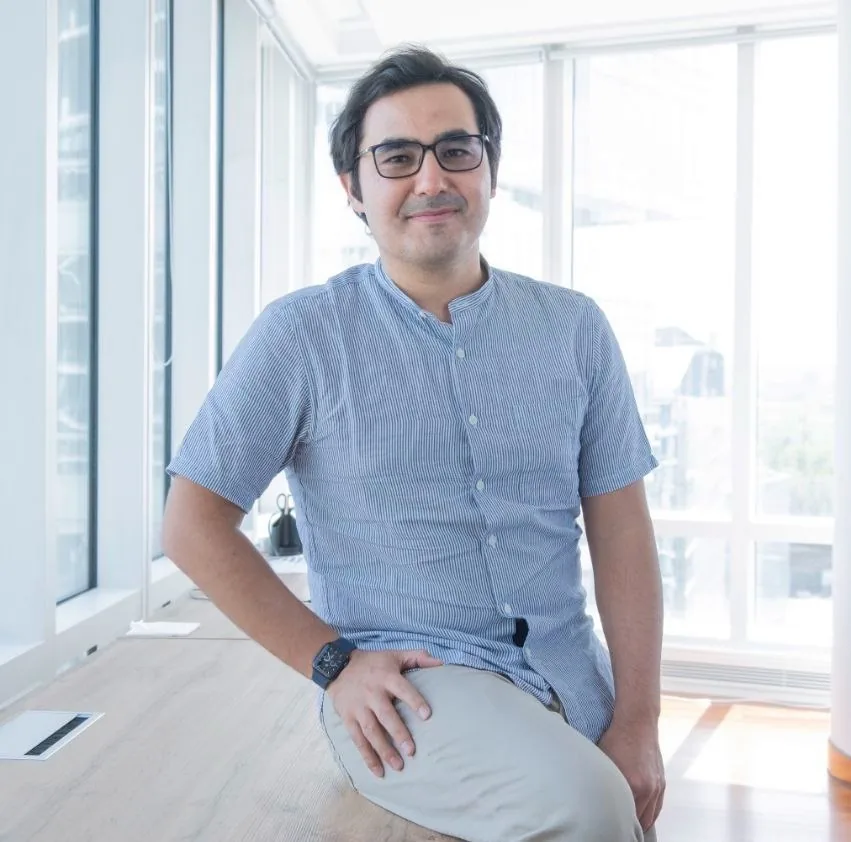
Amirkhan Omarov, founder and shareholder of the Parqour startup, LinkedIn
Parqour is a smart parking solution: a license plate recognition system, online parking payment, and for owners, convenient dashboards showing how many cars entered and exited, as well as daily, hourly, or weekly revenue. We can identify the make and model of a vehicle.
In short, in English, our one-liner is: Smart Parqour — Smart Parking Software as a Service. That is, a smart parking solution in SaaS format for parking and real estate owners.
We launched in early 2021, meaning we have been operating for over four years. We started in Almaty, Kazakhstan. Currently, the project is present in approximately 20 countries — from the US and Europe to the Middle East, Central Asia, the Caucasus, and several Southeast Asian countries: Malaysia, Sri Lanka, Thailand, Vietnam, and Indonesia.
A little about myself: most of my career was related to real estate management — I managed shopping malls, business centers, warehouses, and hotels. That is where my interest in technologies in this field came from. Many in Uzbekistan know me as the founder of SmartPoint — one of the first and largest coworking spaces in Almaty. In 2016-2018, I launched several large coworking spaces in Kazakhstan. For the last four and a half years, I have been fully focused on developing smart parking solutions.
About market differences
In Kazakhstan, we have about 220-230 parking lots and approximately 200 clients. Among them are practically all airports, large shopping and business centers, residential complexes, and markets. In the private segment, we effectively hold a position close to a monopoly. We recently started working on government projects — currently launching our first pilots in Almaty and Astana.
Aside from Kazakhstan, we have about 300 clients in 20 countries. Among key facilities:
— Heydar Aliyev International Airport in Baku
— Bishkek and Osh airports in Kyrgyzstan
— facilities in the US, the Balkans, Morocco, Saudi Arabia, Uzbekistan, Sri Lanka, and other countries.
The team consists of approximately 100 people:
— 20-25 developers and product managers
— 20-25 people in the operations team
— some employees work in Kazakhstan, others are distributed across other countries, including an office in Tashkent.
In Uzbekistan, we already have 10-15 clients, and we continue to expand.
The simplest reason why we chose Uzbekistan is that we are neighbors, close countries. We share a similar culture and much in common. If a business develops successfully in Kazakhstan, it is logical to try neighboring markets. We tested different directions — Russia, Ukraine, Kyrgyzstan, Uzbekistan. And Uzbekistan became our natural choice: it was one of the first countries we entered after Kazakhstan, back in 2022.
There is also a personal reason. I am from Shymkent, near the Uzbek border. I have many connections and relatives in Uzbekistan, so this market is largely native to me.
Strategically, we view Central Asia as our home region. Our goal here is not so much to make big money, but to solve the parking problem and show that it can be done well. This is the foundation for entering larger markets — the US, Europe, the Middle East, Southeast Asia.
And if we talk about Central Asia, half of it is Uzbekistan in terms of population. Therefore, our presence there is absolutely natural.
In some industries, there are noticeable differences between Kazakhstan and Uzbekistan. This is because under the previous president, Uzbekistan pursued a closed policy, and changes began only after 2016-2017.
For example, in Kazakhstan, the Kaspi phenomenon greatly influenced the development of the economy and technology. The bank's active development began about 10 years ago, and five years ago, practically everyone switched to online payments. For us, this became a key factor: people were fully ready for online payments, and parking turned out to be one of the last industries to transition to them. Until 2021-2023, the parking system in Kazakhstan mainly worked through paper tickets and parking meters, and people paid with coins. But the option for online payment already existed, and the transition took only a few years.
When we entered Uzbekistan, there were already players providing online payments — Paynet, Click, Uzum, and others. But unlike in Kazakhstan, this did not cover the entire market. The share of cash payments remained high — 30-50%. Therefore, we had to account for cash payments and integrate various online services. In Kazakhstan, it was enough to work with one bank, but in Uzbekistan, it was necessary to connect several providers and leave the option for cash settlement. This is a key difference for our business.
There are also cultural specifics. For example, paid parking in Tashkent appeared only in 2025, although there have been many cars in the city for a long time. In Kazakhstan, paid parking in Almaty started working back in 2016-2018. This greatly affects the market: until the city administration introduces paid parking, the private sector is also in no hurry to implement it — they are afraid of losing clients, as there are free spots around.
In Tashkent, paid parking is often perceived as incorrect: customers are already spending money, and charging them for parking seems like extortion. This is a cultural barrier that needs to be taken into account.
How important is product localization in Uzbekistan
We have two business models.
- Software subscription.
The client buys the equipment themselves, and we provide the software. Payment is made by subscription, for example, about $200 per month per camera.
- Revenue share.
In this case, we invest in the client's parking ourselves: we perform construction and installation work, purchase equipment — barriers, cameras, servers, and then sign a long-term contract for five years. Income is divided depending on our investments and the parking's revenue.
Both models work successfully in Kazakhstan and Uzbekistan. There are no significant differences in business models or pricing policies.
There are only local nuances:
— in Uzbekistan, product localization is a mandatory requirement: interfaces and communications must be in the Uzbek language. We understood this in advance, so the Tashkent office works with a fully local team, without employees from Kazakhstan
— in working with government structures, there are additional requirements: security, certification, server localization, and data storage within the country. But these are standard conditions for working with a government customer.
Otherwise, in our industry — parking and transport — there are no fundamental differences between Kazakhstan and Uzbekistan.
About the startup ecosystem in Kazakhstan
The startup ecosystem in Kazakhstan looks quite developed at first glance. We have accelerators, tax benefits, coworking spaces, several hubs — Astana Hub, MOST, PIT Alatau. There are investors ready to invest at early stages, and even successful cases, like Kaspi and Freedom.
But this system also has serious limitations, which are characteristic not only of Kazakhstan but also of other countries in the region. The main factor is the too large share of the state in the economy. For example:
— two or three largest banks control about 70% of the banking sector
— railway transport is fully owned by Kazakh Temir Zholy (KTZ)
— the aviation market is divided by one or two players
— Samruk-Kazyna and other state companies hold a huge share in the economy
— in addition, ministries and akimats often create their own subsidiary companies to automate processes instead of looking for startups in the market.
What does this mean? When the economy is 70-80% controlled by the state, there is almost no free market, and competition is minimal. And if there is no competition — there is no demand for efficiency. Without demand for efficiency, there is no demand for technology and innovation.
As a result, we get the following situation:
— startups appear at the Pre-Seed/Seed stage
— but at the Series A stage and beyond, they rarely survive because there is simply no market for growth
— investors are also mostly present at early stages. But when a startup needs $5-10 million for scaling, there are almost no players in Kazakhstan ready to invest such amounts.
This problem is the "state support trap": the ecosystem looks complete, but without a free market and competition, it is difficult for startups to grow.
The problem and the solution are directly related. If the economy is 70-80% controlled by the state, then the first and most important thing is to reduce the state's share and expand the space for private business. Banks, airlines, metallurgy, railways, infrastructure — all of this should either pass into private hands or be managed by professional managers without direct state intervention. Only then will there be competition, and with it — demand for efficiency, technology, and innovation.
The second part of the solution is more realistic in the short term — this is the integration of regional markets. International venture investors are not interested in Kazakhstan, Uzbekistan, or Azerbaijan separately: the markets are too small. To attract large capital, a common market of at least 100 million people is needed. For this, it is necessary to reduce barriers between countries, unify regulation and approaches. A startup created in Samarkand should be able to scale without problems in Almaty, Dushanbe, or Baku.
Some steps have already been taken — for example, cooperation between Astana Hub and IT Park Uzbekistan. But this is not enough. It is necessary to open markets to each other even more actively, unify rules, and create a real regional ecosystem. Then startups will have the potential for rapid growth, and investors — interest in entering the region at later stages.
Plans
We constantly improve the product: making it faster, more convenient, and more accessible.
One of the key ideas we are currently working on is creating an "Airbnb for parking." In large cities in the region — Tashkent, Almaty, Bishkek, and others — there is an imbalance in the use of parking spaces. During the day, residential complex parking lots are empty because residents have gone to work. At night, parking lots of business centers, shopping malls, banks, hospitals, and hotels are empty. We want to unite all this into a single marketplace to increase space utilization and relieve the streets.
At the same time, we are localizing the product for different markets. For example, in Middle Eastern countries, we are developing a separate solution for valet parking — this is the main format there, although it is almost undeveloped in our region. And in the US, in cities like New York, Miami, or Los Angeles, valet parking is also standard.
This year, we launched street parking projects for the first time in several cities at once: we are installing cameras along streets or on cars to record parked cars and manage the process more efficiently.
Recommendations
Innovation does not arise out of nowhere. It always appears within a specific industry. For example, Kaspi is an innovation in banking and FinTech, and in our case — innovations are happening in the field of parking and real estate.
To launch a successful startup, two key factors are important:
- Deep expertise in the industry. You need to understand the market: whether it is finance, medicine, transport, construction, or agriculture. A large industry is one that accounts for at least 5-10% of the economy. It is important to be an expert yourself or attract people who understand which problems are truly critical and require solutions.
- Good understanding of technology. You need to figure out which tools can be applied: artificial intelligence, computer vision, machine learning, the Internet of Things, blockchain, and so on. A successful startup always stands at the intersection of a specific technology and a specific industry.
Conclusion: before launching a startup, it is worth deeply studying the chosen industry and mastering technologies that can become the driver of innovation in this field.
The Tech on Telegram Follow The Tech on Telegram
Keep up with the latest technology and startup news.
Related reading







More from this author

News
zypl.ai begins operations in Japan and focuses on next-generation risk models
Mansur Ismagulov

News
Elon Musk's net worth has exceeded $700 billion for the first time
Mansur Ismagulov

Article Interviews
"Central Asian countries should build a joint ecosystem," — Bekhzod Ismoilov on the development of AI in the region
Mansur Ismagulov

Article Interviews
Bloom's Taxonomy and Engineering Levels: A Practical Growth Model
Mansur Ismagulov

Article Useful
How the IT industry in Azerbaijan developed in 2025: key events
Mansur Ismagulov

News
Tajikistan has become a new member of the regional innovation alliance Central Asian Innovation Hubs.
Mansur Ismagulov