How to launch a startup in China. The experience of Kanat Keldibekov
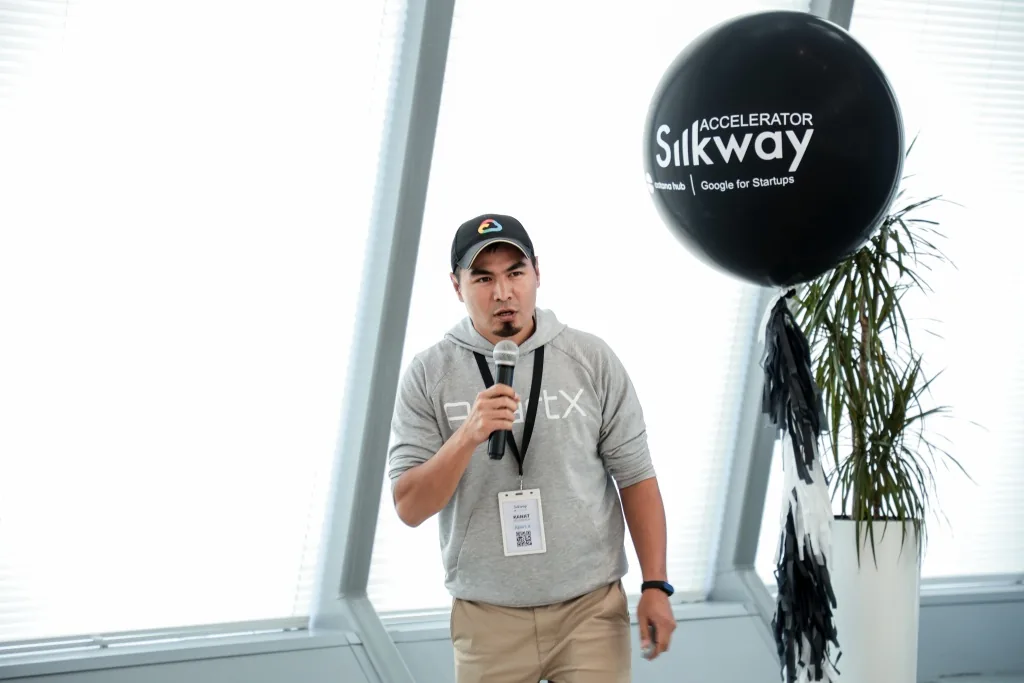
Recently, in our Telegram channel The Tech, there was a live stream where ApartX founder Kanat Keldibekov shared his experience of entering the Chinese market. He explained why he chose China for scaling, what difficulties he faced, and how the startup ecosystems of China and Kazakhstan differ from each other.
Author - Mansur Ismagulov
The Tech AI
Get the key points in seconds - a short summary from The Tech AI.
The CEO of the startup ApartX, a rental automation platform with 150,000 users and 500,000 listings, chose China due to the scale of its market and manufacturing base. In Kazakhstan, the market is small (4 million people), while in China, clients demand high interface density and integration within WeChat/Alipay ecosystems. The company has adapted its product to Chinese standards and plans to expand into medium-term rentals with tax integration.
About Me
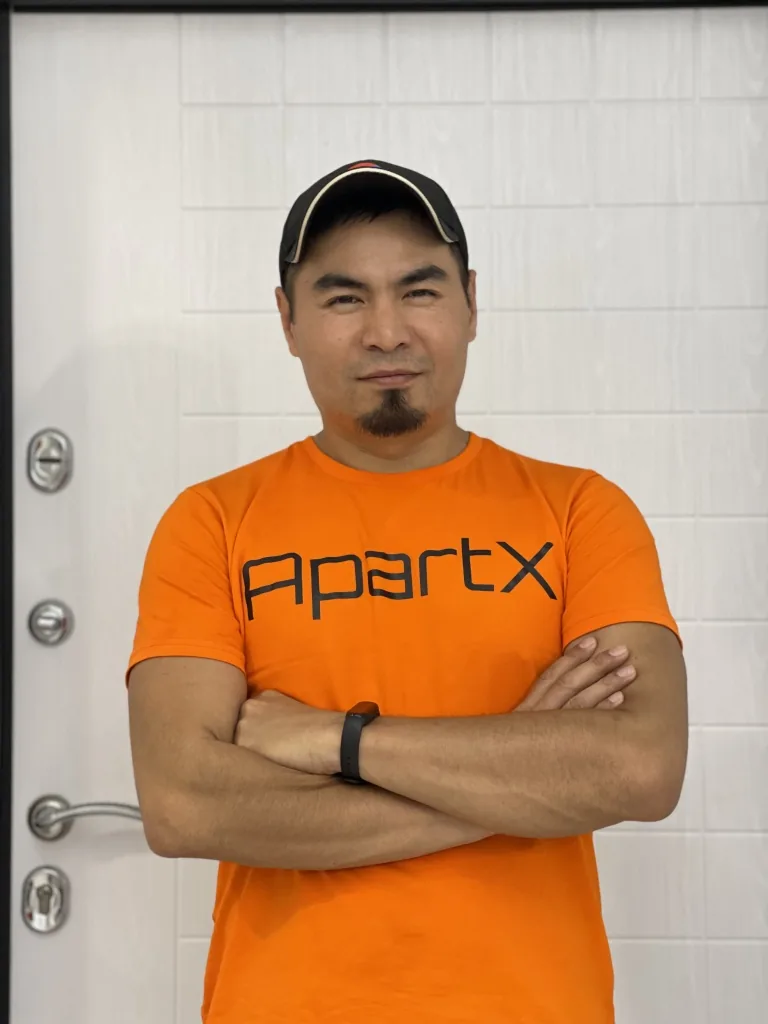
I am the founder and CEO of the startup ApartX. It is a platform for automating apartment rentals. We help property management companies, realtors, and brokers remotely manage check-ins and process rentals without in-person meetings with tenants.
The system operates on the basis of smart locks, biometric identification, and integrations with Airbnb, Booking, OLX, and TripAdvisor. WhatsApp is connected, so all communication happens automatically.
This year, we added six digital agents that:
— answer frequent questions from tenants
— help with booking, advise clients, and select options based on requests.
The process is fully automated: payments are processed, documents are verified, contracts are signed, and digital keys are issued. Agents also respond to reviews and initiate them themselves to improve the rating of properties.
Our goal is to make apartments fully autonomous, so they can be rented out and generate income without human involvement. We are already close to this thanks to the use of artificial intelligence.
ApartX operates in all cities and regional centers of Kazakhstan. Approximately 5,000 apartments and 2,100 property management companies are connected to the platform. The key metric is 150,000 users and more than 500,000 apartment rentals through the system.
Why China was chosen
We tested many hypotheses for scaling and considered different countries. The US is the largest market, but distance, time zones, and the need for significant funding make launching there premature for now. Europe is also attractive, but it has a lot of bureaucracy, and economies are stagnating. Southeast Asia is a fast-growing region, but the market is less mature and has lower transaction values.
China is a special case. It is a huge, growing, export-oriented market. As a hardware startup, we see it not only as a market but also as a manufacturing base. Currently, China is actively opening up: visa-free regime with Kazakhstan, accelerators, incubators. For example, Growth Vision Pro opened an office in Shanghai — this is an entry point.
Once established there, you can expand to other markets through partners. We already have a Chinese vendor: we enhance their hardware with our software and gain access to their distribution in 35 countries. This is a win-win. And personally for me, China is an inspiring place, living in the future. All spheres are maximally digitized. You can visit, see what works, and adapt it to our market.
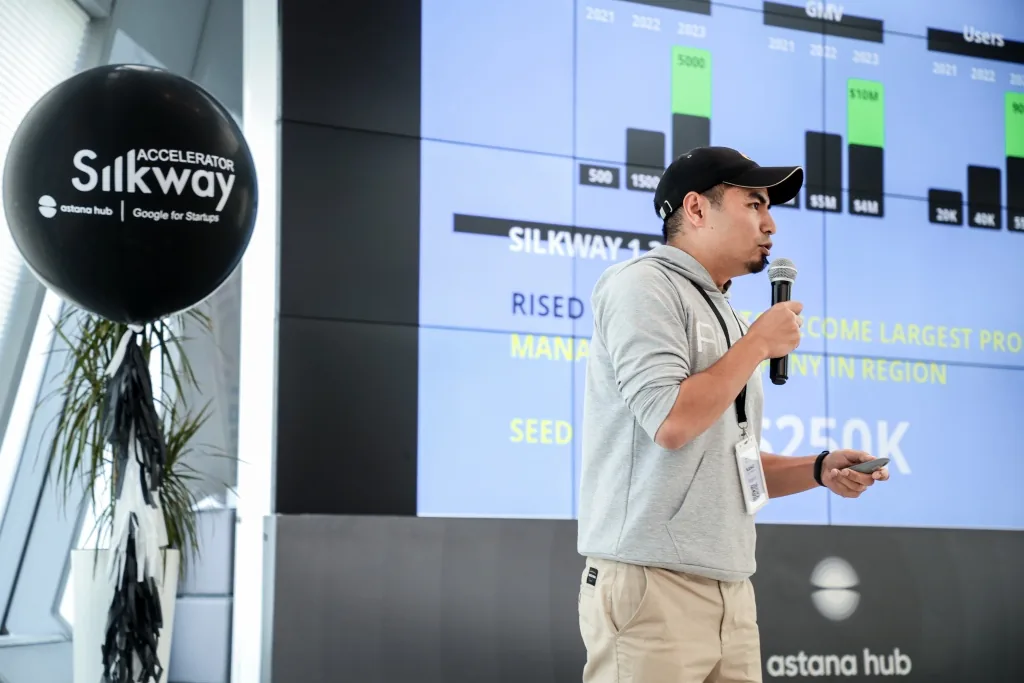
Differences between the Chinese and Kazakh markets when launching a startup
The main difference at launch is scale. The entire market of Kazakhstan is essentially two cities: Almaty and Astana, about four million people. For comparison, this is one medium-sized city in China. There are many more clients and businesses.
For example, our largest client in Kazakhstan manages 150 apartments — this is a serious player in Almaty. In China, the largest client has a million properties. The scales are completely different.
The second key difference is state support. In China, technology and export-oriented companies, especially in the field of AI, receive serious support.
An example is the auto industry: first, production was subsidized, then demand. Buyers are compensated for up to 50% of the cost of a car that meets the specifications. This stimulates competition and forms a strong market. Now, artificial intelligence is supported in the same way.
Comparing this directly with Kazakhstan is not quite correct: markets are at different stages, with different scales and resource volumes. But the key differences are precisely in the size of the market and the level of state support.
The main obstacle in Kazakhstan is the small market. All achievements that are managed to be achieved here are not taken seriously abroad. But the country has its advantages: the market is young, there are many free niches, the ecosystem is developed. It is easier to launch a product, test hypotheses, and raise investments at an early stage. There is access to knowledge, funds, and accelerators. An active community has formed: there is access to information, capital, and necessary tools. Founders support each other; almost anyone can be reached through one or two acquaintances.
When entering the Chinese market, deep localization is important. We adapted the language, interface, and support. Chinese is an ideographic language. One character takes up less space but conveys an entire word. Therefore, Chinese interfaces are more content-dense: more information fits on one screen. Simply translating the text is not enough. We had to completely rethink UX and UI.
Moreover, in China, it is not necessary to launch a separate application. Most users live within ecosystems — WeChat, Alipay, and others. We realized that it is simpler and more effective to create mini-applications directly within these platforms: everything is standardized, convenient, and familiar to users. This is an important insight for entering the Chinese market.
What are the features of the market in China
Chinese customers are more demanding of products. They are used to a wide range of functionality, speed, and convenience. Everything should work in one or two clicks, be as informative and logical as possible. This is especially important in the WeChat ecosystem — the first full-fledged SuperApp model, where you can already call a taxi, order food, buy goods, rent housing, and much more.
Users in China are guided by standards of applications such as WeChat and Alipay. Other services adapt to this model. Therefore, it is important to consider how they think and what they consider convenient. The Chinese audience expects that the product will be integrated into a familiar environment, and the interface will be simple, fast, and visually understandable.
If the product appeals to them, it spreads rapidly. Promotion in China is also different: they focus on videos, live streams, explaining everything visually — how to use the product, where to click, why it is needed. This is already coming to Instagram, but initially, everything was in TikTok and WeChat. Sales go around the clock, and communication is built through visual demonstrations.
Standard advertising in the style of "buy now" does not work there. Promotion is built through native formats, recommendations, real cases. The Chinese audience values trust and clear explanations.
Kazakhstan startup ecosystem
The startup ecosystem of Kazakhstan has been actively developing over the past five years and is approaching maturity. Stable players, support institutions, and a formed entrepreneurial community have appeared. At the Pre-Seed and Seed stages, it is already possible to attract investments, and funds are ready to invest up to the A round.
Strong founders and projects with a clear business model and monetization are becoming noticeable. Unlike earlier copies of Western ideas, today's startups are more mature — they know how to create a product, scale it, and enter the international market.
The state is actively involved — new funds totaling $1 billion have been launched. More and more projects are oriented towards a global level, and they do this with a quality product and confidence in resources — whether it is infrastructure, financing, or access to a professional community.
The next step is the creation of funds and instruments for financing the A round. This will open the path to global scaling and improve conditions for investors and M&A. Such cases already exist, but there should be more. As soon as the ecosystem solves this task, development will significantly accelerate. We are close to this stage — it remains to refine the infrastructure.
Plans
Initially, we focused on short-term rentals, but now we are expanding into medium- and long-term rentals — this market is actively growing. In Kazakhstan, it is still in the shadows: not digitized, not legalized, no regulation, and anyone can call themselves a realtor. This creates risks — "gray" realtors and scammers appear who publish ads without restrictions on Krisha.kz or OLX and receive money.
With changes in the tax code, we realized that we could be useful to the rental market. We became an official tax agent after a year of work with the Committee of State Revenue of the Republic of Kazakhstan and now we can help self-employed landlords: prepare reports, receive deductions, and close documents. For many, this is unfamiliar and causes fear due to possible fines, so we are developing a simple product for legal housing rental and fiscalization.
Also, as a platform for self-employed individuals, we receive tax preferences — minimal personal income tax. This makes legal rental accessible. At the same time, we want to bring order to the realtor market: create verified profiles, reviews, a system of responsibility, and a "blacklist" of scammers.
Our plans by the end of the year are to enter medium- and long-term rentals, tax integration, and digital structuring of the realtor market.
The Tech on Telegram Follow The Tech on Telegram
Keep up with the latest technology and startup news.
Related reading







More from this author

News
zypl.ai begins operations in Japan and focuses on next-generation risk models
Mansur Ismagulov

News
Elon Musk's net worth has exceeded $700 billion for the first time
Mansur Ismagulov

Article Interviews
"Central Asian countries should build a joint ecosystem," — Bekhzod Ismoilov on the development of AI in the region
Mansur Ismagulov

Article Interviews
Bloom's Taxonomy and Engineering Levels: A Practical Growth Model
Mansur Ismagulov

Article Useful
How the IT industry in Azerbaijan developed in 2025: key events
Mansur Ismagulov

News
Tajikistan has become a new member of the regional innovation alliance Central Asian Innovation Hubs.
Mansur Ismagulov