How a London Business School graduate is building the largest robotics ecosystem in Kazakhstan
The Tech AI
Get the key points in seconds - a short summary from The Tech AI.
Sanzhar Shalkarbekov, founder of the ROBOTEK robotics school in Astana, discusses changes in engineering education and key skills for the AI era. Over 11 years, the project has trained more than 16,000 schoolchildren and over a thousand teachers, implementing social programs in 12 cities in Kazakhstan and abroad. In the future, technologies will become a basic tool of the economy, and competition will be between those who can effectively work with artificial intelligence.
In this interview, Sanzhar Shalkarbekov, founder of the ROBOTEK robotics school, discusses how engineering education is changing, which skills are becoming key in the AI era, and what the country’s technological future might look like in a few years.
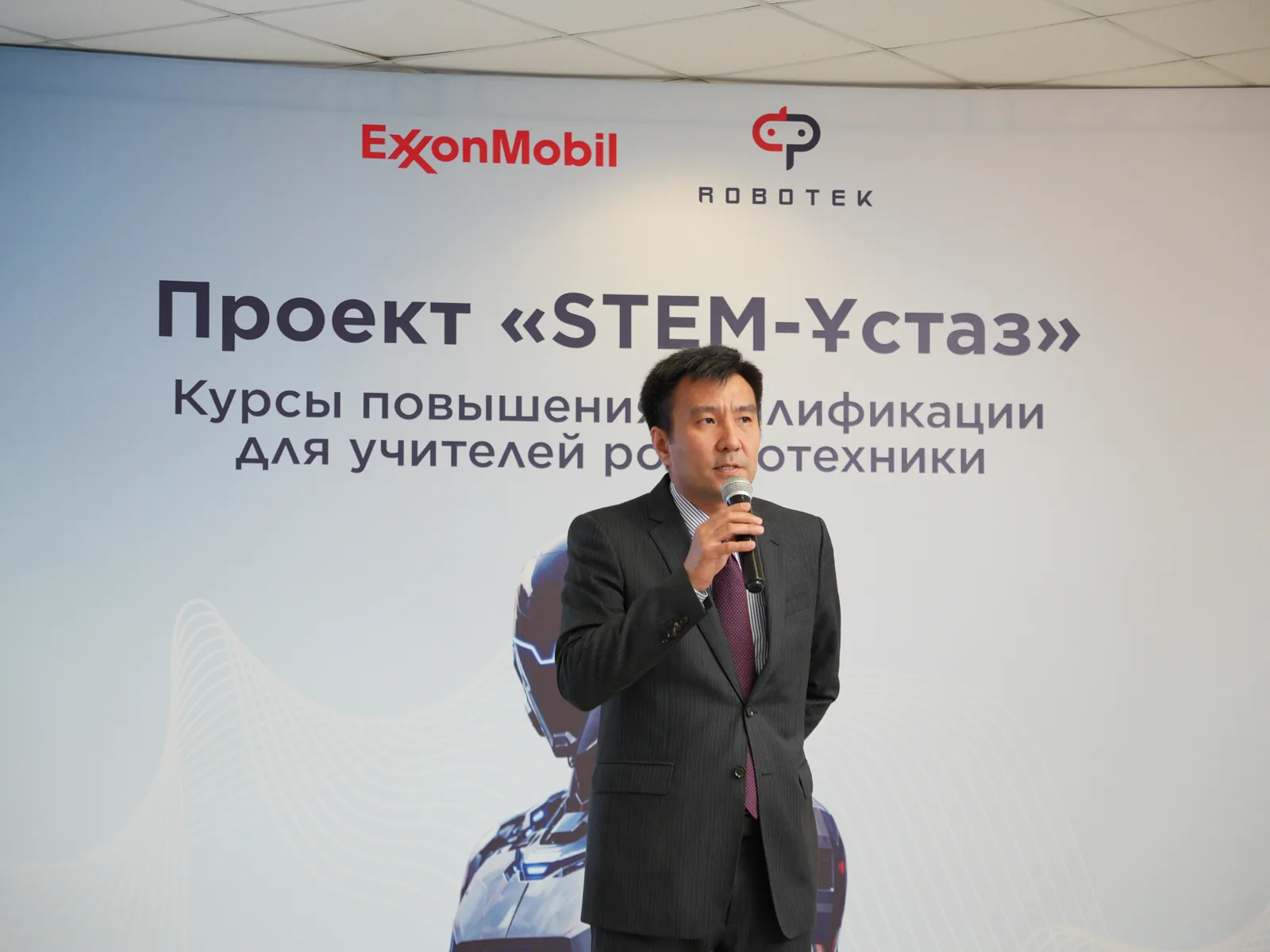
Sanzhar Shalkarbekov, city — Astana, CEO and founder of the ROBOTEK robotics school, Instagram
About myself
I am an alumnus of the RFMSH and NARXOZ University, and I hold an MBA from London Business School. My foundational education is in finance and economics. For over 15 years, I worked abroad—in London and Moscow—at organizations such as the European Bank for Reconstruction and Development, McKinsey, and AFK Sistema.
In 2015, I decided to return to Kazakhstan and establish a center for teaching children robotics. Thus, the ROBOTEK robotics school was born, which I founded using my own savings, without bringing in co-investors. I am the sole founder of the project.
Together with my team, for over 10 years we have been preparing children for the future: developing engineering education, teaching robotics, programming, and modern technologies. When we started, robotics was perceived more as an unusual hobby. Today, parents approach this field much more consciously and understand that it is one of the most effective tools for preparing children for a world of artificial intelligence, automation, and high technologies.
My task is to help the younger generation not just use technologies, but create them and transform the education system in technological fields.
Today, ROBOTEK operates in several regions of Kazakhstan, implements educational and social projects, hosts international robotics competitions, and participates in training future engineers and technology entrepreneurs.
About youth and education
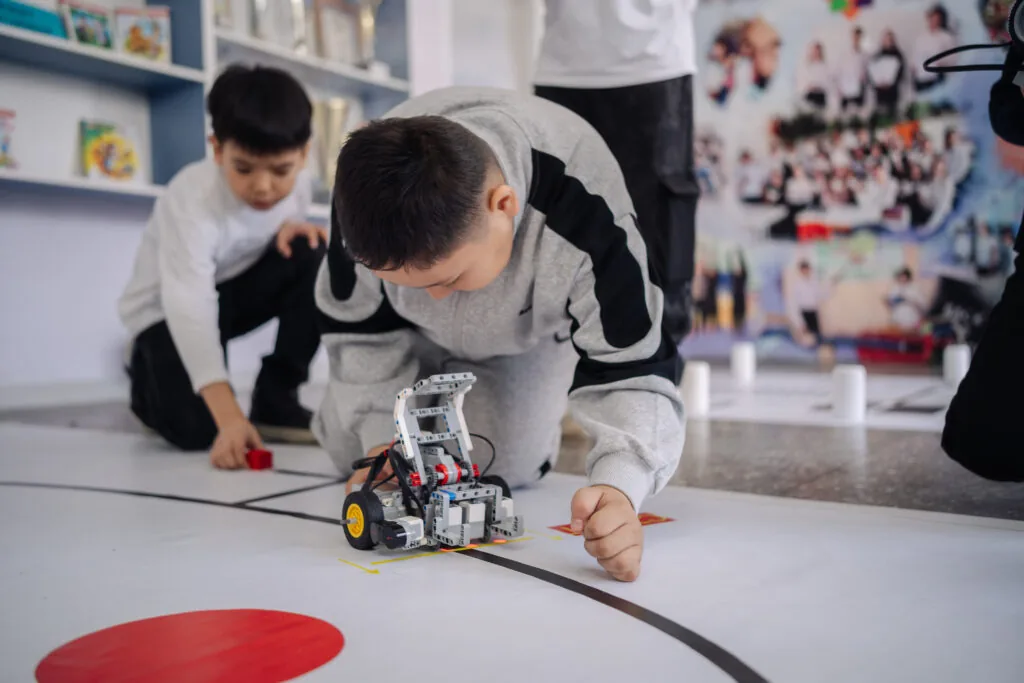
Robotics provides schoolchildren and students not only with technical skills but also with practical experience in creating real engineering systems. Students master programming, mechanics, electronics, working with sensors and algorithms, and participation in projects and competitions helps build a strong portfolio for university admissions and careers.
Moreover, robotics allows students to get acquainted with future professions already in school. Teenagers work with autonomous robots, computer vision, elements of artificial intelligence, and other modern technologies, gaining experience close to a real professional environment.
Beyond technical knowledge, robotics fosters curiosity, perseverance, critical thinking, teamwork, and communication skills. Children learn to analyze errors, refine solutions, and take responsibility for results, which cultivates an engineering and entrepreneurial mindset.
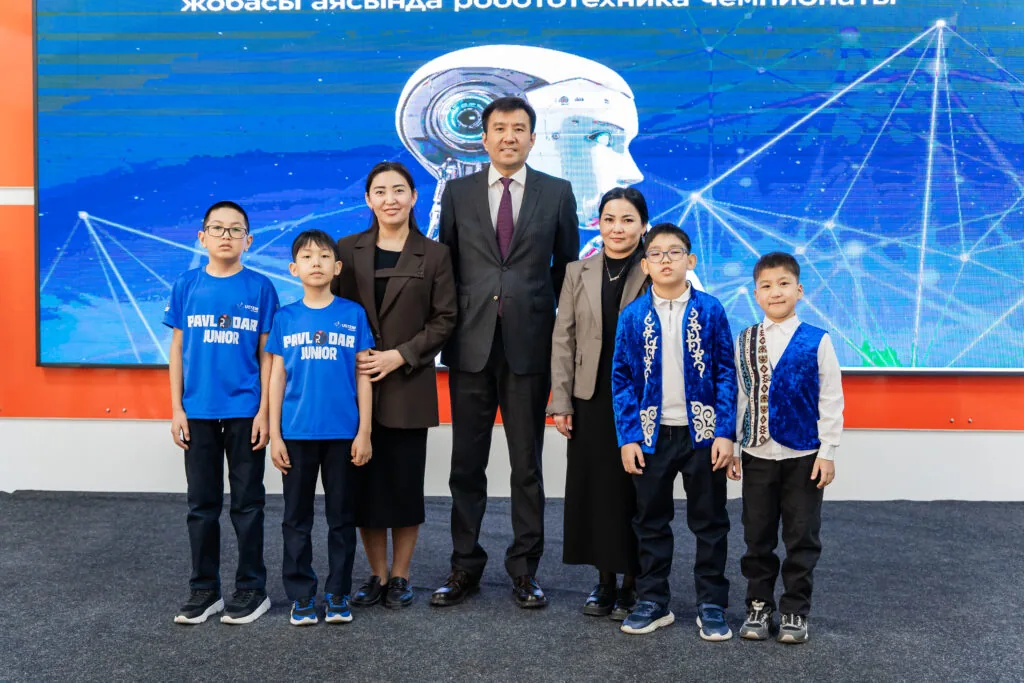
Over the past 11 years, the ROBOTEK team has built one of the largest engineering education ecosystems in Kazakhstan. More than 16,000 schoolchildren have undergone training, over a thousand teachers have been prepared, and educational and social projects are being implemented in the regions, as well as international programs that form the workforce for the artificial intelligence and high-tech economy. A significant portion of these initiatives is implemented on a non-reimbursable basis with the support of partners, including the Nursultan Nazarbayev Foundation, Allur, Kazzinc, ExxonMobil, Yandex Qazaqstan, Silkroad Innovation Hub, ForteBank, Qaztehna, Qaztech, as well as “Astana Daryny,” TechnoWomen, Caravan of Knowledge, and other organizations.
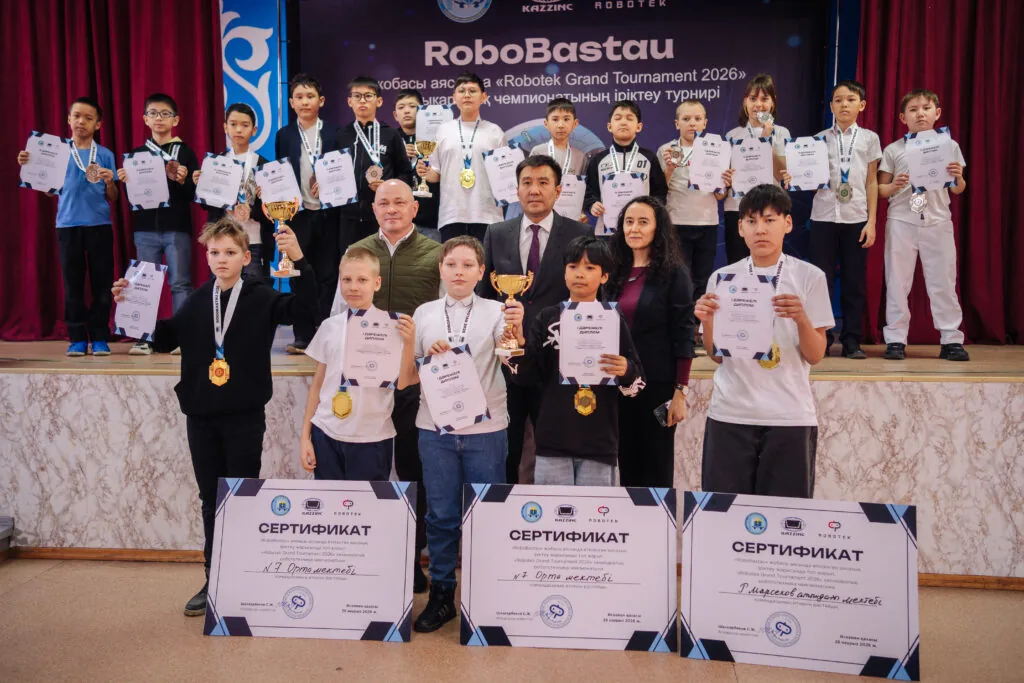
As part of these projects, 127 teams have become prize-winners at international championships. In 12 cities in Kazakhstan, more than 5,100 children from 71 schools have taken free robotics courses as part of the Ozyq Urpaq and RoboBastau programs. Over 1,000 computer science teachers have completed the author’s 80-hour advanced training courses, which are included in the registry of the Ministry of Education. The ROBOTEK team has also implemented educational projects in Azerbaijan and Tajikistan.
A separate area is competitive robotics. The Robotek Grand Tournament has been held for five years and annually brings together more than 3,000 participants. About 220 teams perform in the finals, including 45 international teams from Central Asian countries, Azerbaijan, and Turkey.
The RoboTechnoGirls program is also developing, under which more than 160 schoolgirls have received free training in robotics and artificial intelligence, aimed at reducing gender stereotypes in STEM education. In 2025, the project became a nominee for the People & Projects award in the Social Impact Award category.
In recent years, interest in robotics in Kazakhstan has grown significantly. The number of competitions, educational programs, and private initiatives has increased, and the first startups and projects for developing robotics solutions have appeared. If previously robotics was perceived as additional education for enthusiasts, today it is becoming an important part of workforce preparation for the digital economy.
Robotics has ceased to be exotic. Ten years ago, parents asked why it was necessary and perceived the classes as playing with construction kits. Today, the main question sounds different—how to enter this field and how to develop in a technological direction. This reflects a more conscious attitude of society toward engineering education and future professions.
Educational infrastructure in universities is also developing separately: departments and specialties in robotics and mechatronics are appearing, and work with schoolchildren is strengthening through olympiads and engineering competitions. As part of such initiatives, including the Robotek Grand Tournament, leading universities—KBTU, Toraygurov University, and Energo University—provide grants to winners, supporting talented schoolchildren and stimulating their choice of engineering professions.
The international effect is also clearly visible: participants come from different countries, and participation in championships becomes an important educational experience for them. Such cases show that robotics is already performing the role of an international social elevator.
Among the strengths of Kazakhstan are the high interest of youth in technology and the large number of talented schoolchildren and students. The main challenges remain the lack of practice-oriented learning, engineering laboratories, and closer ties between education and industry needs.
To strengthen technological development, Kazakhstan needs to systematically invest in education and engineering competencies from an early age, as well as support technological entrepreneurship through benefits and reducing barriers for startups. Technological leadership is formed when a country exports not raw materials, but knowledge and engineering solutions.
About the future of technology
Artificial intelligence is becoming one of the main factors transforming the labor market. This is less about the disappearance of professions and more about changes in their content. AI is gradually taking over routine, repetitive, and standardized tasks—processing standard information, filling out documents, preparing standard reports, call center work, and other similar operations.
Against this background, demand is growing for specialists capable of creating and managing complex technologies. First of all, these are engineers, roboticists, automation specialists, energy sector experts, microelectronics specialists, and industrial system experts. At the same time, there is an increasing need for experts in artificial intelligence, data, and software—those who develop, implement, and control AI systems.
Professions related to human interaction retain their significance: teachers, doctors, psychologists, mentors, and team leaders. Trust, empathy, leadership, and motivation remain areas where the human role remains key.
The role of entrepreneurs and innovators is growing separately; they see new opportunities and create products at the intersection of technology and various industries. Specialists at the intersection of disciplines are also becoming increasingly in demand—engineers with an understanding of business, doctors using AI tools, educators working with digital platforms, agronomists, and specialists applying robotics and data analysis. It is these hybrid competencies that will define the future labor market.
The main question today is not whether artificial intelligence will replace humans, but whether humans will learn to use it effectively in their work. In the future, competition will not be between people and AI, but between those who know how to work with AI and those who do not. Therefore, it is critically important to develop not only technical knowledge but also engineering thinking, creativity, the ability for continuous learning, teamwork, and adaptability.
The impact of artificial intelligence on robotics is already manifesting through the concept of Physical AI—artificial intelligence embedded in physical systems. Robots are becoming more autonomous and adaptive: they recognize objects better, understand the surrounding environment, make decisions, and interact with humans without rigidly predefined algorithms. This is forming a new generation of machines capable of learning and acting in real time.
The combination of robotics and AI is already stimulating the emergence of new startups worldwide, especially in the US and China, and accelerating industry development. At the same time, new challenges are arising—issues of safety, human-robot interaction, and data protection.
If we imagine Kazakhstan in five years, we can expect a significantly wider application of AI and robotics in education, industry, logistics, agriculture, and public administration. These technologies will gradually become part of the everyday economy and social infrastructure.
AI will cease to be perceived as a separate technology and will become as basic a tool as the internet or a smartphone. In these conditions, the key factor for development will be the availability of a sufficient number of specialists capable of effectively working with new technologies—this will determine the competitiveness of countries in the digital economy.
Plans
In the coming years, we have identified several strategic directions.
The first is the development of artificial intelligence in school education. If for the last 10 years we taught children robotics and programming, the next 10 will be associated with preparing specialists capable of creating AI solutions and working with them effectively. In this regard, we are considering the introduction of artificial intelligence courses at the intersection with robotics.
The second direction is competitive robotics at the international level. We want Kazakh schoolchildren to regularly participate not only in national but also in rapidly growing Asian championships, which are becoming one of the most dynamic platforms in the world. Recently, our teams competed for the first time at the international Matrix AI Robot Cup championship in Taiwan—this is already the tenth foreign tournament in our international practice, and we see great potential in this direction.
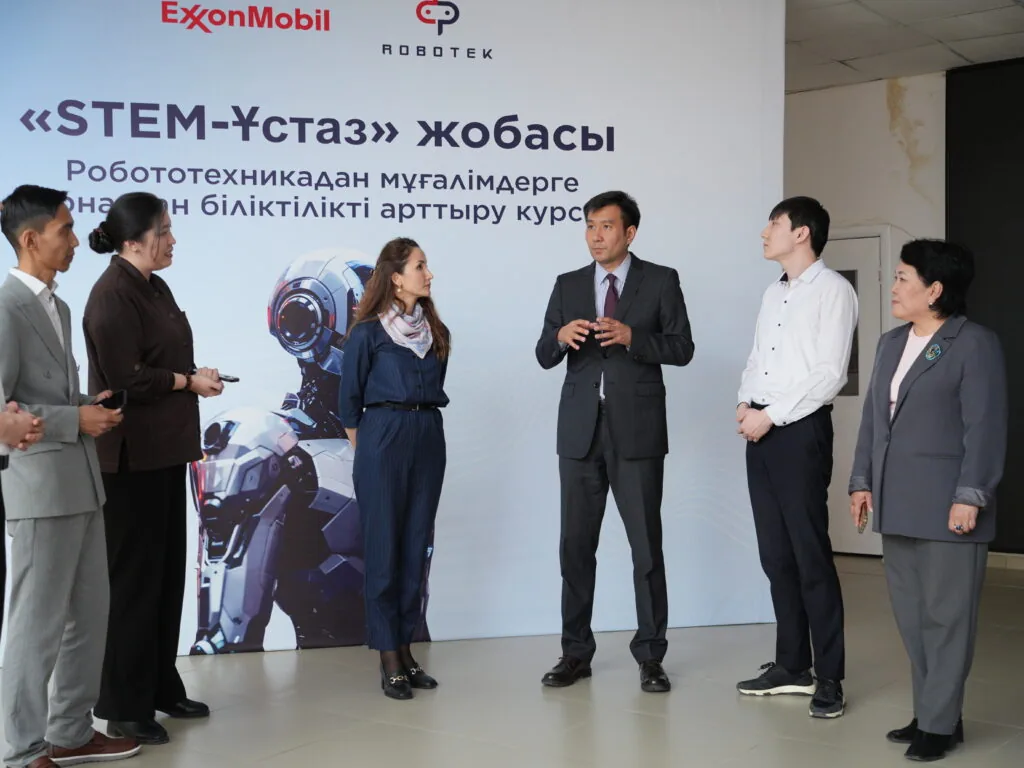
The third direction is teacher training. No country can achieve a technological leap without strong teachers, so we will continue to scale advanced training programs in robotics and STEM disciplines, especially in regional and rural schools.
The fourth direction is expanding children’s access to engineering education in the regions. We plan to launch new social projects in collaboration with business and foundations so that talented children can engage in robotics regardless of their place of residence and family income level. This will help expand equal opportunities and engage more youth in the engineering field.
A separate focus remains the development of the Robotek Grand Tournament—we view it as one of the largest platforms in Central Asia for engineering creativity, robotics, and artificial intelligence.
We are also strengthening the direction of interaction with industrial and service robotics projects so that graduates can apply their knowledge in the real economy, and the industry, in turn, can form a demand for relevant educational programs. In this sense, it is critically important to build close ties between education, business, and industry.
In the long term, our goal is to form an ecosystem in Kazakhstan where a child can go through a path from their first acquaintance with robotics in school to participating in international competitions, creating their own technological products, startups, and launching high-tech businesses.
The Tech on Telegram Follow The Tech on Telegram
Keep up with the latest technology and startup news.
Related reading



More from this author

Article Useful
How to protect your accounts from hacking: 8 settings you should check today
The Tech

Article Useful
500 Global: How the Accelerator Works and Who Can Receive Investments
The Tech

Article Interviews
Game Development in Central Asia: Arkady Moldavski on Developing Reverb and the Growth of the Industry
The Tech

Article Useful
Google, Tesla, BlackRock, and the IMF: Where to Apply for an Internship in Fall 2026
The Tech

News IT
Tesla unveiled the flying electric car Roadster
The Tech

News IT
Intero Biosystems startup won the Startup Battlefield at TechCrunch Disrupt 2026
The Tech