How Vibe Coding is Changing the World of Startups and Solo Founders
Author - Mansur Ismagulov
The Tech AI
Get the key points in seconds - a short summary from The Tech AI.
Venture investor Nurdaulet Bazylbekov describes "vibe coding," proposed by Andrey Karpata in early 2025, as a software development paradigm through natural language using AI. This contributes to the rise of solo-founders: according to Carta data for 2024, their share among new startups reached 35%, and in the AI sector — 36–38%. Tools like Lovable accelerate development, allowing one person to generate up to $17 million in annual revenue and lowering the barrier to market entry.
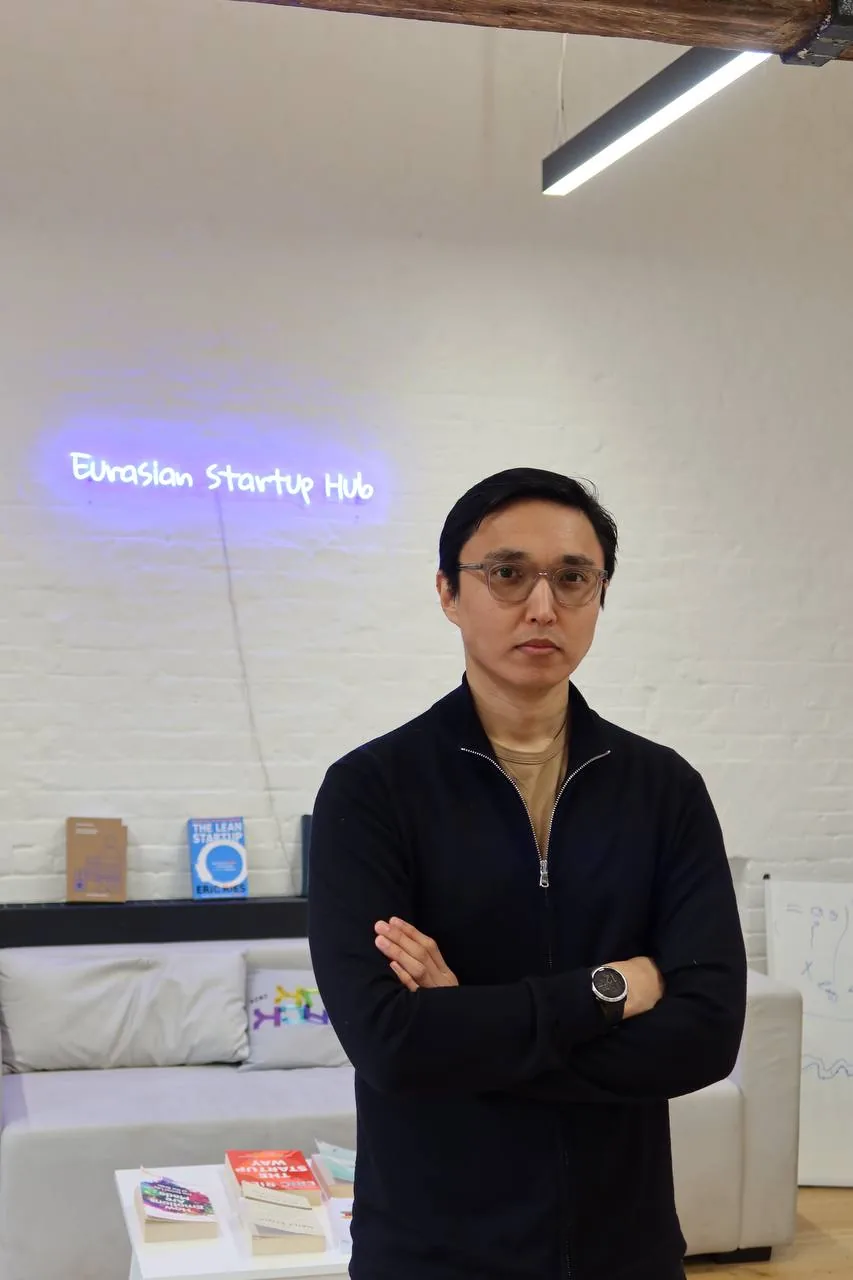
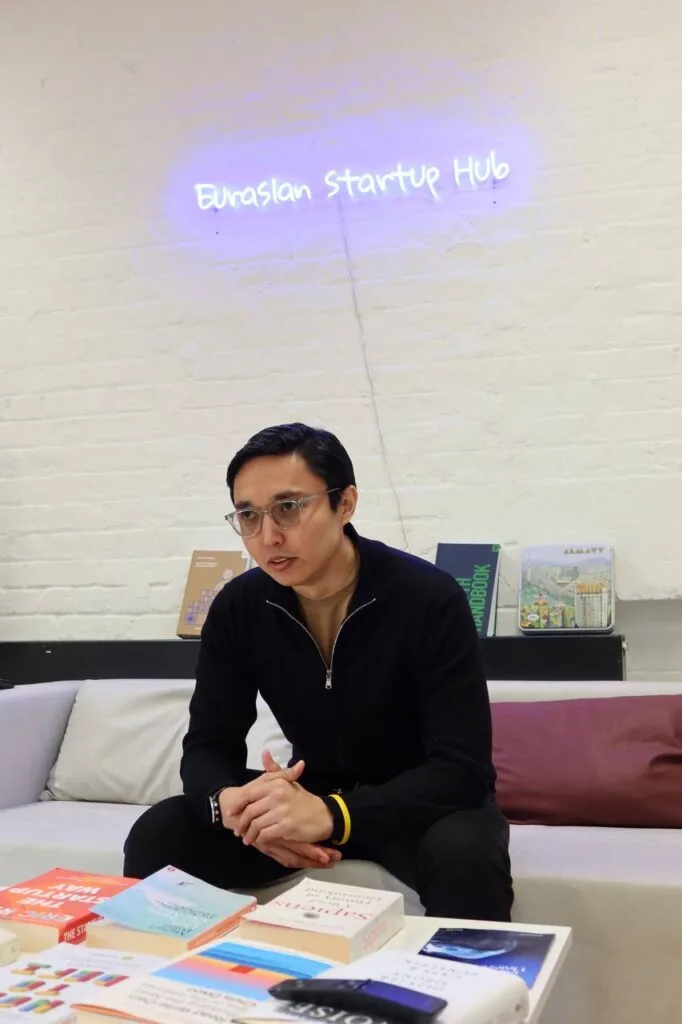
Nurdaulet Bazylbekov, venture investor and founder of Eurasian Hub
Vibe Coding is a new paradigm, first mentioned by Andrej Karpathy, co-founder of OpenAI, in early 2025. Instead of writing every line of code, programmers simply describe the problem in natural language and let AI generate the code. The human role shifts to prompting, testing, and guiding the output. Essentially, developers use plain speech for the iterative assembly of software, while AI performs the more tedious work of writing and refining code.
Although intriguing, experts emphasize that this approach has limitations. As Karpathy himself noted, vibe coding is most useful for quick projects: “It’s not really coding — I just see things, say things, run things, and copy-paste things, and it mostly works,” he said, acknowledging that AI sometimes needs guidance to fix errors. Vibe coding can be ideal for prototyping, as the speed at which AI can generate code is an order of magnitude higher than even the most experienced programmers. Ideally, vibe coding should be viewed more as a creative accelerator rather than a complete replacement.
The Rise of Solo-Founders
Behind this trend lies a clear tendency — a surge in solo-founders. Data from Carta’s 2025 report shows that about 35% of all new startups in 2024 had only one founder, compared to 17% in 2017. That is, the number of solo-founded businesses has more than doubled over the last decade. In the AI sector, the picture is even more obvious: solo-founders now lead approximately 36–38% of new AI startups, compared to less than 20% just a few years ago. These one-person teams benefit from efficiency — the same study claims that solo-founders “save 22% on initial capital and reach revenue faster,” leveraging AI agents and no-code tools. In practice, an ambitious individual using AI assistants today can perform work that previously required a small team.
This shift indicates that AI tools are lowering the barrier to entry — more founders can launch their own projects — even if venture capital markets remain fairly conservative. Leaders in the tech world agree — the era of “AI applications” means that individual entrepreneurs can build global companies on their own, a scenario unthinkable just a few years ago.
At Eurasian Hub, we also observe a similar dynamic within our community of founders. For example, at a hackathon we recently organized, one of the partners was the Swedish startup Lovable — which has simply become a rising star in the venture world in 2025. Just three months after launching their product, they reached $17 million in annual revenue, 30,000 paying customers, and over 25,000 new projects created daily on their platform. The presence of such a partner at our hackathon significantly influenced the team structure of participants. At our previous hackathons, the number of single-person teams never exceeded 5–10% of the total. This time, however, this figure reached 50%, meaning every second team consisted of only one participant. This intrigued us greatly, and in our survey of participants, we received quite similar answers — that everyone comes with some idea, and during team formation, as often happens at hackathons, participants see less value in joining forces around one idea or working on someone else’s idea, since AI tools like Lovable provide the opportunity to implement a project independently at a basic level.
A similar trend is also visible among our investment portfolio and various accelerators. Our recent investment in the startup Nozomio, where CEO and solo-founder Arlan Rakhmetzhanov — a dropout who built a startup single-handedly that attracted $1 million from investors in London — exemplifies this. This shows how AI replaces many team members in the early stages of building a startup. The same dynamic is visible in accelerators like Y Combinator, where, over the past year, there has been a much higher acceptance rate for single-person teams ready to handle both technical and commercial aspects.
Looking Ahead
The combination of vibe coding and solo-founderism points to a new model of entrepreneurship: one where people can launch applications and services with minimal coding knowledge. Industry observers are already predicting one-person AI unicorns. Forbes, for instance, states that “billion-dollar one-person companies are no longer fantasy — they are inevitable” thanks to advances in AI and cloud platforms. If LLMs continue to improve, it is quite likely that more individual innovators will emerge, using conversational coding and AI assistants as their “engineering team.” The CEO of Anthropic, a startup valued at over $60 billion and invested in by founder Jeff Bezos, also recently shared the thought that by 2026 we may see a one-employee unicorn startup.
However, most experts expect this trend to coexist with traditional teams rather than completely replace them. At present, vibe coding seems best suited for prototyping and small projects, while founders and engineers remain vital for scaling. Looking ahead, we can expect the boundaries between developer, product manager, and designer to blur: future startups may well be based on the “vibe” of a single visionary aided by powerful AI. In any case, the rise of AI-driven programming and the growth of solo-founders are changing how innovation happens — and this is a trend worth watching closely in the coming years.
The Tech on Telegram Follow The Tech on Telegram
Keep up with the latest technology and startup news.
Related reading







More from this author

News
zypl.ai begins operations in Japan and focuses on next-generation risk models
Mansur Ismagulov

News
Elon Musk's net worth has exceeded $700 billion for the first time
Mansur Ismagulov

Article Interviews
"Central Asian countries should build a joint ecosystem," — Bekhzod Ismoilov on the development of AI in the region
Mansur Ismagulov

Article Interviews
Bloom's Taxonomy and Engineering Levels: A Practical Growth Model
Mansur Ismagulov

Article Useful
How the IT industry in Azerbaijan developed in 2025: key events
Mansur Ismagulov

News
Tajikistan has become a new member of the regional innovation alliance Central Asian Innovation Hubs.
Mansur Ismagulov