How an Uzbek is building the future of humanoid robots and attracting millions in Silicon Valley
In a joint feature by IT Park Uzbekistan and The Tech, Sanjar shared how his journey unfolded—from a boy herding sheep under the stars of Samarkand to the founder of a Silicon Valley startup that raised $2.5 million to build the foundation for global robotics.
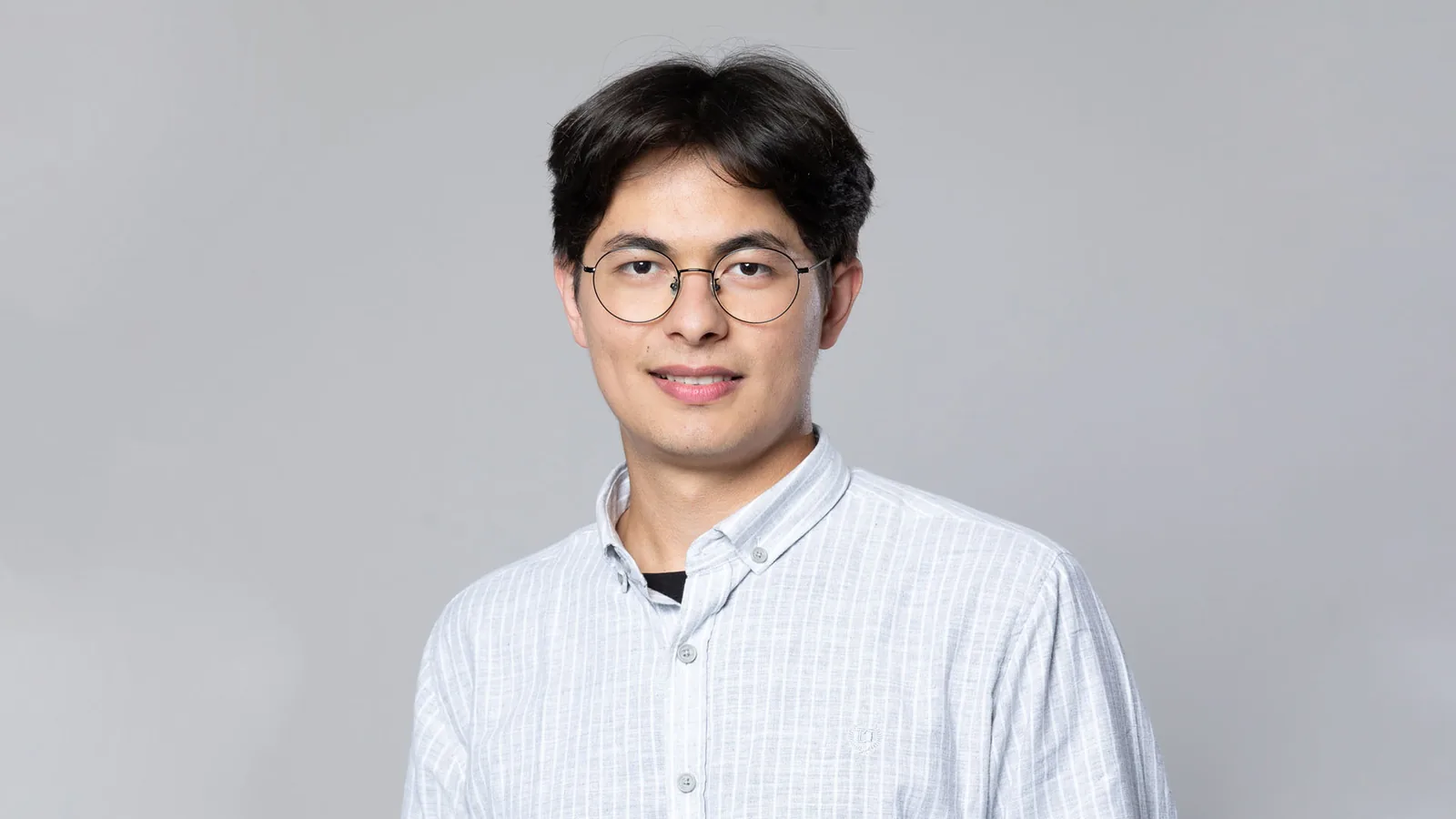
Sanjar Atamurodov is building one of the most ambitious platforms in global robotics — Humanola, a Silicon Valley startup that turns telepresence into the foundation of physical artificial intelligence. The company allows people from around the world to control humanoid robots with minimal latency, turning every operator action into training data for future physical AGI.
Sanjar Atamurodov, City — Samarkand, Founder of Humanola, LinkedIn
About Me
I was born in Samarkand — a city where childhood unfolds under endless stars and where dreams somehow seem closer. From an early age, I was drawn to technology: I took apart everything I could, trying to understand how mechanisms worked, and later — computers and robots.
After high school, I went to South Korea to study at KAIST — a leading university in engineering and robotics. There, I studied computer science with a focus on robotics, creating autonomous systems and drones. This experience became my starting point: I realized I wanted to work with humanoid robots and artificial intelligence for the rest of my life.
During my studies at KAIST, I tried to focus more on AI and robotics. During academic semesters, I spent most of my time studying the theoretical aspects of AI and robotics, and during breaks, I interned at companies. In Korea, there are two vacation periods per year: summer and winter — each lasting about two and a half months. This gave me plenty of time to work on interesting projects at companies.
First Steps in the Profession: Computer Vision and Autonomous Robots
Upon returning to South Korea, I interned at StoneLab Inc, where I participated in the development of a medical diagnostic application based on computer vision: performing data labeling, training neural networks, and integrating the model into the backend. At that time, I also created an API for biometric authentication — my first system used by real users.
Working at Macroact Inc. became the next important milestone. There, I worked on autonomous navigation for a quadruped robot, optimizing algorithms, tuning behavior, and configuring Gazebo simulations — a program for creating and running virtual worlds with robots and objects, allowing them to be tested without risking real equipment. This was a huge springboard for transitioning to more complex robots.
During my studies at KAIST, I also tried my hand as a researcher at AVE Lab and IRiS Lab at the university. At AVE Lab, I worked on algorithms for autonomous vehicles. At IRiS Lab, I worked on perception systems for autonomous vehicles — from processing LiDAR data to lane detection. This stage gave me an incredible depth of understanding of how a robot "sees" the world.
Industry: From Warehouse AMRs to Quadruped Robots
After research, I moved into the industry. At Digitrack Inc, I worked on autonomous mobile robots for warehouse automation.
Later, at Raion Robotics, I worked on the locomotion of quadruped robots. This was a real challenge — making the robot move stably, adapt to surfaces, and perform complex maneuvers.
Study and Work in the USA: Integrating Engineering and Science
I moved to Atlanta and enrolled at Georgia Institute of Technology — one of the strongest centers in the world for robotics and artificial intelligence.
Studying in the USA became a turning point for me. Here, I gained deep fundamental knowledge in robot control, neural networks, perception systems, and autonomous behavior. I took courses on robotic manipulators, motion optimization, machine learning, real-time algorithms — everything that forms the basis of modern robotics.
Alongside my studies, I worked as a robotics engineer at Atlanta Ventures, where I built mobile robots for security and inspection tasks. It was then that I began to feel how theory connects with practice — how knowledge from classrooms instantly turns into code, algorithms, and moving machines.
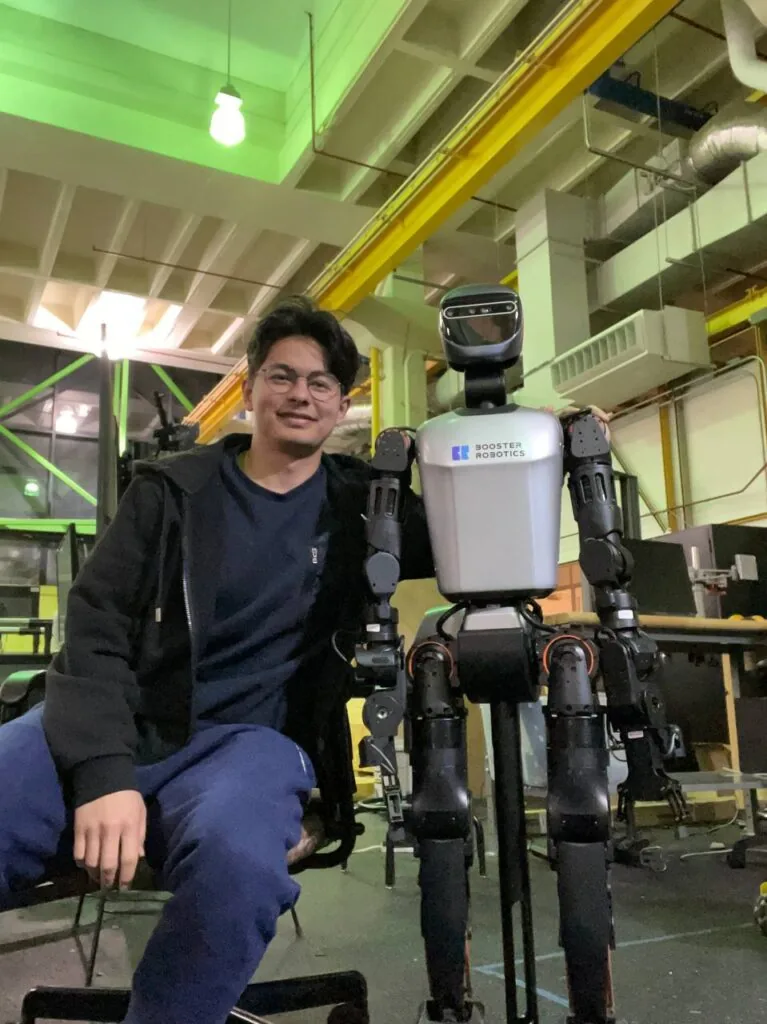
After that, I continued my research career at Georgia Tech, where I engaged in scientific research in the field of humanoid loco-manipulation — the ability of humanoid robots to coordinate movement: walking while lifting objects, opening doors, and performing complex sequential tasks.
And it was at that moment that it struck me: large language models made a breakthrough thanks to the huge volume of data from the internet. But robots don't have such an "internet" — they are literally starving for data. I realized that the only scalable way to create high-quality training data is telepresence, where an operator controls the robot. But no one in the world was doing this systematically.
Then I had an idea that turned my life upside down: to build a platform that would give every roboticist a tool for telepresence and create a data infrastructure for physical AI. Thus, Humanola was born in June 2025.
We are still in the early stages: mass deployments for automating physical labor have not yet arrived. Humanoid robots working in factories, warehouses, or homes in the US do not exist yet — but this is about to happen very soon.
What Problem Humanola Solves
Today, data for training robots is isolated within companies and laboratories. Everyone creates their own small datasets, no one shares, and the industry is literally stuck. It's like a world where every AI solution from 2023 was trained on its own small local internet.
Before Humanola, every company created its own infrastructure for data collection — it was expensive, slow, and inefficient. Many simply worked with existing limited sets, which slowed down development. There was no unified ecosystem that combined data and provided access to it.
Our team is inspired by a future where robots perform dangerous, routine, and monotonous work, while humans engage in creativity and strategy. The only barrier between today and this future is the lack of data for physical AI. By solving this problem, we accelerate the future by years.
I realized that the problem is not just the fragmentation of individual solutions, but the lack of an industry platform to which all market players could connect. Duplication of efforts and data isolation are slowing down the development of the entire field. It was this understanding that became the catalyst for creating Humanola.
What Humanola Does
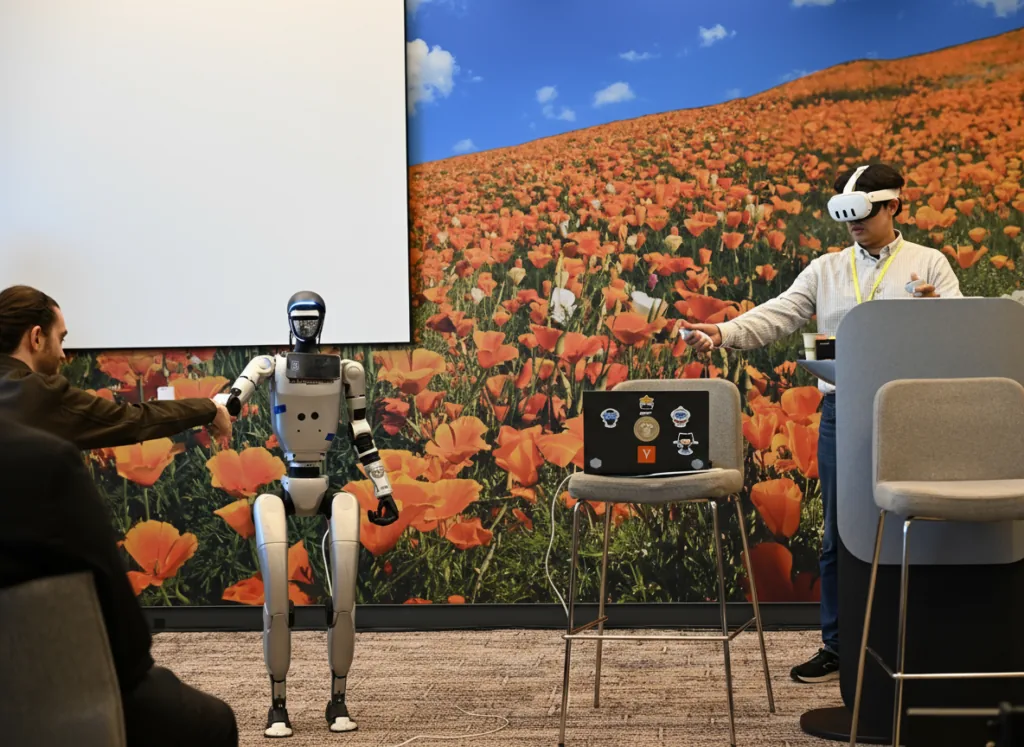
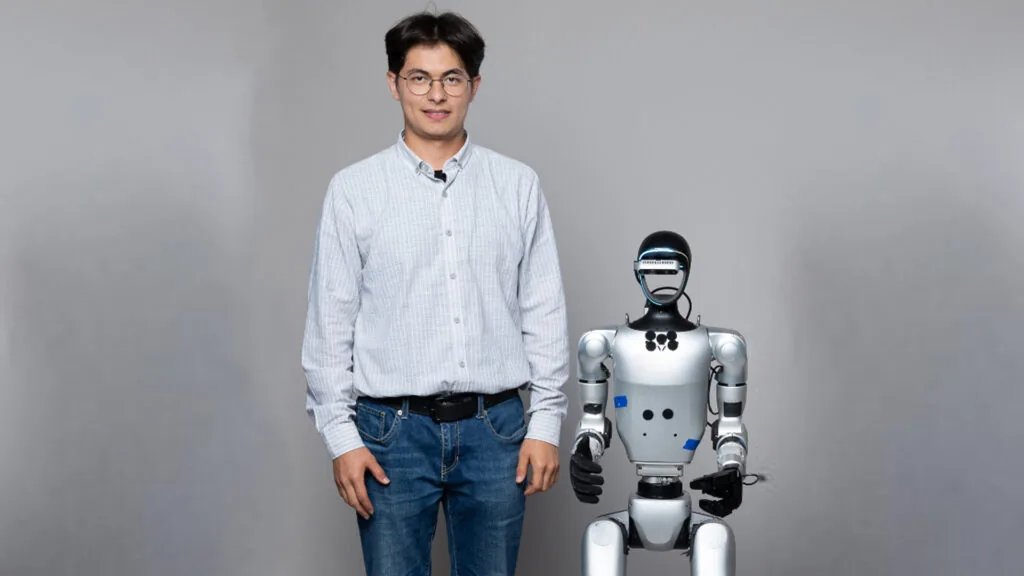
Humanola develops a platform for remote robot control and a comprehensive infrastructure for collecting, processing, and analyzing physical data.
The platform consists of two key components:
— operators in VR headsets control robots in real-time with minimal latency
— all session data is automatically collected, cleaned, labeled, and turned into ready-to-use datasets for AI training.
As a result, companies receive a powerful tool to accelerate the development of their robots.
Humanola is the only independent platform not tied to specific equipment and providing a full cycle: from robot control to complete data processing. Other solutions require creating their own infrastructure or do not provide such a level of integration.
Among our clients are companies implementing robots in logistics, agriculture, and warehousing, as well as developers and researchers who need quick access to high-quality data.
On Difficulties
The most difficult part was achieving minimal control latency over long distances and integrating various types of equipment. This required deep technical improvements at all levels — from the VR interface to network protocols and cloud infrastructure.
We overcame this with our own real-time network infrastructure based on UDP protocols with error correction and adaptive streaming, similar to top VR games. For long-distance control, we deployed regional edge servers to reduce latency to within 80-100 ms even between continents.
We ensured equipment integration through a unified API for robots — abstracting joint control, sensor streams, and safety protocols, so that any humanoid or manipulator could connect with minimal configuration.
The breakthrough happened when we combined private 5G networks in test environments with GPU-accelerated video encoding/decoding on the operator and robot side. This gave stable control with latency below 100 ms — for example, from Tashkent to San Francisco. Thus, we proved that global scalable telepresence is real.
The main motivator not to give up was faith in the mission and the realization that we are building not just a product, but the foundation for a new generation of AI and robotics.
The technical breakthrough in remote control with latency of less than 100 ms was critical — it was then that the concept became reality, and the product entered the market.
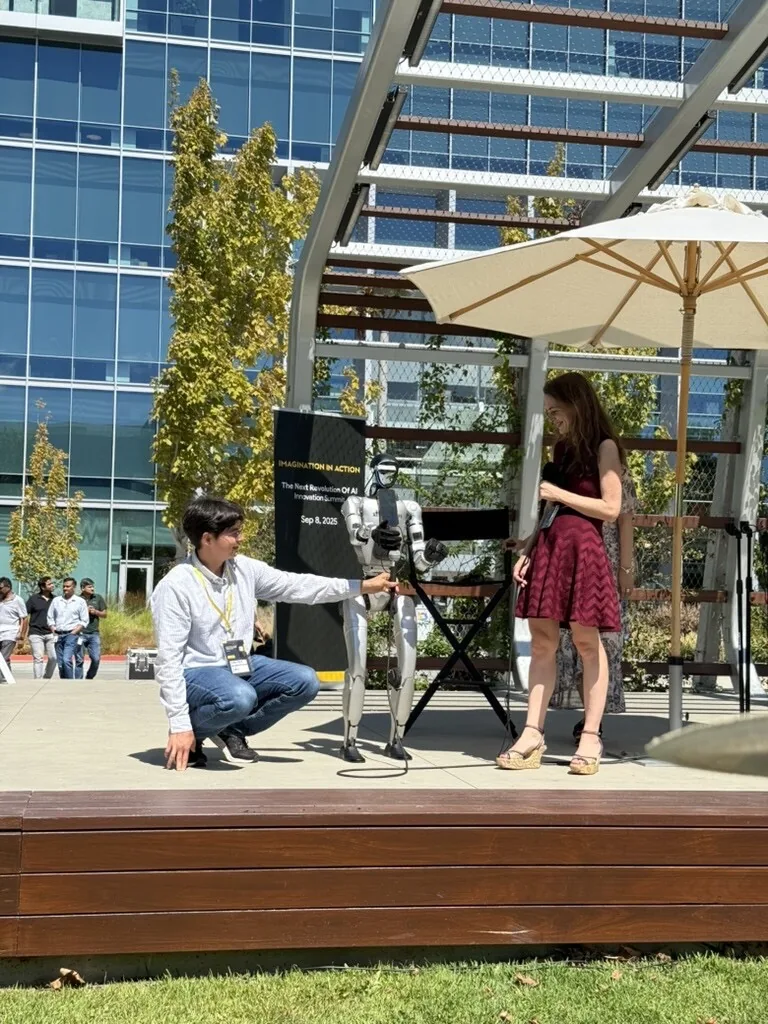
Achievements
I am most proud of in our work:
- Real clients who note a radical improvement in their work. To date, we have two B2B clients — both companies are developing humanoid robots and actively using our platform for telepresence and data collection. We made two sales at an early stage, which confirms the value of the solution: clients note a development acceleration of 30-40% due to ready-made datasets.
- Rapid transition from idea to industrial platform. First, remote telepresence allows clients to instantly deploy robots and control them remotely from anywhere in the world. This means companies can start working with robots immediately, without a long period of developing local control systems. Second, our data processing pipelines handle massive volumes of data and transform raw sensor data into datasets ready for model training. This allows companies to achieve autonomy of their robots significantly faster than with traditional approaches.
- Uniting a strong team around a big mission. Today, our team consists of five people: three co-founders and two engineers. I lead the company as CEO, managing both the technical part and the strategic vision of the company. Our CTO is Zhaoyuan Gu, PhD, with whom I conducted joint research on humanoid robots at Georgia Tech. Our COO is Akbar Erkinov, responsible for the company's operational issues and ensuring the efficient functioning of the organization.
We completed a seed round of $2.5 million from American venture funds and business angels, the first clients are already implementing the platform, and we see confirmation of the relevance of the problem and the value of the solution. Details on revenue and number of users are not disclosed yet due to the early stage.
We are supported by leading venture funds, and our clients are companies seriously investing in robotics. The pace of implementation is the best proof of effectiveness.
On Development in the USA, Korea, and Uzbekistan
The USA is a leader in developing the "brain" of robotics — artificial intelligence and software systems that allow robots to think and act like humans. This is exactly what drives the industry forward.
Korea has strong teams and constantly pushes the boundaries of technology. However, its scale is significantly smaller than in the USA. Korean companies often focus on hardware and innovations, but they lack the scale of the American market.
Uzbekistan is just at the beginning. Robotics here is in the early stages of development.
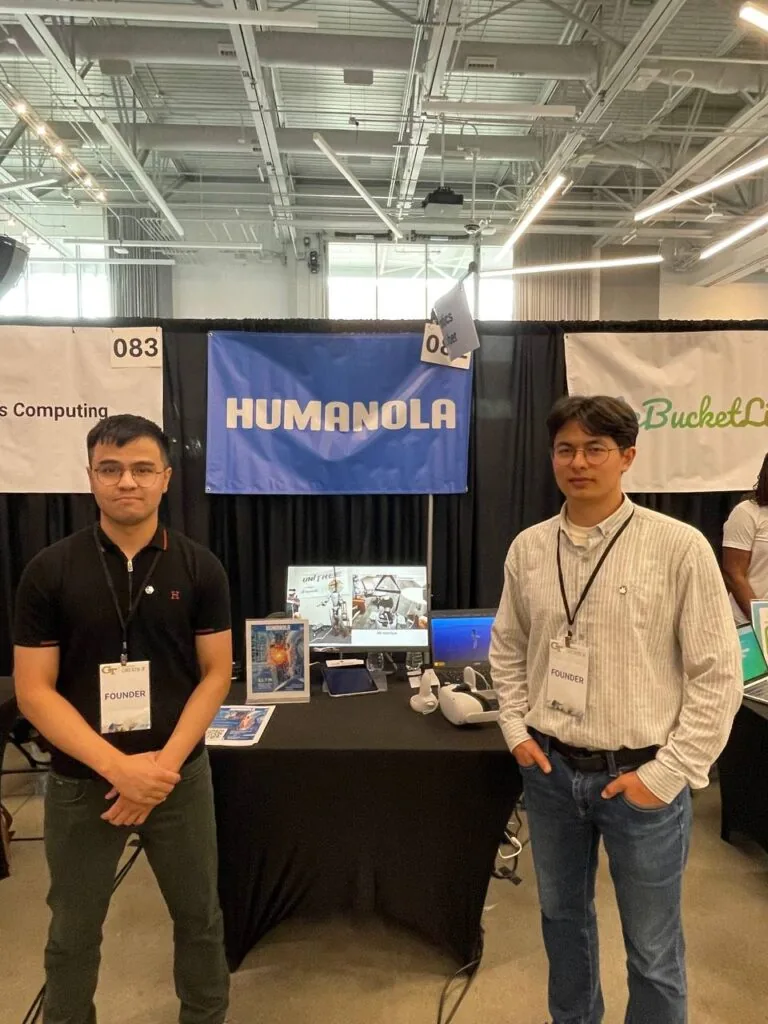
Plans
We aim to integrate Humanola into all major humanoid robot platforms in the USA and around the world, as well as become an infrastructure partner for industry leaders — Nvidia, Tesla, Google — in creating physical AGI.
As part of our expansion strategy for the first 12 months, we are targeting large-scale robot deployments through robotics manufacturers. We are already hiring telepresence operators from Uzbekistan who will remotely control robots working in the USA and other countries.
This creates huge economic opportunities — we are talking about thousands of new jobs in regions of Uzbekistan, while simultaneously scaling the volume of collected data. Operators can work from anywhere in the world, robots can perform tasks anywhere in the world, and the data will be returned for training increasingly sophisticated models. This is a win for the entire robotics industry, for job creation in developing markets, and for the development of physical artificial intelligence.
We want to accelerate the development of physical AGI — make robots mass assistants and forever change the approach to labor. Our mission is to create infrastructure that democratizes the industry and makes intelligent robots accessible everywhere.
Advice for Entrepreneurs
Dream big and don't be afraid to take risks. All significant achievements come on the edge of failure; the main thing is perseverance and consistency.
The Tech on Telegram Follow The Tech on Telegram
Keep up with the latest technology and startup news.
Related reading






More from this author

Article Useful
How to protect your accounts from hacking: 8 settings you should check today
The Tech

Article Useful
500 Global: How the Accelerator Works and Who Can Receive Investments
The Tech

Article Interviews
Game Development in Central Asia: Arkady Moldavski on Developing Reverb and the Growth of the Industry
The Tech

Article Useful
Google, Tesla, BlackRock, and the IMF: Where to Apply for an Internship in Fall 2026
The Tech

News IT
Tesla unveiled the flying electric car Roadster
The Tech

News IT
Intero Biosystems startup won the Startup Battlefield at TechCrunch Disrupt 2026
The Tech