How Uzbeks Can Access Investments in Telegram: An Interview with the Regional Director of Wallet in Telegram
FinTech in Uzbekistan is growing faster than many markets in the region and is already becoming a platform for launching global products. In this interview, we discuss why the country became the first point of official expansion for Wallet in Telegram, how embedded finance is developing, and why crypto is becoming a mainstream tool.
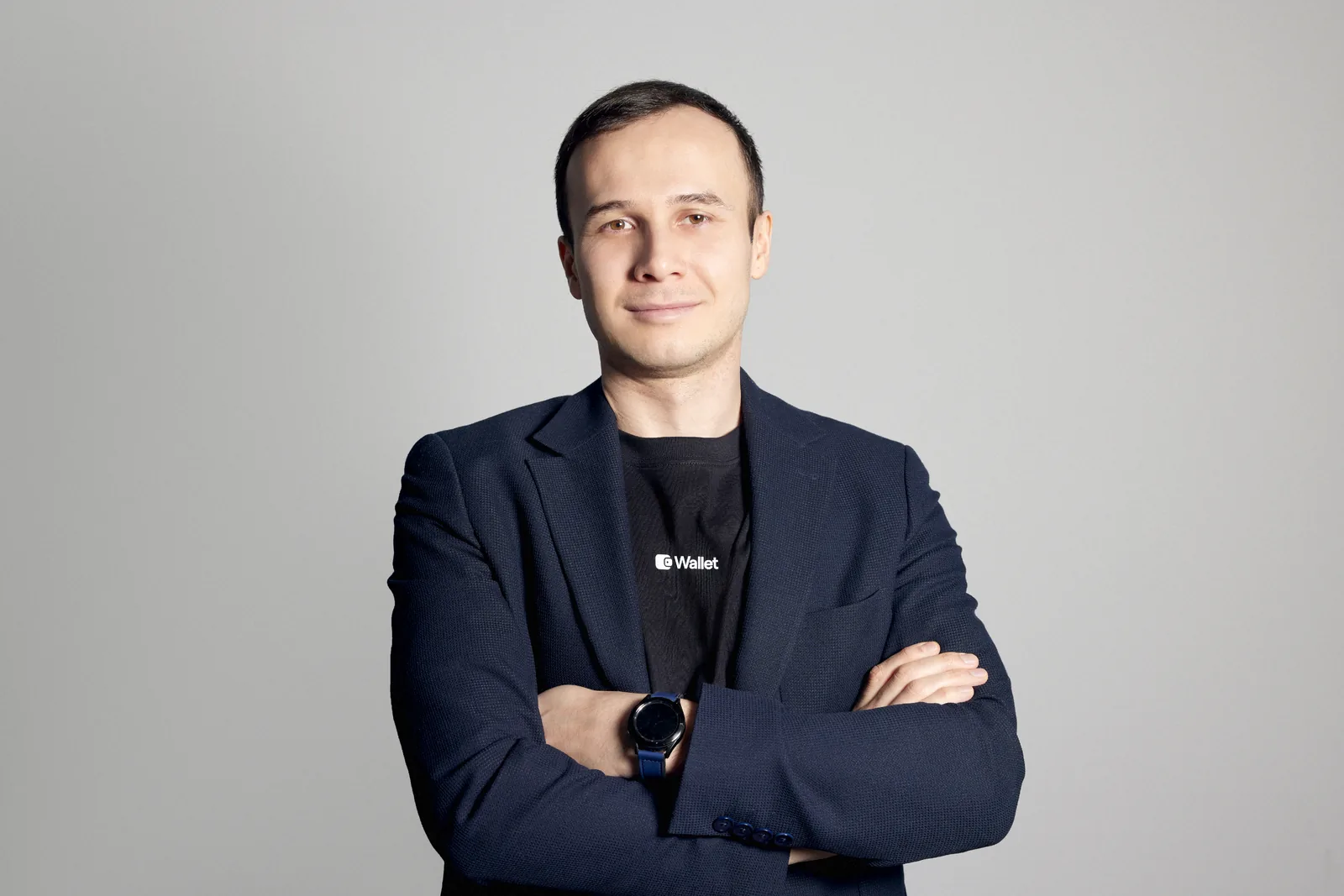
Diyorbek Mukhammedov, city — Tashkent, Regional Director of Wallet in Telegram, IT and FinTech expert, LinkedIn
About Me
I have been working in the FinTech industry since 2019. That’s when I began my journey in South Korea: I lived there for about six years, studied, and started my career as a marketing manager at a FinTech company specializing in money transfers.
Later, I moved into the position of Regional Manager for CIS countries. After returning, I continued to build my career leveraging this background.
Currently, I am the Regional Director of Wallet in Telegram. This is a crypto wallet natively integrated into Telegram, which officially operates in Uzbekistan under its own license.
How I joined the company
I have been working in FinTech since 2019, primarily in the Web2 segment — more traditional FinTech. At the same time, I have always had an interest in the crypto industry. From the beginning, I believed that one key factor was crucial for its development: mass adoption.
Before meeting Wallet in Telegram, I had not seen any projects truly capable of making crypto a mass product. I believe in blockchain technology and its potential, but it only works when it is accessible to the general public.
When I was offered a position at Wallet in Telegram, it immediately “clicked”: if anyone can make crypto mainstream, it is Telegram. Especially in Uzbekistan, where the platform has effectively become part of everyday life. Here, people communicate, read news, conduct business, and even interact with government structures through Telegram — it is a full-fledged ecosystem.
Regarding my transition, the interest was mutual: they approached me with an offer, and I was also considering this opportunity. Ultimately, after several rounds of interviews, we realized we were a good fit for each other.
Before joining Wallet in Telegram, I did not have official experience in the crypto industry, so formally I was not the ideal candidate. However, I believe the key factor was something else — my experience in Web2.
The mission of Wallet is to make crypto as mass and accessible as possible: so that every user has a crypto asset “in their pocket,” right within Telegram. For this, the product must be simple and intuitive. Unlike most crypto exchanges with cluttered interfaces, Wallet focuses on a simple UI and easy access to buying and selling assets.
How the FinTech market in Uzbekistan is evaluated
The market is showing rapid growth — in some aspects, it even outpaces other countries. In certain areas, we are still lagging behind, but overall, the momentum is impressive. I was surprised myself when I returned to Uzbekistan to see how developed FinTech is here.
I lived in Korea for six years, visited various countries, and saw how FinTech develops there — and how it develops here. And there is indeed a significant difference.
First of all, we have developed Open Banking. This means that a card can be linked to any application, and the user is not limited to one bank’s ecosystem. Even though HUMO and UZCARD cards account for about 90% of the market, they can be used in various banking and FinTech applications. This gives users freedom: you can open a card at one bank but use the service that is most convenient for you.
Secondly, regulatory support and a transparent environment are important. International companies understand what to expect and make decisions to enter the market based on this. Therefore, there is trust in the country and conditions for industry growth.
An interesting fact: Uzbekistan became the first market in the world where Wallet in Telegram achieved official expansion.
Yes, the product is present in many countries, but Uzbekistan is the first country where we obtained a license and officially entered the market. In fact, this is the first official launch of Wallet in Telegram, even in the context of Telegram itself. And from here, further expansion to other Central Asian countries will likely begin.
Why Uzbekistan? First of all, regulatory transparency. Companies understand what to expect from regulators: licensing conditions, compliance, KYC, and customer service rules — everything is quite clear and predictable.
Secondly, the demographic structure. About 60% of the population is youth under 30 years old. Unlike many countries where the population is aging, Uzbekistan’s population is young and growing. These are people who inherently live in a digital environment and are open to new technologies.
Moreover, the country’s population increases by approximately 900,000+ people annually. For comparison: in some European countries, the total growth is comparable to this indicator of a single country. This makes the market particularly promising.
And, importantly for business, it is easier to work with a young audience in the long term: by attracting users now, in a few years you gain loyal customers with income and established habits.
What user problems are solved by launching traditional tools within Telegram
The most important thing is ease of access. In Uzbekistan, people literally live inside Telegram, and Wallet in Telegram responds to the global trend of embedded finance — when financial services are built directly into everyday applications.
That is, by logging into Telegram to send a message or read news, the user gains access to financial tools in just a couple of clicks. Including access to crypto assets and tokens backed by US stocks and funds. This is primarily about accessibility and removing barriers.
Why is this important? For example, we launched the ability to invest in the US market through tokens. Each such token is backed by a real stock, but the user buys not the stock directly, but its digital equivalent. Previously, in Uzbekistan, there was no simple way to invest in such assets.
To buy, for example, shares of major American companies or invest in the S&P 500 index, one had to go through a complex process: find a broker, visit an office or open an account online, and gather documents. Often, this only worked with international cards like Visa or Mastercard, while most users have local cards, such as HUMO. Plus — a high entry barrier: from $500 and above.
Wallet in Telegram removes these barriers. Registration takes literally a minute, and you can start with just $1. The user can buy an asset, sell it at any time, and manage investments without complex infrastructure.
Another important advantage is the 24/7 format. Unlike traditional exchanges where trading is limited to operating hours, crypto assets can be bought and sold at any time, including weekends.
The tax aspect is also important. In Uzbekistan, crypto assets are not taxed, even if they are backed by US stocks. This means that users can earn income without tax burdens — and this is fully legal under current regulations.
How you see the future of FinTech in the country
I see the future of FinTech in embedded finance. This is already a global trend: financial services no longer exist as separate applications but are embedded into everyday products that people use daily.
This is visible in the example of China, where WeChat became a major FinTech player, or in the Kazakh market — Kaspi, which has long moved beyond classic FinTech and turned into a full-fledged ecosystem. Therefore, embedded finance is not just a trend in Uzbekistan, but a global direction of development.
The second important trend, especially for Uzbekistan, is the mass adoption of crypto assets. My personal goal is for most people to have a basic understanding: what crypto is, how to invest, and how to use it. And the next step — for most people to already hold some crypto assets.
Crypto is gradually ceasing to be a niche and becoming a full-fledged asset class. This is evident in the development of tokenization of real-world assets: already now, one can invest in gold or funds through digital assets. In the future, this will expand — tokens for stocks, metals, currencies, and other instruments will appear.
For Uzbekistan, this is particularly relevant because regulation is developing. For example, a law has already been passed allowing the use of stablecoins for paying for goods and services. This means that in the near future, crypto may become not only an investment tool but also a full-fledged payment method in everyday life.
This is what creates real value: users come to such products not just for Bitcoin, but for the opportunity to invest in understandable assets and use crypto as a regular wallet.
The Tech on Telegram Follow The Tech on Telegram
Keep up with the latest technology and startup news.
Related reading






More from this author

Article Useful
How to protect your accounts from hacking: 8 settings you should check today
The Tech

Article Useful
500 Global: How the Accelerator Works and Who Can Receive Investments
The Tech

Article Interviews
Game Development in Central Asia: Arkady Moldavski on Developing Reverb and the Growth of the Industry
The Tech

Article Useful
Google, Tesla, BlackRock, and the IMF: Where to Apply for an Internship in Fall 2026
The Tech

News IT
Tesla unveiled the flying electric car Roadster
The Tech

News IT
Intero Biosystems startup won the Startup Battlefield at TechCrunch Disrupt 2026
The Tech