How to get a job at inDrive: Bogdan Artemenko's experience

The Senior Product Designer at inDrive shared how the multi-stage selection process went, what skills are needed to work in a global team, and what challenges designers face when creating a product for dozens of countries and millions of users.
Bogdan Artemenko, city — Almaty, Senior Product Designer at inDrive, Instagram
About Me
I am a product designer on the driver experience team at inDrive. I have been working in the team since August — a little over six months now — and I have been working as a digital product designer for more than five years. Before joining inDrive, I had the opportunity to work at Kazakhstani and Russian BigTech companies.
How to join inDrive
Before applying to inDrive, I already had significant professional experience: I had worked at two large Kazakhstani IT companies and at one of the top-5 companies in Russia. Over time, I formed the impression that inDrive is a strong employer for designers. Additionally, several former colleagues were already working there and shared positive experiences, so when I decided to change jobs, inDrive became the first and only company I applied to.
Next, there was a technical interview on hard skills with the head of product design, after which I was given a test assignment. The next stage was its presentation. Then came the introduction to the team, but not in the format of a standard soft-skill interview. At inDrive, it is built around solving case studies: the team presents real or realistic business situations, and the candidate needs to propose solutions for several tasks within a limited time. This assesses the approach to thinking and working.
The final stage was an interview with the design director in English. The difficulty was that I had two stages on the same day: in the morning, an introduction to the team, and a few hours later, a conversation with the design director. In the end, everything went successfully: I was informed that they were ready to invite me to the company, so I didn't have to wait long for a decision.
Tips for those who want to work in an international company
I would advise keeping a finger on the pulse of in-demand skills in the market. You can do this by regularly attending interviews at various companies that interest you. It is also useful to follow strong experts in your industry on LinkedIn — specialists from the companies where you would like to work.
When it comes to design, you can follow designers from inDrive, Spotify, Booking, and other large projects: look at what skills they list, what cases they have solved, and what projects they showcase. Sometimes specialists publish their portfolios and provide detailed insights into their work processes.
Furthermore, it is important to shift your mindset, including regarding soft skills and approaches to problem-solving. It is crucial to do work not just "for the sake of it" — for example, conducting a workshop not for the workshop itself, but to achieve a specific result. The goal should be that the outcome of the work is high-quality, brings value, and improves the lives of users, the business, or colleagues.
It is also important to treat the business as your own, thinking like a co-owner of the product. This approach means that the specialist feels responsible for the results and the development of the product.
And, of course, English is a must-have. It is the primary communication tool: in international teams, during work meetings, and on business trips. In our work, it is also used when describing mockups, communicating with developers, and interacting with other teams.
Work specifics
When we talk about taxi services, we usually look at it from the perspective of the person ordering the ride. That is, we think about who will get into the car, who will travel, and who needs to get from point A to point B. At the same time, we often forget that all of this is impossible without the driver. In fact, the driver uses the same application, but sees it, so to speak, from the other side — from the perspective of the order executor.
I am specifically responsible for the driver's experience during a trip with a passenger. This includes everything the driver sees on the screen once we are already on the way: addresses of points A and B, order information, passenger comments, for example, that they are traveling with a dog, various icons on the map along the route. It also includes the ability to send a text or voice message to the passenger, clarify exactly where the person is to pick them up. The ability to cancel the trip if the passenger changes their mind. All of this is part of the work to ensure that it is comfortable for the driver to fulfill the order.
When it comes to tools and technologies, the foundation is Figma and Miro. In Miro, the so-called discovery phase takes place: we break down tasks and scenarios, gather research, build CJMs (Customer Journey Maps), form hypotheses, and synchronize with the team on exactly what we want to do.
Currently, AI is also being actively implemented, and we use it in several areas. First, at the stage of task research — for broader problem analysis and accelerating work processes. This includes using prompting methods, working with sources, and assisting in user research.
Second, AI helps speed up work in prototyping, hypothesis testing, design analysis, checking compliance with the design system, and localization. Since the service operates in almost 50 countries, it is important to check interfaces so that they are understandable to users anywhere in the world.
The main challenge in the work is to create a product that is equally convenient for users in different countries. Design here becomes a universal language. The service operates in 48 countries and more than a thousand cities, so user habits vary significantly: in some places, people prefer calls, while in others, they prefer chat.
This is especially important in the driver's application, where the interface must be readable in seconds. In many countries, drivers work on mopeds and use different devices — from iPhones to budget Android smartphones — so the interface must remain simple, understandable, and work under any conditions.
The key skill in this work is empathy for the user: it is important to understand the context of people's lives, their risks, and needs to create truly convenient products. Critical thinking is no less important — before solving a task, you need to analyze it and understand if it really requires a solution. It is also important to work with the problem, not with a ready-made solution: sometimes a request hides a completely different task.
Another important skill is the ability to turn complex ideas into simple interfaces, especially when the product is used in conditions where a decision needs to be made in seconds.
Furthermore, it is important to keep up with trends and tools in the industry. For example, the use of AI and modern work methods helps increase productivity and remain a sought-after specialist.
Working in an international team is an opportunity to create a product for many countries at once and collaborate with people from different cultures and time zones. Sometimes you have to synchronize with colleagues, for example, from Brazil, where the time difference can be 8-10 hours, so it is important to take more responsibility for processes and communication.
Approaches to feedback also differ in an international environment — it is often given softly and constructively. Additionally, it is important to explain the context of tasks in detail so that a distributed team correctly understands the goals and solutions.
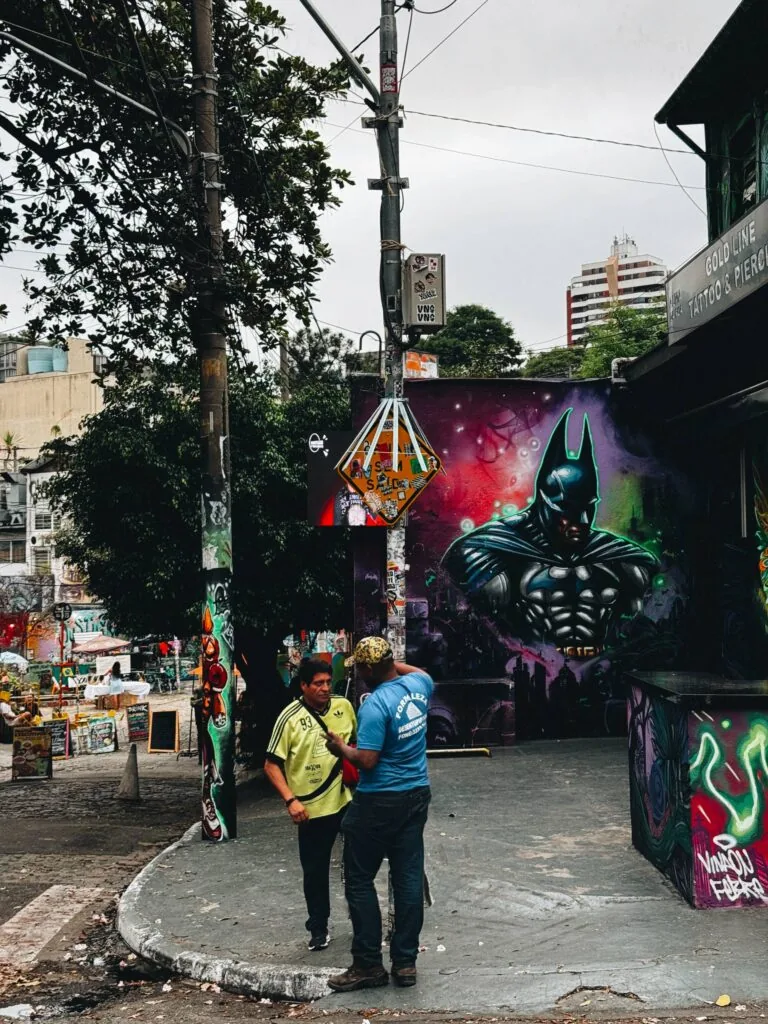
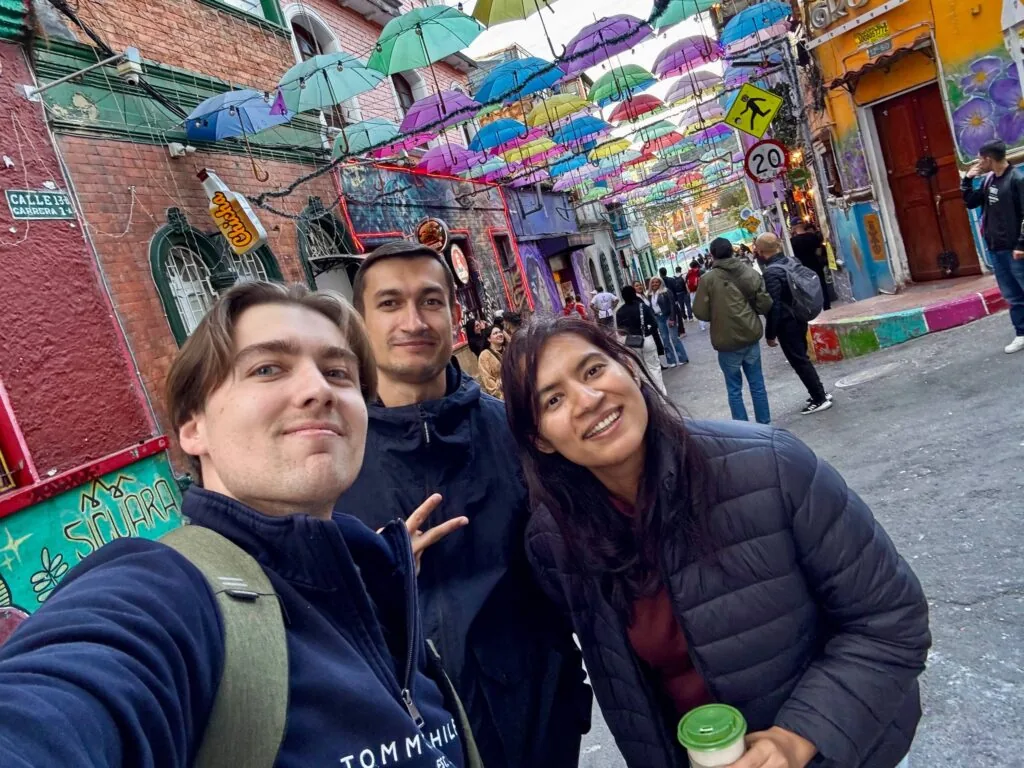
Another part of the work is business trips to test the product in real conditions. For example, the team has already conducted research in Colombia and Brazil, communicating with drivers and studying how they use the service. The next expedition is being prepared — to Nepal. Such trips help better understand users and find new ideas for product development.

About life abroad
inDrive has a full-fledged relocation practice, and the company helps employees with moving. For example, for foreign specialists coming to work in Kazakhstan, the company organizes Kazakh language courses. The company also helps with documents and all onboarding aspects, so that a person can calmly settle into their new life and focus on work.
In my case, there was also an opportunity to relocate: I received two offers from inDrive — for Cyprus and Almaty. At that moment, due to personal circumstances, we decided to stay in Almaty, but the company was ready to provide full relocation support for moving to Cyprus.
As for business trips, a convenient process is also established here. We have a separate travel department that takes care of almost all organizational issues: visa processing, document preparation, and other trip details.
For example, before a trip to Colombia, as a citizen of Kazakhstan, I needed to get a yellow fever vaccination. It is not possible to get this vaccination in Almaty, but it can be done in Tashkent. In the end, together with the travel department, we organized a one-day trip: in the morning I flew to Tashkent, got the vaccination, received a certificate, and in the evening I returned. With this certificate, you can enter countries in Latin America and Africa, and it is valid for 10 years.
Local offices of the company also help during business trips. Colleagues on the ground help find respondents for interviews, invite drivers to the office, and act as translators if necessary.
Aside from the work part, such trips often turn into an interesting cultural experience. After meetings and research, colleagues from local offices often become de facto guides. For example, in Brazil, our colleague took us to an authentic place in Rio de Janeiro. It is hard to even call it a bar or a cafe — more like a local space where city residents themselves go. As a tourist, you would hardly end up in such a place, but thanks to local colleagues, you can see the real life of the city from the inside.
Therefore, such trips are valuable not only from a research perspective. They are also an opportunity to better understand the people, culture, and mentality of the countries for which we create the product. And this, in fact, makes the work even more interesting.
The Tech on Telegram Follow The Tech on Telegram
Keep up with the latest technology and startup news.
Related reading






More from this author

Article Useful
How to protect your accounts from hacking: 8 settings you should check today
The Tech

Article Useful
500 Global: How the Accelerator Works and Who Can Receive Investments
The Tech

Article Interviews
Game Development in Central Asia: Arkady Moldavski on Developing Reverb and the Growth of the Industry
The Tech

Article Useful
Google, Tesla, BlackRock, and the IMF: Where to Apply for an Internship in Fall 2026
The Tech

News IT
Tesla unveiled the flying electric car Roadster
The Tech

News IT
Intero Biosystems startup won the Startup Battlefield at TechCrunch Disrupt 2026
The Tech