How to get a job at Google: Rustam Zokirov's experience
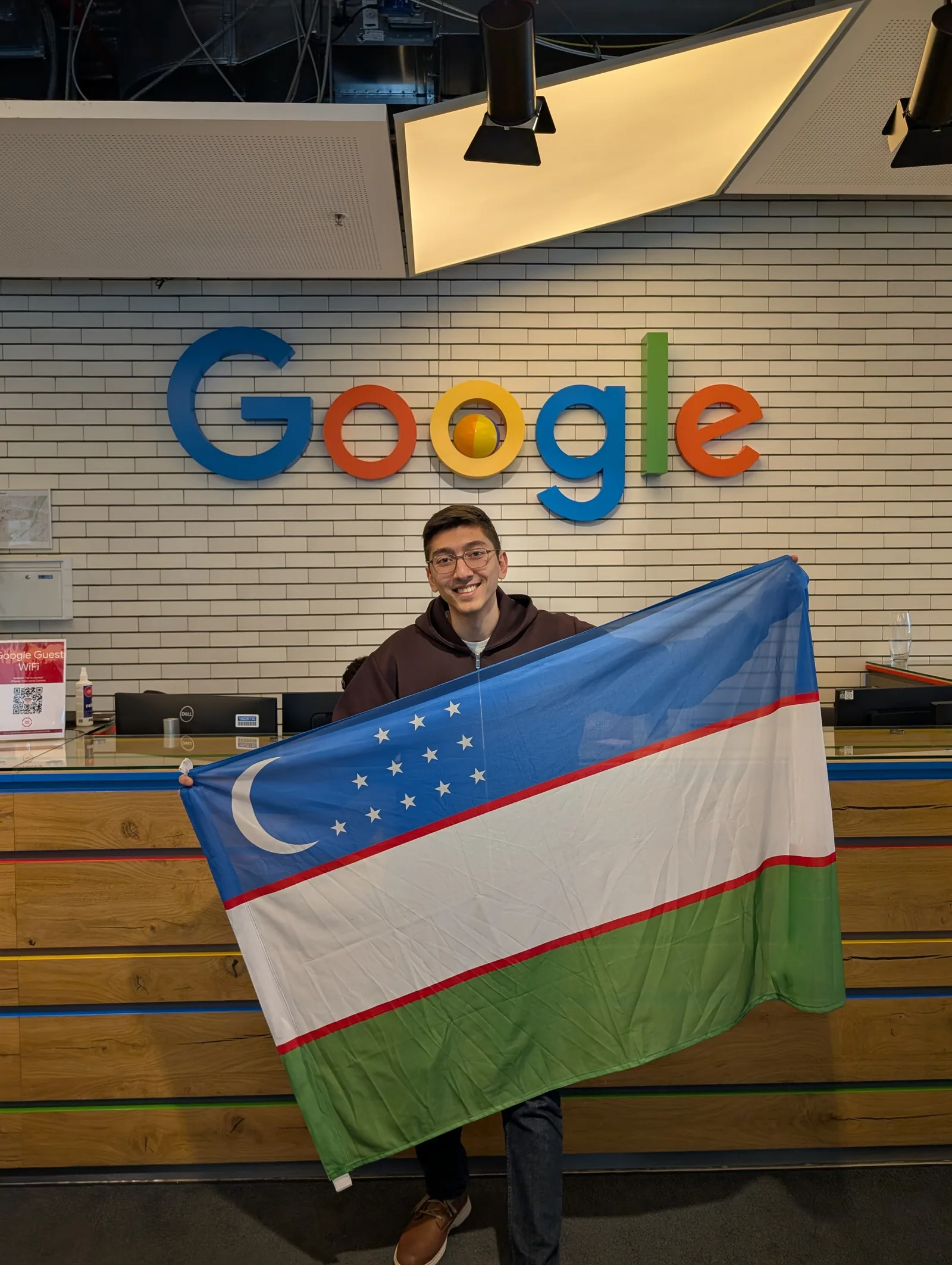
How the hiring process at Google works, what really matters in interviews, and how to get into Big Tech — a personal experience from a Software Engineer who went from internships to working on Android Automotive OS in Germany. Read more in our interview.
Rustam Zokirov, city — Munich, Software Engineer at Google, LinkedIn, Telegram, YouTube
About me
I studied at Inha University in Tashkent and graduated in 2023. During my studies, I worked at EPAM and Exadel, where I gained my first practical experience in development and testing.
Starting from my third year, I actively applied to Big Tech companies — Google, Meta, Amazon, Apple, Tesla, Bloomberg, and others — mostly directly through their websites, without referrals. I occasionally reached the interview stage; for example, at Bloomberg I went through all stages but did not receive an offer because the position had already been filled.
After graduating, I continued applying, and about two weeks after submitting my application, a Google recruiter contacted me. Then the standard process began: recruiter screening, technical interviews, and the team interview stage.
A separate important stage is team matching, which in my case took about six months. This is usually the part that takes the most time.
In the end, the entire process from application to offer took about nine months. As of now, I have been working at Google since 2024 in the Android Automotive OS team and live in Germany.

How to get into Google
If we talk about the interview process, it starts with submitting an application. Without this step, it is impossible to get into the company. You can apply through a referral or directly through the website. A referral increases your chances because your resume is more likely to be reviewed.
Next comes the recruiter stage. This is a call where they discuss your experience, interests, and motivation, and generally check if you fit the profile.
The next stage is technical interviews. Usually, this involves several rounds: one behavioral interview and several technical ones. The format is mostly online, although in some locations the company is gradually transitioning to an offline format.
After the interviews, all interviewers leave feedback, and this process can take about two weeks. Then the recruiter returns with the results. If the candidate moves forward, the team matching stage begins — selecting a project and team. This process can take varying amounts of time depending on the location and internal needs.
It is important to understand that interviews at Big Tech are not inherently super difficult in terms of algorithms or questions. The main difficulty is getting to the interview stage. Competition is high, and the resume screening and invitation to interview stage is the most critical.
Therefore, it is important to apply regularly and be ready for interviews at any moment. After that, much depends not only on the candidate: there is a hiring committee, team matching, and other internal company processes that you cannot directly influence.
For example, in one case, out of 50 candidates who successfully passed the interviews, only two received offers. This shows how high the level of competition is even among those who have already passed the technical screening.

Tips for those who want to work in an international company
The most important thing is that your resume must be directly related to the job description. What is written in the job requirements should be reflected in your experience. If the company needs a certain type of specialist, your resume should show that you are a strong fit for that role. If they need a doctor, you show relevant experience specifically for that position. This is a simplified example, but the logic is exactly that.
No one is interested in just a list of tasks. It is important to show impact: what you improved, which processes or products became better, what value you brought.
It is also important to tailor your resume to a specific position and carefully match your experience with the requirements. It is useful to look at the profiles of people in similar roles at the company and analyze their responsibilities.
Do not overload your resume with irrelevant experience — it is better to leave only what corresponds to the role. Personal projects should also be relevant to the industry, for example, a FinTech project with APIs and metrics.
The key point is measurable impact: numbers, results, links, artifacts. If exact metrics are not available, estimates or before-and-after comparisons are acceptable. For junior specialists, it is important not only to describe tasks but also to show challenges, solutions, and contributions to the result.
Open-source contributions are also valued — GitHub, libraries, projects.
Main resume sections: skills, experience, projects, achievements, education. Fake experience is not allowed — everything is checked. Regarding formatting, readability, structure, PDF format, and grammar are important. Use action verbs: designed, optimized, implemented. A photo in the resume is not needed.
Optimally one page with up to five years of experience.
Work specifics
The hiring process at Google starts with submitting an application and the first conversation with a recruiter. At this stage, the candidate's motivation, interests, and development directions are discussed. Then come the technical interviews, mostly algorithmic, where programming skills and engineering thinking are tested. They are mostly held online, although in some countries offline formats are gradually returning.
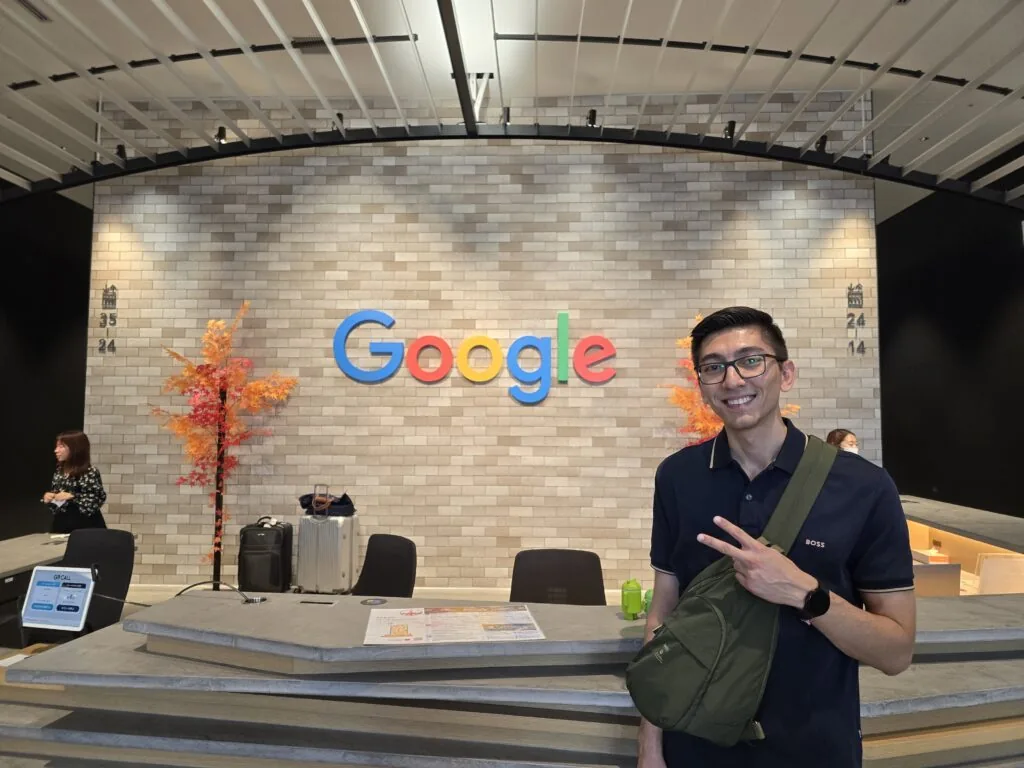
After the interviews, the project selection stage begins, which can take a long time and depends on the location and the candidate's interests. In my case, projects in Romania were considered first, but ultimately I ended up in Munich. The final decision is made by the hiring committee, which evaluates all the feedback and makes an offer decision.
Many think that the hardest part is the interview, but in practice, it is much harder to get to the process itself due to resume screening. Algorithmic tasks are usually not super difficult with good preparation. However, even after successful interviews, not everyone receives an offer, so strong preparation and a bit of luck are both important.
The resume should be maximally tailored to a specific vacancy and show relevant experience. It is also useful to communicate with people from the company to better understand internal expectations and process details that are not always specified in the job description.
Currently, I am working on Android Automotive — this is the version of Android for cars. The project uses Java and Rust, and the work itself involves developing a platform that manages the car's interface and its systems. This is not just writing code, but working with a large, complex system.
One of the main difficulties at Google is the volume of information at the beginning. Onboarding can take up to six months because you need not only to get used to the company but also to understand a project that has been evolving for many years. You also have to master a large number of internal tools that differ from familiar external solutions.
Currently, in the industry, it is important not only to know how to write code but also to understand system architecture, make technical decisions, and build communication. With the development of AI, writing code has become easier, so system thinking and critical thinking are valued more.
Growth at Google largely depends on impact — how much your work affects the product and business. At the same time, the company actively supports learning: it pays for courses, books, and conferences.
The main advantages of Google are the scale of its products and the people. What motivates is the fact that millions of users use your decisions, and there are experts nearby in almost any field. The atmosphere of Silicon Valley is also memorable, where the startup culture is more dynamic compared to Europe, which is focused on work-life balance.

About life abroad
With relocation, Google takes the entire process upon itself — from document preparation to visa and moving. A relocation bonus is also paid so that after moving you can settle in and buy everything necessary. Depending on the location, the amount may vary, but in general, it is quite high, especially for employees with families. The company helps with the documentation, and in essence, you almost do not need to do anything yourself — only submit documents to the embassy.
If we talk about life and work abroad, there is no universal advice here — much depends on the country and personal situation. For example, moving to Germany and Central European countries, such as Austria or Switzerland, with a family can be more difficult, so young specialists sometimes find it easier to decide to move earlier.
Many think that life abroad automatically solves all problems, but in practice, everything depends on where exactly you work. If it is Big Tech — Google, Amazon, Tesla, and other large companies — the conditions are usually better, salaries are higher, and adaptation is easier. In local companies, the situation may be different: often a German language level of C1 is required, and the work environment can be more difficult and less flexible. Therefore, one of the main pieces of advice is to try to get an offer from a large international company first, and then plan the move.
If we talk about education, then for those who are still in school and planning to enroll, I would advise considering foreign universities and planning this path in advance. It is also important to understand what lifestyle suits you. If you are more comfortable with a calm life, travel, and personal space, then Europe might suit you. There, boundaries are usually respected, there is less intrusive communication, and more independence. But in general, everything depends on your goals and the life you want to build.
The Tech on Telegram Follow The Tech on Telegram
Keep up with the latest technology and startup news.
Related reading






More from this author

Article Useful
How to protect your accounts from hacking: 8 settings you should check today
The Tech

Article Useful
500 Global: How the Accelerator Works and Who Can Receive Investments
The Tech

Article Interviews
Game Development in Central Asia: Arkady Moldavski on Developing Reverb and the Growth of the Industry
The Tech

Article Useful
Google, Tesla, BlackRock, and the IMF: Where to Apply for an Internship in Fall 2026
The Tech

News IT
Tesla unveiled the flying electric car Roadster
The Tech

News IT
Intero Biosystems startup won the Startup Battlefield at TechCrunch Disrupt 2026
The Tech