How an English teacher from Azerbaijan built a career in IT: the story of Leyla Gadzhieva
How a humanities education helped build a career in IT, why technology is about people first and code second, and which qualities are more important today than technical skills. The story of a professional journey — from the first job at a tech company to projects in digital transformation, innovation, and HealthTech.
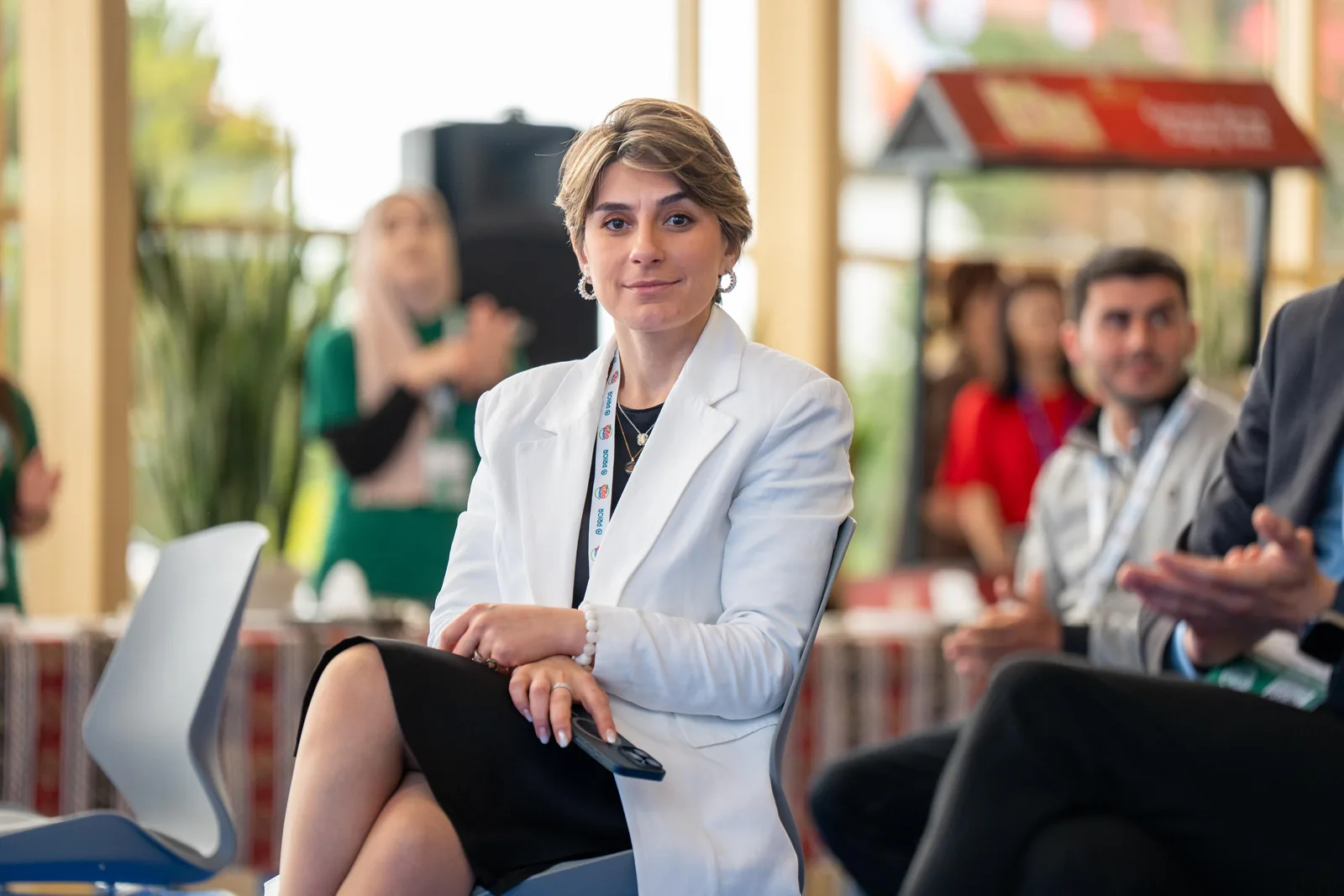
Leila Hajieva, City — Baku, Advisor to CEO, LinkedIn
About Me
If I had been asked as a child what I wanted to become, I would have answered without hesitation: a teacher. I grew up in an ordinary family and graduated from a state school in Azerbaijan. From an early age, I was fascinated by languages. I taught myself Russian: I read classic literature, watched movies, and learned children's songs. I was equally interested in English, although my relationship with teachers was not always easy.
It was then that I first began to think about what a true mentor should be. To me, a teacher is someone who not only imparts knowledge but also helps unlock potential, inspires growth, and builds confidence in one's own abilities.
Years later, I realized that this very idea became the foundation of my entire professional life.
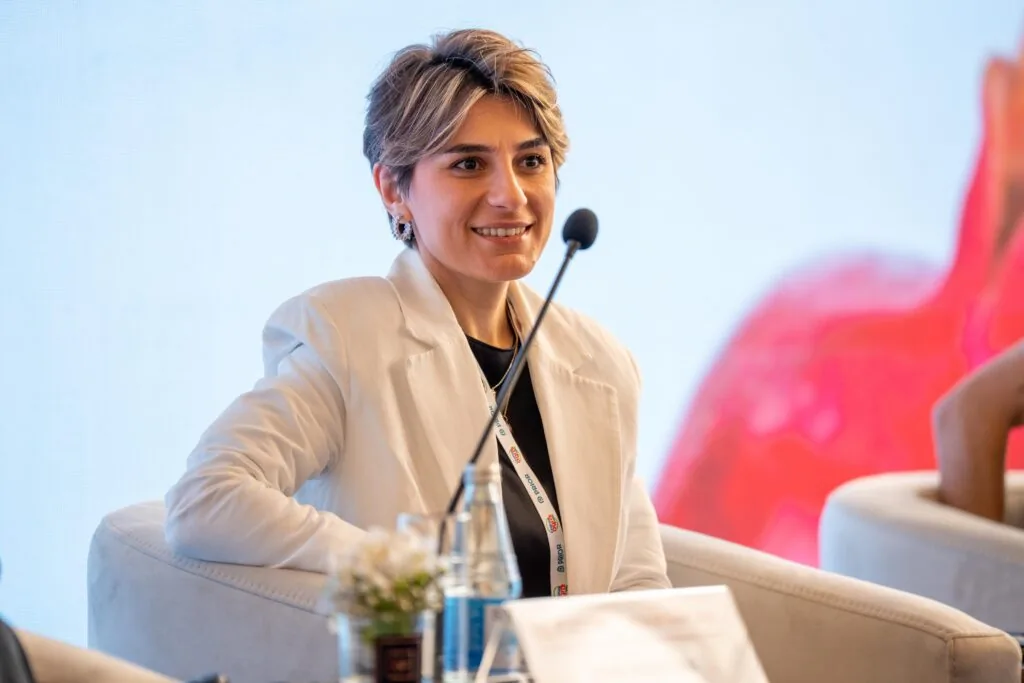
About My First Job in IT
By education, I am a teacher of English language and literature. However, my professional path led me into the field of information technology.
When I joined ATL Tech in 2011, I knew almost nothing about the technology industry. At that time, I had no idea how multifaceted this world could be.
Quite quickly, I understood that IT is not just about software development. It is primarily about people, processes, communication, and the ability to bring together specialists from different fields to achieve a common goal.
At ATL Tech, I was fortunate to work at the intersection of several functions. Every day, I interacted with project managers, engineers, the finance team, procurement specialists, logistics personnel, contractors, and clients. Formally, everyone had their own area of responsibility, but in practice, everyone spoke different professional languages.
It was then that I first realized how important the role of a person who can connect business and technology is. Today, this role is often called a bridge between business and technology. At that time, this term was not yet widespread, but that is exactly what I was doing.
Working in a rapidly growing technology company was a true professional school for me. In small teams, it is rarely possible to stick strictly to a job description. Over time, you begin to take on tasks that formally fall outside your area of responsibility: project management, procurement, financial processes, equipment import, logistics, negotiations, and communication.
This is why I believe that experience working in startups and young technology companies is particularly valuable. Such companies not only help you master a profession but also develop responsibility, speed of decision-making, the ability to work in uncertain conditions, and the willingness to go beyond the boundaries of your role.
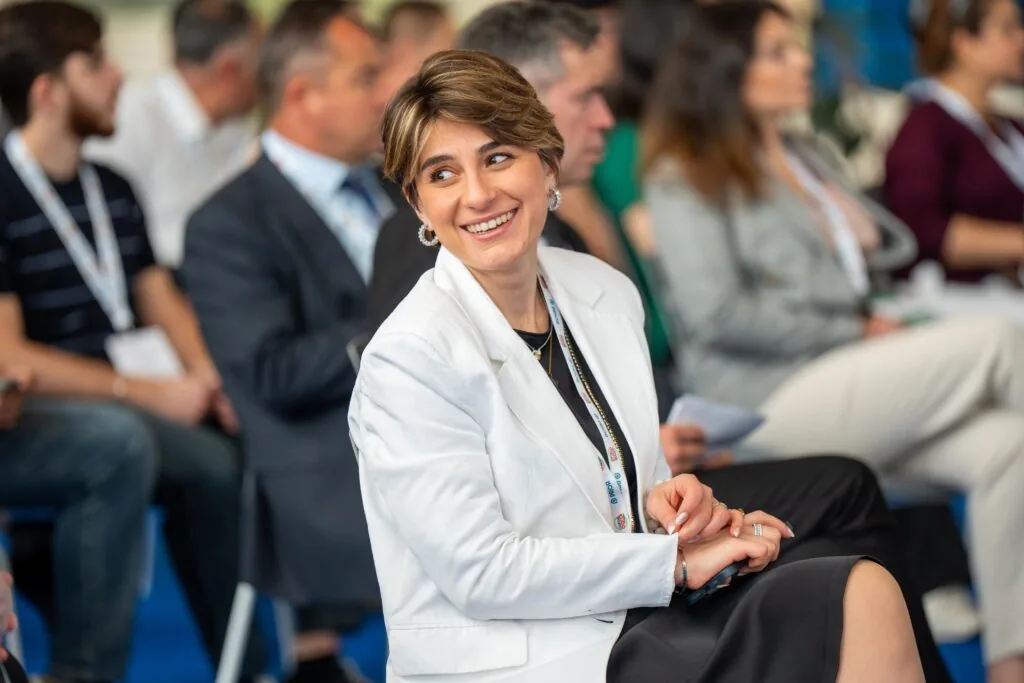
Challenges
Of course, this kind of experience has its downsides. Having become accustomed to a high pace of work and the lack of strict boundaries between functions, it can be difficult to adapt to mature corporate structures with established processes.
It was then that I understood another important thing: professionalism lies not in the ability to work only in one type of organization, but in the ability to timely change your own mindset while maintaining the ability to create value.
Over 15 years, I have had the opportunity to work in a wide variety of technology sectors. Some people say that I often changed industries. I look at it differently. I have always worked in the field of information technology; only the areas of application changed: infrastructure projects, GPS and radar technologies, EdTech, FinTech, innovative ecosystems, digital transformation of the public sector, Smart City, AgriTech, and today — HealthTech.
At the same time, my role remained virtually unchanged. I never aspired to become the strongest technical specialist on the team. My task was to bring strong professionals together around a common idea, help business understand technology, and help technology meet business needs.
Therefore, a significant part of my career was related not only to products and projects but also to people development. I was fortunate to participate in the creation of the ABB Innovation Center and educational initiatives aimed at fostering an innovative culture. Later, projects emerged focused on developing the country's innovation ecosystem, digital transformation of the public sector, preserving cultural heritage, and implementing technological solutions for the agricultural industry.
Over time, mentoring and people development took an increasingly important place in my professional activities. I worked with startups, served as a mentor and jury member for international technology programs, joined the global Women in Tech movement, and created my own development program because I have always believed that the strongest technologies are created by people who are ready to unlock their potential.
Today, I work in the field of digital health. From the outside, it may seem that my path consists of completely different stages, but for me, it is a single story. Banking technologies help people manage their finances, AgriTech affects food security, digitalization of government services makes them more accessible, and HealthTech helps save lives.
Industries change. Technologies change. What remains unchanged is the reason why I choose my next professional step.
Over these years, the technology industry itself has changed. When I started my career, professional knowledge was considered the main advantage. Today, this is no longer enough. Artificial intelligence is changing the market faster than educational programs can adapt. Technologies are becoming more accessible, tools are becoming smarter, and a specialist's key advantage is the ability to constantly learn, adapt, think critically, negotiate, and unite people around change.
This is why I have never considered the lack of a technical education a limitation. On the contrary, it taught me to first ask "For whom?" and only then "How?".
3 Tips to Help You Find a Job in IT
If I am asked today what advice I would give to someone just starting a career in technology, my answer is very simple.
Do not be afraid to start from scratch.
Do not be afraid to admit that you do not know something.
Do not be afraid to change direction if you realize that you have stopped growing.
Technologies are constantly evolving. Professions, tools, and approaches are changing. But the ability to learn, maintain curiosity, and remember that behind any technology there are always people will never lose its value.
Once, I dreamed of becoming a teacher. Today, I understand that this dream has indeed come true. It's just that instead of a school classroom, I have teams, products, startups, ecosystems, and digital transformation projects.
And perhaps my main work has never been tied to a specific industry. It has always been about people.
The Tech on Telegram Follow The Tech on Telegram
Keep up with the latest technology and startup news.
Related reading






More from this author

Article Useful
How to protect your accounts from hacking: 8 settings you should check today
The Tech

Article Useful
500 Global: How the Accelerator Works and Who Can Receive Investments
The Tech

Article Interviews
Game Development in Central Asia: Arkady Moldavski on Developing Reverb and the Growth of the Industry
The Tech

Article Useful
Google, Tesla, BlackRock, and the IMF: Where to Apply for an Internship in Fall 2026
The Tech

News IT
Tesla unveiled the flying electric car Roadster
The Tech

News IT
Intero Biosystems startup won the Startup Battlefield at TechCrunch Disrupt 2026
The Tech