How to build a business in Southeast Asia: the experience of ApartX, LOOQ, and Clockster
Southeast Asia is often perceived as a single, rapidly growing market, but in practice, it is a collection of diverse countries with different cultures, economies, and business practices. This article shares the experiences of founders and co-founders regarding the real challenges, mistakes, and insights involved in entering the region.

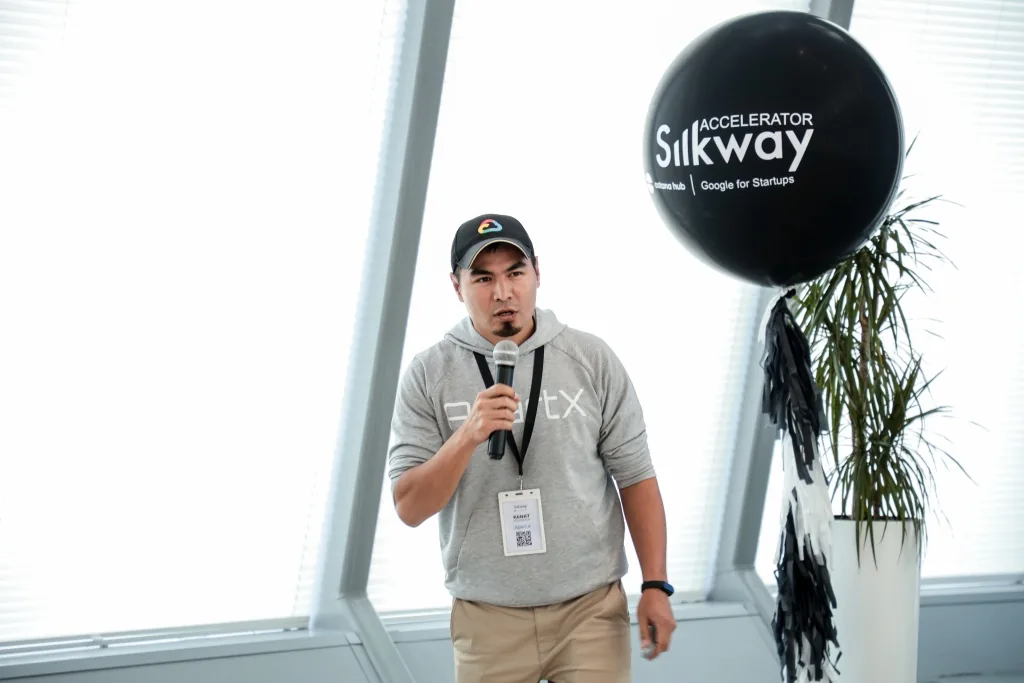
Kanat Keldibekov, CEO ApartX, LinkedIn
The Southeast Asian market is a completely different landscape. You can’t just show up with a team and conquer it. First of all, unlike the Kazakh market, the SaaS model doesn’t work here—people dislike paying for subscriptions. Even businesses are reluctant to pay monthly subscription fees, so this model is practically non-functional in this region. This applies to all of Southeast Asia. Here, either a license model or a transactional model works. If you have a SaaS product, you will likely need to adapt or completely overhaul your business model.
Secondly, it is important to understand that the region is diverse: there is China, and then there are Indonesia, Malaysia, Thailand, Vietnam, and other warm countries. People here differ in mentality—they are more relaxed and less driven. You may encounter this when hiring employees: there are challenges with motivation, building internal company processes, and so on.
If we look at China specifically, the situation is the opposite: people are hardworking, quick to take action, and responsible. However, there is another risk—technologies and products can be copied. This is a very real possibility.
The most optimal option is to find a local partner. This applies not only to East Asia but to any market. It is important to find a partner with whom you share the same target audience but do not compete directly. You should complement each other’s solutions: either you enhance their product, or they already have a large customer base that could benefit from your solution. Such collaboration is an effective scheme where you help each other grow, develop, and earn more.

Beksultan Buitekov, co-founder of LOOQ, LinkedIn
LOOQ is currently entering the Japanese market with a mobile digital-outdoor advertising platform: LED screens on delivery scooters plus an AI/software layer for ad management. Over the past six months, we have gone through many reevaluations of how the Asian market actually works.
Perhaps the main insight for us is that Japan and Asia in general respond poorly to the “technology first, market second” approach. In many CIS countries or the US, a startup can enter through speed, hype, or aggressive sales. In Japan, this hardly works.
Here, they first check not the product itself, but the company’s ability to become part of the local ecosystem. Who introduced you. Who can vouch for you. How well you understand the local context. How much you respect local processes. How prepared you are to play the long game.
We greatly underestimated this at the beginning. It seemed that the innovativeness of the product would be enough to quickly gain market attention. But in Japan, trust is a separate infrastructure that cannot be accelerated by technology alone.
Another important point is that regulation and corporate culture in Asia often turn out not to be a “barrier,” but part of the go-to-market strategy. We realized this when we started communicating not only with the startup ecosystem but also with large Japanese corporations, agencies, and municipal structures. For them, it is important not just “what you are building,” but how predictably and safely you will exist within the system.
We also overestimated the universality of the product. At first, it seemed that we could quickly scale into several Asian countries. In practice, each country requires almost separate localization: a different communication style, a different negotiation cycle, a different decision-making logic, and a different understanding of what innovation should look like.
If we were to start over, we would have done the following much earlier:
— entered through local advisors and partners
— built relationships before attempting large-scale sales
— launched small pilots and gathered local trust instead of trying to look like a “big international company” right away
The main conclusion for us is: the Asian market may seem slow on the outside, but if you manage to integrate into the local trust system, opportunities open up that are very difficult for competitors from the outside to replicate.

Yerjan Ryskali, founder of Clockster, LinkedIn
When we first started looking toward Southeast Asia, the initial impression was: the market is huge, there are many people and businesses—so it should be easier. But in practice, you quickly realize that SEA is not one market. It is a multitude of different countries where everything works differently.
The first mistake is thinking you can enter the region with a single strategy. Indonesia, the Philippines, Malaysia, Singapore—these are completely different stories. Different cultures, different approaches to business, different habits, and different decision-making speeds. What works in one country may not work at all in another.
The second mistake is thinking that physically being on the market is enough. I moved there with my family for almost two years, and it helped a lot in understanding the region. But even that is not enough. In such countries, it is very important to have a local partner, local investors, or people who can support you, open the right doors, and add trust in you as a new player.
Because you can live in the country, meet with clients, and understand the market, but still remain an outsider. But when local partners who know the rules of the game are nearby, the market starts to perceive you differently. This is not about formal “localization,” but about having real support on the ground.
The third mistake is underestimating who really makes decisions. In Southeast Asia, we noticed that decision-makers are often older than in Central Asia. On average, they are people aged 45+, sometimes even older. This is roughly 10–15 years older than we are used to seeing back home.
And this significantly affects the speed of perceiving innovations. What seems obvious, convenient, and modern to us may look like a risk, unnecessary complexity, or an unclear change to a familiar process for them. Therefore, you cannot just come and say: “Here is a new technology, it’s better.” You need to explain, demonstrate, prove, and reduce the sense of risk much more.
The fourth mistake is hiring a large sales team too early. We almost immediately started building a sales team, even though we didn’t yet have a full product-market fit in the new market. As a result, you seem to be strengthening yourself, but in reality, you are just burning through money faster.
Until you have a clear PMF, you cannot scale chaos. First, you need to manually understand who your customer is, why they buy or don’t buy, which segment matures faster, and what objections repeat. And only then hire more people and turn this into a system.
The fifth mistake is underestimating how much cash is needed to enter a large new country. If you are entering a major market where there are already many competitors, you either need to enter with a good financial cushion or have a strongly cash-positive business in another country that will fund the expansion.
We hit the peak of the financial winter, when it was difficult to raise money normally. And a new market requires time: for trust, local case studies, a team, support, and product adaptation. Without proper cash, you start making decisions based on survival rather than strategy. And this hinders progress significantly.
Another mistake is underestimating localization. This is not just translating the interface into another language. You need to understand local processes, habits, documents, taxes, salaries, support, and even how people communicate in business. Each country has its own nuances, and without this, the product looks foreign.
The main conclusion for me is this: Southeast Asia is an interesting region, but you cannot enter it with the logic of “we’ll quickly copy what works at home.” Even if you move there yourself, you still need to listen a lot, adapt, build local support around yourself, and be very careful with money.
It is better to first find a small but clear PMF. And only then build a large team, scale, and play the long game.
The Tech on Telegram Follow The Tech on Telegram
Keep up with the latest technology and startup news.
Related reading



More from this author

Article Useful
How to protect your accounts from hacking: 8 settings you should check today
The Tech

Article Useful
500 Global: How the Accelerator Works and Who Can Receive Investments
The Tech

Article Interviews
Game Development in Central Asia: Arkady Moldavski on Developing Reverb and the Growth of the Industry
The Tech

Article Useful
Google, Tesla, BlackRock, and the IMF: Where to Apply for an Internship in Fall 2026
The Tech

News IT
Tesla unveiled the flying electric car Roadster
The Tech

News IT
Intero Biosystems startup won the Startup Battlefield at TechCrunch Disrupt 2026
The Tech