How game development is evolving in Central Asia. Alexandra Knyasheva on market growth and industry challenges
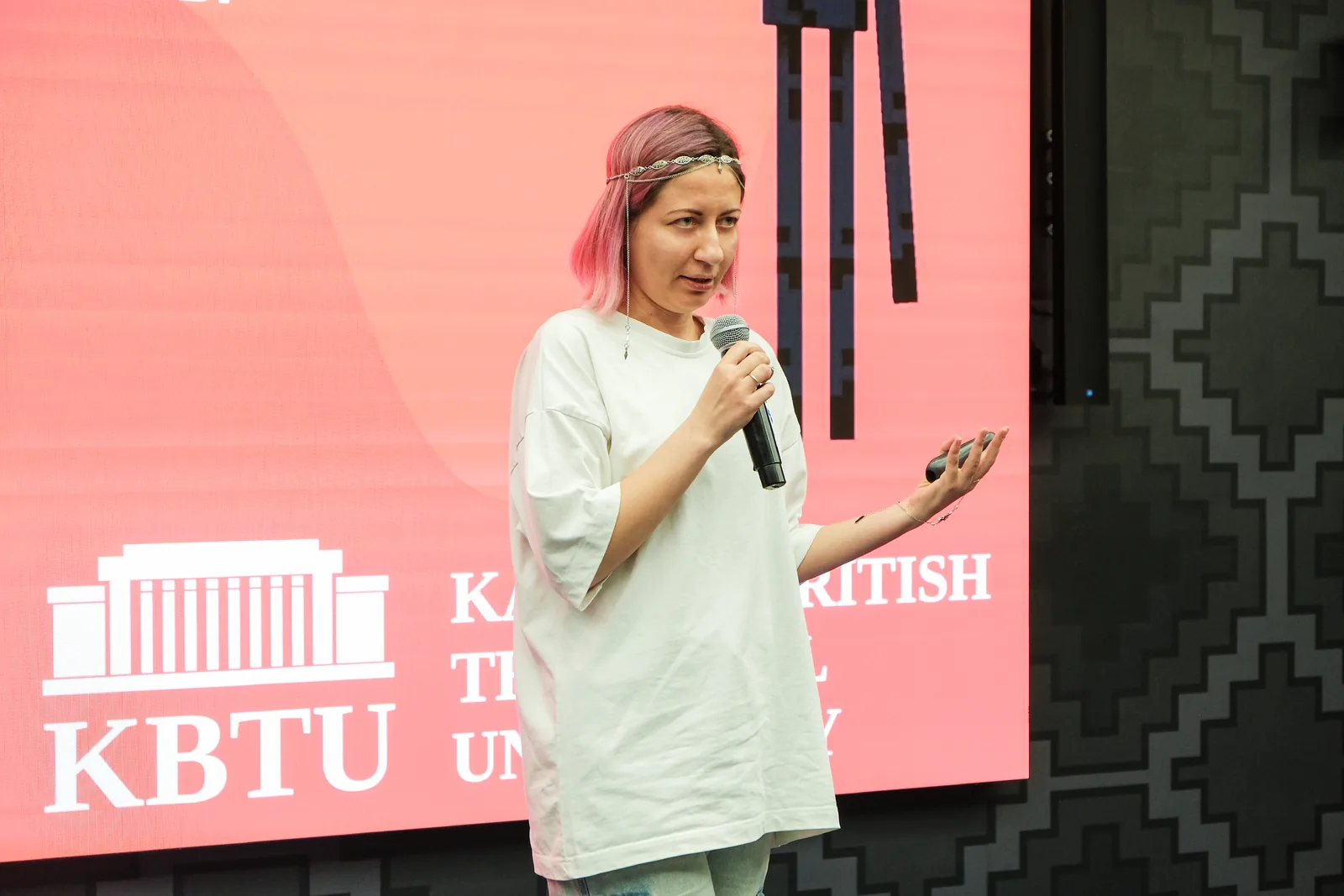
From video game research to launching her own projects on Steam, this is the path Alexandra Knysheva has taken in the gaming industry. Today, she leads the GameLab KBTU laboratory, develops the DiGRA Central Asia community of video game researchers, and helps young teams create their own games. We spoke with her about the future of game development, new technologies, and the industry’s main challenges.
Alexandra Knysheva, city — Almaty, head of the GameLab KBTU Video Game Development and Research Laboratory, senior lecturer at the IT School and Engineering School of KBTU, co-founder and president of the Central Asian chapter of DiGRA, LinkedIn
About Me
I am the head of the GameLab KBTU Video Game Development and Research Laboratory. I also serve as a senior lecturer at the School of Information Technology and Engineering at KBTU, where I teach courses on gamification and video game research. Additionally, I am the founder and president of the Central Asian chapter of DiGRA, the largest international association of video game researchers.
Career Path
I came to games at a mature age. I became interested in games as a medium while I was pursuing my master’s degree in Media Studies. What attracted me was the fact that games are a unique form of media that grants users agency, which is not found in any other format.
Because I entered the field relatively late, I often struggle with imposter syndrome. Around me are people who have been living and breathing games since childhood, as if they were born with a game controller in their hands. On the other hand, my interest in GameDev as an adult allows me to view games quite objectively. This is important for both researchers and developers. I can see not only the strong and interesting aspects of games but also their gaps and weaknesses.
It all started with game research. We began applying knowledge about how games work to create our own projects. For example, in collaboration with UNICEF, we created a free educational game called DPG Sim. This tycoon simulator allows players to understand and experience the journey of developing Digital Public Goods.
More recently, we created the game The Train Parable. It emerged from a research question: we wanted to understand how players identify with characters. To do this, we needed our own game, so we developed a small project.
The action takes place on a train traveling through the Kazakh steppe. The main character is an elderly woman, Zerey, who encounters objects that trigger memories and gradually reveal her story. The game received a positive response, so we decided to release it on Steam — it will soon be available as a paid game.
My education is rooted in media research — I entered the industry through Media Studies. My generation did not have specialized education in game development, so everyone gained experience independently: through game analysis, courses, and networking with experienced developers.
The situation is changing now. This year, we are launching the region’s first bachelor’s program in video game development. After four years of study, students will receive a degree as video game developers. The new generation has significantly more opportunities in this regard.
About Projects
Regarding my current projects, I have already mentioned The Train Parable. The research underlying the game focused on how much players identify with characters depending on their cultural background.
We conducted the first experiment in the summer of 2025 in Malta among participants who knew almost nothing about Kazakhstan. The second was held in Almaty among people who did not need explanations of the game’s cultural code. Then we compared how players perceived the plot and the main character’s decisions. The results were presented at the Gaming in Asia workshop at the National University of Singapore, and a monograph based on the research will be published soon.
We are also continuing to develop the educational project DPG Sim, launching the bachelor’s program, and working on other initiatives.
One of the key directions is a mentorship program for teams who want to create their own game. Every year we open applications, select promising projects, and support them until release. Currently, six teams are participating in the program.
The first team is Umai Gaming Studio, which is creating the game Iz, based on Turkic and Kazakh mythology. The team is currently preparing to release a demo version on Steam.
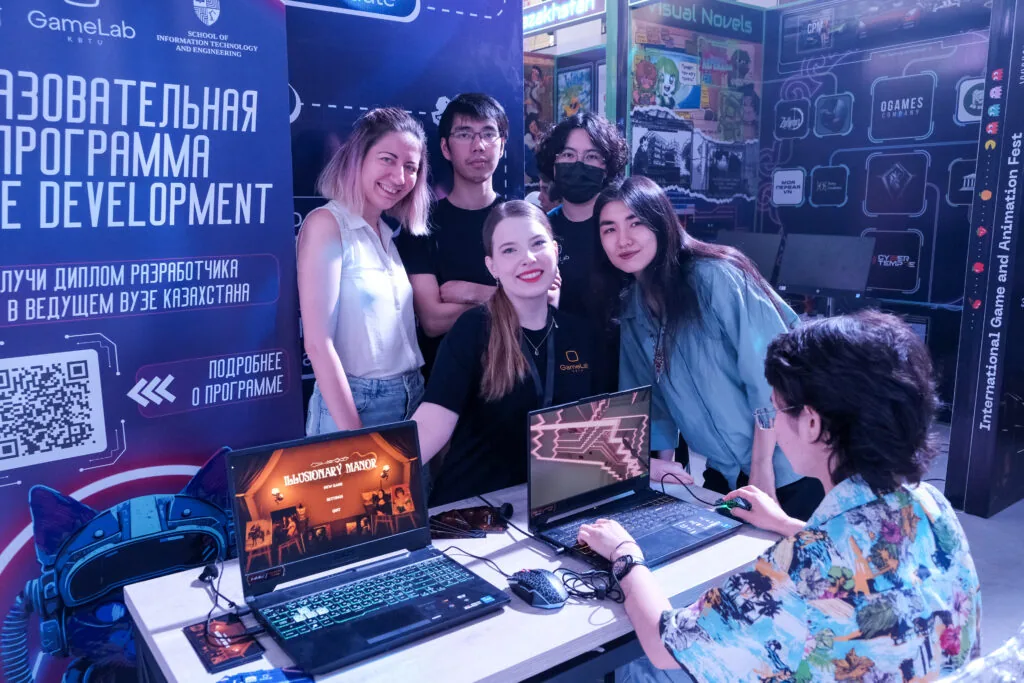
Alamid Games is developing an adventure puzzle game called Illusionary Manor, where players can move inside paintings and solve spatial puzzles.
Another project is Ember Bloom, a combination of Suika Game and Snake mechanics with a bright visual style and its own story. Crystal Adventures is an educational game that introduces players to the basics of algorithms and programming.
I consider one of the main achievements to be the students and graduates of GameLab KBTU, who are becoming an important resource for the development of Kazakhstan’s gaming industry.
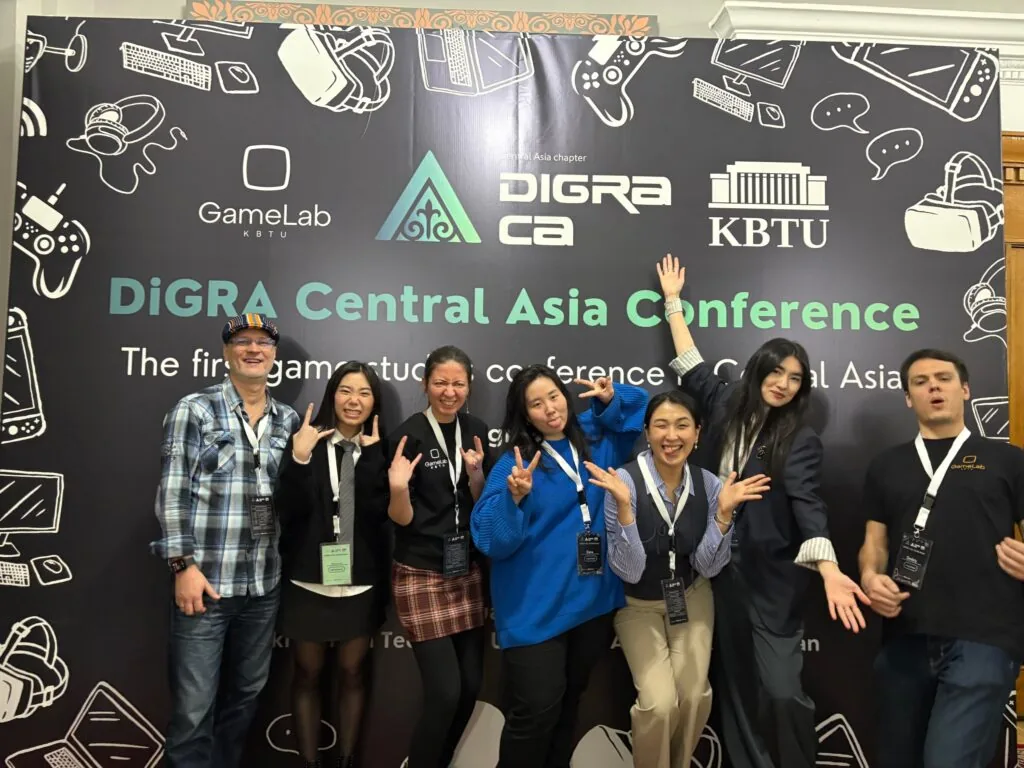
Another significant achievement is the opening of the regional chapter DiGRA Central Asia. This has allowed us to unite video game researchers from the region and more actively represent Central Asia on the international academic stage.
Regarding challenges, the main one today is high competition. With the advent of game engines and AI, creating a game has become significantly easier, but making a truly good and noticeable game remains difficult.
About 40 new games are released on Steam daily. Therefore, even a high-quality project may go unnoticed. This does not always mean that developers did something wrong — sometimes the market is simply so saturated that breaking through to the audience is very difficult.
Skills and Profession
Work in the gaming industry is diverse. For example, a person working as HR in a game studio also works in the gaming industry, but they need to combine HR skills with an understanding of the market. Therefore, the set of skills depends on the profession a person chooses.
If we talk about developers who create their own games in small teams or solo, the range of necessary skills becomes even wider. It is important to first understand what interests you, what you want to do, and what is needed for that. Based on this, you should develop your skills in the chosen direction.
From my experience working with developers, I can say that even those who already have work experience and may have released their own games often have serious gaps even in the most basic areas. For example, we have encountered game designers who lack knowledge in mathematics and statistics. Or game developers and animators with serious gaps in their understanding of physics. All of this ultimately affects the quality of the final product.
People often strive to learn complex technologies, master new frameworks that appear on the market, but their foundation is lacking. And the foundation — down to the school curriculum.
Today, many games are created using game engines. The most popular are Unity, Unreal Engine, and Godot. Our studio has experience working with all three, and we choose the engine depending on the game we want to make. Moreover, recently we have actively shifted towards AI tools and strive to study them as deeply as possible. This applies to all areas: whether it is 3D modeling, prototyping, coding, narrative, or anything else where artificial intelligence can find worthy application.
How the Gaming Industry is Developing in Central Asia and the Caucasus
It is correct that people are increasingly talking about the Central Asian market. Previously, individual countries were discussed, but if you look at the region as a single market, the picture becomes much more complete — the choices are wider, and it is clear how the industry is growing as a whole.
The modern market cannot be compared to what it was five or six years ago. The gaming industry is beginning to be perceived as a serious sector — by both the state and society. Educational programs are being opened, and the attitude of parents and young people toward the profession is changing. There is an understanding that this is a full-fledged industry with great prospects.
At the same time, expectations from game development are often inflated. Developers are expected to create projects capable of competing with the largest international AAA games, even though the market and studios are still forming.
Therefore, beginner teams especially need support and resources. It is important to play their projects, add games to wishlists, follow studios, talk about them, and support crowdfunding campaigns.
If the state, the industry, and players slightly lower their expectations and focus on supporting young teams, developers will be able to realize their potential much better.
Advice for Beginners
First of all, to those who want to work in game development, I advise playing consciously. It is important not just to spend time in games, but to analyze mechanics, visual style, music, and understand why a game engages or irritates you. This experience becomes a competitive advantage.
Together with MISiS, we developed a free course called “Video Games and Gamification” in Russian, English, and Kazakh. It helps to understand how the gaming industry works and where to start.
However, no new technologies will replace fundamental knowledge. If you want to become a developer, it is important to first study the basics of programming and strengthen your foundation.
I also recommend our bachelor’s program, which combines fundamental training with modern tools and technologies, including artificial intelligence.
Plans
Currently, we are preparing The Train Parable for release. Originally, the game was created as a research project, but later we decided to significantly improve it: make it longer, more interesting, and release it as a full commercial product. The new version will be paid, and the playthrough will take significantly more time than the initial prototype.
The gameplay mechanics will also change. In the first version, the main character Zerey simply walked through the train and encountered objects that triggered memories, but in the new game, there will be more surrealism and freedom for the player. We will explore themes of the collective unconscious and cultural code.
To slightly lift the veil, one of the key gameplay mechanics will be the ability to look out the train window. Any Kazakhstani who has traveled by train at least once knows that the endless steppe only seems monotonous. If you look closely out the window, you can see many details and become engrossed in this process for a long time. We wanted to convey this feeling in the game.
Besides The Train Parable, the GameLab KBTU portfolio includes other projects: the educational game DPG Sim, created in collaboration with UNICEF; the VR quest Qazaq History Quest for VR Nomads; the adventure puzzle game Illusionary Manor, developed by Alamid Games; the programming educational game Crystal Adventures, created by KBTU student Adlet Samurat; the horror game SorrowField from Akerium; and the pixel adventure game based on Turkic mythology Iz from Umai Gaming Studio.
Besides game development, we are actively developing the research direction. Together with DiGRA Central Asia, we have already held the first regional conference on video game research, which took place in February at KBTU. As a result of the conference, scientific articles presented by participants were published.
Currently, we are preparing for the next conference, which will take place in February in Tashkent. And, of course, we are eagerly awaiting the first intake of students for our bachelor’s program to begin training the new generation of gaming industry specialists.
The Tech on Telegram Follow The Tech on Telegram
Keep up with the latest technology and startup news.
Related reading






More from this author

Article Useful
How to protect your accounts from hacking: 8 settings you should check today
The Tech

Article Useful
500 Global: How the Accelerator Works and Who Can Receive Investments
The Tech

Article Interviews
Game Development in Central Asia: Arkady Moldavski on Developing Reverb and the Growth of the Industry
The Tech

Article Useful
Google, Tesla, BlackRock, and the IMF: Where to Apply for an Internship in Fall 2026
The Tech

News IT
Tesla unveiled the flying electric car Roadster
The Tech

News IT
Intero Biosystems startup won the Startup Battlefield at TechCrunch Disrupt 2026
The Tech