How an Armenian developer passed Big Tech and launched his own AI startup for sales teams

From Adidas and Google to his own AI startup in Yerevan, Aram Shahbandaryan has navigated the landscapes of Big Tech, SaaS, and international markets. Today, he is developing Empy, a platform for sales agents that leverages data and AI tools to enhance sales processes. In our interview, he shares insights into his experience, pivotal shifts, and the current stage of his project.
Aram Shahbandaryan, City: Yerevan, Founder of Empy, LinkedIn
How It All Began
I spent most of my career working in digital businesses. I started at Adidas in the Russian e-commerce sector. Later, I worked on B2B SaaS and hardware projects in Luxembourg, where I was responsible for selling and promoting 3D scanners. Subsequently, in Singapore, I led marketing for a cryptocurrency exchange. After that, I moved to Armenia and worked at Crisp, a notable project in the market, which also included involvement with voice.ai.
Next, I worked at Google, focusing on the B2B SaaS segment, helping businesses grow through advertising, paid traffic, and the implementation of AI solutions. After Google, I ran my own offline business: I organized retreats and global travel experiences. One of the concepts involved training top managers in communication, specifically nonviolent communication.
It was from this experience that the idea emerged to create a model that assists in business coaching. Over time, it evolved into the Real-Time Conversational Coach product.

Launching the Startup
We are developing a data enrichment solution for sales agents, helping B2B sales teams find deeper and more relevant information about clients to create personalized outreach messages and improve communication efficiency.
The product has gone through several development iterations—from a macOS application for calls to isolating the key module responsible for finding information about a person before interaction into a separate, standalone solution. Ultimately, this module became the core of the product and the main direction of development.
Currently, we work with data from the world’s largest providers, processing and structuring it for use by sales teams. Clients apply this data for large-scale outbound campaigns across various communication channels. Essentially, we are building infrastructure for sales agents that enables them to work with large volumes of high-quality data.
The key advantage of the product is speed and cost-effectiveness. We provide data faster than most competitors in the market and at approximately 10 times the cost of existing solutions, which allows the product to consistently attract new clients.
Target Audience
We have our own database of professionals, deals, and various business signals. The primary use case involves B2B sales departments in complex industries such as real estate and hedge funds. Additionally, several venture capital firms among our clients use our data and tools.
Our main target segment consists of teams responsible for business development and client relations in complex B2B businesses—sales, customer success, and related functions.
Incubation Programs
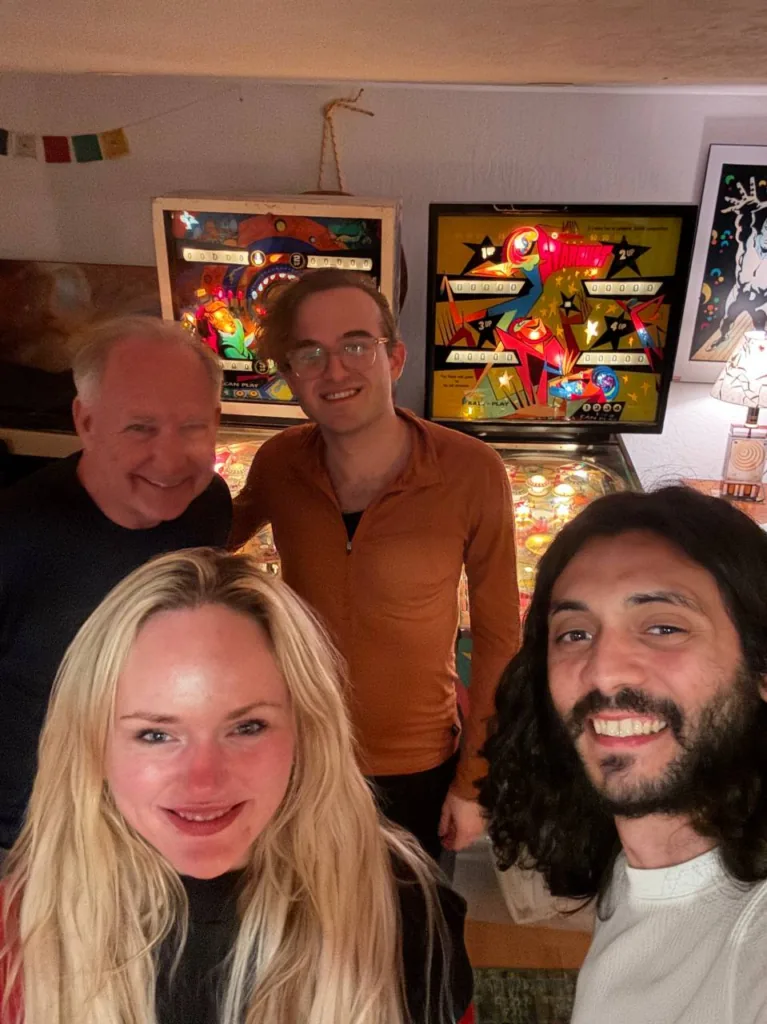
We raised approximately $165,000 in angel investment at the Pre-Seed stage, effectively at the idea level without a ready product. These funds were provided by several private investors—former colleagues and friends—who supported the project in its early stages and enabled us to build the product entirely from scratch.
As part of our development, we also participated in the Draper University Hero Program, where we connected with a strong community, including participants from Kazakhstan and Astana Hub. Additionally, we took part in the Plug and Play Armenia accelerator program.
In terms of traction and community:
— Second place on Product Hunt
— Over 2,000 users on early versions of the product
— Finalists of Startup Awards Uzbekistan 2024
— Reached finals in pitch competitions, including a top-5 finish among hundreds of startups in Armenia.
On Challenges
Startups are inherently risky. It is practically impossible to do this without risk, especially when you have a family and obligations. There is constant uncertainty, a high level of stress, and a significant risk of failure. Difficulties in this field are the norm, not the exception.
However, this reflects market reality. Those who know how to work under such conditions and adapt to them eventually become more resilient and calm. This experience fosters a more realistic view of business—free from illusions and inflated expectations.
I lived in Silicon Valley for about a year and a half after my experiences in Russia, Armenia, and Singapore. After securing investment, I moved there, while part of the team remained in Yerevan. The period of adapting to the American approach to business was quite challenging—it is a more free and entrepreneurial environment. I had to rethink the post-Soviet approach to decision-making and shift to a more proactive work model.
One of the key internal challenges was the fact that for nearly four years, I developed products that were "nice-to-have." These were interesting from an idea perspective but did not always align with actual market demand. This is a common mistake—creating a product that looks strong but does not solve a critically important problem. Moreover, even limited revenue can create an illusion of model stability.
This period largely shaped my approach to work and decision-making. It allowed me to develop a more honest assessment of my own capabilities and focus on what truly matters to the market.
Currently, the company is experiencing steady progress. Revenue is around $10,000 per month, whereas previously, we were mostly dealing with one-off deals. Today, new sales are recorded daily, which is the first sign that the product is beginning to find product-market fit. However, the stage remains early-stage.
There was also a difficult period in the past related to limited financial resources and the lack of stable income. During this time, I had to live in various conditions—staying with friends, in a garage in California, and even in a yoga ashram. It was a stage of high uncertainty and a significant change in my usual lifestyle.

Achievements
In the previous version of the product, about 42 B2B companies were users. In one iteration, we also launched an AI coach for founders—there were over 100 paying users and approximately $1,300–$1,400 in MRR, although this was an early stage and more of a hypothesis test.
Currently, we have shifted to our current product focus and are approaching $10,000 in monthly revenue. The product is used by about 14 companies. The main use case is data enrichment and sales intelligence for B2B teams that conduct outreach via email, LinkedIn, and other channels. We help them build and utilize AI agents for sales and analytics.
Plans
Currently, we are developing the sales agent direction based on our own data and accumulated experience working with clients. The product is built around automating and enhancing sales processes through data enrichment and AI tools.
We are actively testing the market and various segments, focusing on the most profitable B2B clients with high average check sizes and a regular need for outbound activities.
The main priority for the coming months is scaling sales and targeted work with segments to confirm the strongest product-market fit.
Next, we plan to strengthen the product aspect for the selected segment and scale the solution to a broader market. Upon confirmation of the hypothesis, we will move to the next funding round and accelerate growth.
The Tech on Telegram Follow The Tech on Telegram
Keep up with the latest technology and startup news.
Related reading






More from this author

Article Useful
How to protect your accounts from hacking: 8 settings you should check today
The Tech

Article Useful
500 Global: How the Accelerator Works and Who Can Receive Investments
The Tech

Article Interviews
Game Development in Central Asia: Arkady Moldavski on Developing Reverb and the Growth of the Industry
The Tech

Article Useful
Google, Tesla, BlackRock, and the IMF: Where to Apply for an Internship in Fall 2026
The Tech

News IT
Tesla unveiled the flying electric car Roadster
The Tech

News IT
Intero Biosystems startup won the Startup Battlefield at TechCrunch Disrupt 2026
The Tech