How to work with mobile audiences: the opinion of the former creative director of Snap Inc.
Will Suggal is the founder of Make My Day, a creative marketing studio and immersive marketing studio. Previously, he held positions as Global Head of Creative Strategy at Snapchat and Brand Strategy at Twitter.
Author - Mansur Ismagulov

The Tech AI
Get the key points in seconds - a short summary from The Tech AI.
At NEXT MBA in Almaty, Alexander Graham Bell spoke about attracting users through XR technologies. Examples include virtual NBA matches, AR runs at the 2022 Olympics, and an ATP campaign with 10 million views. Brands are creating "superfans" through interactivity, although device accessibility remains limited for now.
At the NEXT MBA event in Almaty, he spoke about how to attract and retain engaged users.
Using new technologies to engage users
The first telephone call by Alexander Graham Bell in 1876 serves as an example of how technology has always played a key role in changing the way we communicate and interact with the world. However, with the development of XR (Extended Reality), technology is not only changing the ways we communicate but also the interfaces through which we interact with the world, information, and experiences, creating new opportunities for consumers and brands.
In 2003, Second Life emerged—a virtual world where users could build their own new reality, adding layers of creativity and imagination, almost as if recreating themselves. Although it was slightly ahead of its time, this concept became the foundation for modern understandings of the metaverse and extended reality. At that time, early wearable devices, such as Google Glass, were too expensive, had weak cameras, and poor voice recognition. These technologies faced challenges that engineers needed to overcome to make wearables and headsets accessible and useful for users. People wanted devices that were intuitive and immediately beneficial in everyday life.
Today, wearable devices and extended reality are on the verge of the next stage. We see products like Snapchat Spectacles, Meta Orion Project, Oculus, and Apple Vision Pro beginning to attract early adopters. We are approaching a moment when brands and manufacturers optimize their products for widespread use and move toward mass adoption.
In the future, marketers will work with a generation that grew up with social media and smartphones. The rise of the creator economy has changed marketing approaches. Brands must adapt to new conditions, considering how new technologies change the ways people interact with the world.
Brand adaptation to changing conditions
XR technologies create "superfans" who can not only observe but also actively participate in events, experiencing moments on a new level. Brands need to consider how to integrate these new opportunities into audience engagement. For example, in virtual reality, personalized moments can be created that allow users to "immerse" themselves directly in the action, similar to NBA basketball games where viewers find themselves right on the court by stepping into a VR headset.
Adding data, such as statistics or event information, makes interactions more interactive. Sports stadiums, for instance, can transform into places where spectators not only watch matches but also actively participate, earning rewards for their involvement.
An example of this approach was presented at the 2022 Olympic Games. Through a mobile app and augmented reality, people around the world could participate in virtual 100-meter races, even though they were far from the stadium. Participants competed in different cities, such as New York and London, using AR capabilities to enhance their experience.
Technologies are also changing the perception of sports. For example, the NBA provides viewers with the ability not only to watch matches but also to control the viewing angle, interact with players, and receive real-time statistics.
Marketers gain new opportunities to attract audiences. An example is the ATP Tennis campaign, which used AR technologies, TEI data, and Hawkeye to show tennis highlights from different angles and make them interactive. This helped attract people who were previously uninterested in tennis. Using social augmented reality allowed reaching more users, and the campaign garnered over 10 million views.
Interactivity and engagement
Technologies are changing content perception. People want to immerse themselves in augmented, virtual, and mixed reality experiences because this allows them to be truly engaged. This approach to communication makes content more meaningful and helps brands create deep connections with their audience, especially with young people. Brands operating in this field gain loyal fans—"superfans," which, in turn, drives revenue growth.
However, technologies still require development in terms of convenience and accessibility. For example, using real-time data, as Adidas did during the 2014 FIFA World Cup, allows brands to create engaging and creative stories that lead to significant results, such as increased sales and audience loyalty. It is important to learn how to effectively integrate various data sources and technologies to expand capabilities and create unique experiences for users.
The moment when it became clear that AI would become a significant factor in change arrived with Snap's approach. When transitioning from Twitter to Snap, it was obvious that the company was creating a unique experience for mobile devices, designing content specifically for phones rather than adapting it from other platforms.
Regarding attention capture, in some social media feeds, it is indeed necessary to quickly grab attention. However, alongside this, there is a resurgence of more thoughtful and rich experiences, such as long videos on TikTok or Snapchat, where users begin to immerse themselves in more interesting content.
Advice for young professionals: never stop learning. The world and technologies are changing, and continuous development is essential. Core marketing principles, such as clear communication, brand differentiation, and demonstrating its value, remain relevant. It is also important to remember that people appreciate bold brands that offer interesting content while avoiding noise.
The Tech on Telegram Follow The Tech on Telegram
Keep up with the latest technology and startup news.
Related reading




More from this author

News
zypl.ai begins operations in Japan and focuses on next-generation risk models
Mansur Ismagulov

News
Elon Musk's net worth has exceeded $700 billion for the first time
Mansur Ismagulov

Article Interviews
"Central Asian countries should build a joint ecosystem," — Bekhzod Ismoilov on the development of AI in the region
Mansur Ismagulov

Article Interviews
Bloom's Taxonomy and Engineering Levels: A Practical Growth Model
Mansur Ismagulov

Article Useful
How the IT industry in Azerbaijan developed in 2025: key events
Mansur Ismagulov
News
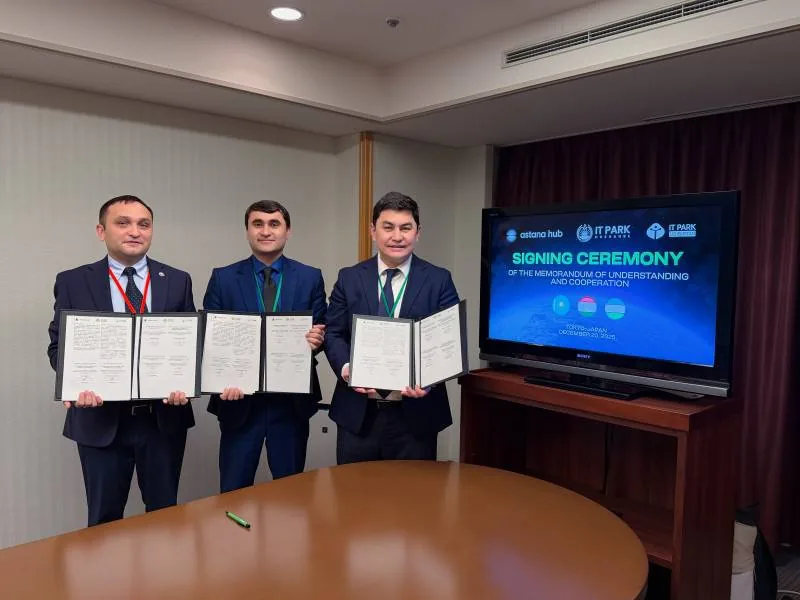
Tajikistan has become a new member of the regional innovation alliance Central Asian Innovation Hubs
Mansur Ismagulov