How to raise over $600,000 in investments: a case study of the startup Deepen
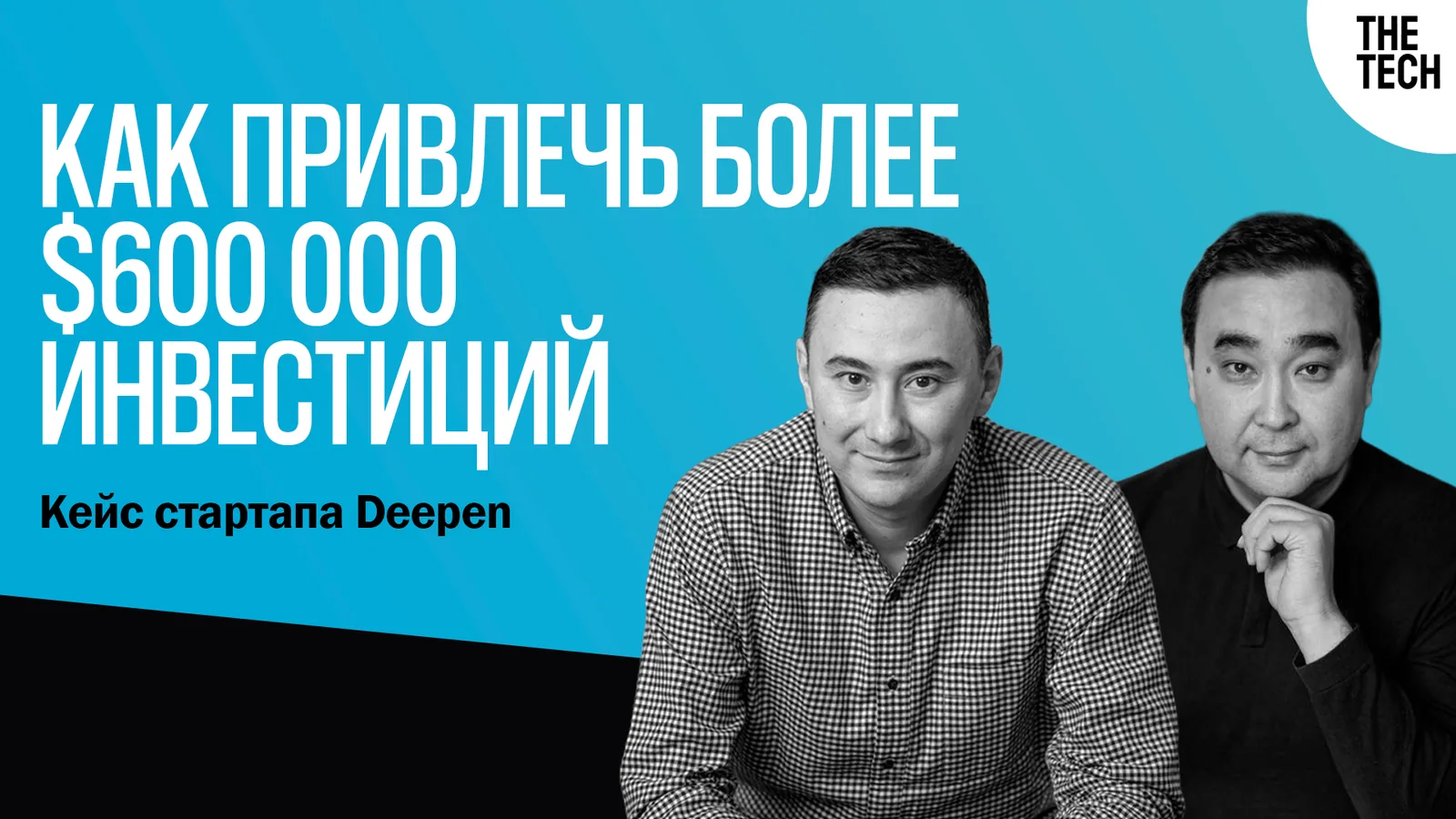
On The Tech’s YouTube channel, a live stream was held with Farhod Firkatov, founder of Deepen. He shared how the startup secured funding — from its first business angel investor from South Korea to a round with a professional venture club, why it was necessary to negotiate with over 100 investors, and how a SaaS product for gyms evolved into a full-fledged wellness ecosystem.
Farhod Firkatov, CEO of Deepen
About the Startup
Deepen is an ecosystem for the fitness industry in Central Asia. It all started as a SaaS product for gyms: a tool that helped facilities manage client records, memberships, and schedules instead of relying on pens, paper, and spreadsheets. Over time, the product expanded into three interconnected areas: a B2B service for gyms, a B2C application for end users, and a line of proprietary products, including wearable devices and an AI trainer.
The idea was born from personal pain: Uzbekistan ranks among the world’s leaders in cardiovascular mortality, while population engagement in sports remains at around 1%. Experience working in the US in corporate wellness, and later as country manager for the international fitness service OneFit in Uzbekistan, provided a deep understanding of the market and the confidence that digitalization of the industry here was inevitable.
How the Product Works
We built a model based on the flywheel principle. First, we created a B2B tool for gyms to acquire users through them. From B2B, we moved to a B2C product for the gyms’ end clients. As people began actively using it, we built our own user base, which we can now leverage to sell our own products without incurring new advertising costs.
Today, Deepen has between 170 and 180 B2B clients and over 10,000 B2C users, with the base growing by 5,000+ new users monthly. On this foundation, the company launches its own wearable devices and AI trainer, products sold directly to this existing audience.
Investment Rounds and Key Results
Deepen’s first check came from a business angel investor from South Korea, who had already invested in Uzbekistan and was looking for local connections. The introduction was made through personal networking and evolved into a five-day trip to Korea, where the investor evaluated not so much the numbers but the founder himself — his discipline, engagement, and willingness to see things through.
The round closed at a valuation of $750,000, with terms of 20% equity for $150,000. The investment came in two tranches of $75,000 each. Local business angels from an investment club joined the Korean investor; they initially offered a valuation of around $500,000 but came on board after the round had already started closing.
The next stage was a round with the venture fund Alchemist Ventures, approximately a year and a half after entering the market, when the company already had a stable base of paying customers.
The most recent bridge round closed with an angel investor in three and a half months: the company raised $300,000 at a valuation of $6 million, an eightfold increase compared to the initial valuation.
The Investment Funnel
In the last round, six potential investors — funds and private individuals — entered negotiations. Two reached the final stage and made offers. We did not agree on valuation with one of them, and the deal was closed with a single investor.
Over a year and a half of working on Deepen, the founder conducted more than 100 meetings with investors. By his own estimate, fundraising at its peak consumed up to 60% of his time and energy; it was not a side activity but a full-fledged parallel job.
Strategy and Approach to Fundraising
Investors were found through warm introductions, investment clubs, and personal networking: constant presence at meetups, mentoring, and participating in juries. The previous successful case with 1Fit in Uzbekistan also significantly helped open doors.
A good approach is positioning through analogies with well-known Western products. In conversations with one of the funds, Deepen was described as a combination of Mindbody (B2B for gyms), Strava (community and activity), and Whoop (wearable devices), adapted for a growing market. An investor specializing in such successful business models, proven in the West, offered to introduce us to a relevant fund.
A separate lesson is to start conversations with investors long before the money is actually needed. If a round needs to close in six months, work on it should begin now: gathering feedback on what metrics investors want to see and adjusting company growth accordingly.
Company Valuation
The company’s valuation grew from $750,000 to $6 million due to a shift in the business model. Instead of a single SaaS product for businesses, the company created an ecosystem with three revenue streams: B2B subscription, B2C application, and its own product line.
Mistakes and Lessons
Looking back, I realize that in the first investment round, we should have agreed to give up a smaller equity stake. For example, raising $75,000 for 10% instead of immediately taking $150,000 for 20%. At the time, I lacked experience working in Uzbekistan’s venture market, which was just beginning to form.
However, this decision ultimately worked in our favor. The retained 10% later allowed us to raise significantly more investment in the next venture round without giving up a larger share of the company.
Another important lesson for me relates to the legal aspects of deals in Uzbekistan. In the US, you can quickly sign a SAFE agreement and receive funds, but our process is much more complex: the investor needs to become a co-founder, collect signatures from all parties, and go through banking procedures. Even if the money is ready, the paperwork can take several days.
Finally, I realized that you should not endlessly prolong negotiations with an investor. If they start slowing down the company’s development, it is better to immediately set a deadline for making a decision. If an agreement cannot be reached within that time, you should move on and look for another partner.
Advice for Founders
- Build a business around what you genuinely love and understand from the inside. This applies to the product, fundraising, and sales.
- There is no such thing as a perfect product. Launch your MVP to the market as early as possible and let early customers pay, even small amounts: free offerings do not create value and do not provide honest feedback.
- In the early stages, investors invest not so much in numbers but in the founder, his engagement, discipline, and willingness to see things through.
- Start building relationships with investors long before you need the money. Fundraising involves long negotiations, due diligence, and document work, not a one-time transaction.
- Do not be greedy with equity in the early stages; it is better to raise less money for a smaller percentage and leave room for future, larger rounds.
- Investment is a resource for the product and marketing, not for the founder’s personal expenses.
- If negotiations drag on without reason, do not be afraid to force a decision or walk away and look for another partner.
The Tech on Telegram Follow The Tech on Telegram
Keep up with the latest technology and startup news.
Related reading




More from this author

Article Useful
How to protect your accounts from hacking: 8 settings you should check today
The Tech

Article Useful
500 Global: How the Accelerator Works and Who Can Receive Investments
The Tech

Article Interviews
Game Development in Central Asia: Arkady Moldavski on Developing Reverb and the Growth of the Industry
The Tech

Article Useful
Google, Tesla, BlackRock, and the IMF: Where to Apply for an Internship in Fall 2026
The Tech

News IT
Tesla unveiled the flying electric car Roadster
The Tech

News IT
Intero Biosystems startup won the Startup Battlefield at TechCrunch Disrupt 2026
The Tech