How to Attract Over $1,000,000 in Investments: The TrustMe Case
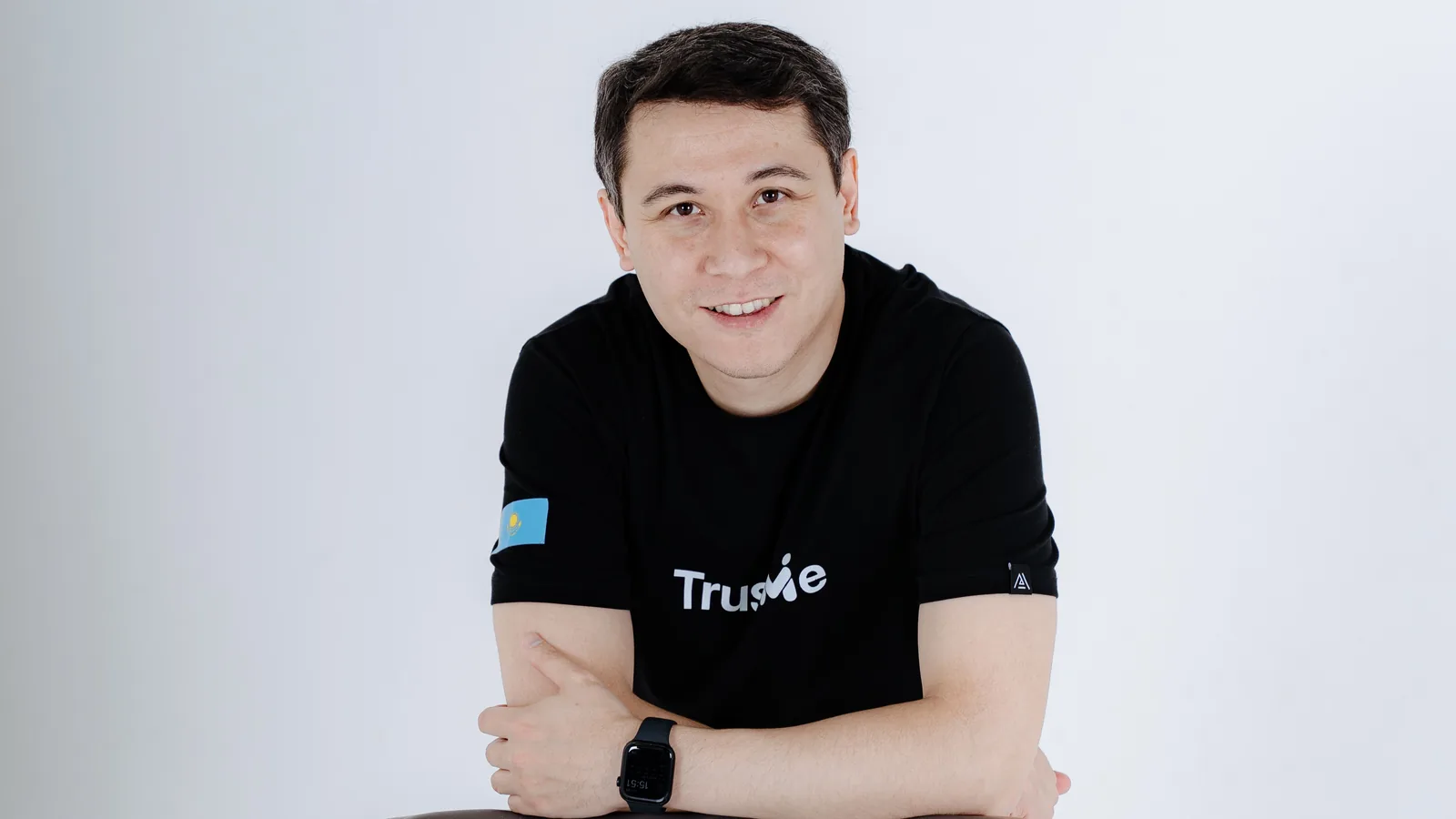
In this episode, we analyze the real journey of TrustMe startup in attracting investments. Founder Chingiz Dauletbayev shares his experience: from the initial $100,000 raised under the friends & family model to a $1,000,000 investment from Tim Draper. This is a story about systematic fundraising, strong personal belief in the product, and a broad global vision.
Chingiz Dauletbayev, CEO of TrustMe
About the startup and the founder
I am the founder of the TrustMe startup. I have been building this project for over four years, and sales of the Trust Contract service began three years ago.
TrustMe is one of the fastest-growing startups in Central Asia. We specialize in digital contract execution through various signing methods, with the primary format being SMS signing. The key feature of our product is programmable contracts, or smart contracts, which allow for embedding different execution conditions.
From the very beginning, I built TrustMe as a global venture project with the potential for worldwide scaling.
Before this, I had experience creating a FinTech product—an analogue of Alipay and WeChat Pay—back in 2007. At that time, the project did not receive investment and was shut down, but this experience became an important point of reflection for me.
Investment rounds and key achievements
At the start, I invested my own $200,000 into the project.
The first investment round took place in October 2021. I managed to raise $100,000 from 6 investors out of 25 potential participants from my friends & family circle. Within this round, I allocated 4% of the company at a valuation of $2.5 million. The round itself took only three to five days due to the time constraint.
The second round took place in May–June 2022—I raised an additional $100,000 from three investors out of approximately 50 contacts.
In January 2023, the third round occurred, where I managed to raise about $100,000 from two to three investors out of more than 100 contacts.
In the summer of 2023, I raised $200,000 after completing the Silkway Accelerator program by Astana Hub and Google for Startups. Over the three months of participation in the program, the project's key metrics tripled.
Among the achievements were making it into the top 10 startups of Digital Bridge, as well as the top 10 out of 160 startups from 60 countries in the Hero Training Accelerator in Silicon Valley, where we were the sole finalist from Central Asia.
In November 2023, I reached a verbal agreement for investment with Tim Draper. The negotiations and due diligence process took about a year, resulting in a $1,000,000 investment. The funds arrived in late December–early January. Concurrently during this period, I also attracted an interim investor for $100,000.
Strategy and approach to fundraising
I always set strict deadlines for rounds—three days, ten days. This creates a sense of scarcity and accelerates decision-making.
I used elements of game theory: investors did not know who was investing and how much. If there were more applications than the limit, shares were reduced proportionally.
I noticed that everything hinges on trust. Conversion rates gradually declined: out of 25 people, six invested; out of 50, three; out of 100+, only two or three. The further the circle of contacts, the lower the level of trust.
During fundraising periods, I focused exclusively on this—making calls and pitching. Overall, as a venture founder, I believe that about 20% of time is always spent on attracting investment.
After hundreds of calls, my pitch became second nature—I was ready to answer any questions.
At the same time, I consciously did not live off current revenue: I reinvested everything into growth and marketing, sometimes even going into debt to avoid slowing down scaling.
Mistakes and lessons
Initially, I tried to raise $200,000 from three investors—this did not work. Later, I realized that it is necessary to start with smaller checks and a wider base.
There were situations where investors promised to invest but dragged their feet. Then I understood that a promise is not money.
In 2019, during the previous FinTech project, I reacted too emotionally to rejections and ultimately shut down the project. Now I understand that I lacked inner confidence at that time.
I also realized that investors can well sense the founder's state. If you doubt, it shows.
Advice for founders
1. Money is fuel. Without investment, rapid scaling is practically impossible.
2. It is important not to stop after the first rejections and work with the funnel: the further the circle of contacts, the lower the conversion—and this is normal.
3. Fundraising must be systematic and have deadlines.
4. The pitch needs to be refined through dozens and hundreds of repetitions.
5. The key is to have absolute belief in your product.
6. If investors do not show interest, this is also an important signal and a form of validation.
7. From the very beginning, it is important to think globally and not hinder growth for the sake of short-term
profitability.
8. And most importantly—never give up.
The Tech on Telegram Follow The Tech on Telegram
Keep up with the latest technology and startup news.
Related reading




More from this author

Article Useful
How to protect your accounts from hacking: 8 settings you should check today
The Tech

Article Useful
500 Global: How the Accelerator Works and Who Can Receive Investments
The Tech

Article Interviews
Game Development in Central Asia: Arkady Moldavski on Developing Reverb and the Growth of the Industry
The Tech

Article Useful
Google, Tesla, BlackRock, and the IMF: Where to Apply for an Internship in Fall 2026
The Tech

News IT
Tesla unveiled the flying electric car Roadster
The Tech

News IT
Intero Biosystems startup won the Startup Battlefield at TechCrunch Disrupt 2026
The Tech