How to Raise $500,000 at the Pre-Seed Stage: The Moon AI Case
On The Tech's broadcast, Aschat Adhamov, founder of Moon AI, broke down his journey from initial self-funding to securing a Pre-Seed round. In a conversation with Murat Zhunusov, he discussed bootstrapping, nine months of working with funds, speaking at the CEFA forum, and how he managed to close a deal right on stage at Oscar Hartmann's pitch show.
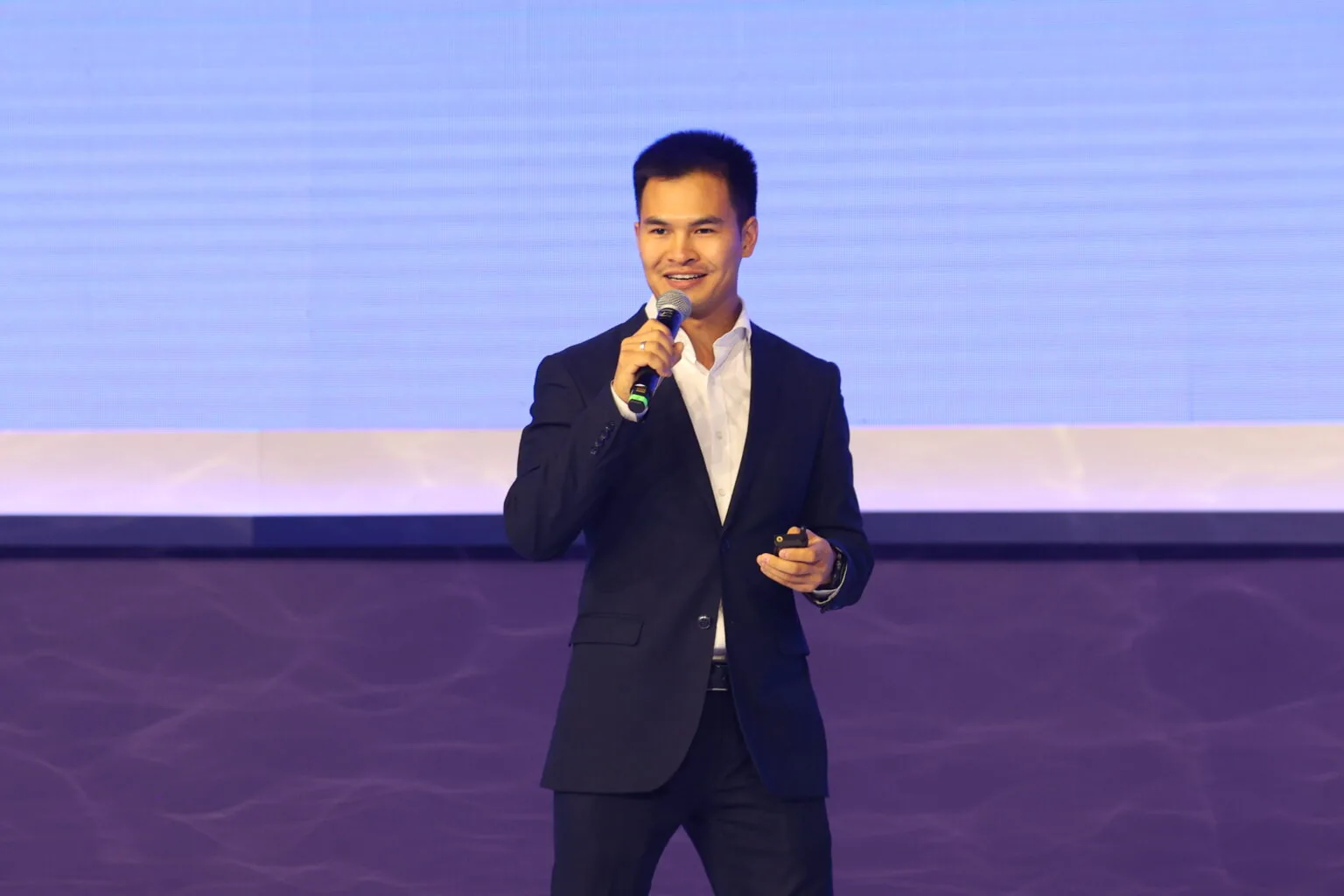
Askhat Adhamov, CEO Moon AI
About the startup and founder
I am a serial founder of Moon AI. Before this, I had a failed startup, and that experience helped during fundraising. I also consulted more than 150 companies on automating business processes and building sales departments.
Moon AI is a platform for implementing AI agents in small and medium-sized businesses. Any entrepreneur, top manager, or manager can go to the platform and literally in a few clicks create a working agent and integrate it into communication channels.
Investment rounds and key achievements
At the start, I invested my own money: I had to sell an apartment and other assets to prove that I believed in the project.
The first external money came from an investor from a previous closed project — he took the initiative himself and supported the new idea. The second early investor was a close friend from the Family & Friends circle who simply believed.
At the pre-seed stage, we raised $500,000 at a $5 million valuation using SAFE. The round is still closing, and the final amount will be slightly higher. The funds were directed to cover cash flow gaps — technical specialists are expensive, and an early-stage startup earns little. This money will last for one year, during which time the task is to reach the next round.
The turning point was the speech at the CEVF forum in June 2024 — after that, we established relationships with MOST Ventures and other funds that subsequently invested. A separate achievement was the investment from Oscar Hartman — the deal was closed right on the stage of his pitch show in Almaty.
Strategy and approach to fundraising
Before the CEVF forum, we bootstrapped and did not open a round. After the speech, we began actively working with funds — it took about nine months from first contact to receiving money. Fundraising took 20-30% of the time, the rest was product and team. During cash flow gaps, I attracted borrowed funds so that the company could continue to grow.
About 80% of investments we received through outbound flow: we wrote, knocked, and pitched ourselves. There were about 10-15 direct rejections, while many of those who initially said no ultimately invested. I prefer a direct refusal to a vague answer — it gives an understanding that you need to move on.
I had been knocking on MOST Ventures' doors since my previous project: they ignored me, but I still wrote and called. After three years, they saw the dynamics: who I was then and who I am now. Out of more than 300 applications, they selected about 20-30 for the shortlist and invested in only five projects. For them, it was important that we already had real clients and month-over-month revenue growth. At the Pre-Seed stage, top investors invest in the founder and team — they analyzed the technical stack, people's motivation, and how long they had known each other.
I have known Oscar Hartman for about five years through his videos — his philosophy has become part of my approach to life. Our tracker Evgeny spoke at his forum and wrote to all startups about the opportunity to apply. We were initially accepted, but two days before the performance, we were rejected. I secured participation through persistent negotiations — I went for PR and 100,000-200,000 views on YouTube. It turned out differently.
On stage, Oscar offered to buy 5% for $50,000, valuing the company at $1 million. I did not agree and used his own argument: a founder who gives a discount to an investor will give a discount everywhere. After the show, there was a short due diligence with his team, and then we immediately signed the agreement.
The valuation at the Pre-Seed stage is not formed based on EBITDA or revenue. The logic is this: I need $500,000 — less will not be enough, the money will burn up halfway like a rocket without fuel. Giving away more than 10% is not possible — otherwise, by Series A, the founder will have less than 50% left, and large funds will not enter. From this: $500,000 is 10%, meaning the valuation is $5 million. At later stages, ARR is multiplied by the market multiple: for AI companies with rapid growth, this is 15-20x. Investors enter when they see exit potential — they buy a stake at $5 million to sell it at $50 million or a billion.
In venture capital, unlike traditional investments, everyone tells the truth. What takes 6-12 months for fundraising — takes 6-12 months. There are no hidden pitfalls here. Everything rests on reputation — this is the main asset that no one risks.
Mistakes and lessons
The startup is two years old, but we have been actively growing only in the last six months. The first year and a half were spent scaling in unnecessary directions: we tested many hypotheses, and areas appeared that we would not develop today, but they exist because there are paying customers there. For a startup, this is a minus. I would not scale until I clearly understood PMF — I would do non-scalable things very well for a small audience and only go into growth after confirming that people are willing to pay and recommend.
We initially built the product without AI in development processes — now this creates barriers when implementing new tools. The current task is to be among those who test and apply new things first.
In closing previous businesses, I was guided by the principle: while you spend time on what you do not believe in, the fire that could create something big goes out. At 18–19 years old, I gave away a profitable educational center in Almaty and was left without money before the quarantine. This opened the opportunity to launch an online school, which, at a valuation of $1,250,000, raised $100,000 from business angel Tolgat Ismail and grew 80 times in a year. Then I closed it too — I saw that there was no potential to become an international company there. A business where growth requires proportional growth of people competes with budget, not technology.
I use a simple filter: everything that brings me closer to creating a company with a capitalization above $1 billion — I do. What stops bringing me closer — I stop. That is why I agreed to the StartX program from Stanford, even though it is three months outside the region: if the goal is large-scale, you need to create opportunities there.
Advice for founders
- Create an MVP. With AI and vibe coding, this can be done in two hours. You can only check an idea by offering it to real customers and asking them to pay — business plans and financial models do not work.
- Go to investors as early as possible. The investor watches you in dynamics: you come with poor metrics, improve, come again — that is what he loves. Instability and immaturity of the founder are one of the main reasons for rejections.
- Participate in accelerators. Most are free — they provide trackers, resources, access to investors, and feedback. Apply everywhere: we applied to three or four programs in parallel, passed everywhere, and chose ourselves.
The Tech on Telegram Follow The Tech on Telegram
Keep up with the latest technology and startup news.
Related reading






More from this author

Article Useful
How to protect your accounts from hacking: 8 settings you should check today
The Tech

Article Useful
500 Global: How the Accelerator Works and Who Can Receive Investments
The Tech

Article Interviews
Game Development in Central Asia: Arkady Moldavski on Developing Reverb and the Growth of the Industry
The Tech

Article Useful
Google, Tesla, BlackRock, and the IMF: Where to Apply for an Internship in Fall 2026
The Tech

News IT
Tesla unveiled the flying electric car Roadster
The Tech

News IT
Intero Biosystems startup won the Startup Battlefield at TechCrunch Disrupt 2026
The Tech