How a guy from Baku became a UX consultant for international companies
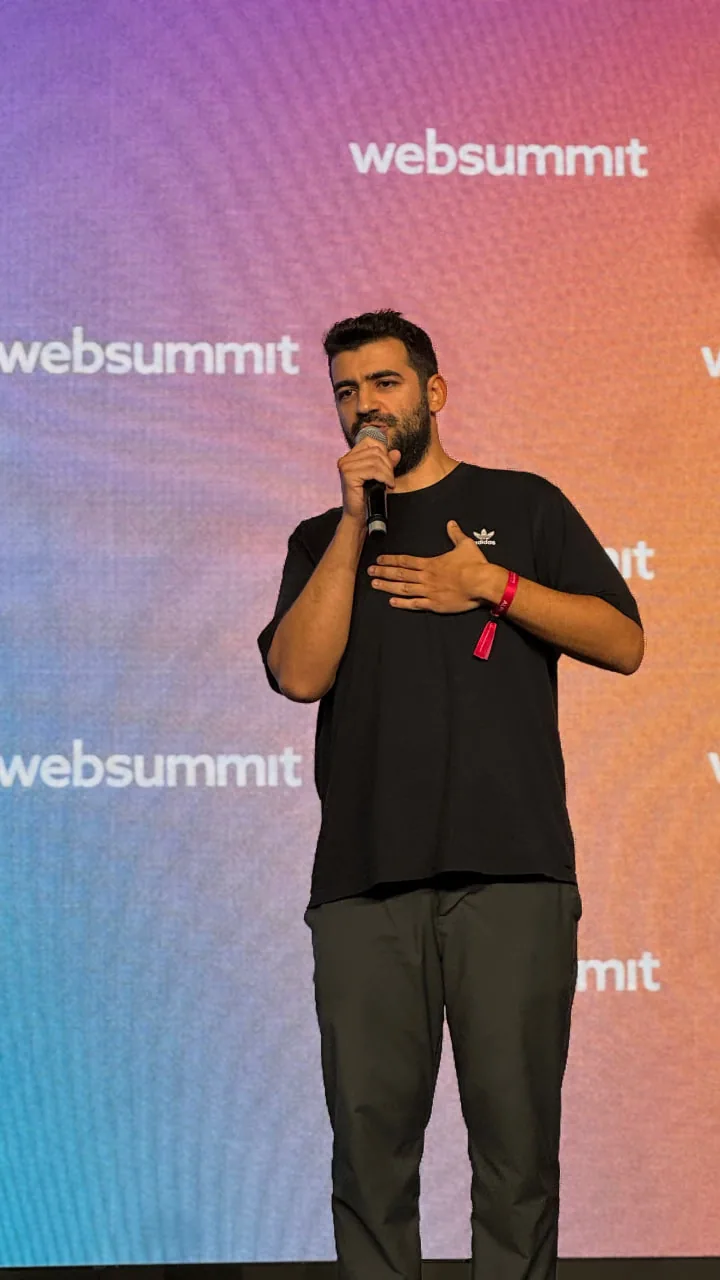
Agshin Rajabov, UX designer and entrepreneur from Baku, founder of Emotix and the first UX consultant in Azerbaijan, told The Tech about his path into the profession, his work at EA and Deutsche Bank, and the challenges of an IT career.
Agshin Rajabov, City: Baku, UX Consultant, founder, LinkedIn
About Me
I have been working in the field of user experience and design for over 15 years, both as a designer and an entrepreneur. I currently live in Tallinn, Estonia, and am the founder of Emotix, as well as the first UX consultant in Azerbaijan.
My educational path was unconventional, and this likely shaped my professional trajectory significantly.
I earned my bachelor’s degree in Poland at the Poznań School of Social Sciences, in a field related to psychology and design. At the time, such a combination of disciplines was hardly common, and not everyone understood why one would study psychology alongside design. However, for me, these fields were inherently interconnected from the start.
Later, I moved to Istanbul, where I obtained a master’s degree in film and cinema at Mimar Sinan University. On the surface, the combination of psychology, film, and design might seem disjointed, but in practice, these fields intersect closely.
Film is one of the most developed forms of user experience—the director manages the viewer’s attention, determines when and what emotion to evoke, and how to structure emotional dynamics. Design in the digital environment does the same thing, but on an interface screen.
Recently, at one of the events, I was asked how psychology, film, and UX design are connected. My answer remains unchanged: these are three different languages describing the same system—understanding how people perceive information, make decisions, and experience emotions. That is exactly what user experience is.
About My First Job in IT
I did not consciously choose a career in information technology—it developed naturally. At 17, I was living in Poland and was interested in visual interfaces and how people interact with digital products. At that time, the term user experience was not yet widely used; graphic and web design were more common terms. The key moment came when I tried to order food online in Poland: the website was so complicated that the process took about 20 minutes and ended with the order being canceled. Then I realized that bad design is the result of specific decisions, which means it can be improved. This became the starting point of my interest in this field.
Later, I worked at Electronic Arts and Deutsche Bank. Each experience provided a distinct professional focus: in the gaming industry, I gained an understanding of the emotional impact of design; in the banking sector, I learned about the complexity of enterprise solutions. This shaped my approach as a designer working simultaneously in B2C and B2B directions. Currently, I am developing my own company and educational platform, whose goal is to help startups validate hypotheses before development begins, since many errors stem from incorrectly defining the problem. Education and mentoring remain an important part of my activities.
I got my first professional position at 17 in Poland, at a small creative studio, where I started as a junior designer. The environment did not offer onboarding or mentorship, and learning was built on independent observation and practice. I learned by observing my colleagues and then reinforcing that knowledge on my own—this experience proved more valuable than formal education.
The tasks included banners, landing pages, interface elements, and logos. Often, several versions were created that were not approved, which later led to an understanding of the iterative nature of design. It was then that a key realization formed: design is not about visual aesthetics, but about solving a problem, where every element must have a functional justification.
The interview process at Electronic Arts and Deutsche Bank was significantly simpler back then and often resembled an informal conversation. Over time, it became clear that interviews are not exams, but a mutual assessment of fit. Companies at an early stage evaluate not so much skills as thinking, interest, and approach to problem-solving. Questions focused on logic rather than tools: reasons for choosing the profession, evaluation of work, and analysis of decisions. A “correct answer” was not important; rather, the way of thinking was.
Later, working in different countries and large companies, I came to understand that in strong teams, the key is not proficiency with tools, but the ability to form one’s own opinion about the product and user experience.
Formal education was not the decisive factor in getting my first job—interest, portfolio, and practice played the main role. However, psychology helped me better understand user behavior, while training in film and storytelling allowed me to perceive a product as a narrative structure with a beginning, conflict, and resolution.
Among personal qualities, curiosity, the ability to listen, and the capacity to simplify solutions proved most important. These qualities allowed me to develop faster, understand users more accurately, and avoid unnecessary complexity in solutions.

Challenges
The main difficulties in my first job were related to professional insecurity, language barriers, and lack of experience. At Punk Team in Poland, I often felt too young for the role, so I compensated for this with complex tasks and overtime. A separate issue was language: my Polish was weak, and I needed to quickly improve my English. In meetings, I often understood almost nothing, especially due to technical terms, so I started independently analyzing and translating everything I didn’t understand, and I adopted a rule not to leave a meeting without fully understanding it.
I also lacked commercial experience, so I created projects on my own: brand redesigns, logos, local business tasks, and university posters. A difficult aspect was the sense of belonging—working in another country among more experienced people caused constant self-doubt.
A separate challenge was rejections and silence: not receiving a response was perceived more heavily than a direct rejection and affected my motivation. Later, I began to view rejections as feedback rather than an evaluation of my personality, and used them to improve my portfolio and approach. At the same time, I changed my strategy: instead of focusing on the quantity of applications, I shifted to quality—personalized messages and more precise targeting, which increased response rates.
Another difficulty was imposter syndrome, especially early in my career. There was an incident with my first independent project—a website for a restaurant that the client rejected without explanation; this strongly impacted my confidence but became an important lesson that work is a process of iterations, not a search for a perfect result.
Communication was also a significant challenge: the ability to explain decisions and work with feedback is formed only through practice. Overall, I encountered the classic paradox—that you need experience to get a job, but you need a job to gain experience—which is resolved through personal projects and practice. My first job ultimately became for me primarily a learning stage, rather than a quick career achievement.
3 Tips to Help You Find a Job in IT
First and foremost, you must engage in practical work before starting your job search. Employers cannot evaluate a candidate without demonstrating real skills. Instead of waiting, you should build your own portfolio and projects by working on real tasks: problems faced by family, friends, or small businesses. You can redesign existing products or create projects for free. The market is oriented not toward diplomas, but toward proof of skills. In my case, when applying to my first company, my portfolio did not contain commercial clients—only 15–20 independent projects, which turned out to be sufficient.
A portfolio is not just a collection of works, but a reflection of your way of thinking. Companies evaluate not only experience but also your approach to problem-solving, so it is important to describe each project: the problem, reasons for choosing the solution, factors considered, and the result. Employers evaluate not the product, but your thinking.
Second, it is more effective to interact with people rather than with companies. Mass emailing and waiting for responses is the least effective strategy. A more effective approach is communication via LinkedIn, participating in discussions, and direct contact with professionals. It is important to attend conferences, meetups, and professional events, as well as follow specialists and media. Commenting on work also helps establish connections. Hiring decisions are made by people, not companies, and in my case, my first employment also occurred through a personal connection.
Networking is not manipulation, but professional interest. Instead of asking for a job, it is better to ask questions about a specialist’s path. People are happy to share their experience and remember those who show genuine interest.
Also, it is important to view rejections as a source of data. Each rejection provides information: lack of experience, portfolio gaps, or unsuitable timing. Emotional reactions should be excluded. Rejections are not a permanent state: at the start, they seem frequent, but over time they lose significance. In the long term, only the result matters. A career in IT is a long process, and rejections in the first years are merely its initial stage.
The Tech on Telegram Follow The Tech on Telegram
Keep up with the latest technology and startup news.
Related reading






More from this author

Article Useful
How to protect your accounts from hacking: 8 settings you should check today
The Tech

Article Useful
500 Global: How the Accelerator Works and Who Can Receive Investments
The Tech

Article Interviews
Game Development in Central Asia: Arkady Moldavski on Developing Reverb and the Growth of the Industry
The Tech

Article Useful
Google, Tesla, BlackRock, and the IMF: Where to Apply for an Internship in Fall 2026
The Tech

News IT
Tesla unveiled the flying electric car Roadster
The Tech

News IT
Intero Biosystems startup won the Startup Battlefield at TechCrunch Disrupt 2026
The Tech