How to find a job in IT without experience: Asad Fayzullaev's story after 325 rejections
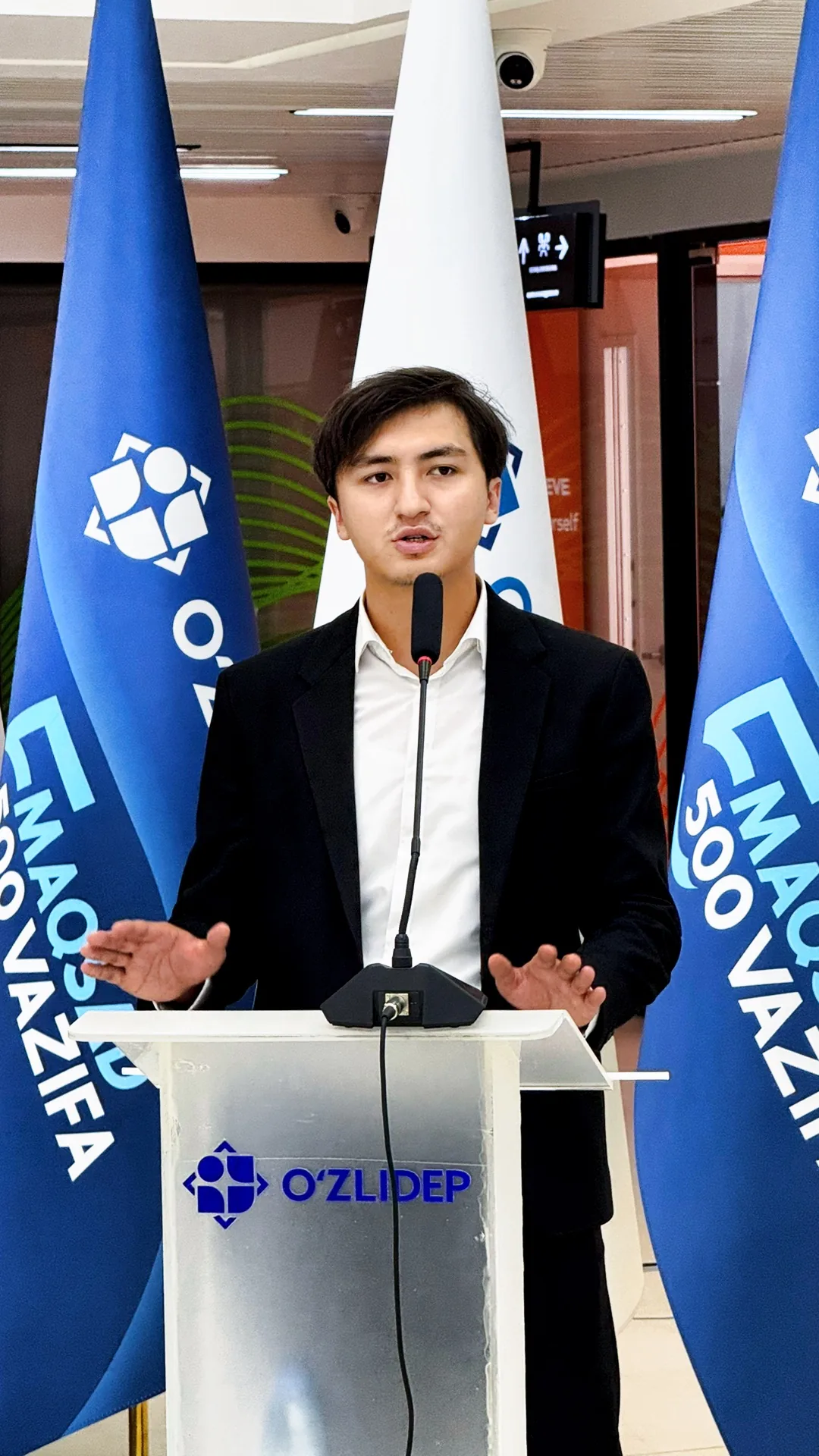
Asad Fayzullaev began his career even while studying at university. First, he launched his online store, then worked at a tech startup, and today he develops digital products at ANORBANK. In an interview, he shared how to land your first IT job without experience and why 325 rejections don’t mean you’re a bad specialist.
The Tech AI
Get the key points in seconds - a short summary from The Tech AI.
Asad Fayzullaev, a financier and manager at ANORBANK (Tashkent), started his business at the age of 15 and worked at TASS Vision. At the bank, he develops digital platforms, using financial thinking to evaluate the return on investment of integrations. Fayzullaev advises building a portfolio of projects, networking, and honestly discussing case studies during job interviews.
Asad Fayzullayev, city — Tashkent, project manager at ANORBANK, LinkedIn
About Me
I am a financier by training and recently graduated from Westminster International University in Tashkent. My major is Finance General. However, I started doing business before I even studied finance. In the ninth grade, my team and I launched an online store called affix.uz.
At that time, Abad.uz and Olcha.uz were already on the market, and I seriously intended to compete with them. But the project had to be closed because it interfered with my university entrance exam preparation. And there was nowhere to raise funds because the venture capital market simply did not exist in Uzbekistan back then.
But a failed business teaches faster than any course. At 15, I learned through personal experience what a small team and a company with mismatched expenses look like. Later, at university, they explained this to me using formulas, and I already knew what they were talking about.

About My First IT Job
I entered the IT field through my online store. To build the product I was selling, I started learning Python—I wanted to understand what it was made of. In 2022, when choosing a major at university among IT, business, economics, and finance, I bet on finance. I was following the development of artificial intelligence and understood that automation would primarily affect coding. The value would remain with those who understand logic and patterns, and this can be learned without a programmer’s degree.
I chose finance consciously. It teaches you to see a product through numbers and provides flexibility: a financier is needed both in a government institution and in a bank. Currently, I work at ANORBANK in the area of digital platforms and ecosystems. I am involved in the development of the mobile app, ecosystem products, and partner services. The idea is simple: the app should solve not only banking but also everyday tasks. For the client, it’s one button, but behind it are months of negotiations, legal work, and technical integration.
Finance has been particularly useful here. Before integration, I calculate how much it will bring to the bank, what expenses it will reduce, and when it will pay off. Therefore, my first question is not “Is this interesting?” but “How much does it cost and what will it bring?”
At 19, I joined TASS Vision, one of the country’s strongest tech startups, as an intern. After a month, I started working on international markets, and later became a partner manager for the Caucasus region and the Baltic states. I handled everything—from sales and exports to new features, support, and development tasks. I conducted negotiations in Azerbaijan, Kazakhstan, and Kyrgyzstan, attended meetings, and closed deals. I exceeded my annual KPI in just three months. Together with the team, we also expanded to Peru—the first Uzbek tech startup in Latin America.
After leaving TASS Vision, I was invited to 11 companies, and I interviewed at each one. They asked about both hard and soft skills. My experience managing teams of 15–20 people helped me, so I answered questions not with theory but with real cases. Another advantage was my experience at the international audit firm Forvis Mazars. In banking, this turned out to be a strong argument: someone who understands both the product and accounting covers two areas at once.
I believe it is useless to memorize answers for a specific company—the conversation will not go according to the script anyway, and prepared responses are obvious. You should prepare not for questions but for your own cases: what was there before you, what you did, and what changed. And be able to tell about it in a minute.
If you don’t know something, it’s better to say so directly. An interviewer can almost always tell the difference between an honest “I haven’t encountered this” and an attempt to wiggle out of it. An honest “I don’t know” closes one question, but trying to wiggle out might close the entire interview.
My education helped me. A diploma and real education are different things. It was the university that formed my financial mindset, the habit of counting, and the ability to read business through numbers.
What helps most in work is the willingness to dig into details and constantly ask questions: “What is this?”, “How does it work?”, “Why exactly like this?” The grade stays in the diploma, but understanding stays with you.
Today, when AI takes on more and more operational work, it is especially important to be able to think critically and ask the right questions. Tools become obsolete, but this skill remains.
After university, I continue to learn—I take courses on Coursera and communicate a lot with experienced professionals. For me, a specialist ends the moment they decide they already know everything.

Challenges
As a student, I know from my own experience: the main difficulty is that you have no experience, yet everyone wants experience. This is a vicious circle that every first- or second-year student hits. I solved it head-on—I went to work for free. The university had a department that worked with startups and projects, and I went there as an intern. I worked for a year without pay because money didn’t interest me at all. I needed a portfolio and an understanding of how everything works from the inside. After a year, I had both, and conversations with employers became completely different.
But unpaid work is justified only when it has a deadline and a clear result in the form of projects. If after six months you have nothing to show except an entry in your employment record, it is no longer an investment but exploitation.
I still have my statistics. In my first and second years, I sent 325 applications to IT companies and banks. Of those, zero suitable offers. Almost everywhere they asked the same thing: experience and portfolio, which projects you participated in, and what you did yourself. You apply precisely to gain experience, but they don’t hire you because you have no experience. After those 325 applications, I changed not my motivation but my strategy. It became clear that sending resumes doesn’t work; having projects behind you does. So I went out to get projects: an unpaid internship at the university, participation in everything I could reach.
After a year, I applied not as a student without experience but as a person with experience. Then I realized that a rejection itself means almost nothing. 318 automatic rejections are not 318 evaluations of you as a specialist. It’s just a signal: your profile is currently unreadable to recruiters. Rejections are data, not a verdict.
The first challenge was transitioning from a startup to a bank, and it was about speed. In a startup, you come up with an idea, test it, and launch it in a week. In a bank, there are regulatory requirements, security, and compliance, and some obvious solutions simply cannot be implemented. At first, this knocked me off balance, but then I understood: a constraint is not an obstacle to the task but its condition. Within this framework, there is almost always space that no one uses.
The second challenge is partner integrations. From the outside, it seems like negotiations: we agreed, we did it. In reality, each integration is a connection of two systems, two legal departments, and two sets of priorities. The partner has their own release schedule, we have ours, and they rarely coincide.
What saves me here is the habit of keeping the whole picture in mind. I simultaneously handle the commercial side, API documentation, and task formulation for our team. This helps avoid losing weeks on ping-pong between parties.
The third thing I had to learn separately is how to talk to developers. “Make it more convenient” is not a task but a wish. A task is when it is clear what changes, why, and how to check the result. Until I understood this, some of my task descriptions came back with questions, and the fault was mine, not the team’s.
If I were to draw a general conclusion, in a bank, the winner is not the one who insists louder but the one who comes with a calculation. When you show how much a solution will bring and what it will optimize, the conversation becomes much shorter.
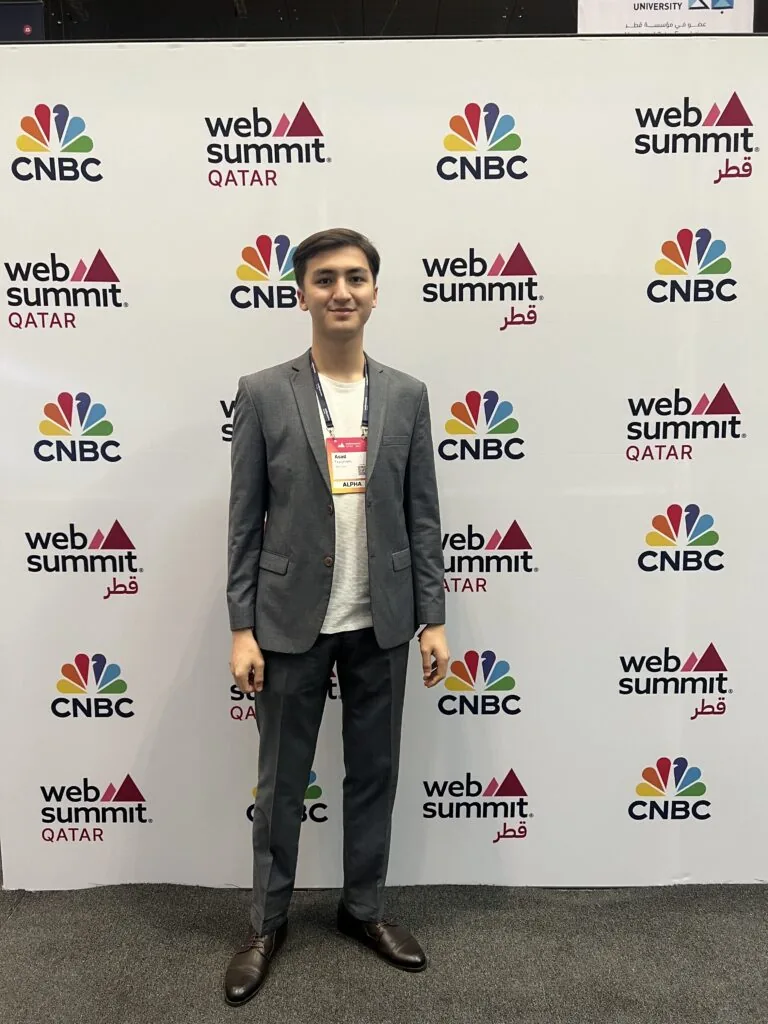
3 Tips to Help You Find a Job in IT
First, build a portfolio, not certificates. At the start, 10 courses lose to one real project where you did something and can explain exactly what. A course shows what you learned, but a project shows results.
Second, go where the people are. There are startup communities, hackathons, meetups, university projects, and almost all good offers come from someone who has seen you in action, not from a job application. This is not about connections; it’s about the fact that a recommendation removes some uncertainty.
And the third tip—learn to tell what you did at work. For example, not just “participated in a project,” but what was there before you, what you did, and what changed. This is a separate skill, and it often matters more than the experience itself. I have seen such people—stronger than even myself, experienced. They simply lost out in interviews because they couldn’t showcase their work.
And separately—do not tie your self-esteem to job rejections, because I had 322 in a row, and it says nothing about the person. It only says that the strategy is not right yet.
The Tech on Telegram Follow The Tech on Telegram
Keep up with the latest technology and startup news.
Related reading



More from this author

Article Useful
How to protect your accounts from hacking: 8 settings you should check today
The Tech

Article Useful
500 Global: How the Accelerator Works and Who Can Receive Investments
The Tech

Article Interviews
Game Development in Central Asia: Arkady Moldavski on Developing Reverb and the Growth of the Industry
The Tech

Article Useful
Google, Tesla, BlackRock, and the IMF: Where to Apply for an Internship in Fall 2026
The Tech

News IT
Tesla unveiled the flying electric car Roadster
The Tech

News IT
Intero Biosystems startup won the Startup Battlefield at TechCrunch Disrupt 2026
The Tech