How to find an investor. Khazrat Ismailov on Yoshlar Ventures' approach to startups
Shahzod Ismailov, Venture Associate and Director of Corporate Relations at Yoshlar Ventures, shares the main mistakes made by founders, secrets of smart money investments, and explains which startups truly attract the attention of venture funds.
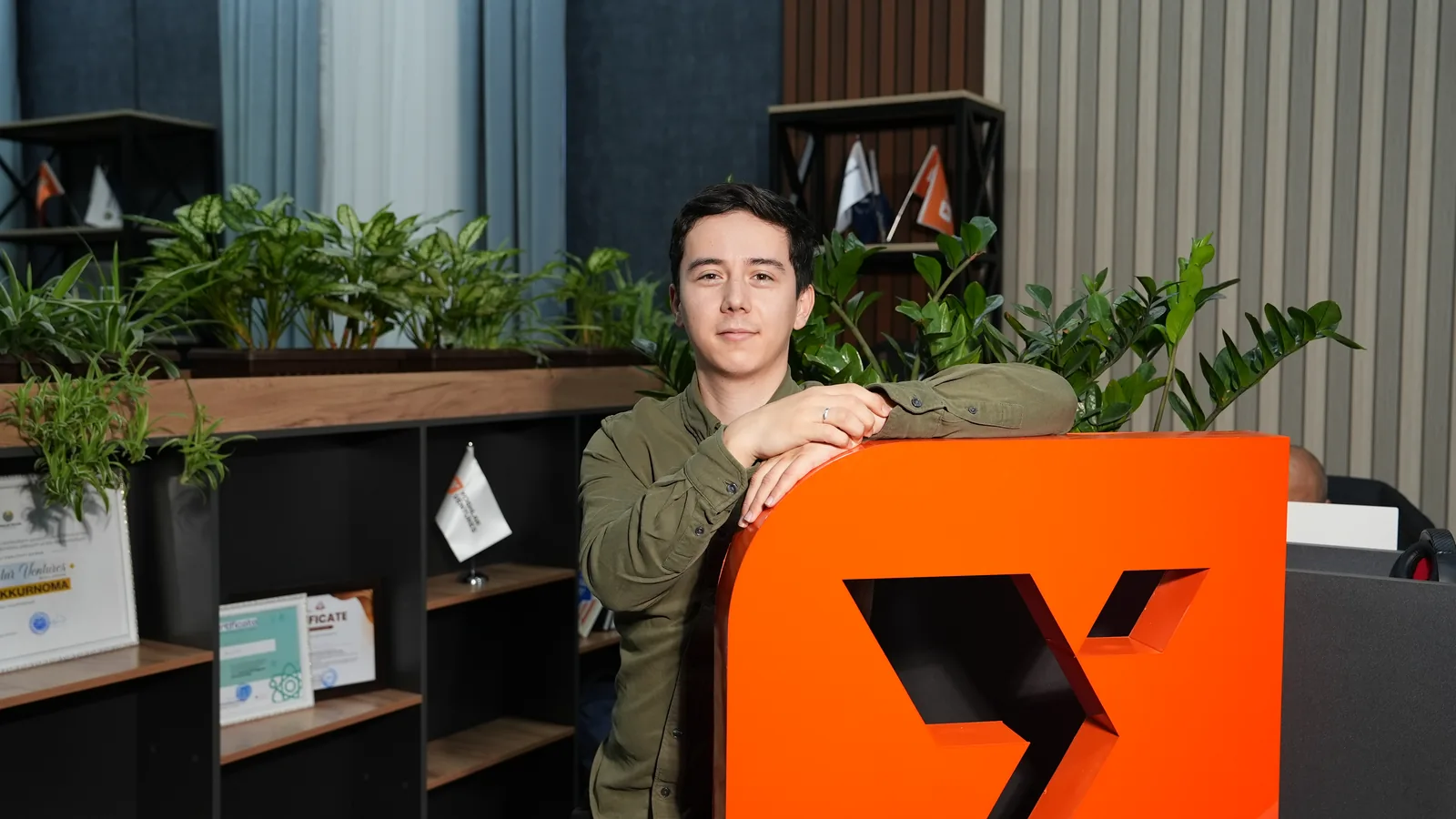
Shakhzod Ismoilov, City — Tashkent, Venture Associate and Director of Corporate Relations, Yoshlar Ventures, LinkedIn
About Me
I am a Venture Associate and Director of Corporate Relations at Yoshlar Ventures. Currently, I have two main responsibilities: fostering the development of the local startup ecosystem in Uzbekistan and working with international startups. Additionally, I manage my own startup investment portfolio.
About Investments
One of the primary challenges we currently observe in Uzbekistan's startup ecosystem is the relatively small number of startups. When we began focusing on developing startups in Uzbekistan, it became clear that we needed to address two difficult-to-combine tasks simultaneously: increasing the quantity of startups while simultaneously improving their quality.
Our venture fund primarily focuses on investing in startups founded by individuals aged 18 to 30. One of our key criteria is the founders themselves. We believe that Uzbekistan has immense potential among founders who can scale to an international level.
Although Uzbekistan's ecosystem is still developing, we are confident that significant leaps can be made in the digitalization of the country's economy. In this regard, we invest not only in international projects but also in those capable of capturing a significant share of the Uzbek market and subsequently helping to develop the Central Asian market. However, we understand that focusing exclusively on the Uzbek and Central Asian markets would be a major mistake.
Therefore, we also make international investments. By international investments, we mean supporting Uzbek founders who can expand into international markets. A key approach is investing "smart money," which helps ventures stand out from others and supports startup growth after they enter our portfolio.
One of the main distinctions of our fund in the local market is the presence of our own media team, a feature no other venture company in the region possesses. Our venture fund operates under the Agency for Youth Affairs, which gives us extensive access to students and individuals who support Uzbekistan's innovation system.
The third aspect is our personal experience. For example, I previously worked at a Big 4 company and later founded my own manufacturing company, where we operated simultaneously in B2B, B2G, and B2C segments. Therefore, my main focus is working with my own portfolio of startups: supporting their expansion into international markets and training them on how to sell products to clients in those markets.
A startup at the initial stage does not necessarily need to enter a large market immediately. If the ultimate goal is international expansion, we immediately train them on how to work with international clients.
We also focus on financial strategy and market entry strategy: by allocating resources correctly, founders can achieve key milestones before the next investment round. In this, we work closely with our financial team to ensure that the KPIs established between the venture fund and the startup are met.
Our maximum investment size at present is approximately $200,000, and we are working to increase it. The investment amount is divided into three parts.
For startups developing an MVP and implementing their first market entry strategy to attract early users, we typically invest up to $40,000. Once the MVP is ready and the startup works on bridging the market gap, transitioning from early users to a broader audience—this stage between Pre-Seed and Seed rounds—we invest up to $100,000.
For the next round, when the startup expands and finds its product-market fit, we make larger investments of up to $200,000.
We plan to hold investments for three to five years for startups focused on the local and Central Asian markets. For international markets, this period is five to seven years.
At the same time, we also make follow-on investments to maintain a reasonable stake in the startup. This allows us to mitigate risks for early-stage startups by investing smaller amounts for a reasonable percentage. When a startup begins to show good results, we provide additional funding and remain in the company's portfolio.
Investor Advice
Many founders make one of the biggest mistakes: they do not understand who venture investors are, what they do, and how they invest. Ventures do not necessarily invest in excellent products or ideas. Even if you already have an MVP, ventures rarely invest in a product that has not been validated by the market unless you have proven experience—for example, two or three successful startups with exits.
If this is your first startup, ventures focus on traction and how the market responds to the product. Additionally, founders must strategically understand which venture funds are suitable for them at early stages, as not all funds are suitable for every startup.
The mentality of venture investors is capitalist: they want to earn money, invest at the early stage, and watch the startup grow. However, a startup does not always need a shareholder who simply provides money and does not participate in the company's development.
Currently, there are many platforms, and the internet is the primary tool for research and discovery. For reference: there are already more than 10 new venture funds in Uzbekistan. Private venture companies are also entering the market. By 2026, more capital is likely to appear, and new venture firms will emerge.
This has both positive and negative aspects. On one hand, more capital is good; on the other, if there are insufficient startups, it may lead to imbalance and instability in the ecosystem. Ideally, it is good to have venture firms focused on specific segments and industries. However, given the current state of the startup ecosystem in Uzbekistan, it would be a mistake to strictly divide portfolios by sectors such as DeepTech, BioTech, or FinTech. Therefore, at present, we are industry-agnostic and invest in any sector.
One important lesson for us concerns EdTech: this sector has become a "red flag" because there are too many players, and modernization is extremely difficult. Competition is high, and user churn is significant because it is B2C. Although there is demand for education in Uzbekistan, the question arises: after capturing a share of the market, what comes next?
Another underestimated segment is AgriTech. I have experience working in agriculture, and my family owns land, so I understand the real problems and know what works and what does not. I believe that startups in this sector have great potential.
On Challenges
Many founders are currently facing difficulties: they launch a product but receive no investment. It is important to look not only at the local market but also at the global one. In the world, there is a struggle between startups and large "dinosaurs"—slow-moving corporations.
In the past, companies simply invested in startups instead of conducting R&D. But now AI is developing rapidly. We see that more investments are going into AI companies that replace "dinosaurs." For example, a product for lawyers can save time and increase accuracy. But if you create an AI that allows people without legal education to work like a real law firm, this effectively replaces large traditional companies.
The same applies to FinTech: if you create a product that efficiently performs banking functions, large financial companies can be replaced.
In the past, AI was created to simplify life—helping with routine tasks and data processing. Now AI is developing further—it is like a "brain" based on the knowledge of all humanity. The question is how to use this experience to replicate or replace human expertise. If a company solves real problems, delivers accurate results, adheres to ethics, and people are willing to pay, it is a good candidate for investment.
In Kazakhstan, many new projects with international potential understand the global landscape. Similar products are emerging in Uzbekistan. It is no longer enough to simply create a SaaS for B2B or B2C. Building a full-fledged platform based on DeepTech can be revolutionary not only for the country but for all of humanity.
The Tech on Telegram Follow The Tech on Telegram
Keep up with the latest technology and startup news.
Related reading






More from this author

Article Useful
How to protect your accounts from hacking: 8 settings you should check today
The Tech

Article Useful
500 Global: How the Accelerator Works and Who Can Receive Investments
The Tech

Article Interviews
Game Development in Central Asia: Arkady Moldavski on Developing Reverb and the Growth of the Industry
The Tech

Article Useful
Google, Tesla, BlackRock, and the IMF: Where to Apply for an Internship in Fall 2026
The Tech

News IT
Tesla unveiled the flying electric car Roadster
The Tech

News IT
Intero Biosystems startup won the Startup Battlefield at TechCrunch Disrupt 2026
The Tech