How to find an investor. Munis Sharipov on how United Ventures supports startups
Founder of several IT companies and head of Uzbekistan's largest venture fund, United Ventures, shared insights on how to properly present a project, find investors, and overcome typical challenges on the path to a successful investment. He also discussed the fund's strategies and priority sectors.
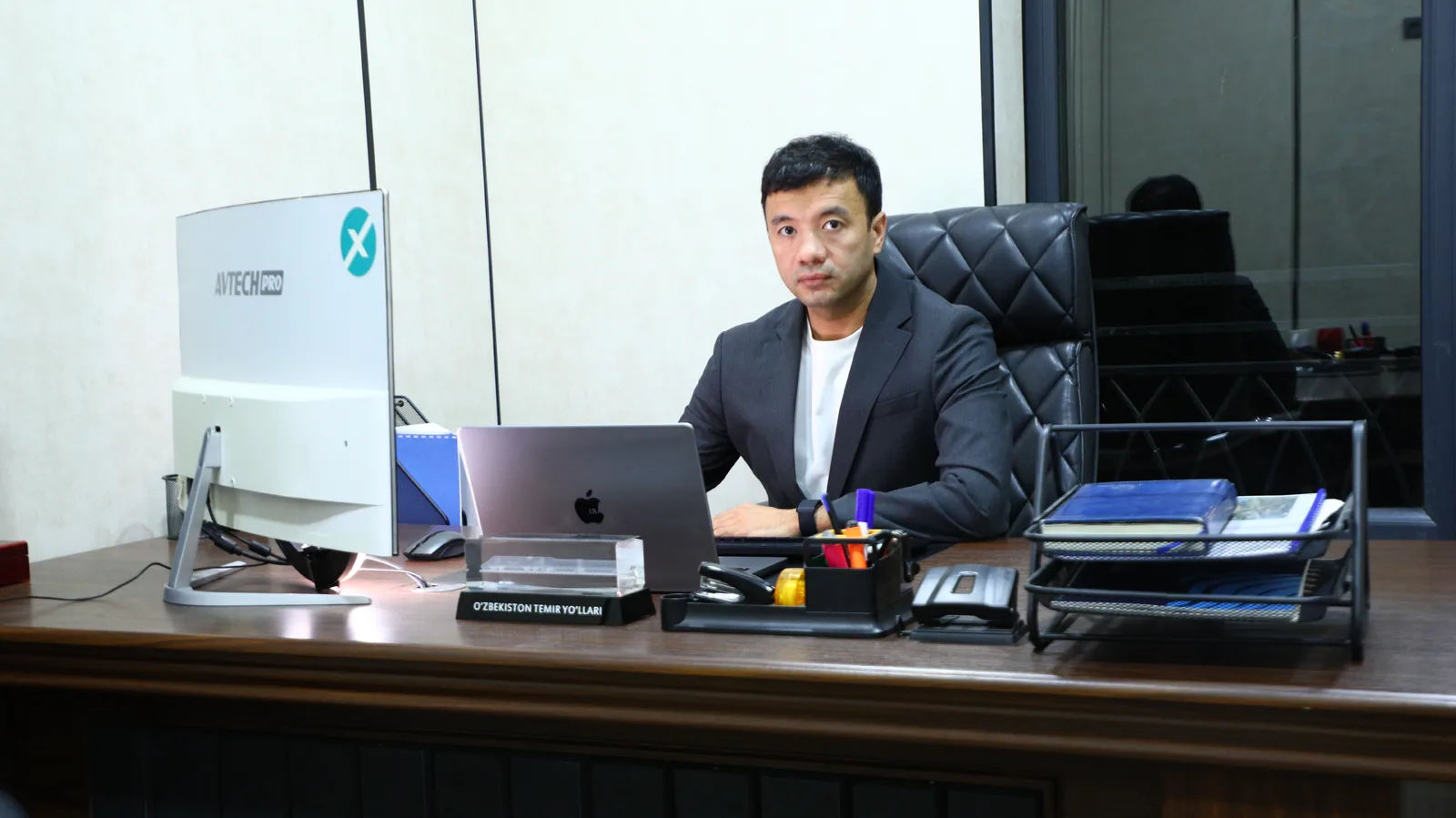
Munis Sharipov, City — Tashkent, CEO United Ventures, LinkedIn
About Me
I graduated with a bachelor’s degree from Tashkent University of Information Technologies and a master’s degree from Tashkent State University of Economics. For over 15 years, my career has been linked to the public and financial sectors: I held executive positions at the Ministry of Finance, Trastbank, and Uzmilliybank, and served as an IT advisor at Uzbekneftegaz. At the same time, I founded several IT companies — for example, Tenzor Soft, which develops corporate solutions for government agencies and banks, and the telemedicine service XMed. This experience helped me deeply understand market needs and the potential of technology.
Today, I am the CEO of the United Ventures venture fund, established at the initiative of the President in collaboration with seven leading state banks of Uzbekistan. The fund’s authorized capital is $40 million, making it the largest venture fund in the country. Our mission is to support innovative projects at early stages and develop a strong startup ecosystem. My interest in investing stems from a desire to apply my experience in IT and finance to foster the growth of new ideas: I am convinced that the country needs a powerful technological environment, and startups need mentoring and financial support to grow and change the world.
The work of a venture investor combines several roles: we act as analysts, advisors, and sometimes even guiding mentors for founders. Every day, we study numerous projects, constantly learn, form a strategic vision, and maintain connections with experts and partners. The main thing in this work is to combine deep analysis of business and technology with the ability to understand people and support founders.
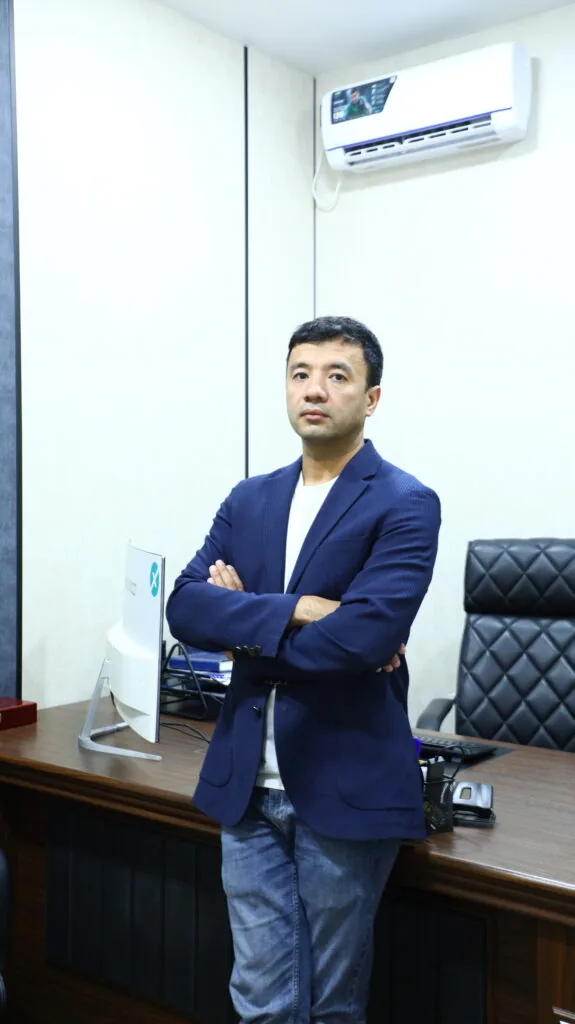
Key qualities of a successful investor:
— Analytical mindset. An investor must see the economic model, potential profitability, and feel the numbers.
— Strategic thinking. It is necessary to forecast market development, evaluate competition, and understand how a startup fits into the ecosystem.
— Curiosity and willingness to learn.
— People orientation. Building trusting relationships with founders is critical: it is important to be patient, honest, and supportive, share experience, but also demand accountability.
— Risk management. Venture capital is calculated work with risks. One must be able to make strategic decisions, weighing the high uncertainty of projects.
— Communication and network. An investor acts as a link: he must have a wide circle of business contacts to help portfolio companies grow.
About Investments
When working with startups, we encounter a number of typical problems. To deal with these difficulties, we build an investment process focused on comprehensive support for projects.
- High risks of early stages. At the idea stage, startups have no revenue, and the business model may be unproven. We address this through careful hypothesis testing and a reasonable size of initial investments. Often, we invest with small checks, allowing us to analyze the idea in practice, and then recapitalize promising projects.
- Inexperience of the team. Many young founders are encountering business processes for the first time. We connect experts and mentors from the fund, our acceleration program, or our external network, who help with financial modeling, market entry strategy, and project management.
- Regulatory and administrative complexities. Working conditions and legislation may be unfamiliar to foreign teams. We help startups correctly register a company in Uzbekistan, understand local licensing and standards.
- Finding the right projects in the fund. We receive hundreds of applications annually. Under such conditions, it is important to filter projects quickly. We have developed strict selection criteria and multi-stage expertise: due diligence, technical assessment, and conversations with the market. This helps focus on the most promising ideas.
- Financing and budget management. Startups sometimes underestimate the time and money needed to reach the market. We conduct joint budget planning, evaluate the roadmap, and minimize the risk of funding shortages. For example, we recommend reinvesting or finding co-investors in a timely manner.
Our experience in the market is young but active. We have invested in several startups at different stages — from Pre-Seed to Series A. Despite the fund being only a year old, we already have truly inspiring growth stories. Today, we have invested in three projects, each of which demonstrates significant growth.
One of our projects is an automation system for small and medium-sized businesses, providing an ERP platform for accounting, sales management, warehouses, and production. In one year, the product won dozens of clients in Uzbekistan and began entering the CIS and MENA markets.
The second project is a SaaS for the HoReCa sector, aimed at cafes, restaurants, and bars. It provides POS accounting, omnichannel sales, warehouse control, and analytics. The startup quickly gained hundreds of active users and captured a market share among competitors.
The third project is a technological platform for large retail and e-commerce. It combines CRM, ERP, logistics, HRM, and AI-based analytics. The project has already received tens of thousands of MAUs, high revenue, and has begun entering the markets of Kazakhstan and Russia.
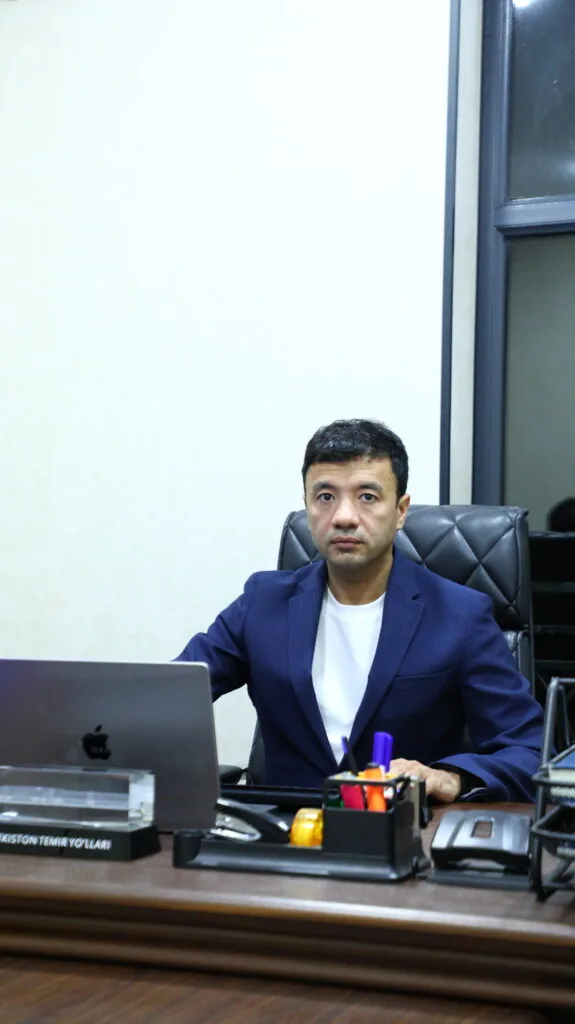
Investment Strategy
Our strategy is focused on early, breakthrough projects that change established markets using technology. The main selection criteria are:
— Team. We are interested in teams with deep knowledge in their field and proven experience in implementing projects. We assess their determination, flexibility in decision-making, and ability to quickly learn from mistakes.
— Problem and solution. We evaluate the uniqueness of the product, the presence of technology or algorithms, and how much better the solution is compared to existing alternatives.
— Market. The size and growth of the target market are important. We look at local demand in Uzbekistan and the potential for scaling abroad. Competitive analysis shows whether the project has advantages that will allow it to capture a significant market share.
— Business model and financial sustainability. Even at early stages, we consider unit economics and the persuasiveness of financial plans.
— Achievements and validation. We look at the startup’s first indicators — the presence of a prototype or MVP, early clients/users, partnership agreements. Small but real signs of market interest significantly increase the project’s chances.
— Alignment with the fund’s focus. We invest in projects beneficial to the economy of Uzbekistan, primarily in FinTech, AI, MedTech, AgriTech, and others. The startup must be ready or required to open a company in Uzbekistan — this is a regulatory requirement.
When assessing risks, we analyze each of these areas. For example, technological risk we look at through expertise, market risk — through interviews with potential customers and pilot launches. For team risk, we check founder connections and their past projects. We use business model stress-testing methods: we model different scenarios of growth and demand decline to understand if the attracted investments will be sufficient. The final strategy is portfolio diversification and phased financing. If the project is successful, we recapitalize it; if results are weak, we exit the investment at an early stage, minimizing losses.
Our priority is Uzbekistan. According to the fund’s charter, we invest exclusively in companies registered in Uzbekistan — even if the team is international. Nevertheless, we are actively developing international connections. For example, in 2025 at the Startup & Venture Summit in Tashkent, United Ventures signed a memorandum of cooperation with Astana Hub Ventures. This agreement expands our interaction with foreign partners in the field of venture capital and innovation. In practice, this means that we are ready to consider projects from foreign founders if they open a legal entity in Uzbekistan.
We strive to be “all-around” partners for startups: our help goes far beyond writing checks. According to the fund’s mission, we develop projects through strategic financing combined with incubation and acceleration programs. This means the following:
Mentorship and expertise. Each portfolio startup is assigned a curator or several experts from the United Ventures team and our partners. These specialists help with business strategy, marketing, financial planning, and technically — for example, by giving advice on product architecture or technology selection.
Access to corporate and government partners. We cooperate with founding banks and the largest companies that can become pilot clients for our startups. If a project solves a banking or industrial problem, we can organize a demonstration of the solution or a pilot launch in one of our partner structures.
Acceleration programs and training. Our fund periodically conducts educational seminars and brings startup teams together at acceleration sessions. This allows founders to exchange experience, receive advice from successful entrepreneurs, and meet potential investors.
Network development and PR. We involve startups in profile conferences, hackathons, and meetings with investors. Participation of our projects in such events gives them visibility and new connections. We also help with media support — informing communities and the press about the achievements of portfolio companies.
Legal and administrative support. Together with startups, we resolve issues of company registration, intellectual property protection, and advise on compliance with regulatory requirements. This is especially important for international teams mastering Uzbek regulations.
Our fund operates with early-stage investments — from the idea stage to Series A. The investment range is approximately from $25,000 to $1,000,000. We often start with a small “angel” package of $25,000-$50,000 at the idea stage and increase it to hundreds of thousands of dollars as the startup develops.
The decision on the amount depends on several factors:
— Project development stage. At the idea stage, sufficient funds are needed to create an MVP, so the range is closer to the lower bound. At the Pre-Seed stage, we usually invest $50,000-$200,000 so that the team achieves the first metrics. For pre-A/Series A, the amount can approach from $500,000 to $1 million, especially if expansion into new markets is required.
— Project needs. We carefully evaluate the startup’s budget: how much money is needed for 12-18 months of work to achieve planned milestones. We choose the investment amount to ensure the project has a “trench” for one or two development cycles.
— Deal structure and co-investors. We take into account the valuations and the share allocated for our investments, as well as the participation of other investors. Often, we become co-investors with other funds or business angels, so the size of our check is agreed upon in the general contract.
Venture investments traditionally have a long horizon. Usually, the fund plans to return investments within approximately 7-10 years. This means that we are ready to support the startup throughout the entire period of its growth, which may take several years. As a rule, we plan to hold the investment in the portfolio company until its liquidity event — whether it is an IPO, sale to a strategic investor, or acquisition by a larger company.
In practice, our projects are on average ready for a serious exit three to five years after the first investment. However, much depends on the situation: if a startup quickly shows high results and a buyer appears earlier, we can exit the project early. If the company develops according to plan and more time is required for a quality exit, we remain among the investors and help achieve the goal. It is important to emphasize that we are focused on long-term growth: as noted in studies, the typical path for venture companies from initial funding to exit takes several years.
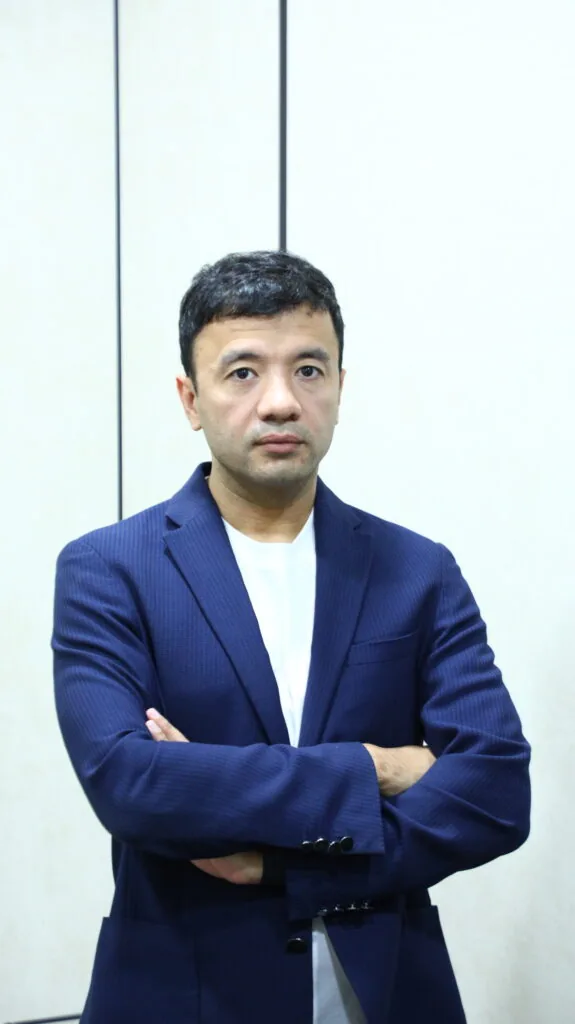
Investor Advice
Form a clear investment proposal. In practice, this means preparing a substantive pitch deck and a brief project summary, where the problem, solution, market, and team are clearly described. Work on the first metrics: even small pilots or results from initial sales significantly increase investor interest. Analyze the financial model and be ready to present a forecast of revenue and expenses. Be sure to think through the legal side — founding documents, agreements with co-founders, and IP must be in order. The main advice: tell stories through specific numbers and facts. Investors love it when the “business story” is backed by data and realistic plans.
Participate in thematic events and competitions. In Uzbekistan, these are demo days and pitch sessions, specialized hackathons, and startup accelerators. At such venues, you can meet potential investors and mentors directly. As noted on our fund’s website, Pitch Day is a dynamic event where startups present their ideas to investors and experts. We also recommend joining regional and international tech communities — lists of funds and events are published there. Do not forget about personal contacts: ask for recommendations from familiar entrepreneurs and mentors. Any well-known business angel or accelerator is a good source of contacts. Finally, actively use business social networks, the startup’s profile on platforms like AngelList or other “crowd” platforms.
The more convincing and “predictable” your story is, the easier it will be to interest investors. And you can find them through the right events, networking, and specialized channels for startups.
Plans
First of all, we are attracted to projects in the fields of FinTech, AI, MedTech, and AgriTech, as this is where we see synergy with the priority tasks of the Uzbek economy. For example:
— FinTech. We are interested in solutions that simplify financial services. We are looking for startups that expand financial accessibility — whether it is mobile applications for rural residents or new payment platforms for business.
— Artificial Intelligence and Data Science. We are looking for teams that create products based on machine learning: natural language processing, computer vision, predictive analytics. Startups that can use local data to provide value to the market are particularly promising.
— MedTech and HealthTech. We are attracted to digital solutions for healthcare: telemedicine, electronic medical record systems, health monitoring applications. Given the remoteness of many regions, projects that improve access to doctors and facilitate diagnosis are a priority.
— AgriTech. Farming is one of the most important industries in Uzbekistan. We are interested in “smart farming” technologies: for example, sensors and platforms for crop management, agri-analytics services, logistics solutions for food supply chains. If a project helps increase agricultural productivity or bring products to a new market — it is interesting to us.
In addition, we are always open to interdisciplinary innovations: for example, the combination of IoT and AI in any of the above fields, or a project at the intersection of several directions. The main thing is that the idea is breakthrough and has a sustainable business model. In the future, in addition to the listed areas, we plan to monitor “green” and digital technologies that correspond to global trends, but the priority remains with those industries where United Ventures can have the greatest effect on the domestic economy and society.
The Tech on Telegram Follow The Tech on Telegram
Keep up with the latest technology and startup news.
Related reading






More from this author

Article Useful
How to protect your accounts from hacking: 8 settings you should check today
The Tech

Article Useful
500 Global: How the Accelerator Works and Who Can Receive Investments
The Tech

Article Interviews
Game Development in Central Asia: Arkady Moldavski on Developing Reverb and the Growth of the Industry
The Tech

Article Useful
Google, Tesla, BlackRock, and the IMF: Where to Apply for an Internship in Fall 2026
The Tech

News IT
Tesla unveiled the flying electric car Roadster
The Tech

News IT
Intero Biosystems startup won the Startup Battlefield at TechCrunch Disrupt 2026
The Tech