How to Find an Investor: Lev Kavtaradze on Why Even Strong Startups Get Rejected
Why even strong startups don’t make it to the investment committee, what the “ideal” founder looks like in the eyes of VCs, and which signals instantly kill trust — this is what Levan Kavtaradze from TMT Investments reveals based on 15,000 reviewed projects.
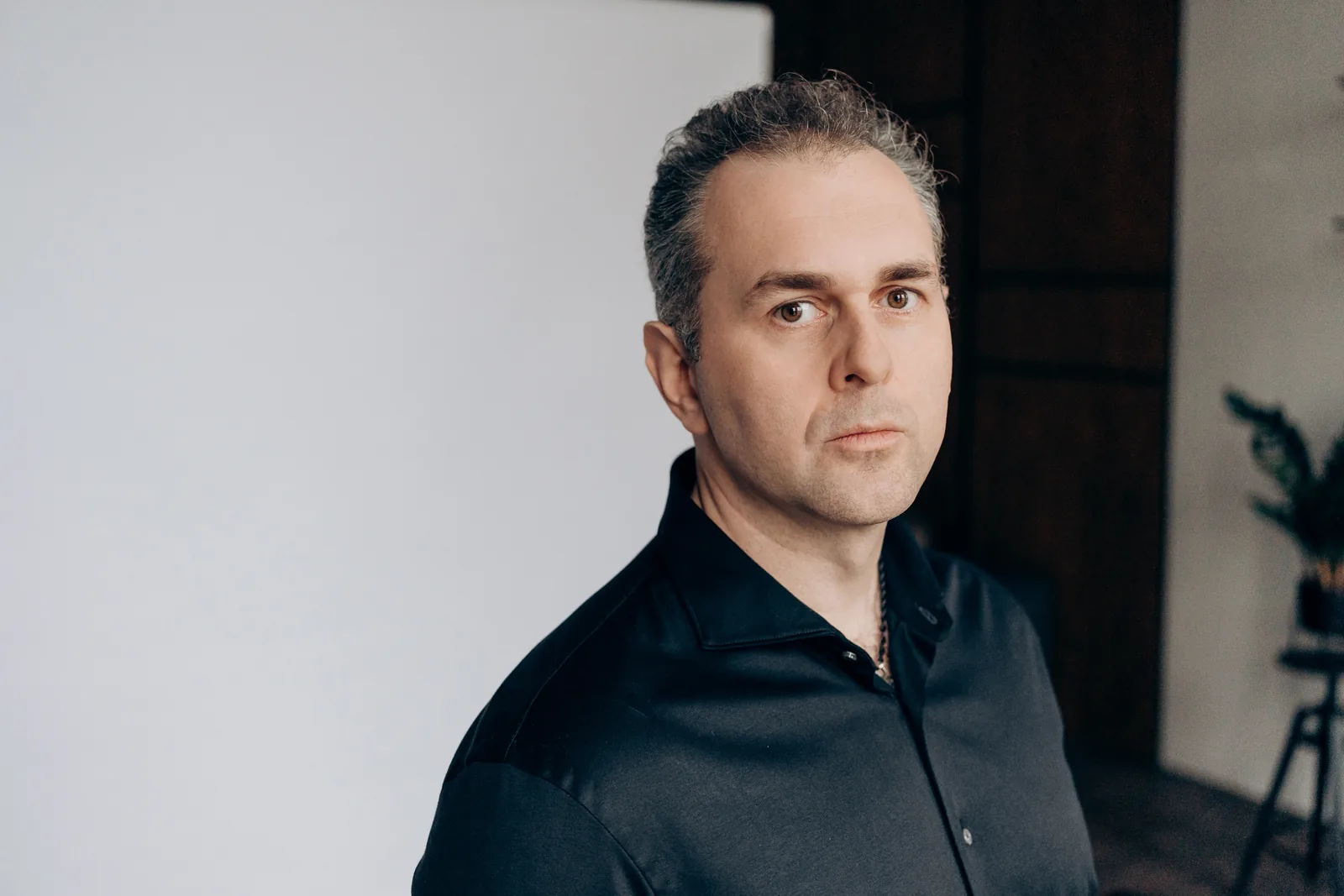
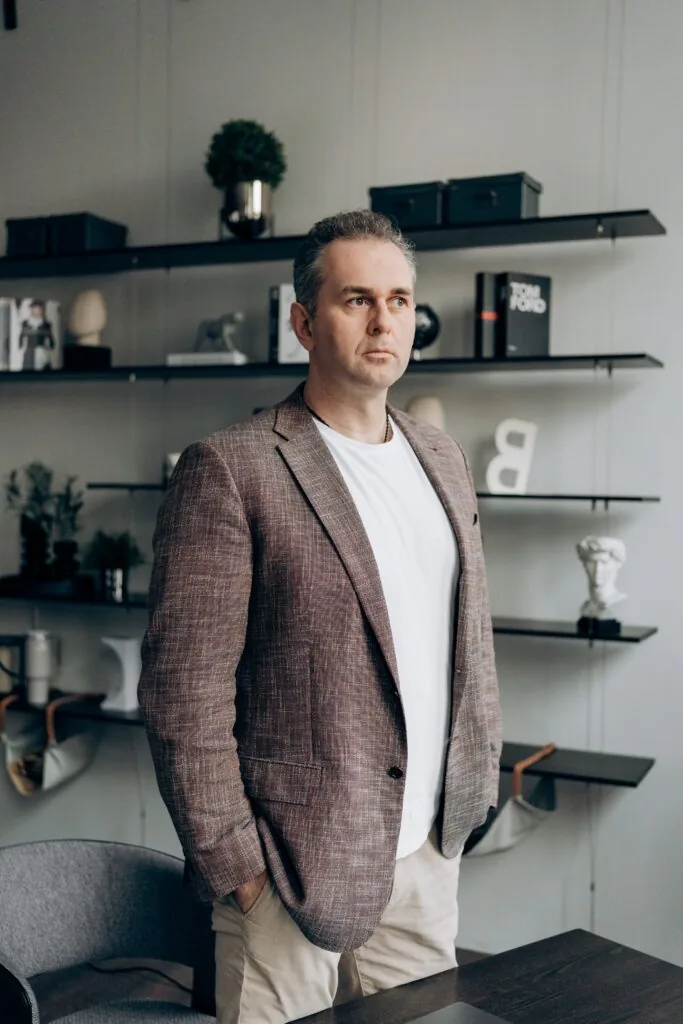
Levan Kavtaradze, City — Dubai, Investment Director at TMT Investments Plc
About Me
My journey in tech investments didn’t start in a conventional way. Most players enter venture capital either from the corporate sector or from finance; in some cases, successful founders, after an exit, begin allocating capital to early-stage startups. In my case, I entered venture capital after several failures with my own startups. My team and I started launching tech businesses in 2007, when we had no idea what terms like “venture,” VC, “fundraising,” or MRR meant, and SAFE wasn’t even used in projects. After another failure, I finally honestly admitted to myself that launching my own startups wasn’t for me. I invested a lot of energy into each new topic but burned out quickly. At that moment, the TMT Investments fund was being formed, and my good friend Sasha Pak invited me to join. Since then, over 15 years, my team and I have invested in more than 110 companies, primarily in the US, UK, and Europe, became early investors in five unicorns, and the fund has generated over $100 million from exits.
Currently, in addition to working with the fund, I am actively developing my educational project, “Fundraising School,” in collaboration with partners from Red Team Accelerator. There, I strive to share with students the essence of more than 18 years of experience in venture capital—both from the founder’s and the investor’s perspectives. During this time, we have reviewed approximately 15,000 startups and closed over a hundred international deals worth tens of millions of dollars.
About Investments
Often, both startups and novice VCs perceive an investor’s work as something thrilling, bright, and emotional: picking out that unique diamond from a pile of talents, betting on the next Musk, guessing the next big thing, and other such enthusiastic rhetoric found in TechCrunch articles.
In reality, after working with a portfolio for several years, it becomes clear that this process is more like an assembly line: various “boxes” pass through—large, small, successful, and less so. The task is to calmly and according to clear criteria select the most promising ones and pass them further down the chain, where the next investor will either continue or stop.
Results are recorded: growth in some cases, write-offs in others—without unnecessary emotions, excessive excitement, or disappointment.
Essentially, VC work requires the same discipline, emotional control, and strict risk management as professional trading.
The moment an investor starts getting overly excited about a founder, throwing money at the stage after a beautiful pitch, and loudly declaring, “This is my future unicorn,” it is a 95% direct path to a future write-off, because the investor loses critical perception regarding that startup.
A common problem is the startup’s unpreparedness for investment. For example, a company comes in at the Series A stage, but its financial model is not fully developed, or key legal documents are missing from the data room. This is often critical: if I already like the startup after communication, it is important for founders to provide all materials as quickly as possible so that I can present it to the investment committee before a more prepared competitor appears. Otherwise, if preparation takes two to three weeks, there is about a 70% chance the startup will not reach the committee. We have had dozens of such cases.
Startups often do not take modern realities into account: to secure investor money, especially at the active growth stage, you need to compete professionally. Fundraising is a separate skill, just like financial management, and it does not arise automatically.
About TMT Investments
Within TMT Investments and my own angel portfolio, over a hundred international deals have been closed on Western markets, totaling tens of millions of dollars. Among our companies are Bolt, PandaDoc, and others, as well as Praktika AI, which showed one of the fastest revaluations—12.5 times in six months. Also, 3S Money and Verto FX are international FinTech platforms with strong growth rates, Scentbird and Feel are e-commerce companies with interesting products and marketing innovations, and the booked taxi service Rhino in Brazil. Over these years, we have managed to find many strong companies with interesting products and strong founders.
We often help startups with networking: we introduce synergistic projects to each other, and occasionally good collaborations grow out of this. We also work with the investment network—recommending our companies to well-known VCs.
A separate area is expertise in fundraising. When a startup raises a new round, we can help plan it and build an optimal structure based on the financial model and roadmap. This ensures that the funds are sufficient to implement plans, the investor composition is balanced, and dilution is not excessive.
What is the strategy for selecting startups for investment?
At TMT Investments, we are primarily interested in companies at the active growth stage—Late Seed, Pre-Series A—with confirmed product-market fit, a formed team, and revenue of approximately $1 million ARR. Sometimes we make later-stage investments in Series B, but we no longer consider early experiments at the Seed and Pre-Seed stages.
A fundamental condition is that the company must already be generating revenue in large markets: US, UK, EU, MENA, and so on. If a company is practically present only in a small local market, we are not interested. The risk is too high that the investment, even in case of a successful exit, will not provide the required return and will not compensate for portfolio risks.
It is important that the team, not just in plans but with actual received funds, proves its ability to scale in large markets: the TAM size should be at least tens of billions of dollars.
When assessing potential, the size of the market is important, but so is the exit hypothesis. It is necessary to understand at least at a basic level where, when, who, why, and for how much this startup might be bought. Without such assumptions, investing makes no sense if the investor does not expect dividends, and a venture fund, as a rule, does not expect them.
Regarding risks, a separate article—perhaps even a book—could be written. There are behavioral risks of the founder, team configuration and internal relations, product and market risks, managerial, and even geopolitical risks. Not all of them can be filtered out at the investment stage, but some certainly can. For example, the founder’s behavior in communication with VCs.
An excessive focus on personal brand at the expense of business, metrics, and legal aspects is often a signal that the founder may not withstand the pressure. Hiding inconvenient facts from the investor is an immediate loss of trust, and venture capital is largely built on trust.
For example, we always ask founders to send historical financial data after the interview. They are not always “pretty”—there are experiments, mistakes, periods of stagnation. If instead of an honest answer, the founder resorts to general formulations and “growth prospects,” this is almost always a rejection.
Another signal is if, at the late Seed round, the team’s ownership is already diluted below 50%. This often indicates that the team does not know how to protect its interests and negotiate terms.
It also happens that the numbers are formally correct, but in the financial model, they are presented in such a way that the meaning changes. This is usually easily detected and also leads to a loss of trust at the start.
A separate factor is growth efficiency. If the team reached $1 million ARR but spent $5 million on it over seven years, this is most likely also a rejection. Almost always, there are teams that achieve the same results faster and cheaper, and they have higher scaling potential.
We make all investments in the US, UK, and EU. Additionally, we may consider MENA and Southeast Asia. The most important factors are the geography of revenue and the jurisdiction of the holding company. Ideally, Delaware or London.
Investment Size
In the first round, we typically invest an amount in the range of $500,000 to $1 million—most often as a co-investor in a round of $3–10 million. Then, if the company shows quality traction, we may participate in one or several follow-on rounds.
It is important for us that the funds raised are sufficient for the startup for at least a year and a half—even in a pessimistic scenario. Ideally, the company is already reaching break-even, and then investor money works as a growth accelerator. In such a case, even if the founders fail to raise the next round, the business will be able to continue existing. In recent years, we increasingly see such startups: founders put in serious efforts and build a break-even economy already in the second or third year of operation.
TMT Investments operates on an evergreen model—this means we do not have strict deadlines for exiting investments in individual companies. Some exits occur in two to three years, but there are still companies in the portfolio that we invested in back in 2012–2013.
Advice from an Investor
Regardless of the round—whether it is Pre-seed or Series A—it is important to remember one rule: all materials must be ready before the first contact with the investor, not such that after the call you go away for two weeks to finish something.
Of course, the more mature the stage, the more materials are required. But even for pre-seed, you need to prepare at least a presentation, a basic financial model with forecasts, competitor analysis, and a description of the technology, if relevant.
The logic is simple: the investor is maximally motivated to move the deal forward immediately after the call with you. The longer you delay with materials, the “colder” the interest becomes.
The above applies to any round. But if we talk about the earliest stages, for any VC it is fundamentally important that the product-market fit stage has been passed and live feedback from the market has been obtained.
In modern venture capital, where the value of IT development approaches zero, the classic startup team setup of “one and a half inexperienced students with burning eyes and big ambitions” no longer works. Even at the pre-seed stage, the most successful teams are those where founders have at least three to five years of domain expertise and, preferably, entrepreneurial experience.
Unfortunately, not all founders, even with strong product expertise, have previously launched businesses. Therefore, acceleration programs are playing an increasingly important role in the world, helping teams go through this path and prepare for working with investors.
Professionally prepared programs, such as Red Team Accelerator, focus precisely on the growth stage—when a startup already has a product but no systematic scaling yet.
Plans
The peak of mass investments in projects with the AI prefix is already passing. Now the market is waiting for real economic efficiency from this segment, so I view it with significant reservations. Only deep expert AI systems, narrowly specialized in a specific segment and providing an immediate multiple economic effect from application, are of interest—and even then, only if there is a clear exit strategy. Everything else will most likely come under correction in the coming years.
The investment climate and VC sentiment have changed dramatically several times over the last five to six years. Founders need to understand how investors really view the market and their startups. I discuss these and other topics in detail in my courses—where it is especially interesting to work with real cases from participants.
This year, I will be speaking as an expert in the Kazakh program Silkway Accelerator. It is interesting to observe the founders of the seventh cohort and see new faces. I invite you to participate—applications are accepted until April 30.
The Tech on Telegram Follow The Tech on Telegram
Keep up with the latest technology and startup news.
Related reading



More from this author

Article Useful
How to protect your accounts from hacking: 8 settings you should check today
The Tech

Article Useful
500 Global: How the Accelerator Works and Who Can Receive Investments
The Tech

Article Interviews
Game Development in Central Asia: Arkady Moldavski on Developing Reverb and the Growth of the Industry
The Tech

Article Useful
Google, Tesla, BlackRock, and the IMF: Where to Apply for an Internship in Fall 2026
The Tech

News IT
Tesla unveiled the flying electric car Roadster
The Tech

News IT
Intero Biosystems startup won the Startup Battlefield at TechCrunch Disrupt 2026
The Tech