How to find an investor. Arlan Isaev on how startups can stay visible and attract capital
Arlan Isaev has been working with finance and investors for over 13 years, and today, together with the InvestClub Academy community, he helps startups find capital and enter new markets. In an interview with The Tech, he shares the principles of project selection, explains why the team and reputation are important, and gives advice on how startups can stay visible and convincingly sell their ideas.
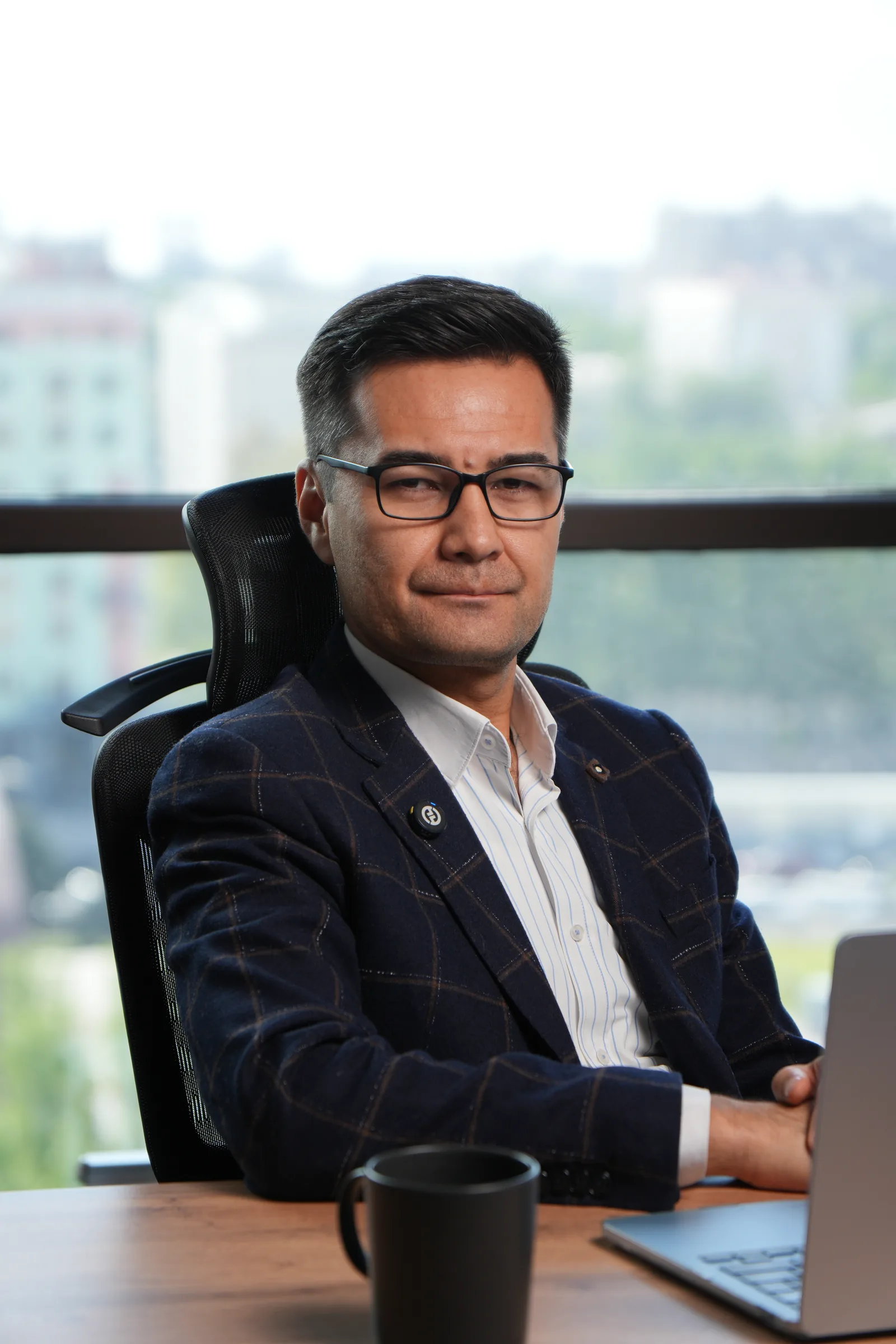
Arlan Isaev, city — Bishkek, CEO of InvestClub Academy, co-founder of Turkic American Angel Network, Instagram, LinkedIn
About Me
I have been investing in the stock market for over 13 years. My journey began in 2012, right after graduating from university. At that time, I was invited to help a manufacturing company that was on the verge of bankruptcy. We completely revised its strategy, restructured its processes, and within about a year and a half, we brought the company to the forefront of the Kyrgyz market. During this period, I progressed from a junior specialist to the Chief Financial Officer.
However, the work was demanding: almost no days off, with constant overtime. At some point, this began to take a toll on my health. I sat down and calculated how many years it would take me to work at such a pace to achieve my financial goals. Even under the most optimistic scenario, it would take about eight years. It was then that I realized I wanted to find another path.
I had long been interested in investing, as early as 2008, but in Kyrgyzstan, there were practically no specialists from whom I could learn. Initially, I considered studying in the US and Europe, but circumstances led me to Moscow, where I spent several years studying the stock market and began investing my own funds.
Upon returning to Bishkek, I founded InvestClub Academy, where I teach people how to invest intelligently in the stock market. Over time, my students began asking about other investment opportunities. Thus, we gradually moved into the venture market.
Later, together with a partner, we developed a strategy for the development of this direction, began attending international events, meeting investors, and connecting with startups. We made our first investment after a trip to Georgia, where we found a promising project.
Since September 2025, we have been systematically engaged in venture investments. Today, together with members of our investment community, we evaluate and invest in promising startups.
About Investments
I have been working with investors for over seven years. For more than six years, I worked at Freedom Broker in Kyrgyzstan and simultaneously engaged in investor education. The company supported this initiative because it helped improve financial literacy.
Over the years, I have come to understand that the most important quality of an investor is the understanding of risks. Risks exist everywhere, but in venture investments, they are particularly high. Therefore, before starting work, we thoroughly explain all terms, review documents, and ensure that the person consciously accepts the potential risks.
The second important criterion is the quality of the investors themselves. We form an investment club and do not accept everyone. Honesty, openness, a good reputation, and the absence of selfish motives are important to us. We want to build a strong community based on trust.
Currently, we have only one startup in our portfolio. At the moment, we are also evaluating two or three more promising projects.
The startup we have already invested in is actively developing and is now entering the Uzbek market. This is an AgriFinTech company called TelAgri.
TelAgri helps banks reduce risks when lending to agribusiness. Using satellite imagery and analytics, the company assesses the condition of agricultural land, predicts potential risks, and assigns a risk level—high, medium, or low—to each project. This allows banks to make more accurate decisions when issuing loans and to increase the efficiency of lending.
Today, TelAgri already works with banks in Georgia and Azerbaijan and has also entered the Israeli market.
First and foremost, in a startup, we look at the team. If the founders have already had a successful startup and an exit, it indicates that they know how to build a business, work with investors, and attract funding.
The second important criterion is the reputation and background of the founders. We study their past experience and check for any negative history. It is important for us that the team has a good reputation.
We also evaluate the business itself. It must be scalable and not limited to a single market or country. We study the company’s development strategy, its growth plan, and its future exit strategy. Additionally, we evaluate the technology, idea, and product. Only after a comprehensive assessment do we make an investment decision.
For now, we are investing in international startups. However, I am confident that startups from Kyrgyzstan also have great potential. In my opinion, to create truly scalable projects, it is important to adhere to several principles.
Experience and exposure are important. It is necessary to travel more, see the world more broadly, and not confine oneself to one’s own “sandbox.” It is important to understand how other markets work and what opportunities exist.
According to global statistics, many successful startups that grew into large companies and went public were founded by expats and immigrants. Therefore, I always advise our startup founders to think broader, immediately consider scaling, and create a product that is not limited to a single market.
The second piece of advice is to learn how to sell your idea. Our startups pitch well, but often their presentations do not sell. They contain many technical terms and complex explanations. If the idea is truly good, it needs to be packaged correctly, communicated clearly to investors, and presented persuasively. It does not matter what language you speak in—English, Russian, or Kyrgyz. The main thing is that the investor understands the value of your project.
Investment Size
We only started engaging in venture investments last autumn. Currently, our investors enter startups with small checks—from $5,000 to $10,000. In aggregate, this allows us to form rounds of $50,000–$100,000, for which we acquire shares in companies.
Our strategy is quite simple. We invest in startups that are already being entered by strong venture funds, experienced advisors, and reputable market players. If they see the potential of the project and decide to invest, we are ready to join the deal. If they decline, we also do not enter.
Over time, we plan to increase investment volumes, attract new participants to our venture club, and, consequently, increase the average check size. After all, the larger the share in a promising company, the higher the potential return upon a successful exit.
I believe that startups should be helped in any case, even if we do not become their investors.
Any project needs strong specialists: technical experts, marketers, financiers, as well as international partners and contacts. We can introduce a startup to the right people, share experience, advise on how to best structure certain processes, and help avoid common mistakes.
Moreover, we help with forming the strategy for the company’s further development. But the most valuable thing we can offer is networking. When a startup gains the right connections, new opportunities, partnerships, and markets open up for it.
Plans
Since I work more with investments and finance, I am particularly interested in finding a strong FinTech project. In Kyrgyzstan, there are already successful FinTech companies, but many of them do not currently need investments and are not ready to sell equity. Therefore, I would like to find a promising project in which I can not only invest but also become part of its story.
We are also interested in technology companies, especially in the DeepTech sector. We are considering projects in healthcare, EdTech, and other promising areas, including new niches that are just beginning to develop.
Advice from an Investor
There are accelerators, funds, and open lists of investors—this is no longer a secret today. No one is hiding; on the contrary, investors openly talk about themselves, participate in events, and look for promising projects.
Therefore, my main advice to startups is to participate in all pitches, forums, and industry events. Be visible. This is important so that you are heard and noticed.
Not all investors are ready to invest immediately. Many need traction—confirmation that the company is growing. Sometimes they observe a startup for a year, two, or even three years before making an investment decision. Therefore, it is important to regularly show results: demonstrate growth and figures quarter by quarter, year by year.
If this is not the case, and if a company cannot attract investment even at early stages, the problem often lies in the fact that the founders failed to properly present their idea or prove its potential. Here, connections, networking, and the ability to build relationships with investors play a significant role.
As for Kyrgyzstan, I believe that the startup and venture investment sector will develop much faster. Currently, a special financial and investment territory is being created in the country. I think this will help attract foreign capital and new investors who will be ready to invest in local projects and startups.
Moreover, I expect the government to continue supporting this direction. A bill on the venture industry is expected to be adopted, which will create more favorable conditions for the development of the ecosystem. Support may be expressed not only in financing but also in legislative initiatives, expertise, and mentoring of young entrepreneurs.
We have many talented people with strong ideas, promising developments, and even inventions capable of solving global problems. Therefore, I look optimistically at the future of Kyrgyzstan and generally believe in the potential of Central Asian countries.
The Tech on Telegram Follow The Tech on Telegram
Keep up with the latest technology and startup news.
Related reading






More from this author

Article Useful
How to protect your accounts from hacking: 8 settings you should check today
The Tech

Article Useful
500 Global: How the Accelerator Works and Who Can Receive Investments
The Tech

Article Interviews
Game Development in Central Asia: Arkady Moldavski on Developing Reverb and the Growth of the Industry
The Tech

Article Useful
Google, Tesla, BlackRock, and the IMF: Where to Apply for an Internship in Fall 2026
The Tech

News IT
Tesla unveiled the flying electric car Roadster
The Tech

News IT
Intero Biosystems startup won the Startup Battlefield at TechCrunch Disrupt 2026
The Tech