How a musician from Tashkent became the founder of a game studio and is shaping the future of game development in Central Asia
In the new material is the story of a startup from Uzbekistan that is bringing Central Asia to the global game development market. Read the interview with Firdevs Mamadkhonov, founder of Doomers Entertainment and creator of the popular game "Golden Horde."
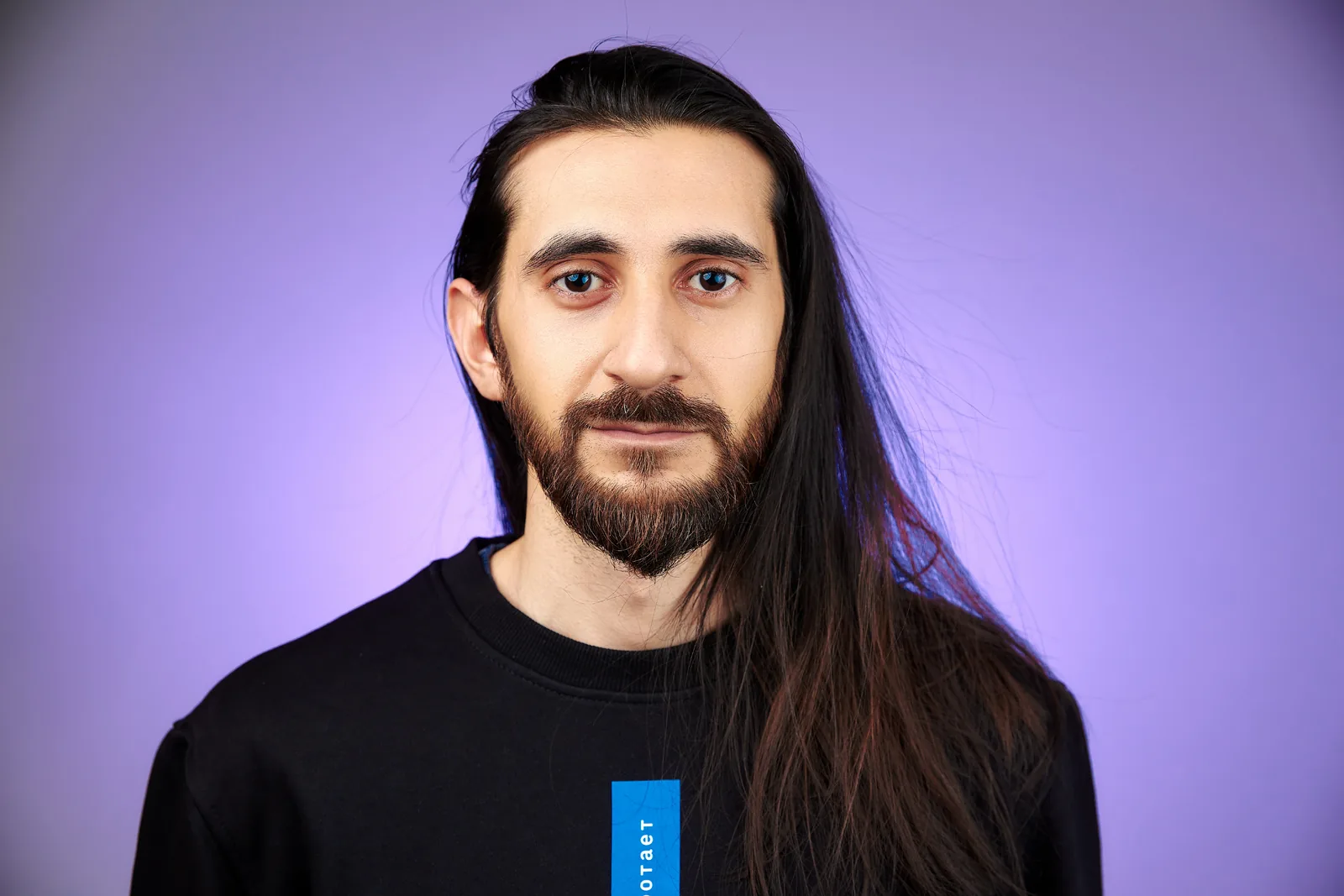
Firdavs Mamadkhonov, city — Tashkent, CEO, Founder of Doomers Entertainment LLC, LinkedIn
About Me
I am the founder of the game studio Doomers Entertainment, which is transforming into a game publisher. Currently, my main activity is focused on publishing — this is what I live and work for every day.
Career Path
I entered the game development industry during the pandemic. There was a complete lockdown, everything was closed, and I was working in the service sector. We stayed at home, and all our time was spent either on social media or on games.
I started playing a lot, especially Skyrim — it is one of my favorite games. I played it for almost a year and a half with almost no breaks, from morning until evening. I became so immersed in that world that it was then that I started wondering: “How are games created anyway?”, “How does it all work?”.
Originally, I am a musician by profession: I had a studio called Doomers Entertainment and a band called The Doomers in the post-rock genre. I was involved in mixing, mastering, and later — sound design and soundtracks, including for games.
Gradually, I became interested not only in audio but also in the development process itself: the script, game design, mechanics, and features that I missed as a player. I began to independently study game engines — Unity, Unreal, and the Creation Engine, on which Skyrim is built. This is where my journey in the industry began.
There were many difficulties. First, there was no understanding of how to make games at all and which engine to choose — I learned from YouTube and online materials. Second, I lacked powerful hardware: I worked on a regular office laptop, so I severely limited myself in terms of technology. Later, when working with a team, I often had to delegate more tasks than participate directly in development.
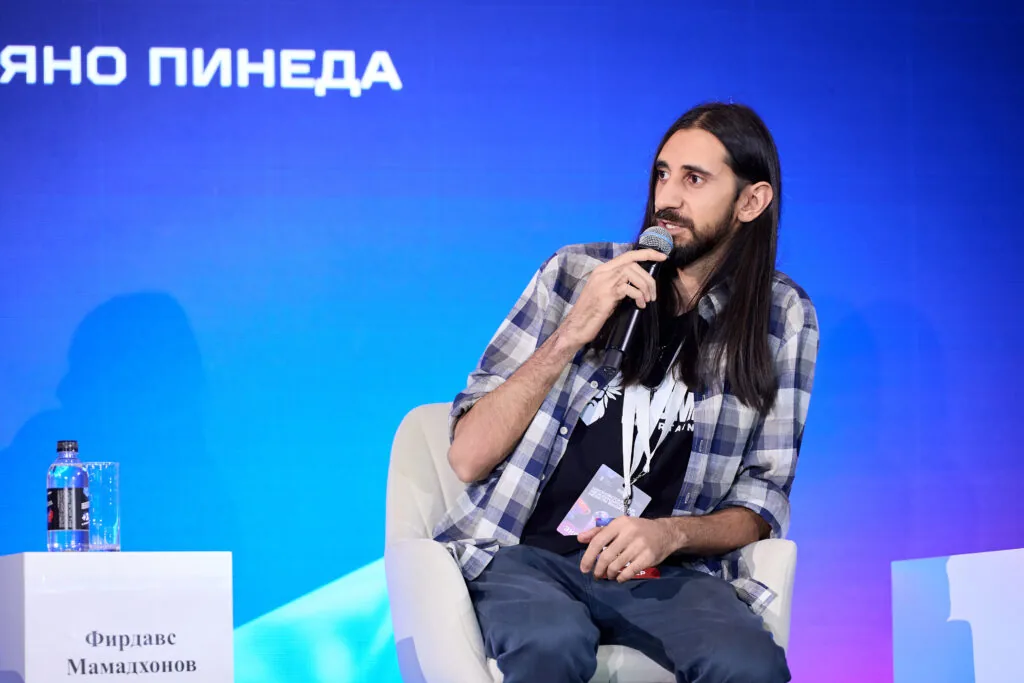
About Projects
Our current key project is “Golden Horde,” which became popular in 2023. It is a medieval RPG with survival elements. The events take place in the 13th century — during the time of the Mongol army invasion of Genghis Khan into Central Asia and territories near China. The player acts as a representative of a local nomadic people — you can either resist the conquerors or join them and develop within this historical storyline.
The game features an open world and survival mechanics — hunger, fatigue, enemies, camps. The player can liberate or conquer lands and thereby expand their influence on the map.
Currently, I act more as the project founder — mainly delegating tasks. But at the very beginning, there were only two of us: me and an environment artist. I handled the code myself, and he handled the visual part, and together we assembled everything in the engine.
Gradually, the team grew, processes were established, and we began to distribute tasks more competently. Currently, the team consists of about 15 people: there are developers, as well as enthusiasts and volunteers who are close to the RPG genre. Many joined out of interest — because they themselves dreamed of making RPGs, and here was an opportunity to do it together.
Achievements
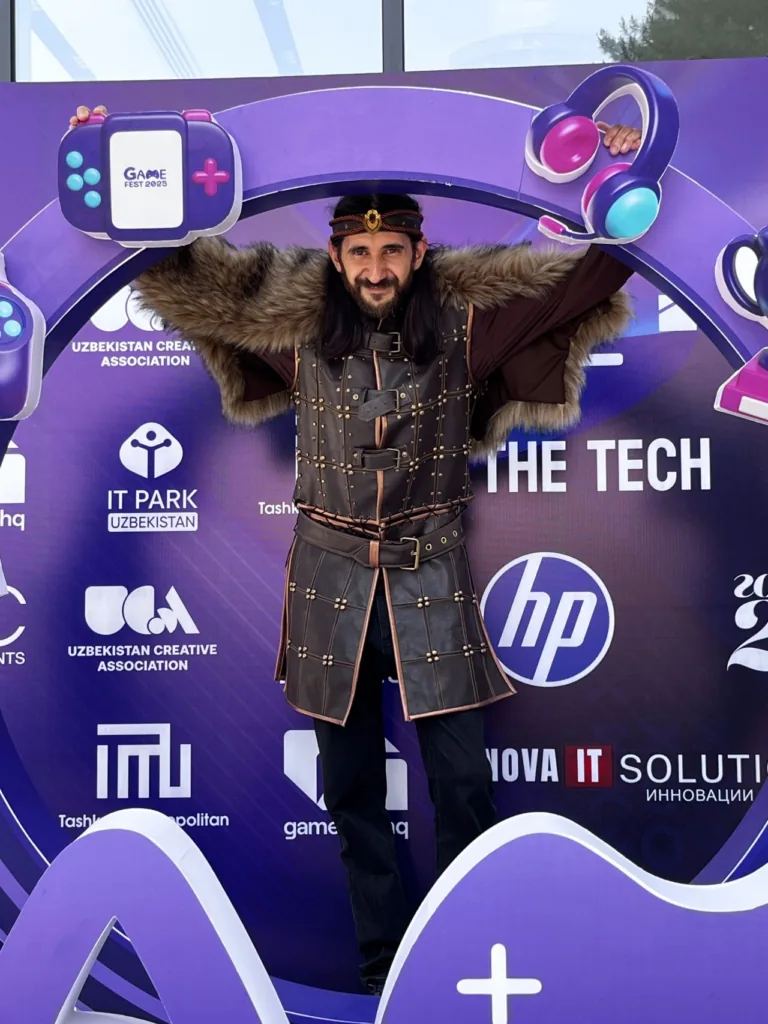
One of the key achievements is that we won a presidential grant of $30,000 in 2023. This was a big event for me and for the entire team.
We also participated in several accelerator programs. Among them is the international program Startup.vc, as well as the accelerator from Investoro, into which we were accepted based on the grant received.
Additionally, we went through the Turkish acceleration program WePlay Ventures and entered the top 12 studios of WePlay Stars — this is a selection among participants of all four seasons of the program.
Very recently, we also completed an acceleration program with Ali Hasanov, where we were mentored in the business aspect: strategy, studio development, monetization. This is especially important for us because we want to develop not only as developers but also as a full-fledged game business.
Every year is full of events: we are invited to different cities to present projects, show demos, and conduct playtests. Thanks to this, we have gathered a large audience around the project.
It is worth noting the media popularity of “Golden Horde.” In 2023, an American journalist organically wrote about us on gamingbible.com — we did not expect this. After that, French, German, and Chinese gaming media joined in, followed by Russian-language publications.
Skills and Profession
If we talk about key skills in the game development profession, the first thing is diligence. In game development, it is not like in classic IT: build an MVP in two weeks, release it, and immediately look for the first users. Here, if you are not ready for constant changes, pivots, testing, and improvements — it will be difficult.
This is a creative field, but it constantly requires revisions. You need to receive feedback, change the product, receive feedback again — and so on in a circle.
Unfortunately, many developers follow one of two paths. The first — they spend years making a game only according to their own vision, ignoring the market, and as a result, there is no guarantee that there will be sales after release. The second — on the contrary, they give up quickly: they receive criticism or rejections and simply abandon the project.
Therefore, stress resistance and patience are important. If we had not continued working on “Golden Horde,” we would not have achieved anything.
I remember how in 2023, in February-March, during the first pitches at IT Park Uzbekistan, we received rejections. There was no money, no funding. Then I had a choice: go to work for hire or continue to develop the project. I chose the second — we began to assemble a team and move forward.
There were many difficulties. If we take “Golden Horde,” we rebuilt the game from scratch three times. We conducted more than 2000 playtests, gathered a huge amount of feedback. And although the game is still in development, we consciously continue to improve it because the project is large-scale and risky — we do not want to devalue the release with a raw product.
The main thing in game development is patience and hard work. Everything else is accumulated in the process.
How the Industry is Developing in Central Asia
Our industry is developing slowly but surely. Of course, we would like faster growth, especially against the backdrop of the emergence of AI. Thanks to it, it has become easier to code, create art, make trailers, and promote games. This will lead to a significant increase in competition in the global market, so it is important for us to accelerate.
At the same time, there are already positive examples. In Central Asia, grants and support are appearing. In Kazakhstan, there are successful cases — for example, Grand Mobile, which showed good downloads and revenue. This is an important signal: if one studio succeeded, it means that other countries in the region can catch up and release popular projects.
Today, it is not necessary to be in the USA to achieve success. It is important to work systematically and correctly build a go-to-market strategy — to be able to show the game to its audience and reach the right player.
Currently, we are launching our own acceleration program in Uzbekistan. This is an intensive 45-day process for studios with ready-made projects — with a focus on funding and financial literacy.
Many developers lack exactly this: proper timeline planning, budget distribution, resource assessment, formulation of USP, and building a go-to-market strategy. We want to fill these gaps and help studios enter the market prepared.
Our goal is for games from Central Asia to become top sellers on Steam and for the region to begin to appear systematically in global charts.
Currently, the market is favorable for this. Low-budget indie games sell well on Steam. For success, budgets at the AAA level of tens of millions of dollars are not mandatory. Development in our region is cheaper, and this is our advantage — you can test ideas faster through small but high-quality projects.
Currently, there are three key barriers to development in our region:
- Lack of specialists and experts.
- Lack of systematic education and game development schools.
- Lack of funding even for small studios.
This is a vicious circle: few experts — education suffers, little education — few personnel, few personnel — it is more difficult to attract investments.
Therefore, we have launched our own publishing direction. Our task is to properly validate ideas and work with projects that already have a potential audience.
The most valuable thing for us is the player's time. If a person spends at least half an hour a day in our game — then we have already won. Further monetization can be built.
The main thing is to make fun, high-quality, interactive games and gradually break that very vicious circle of industry development in the region.
Plans
The development of our publishing is based on the fact that we work with games regardless of the country. We can accept projects from Kazakhstan, from Central Asia, and in general from all over the world. For us, the main thing is the potential of the game itself.
First of all, we focus on validating the idea: how interesting the project is to the audience. We conduct tests, collect feedback, and only then make a decision on further development. Our goal is to release as many strong hits as possible.
In the near future, we plan to launch our own acceleration program. We will work with teams on preparation for funding, marketing, release, and sales — building the right strategy for bringing games to market.
This year, through our publishing direction, we plan to release five projects. Some of them we cannot announce yet, but two can already be named.
The first is a visual novel in the universe of “Golden Horde” in the spirit of a historical melodrama: with character choices, dialogues, and storylines — something in the mood of “Magnificent Century.”
The second project is “Sheep Wrestling” — a multiplayer arena.
Official announcements are planned for the near future. We will gradually reveal the rest of the projects.
Advice for Beginners
I would advise parents to invest in the development of their children so that they can focus on learning rather than on side jobs. Personally, I went through different jobs — from a factory to a waiter — and spent a huge amount of time on this. If I could go back, I would just work on myself: study engines, IT structure, and develop patience.
Many want quick results in 6-12 months, seeing the success stories of others. But the reality is this: success is built for 5-10 years ahead. If you start at 18-20 years old, think about what you will achieve by the age of 30. This is the time of flourishing and career growth.
It is important to be ready for routine, constantly learn, and patiently develop skills. In the CIS, there are popular courses on game development — XYZ, Skill Factory, Skillshare, Gamebox. In two years, we accepted more than 150 developers, and many of them realized that the entry barrier into the industry is high, and to work in large studios, you need a strong portfolio.
We ourselves acted as a kind of accelerator, showing how the development pipeline works. Now in Uzbekistan, game development courses are being launched on a grant basis — this is just the beginning for Central Asia.
The main thing is patience, systematic work on yourself, and plans for the long term.
The Tech on Telegram Follow The Tech on Telegram
Keep up with the latest technology and startup news.
Related reading






More from this author

Article Useful
How to protect your accounts from hacking: 8 settings you should check today
The Tech

Article Useful
500 Global: How the Accelerator Works and Who Can Receive Investments
The Tech

Article Interviews
Game Development in Central Asia: Arkady Moldavski on Developing Reverb and the Growth of the Industry
The Tech

Article Useful
Google, Tesla, BlackRock, and the IMF: Where to Apply for an Internship in Fall 2026
The Tech

News IT
Tesla unveiled the flying electric car Roadster
The Tech

News IT
Intero Biosystems startup won the Startup Battlefield at TechCrunch Disrupt 2026
The Tech