How the Kyrgyz State Technical University named after I. Razzaakov trains hardware engineers
Author - Mansur Ismagulov
The Tech AI
Get the key points in seconds - a short summary from The Tech AI.
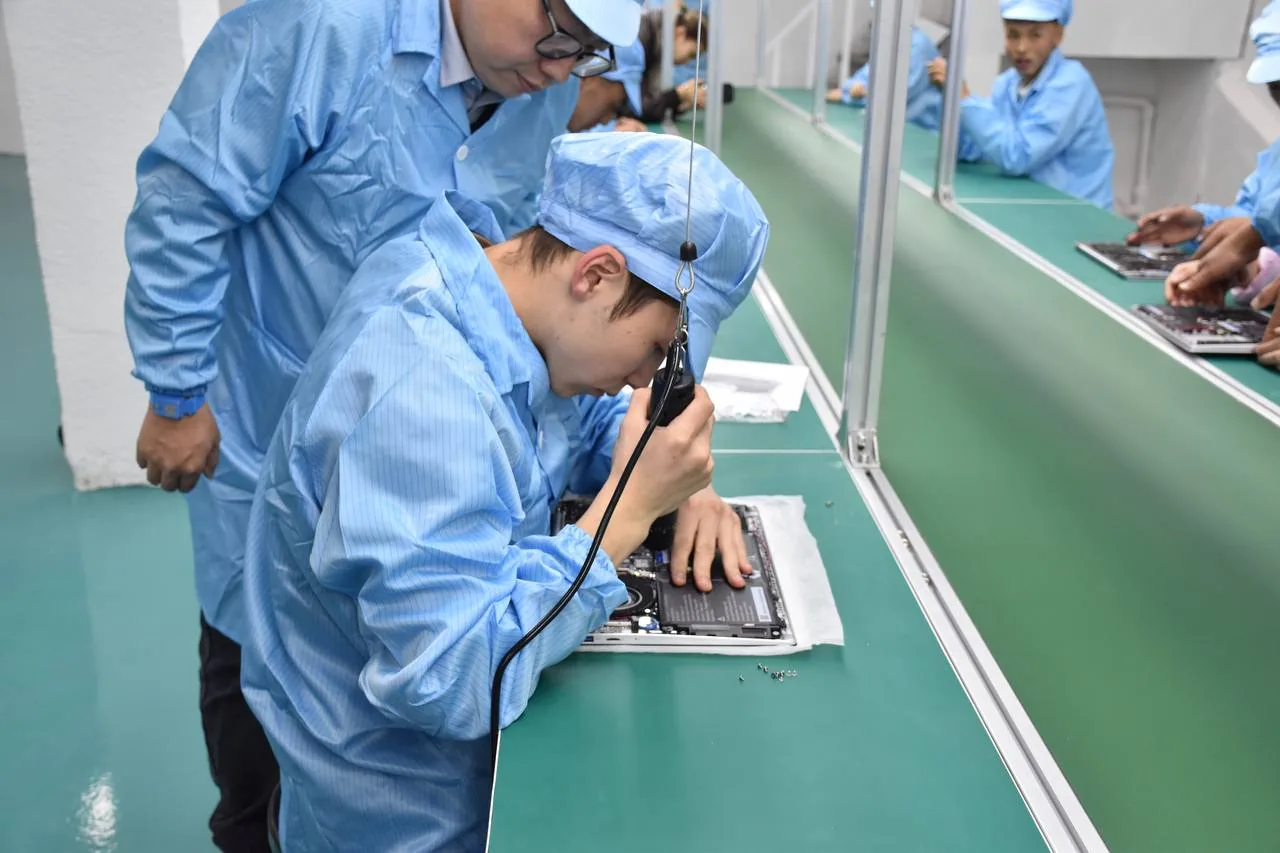
The hardware track at the university has been developing since 1979 at the Department of Computer Science and Information Technology. Training takes place in the "Computer Circuit Design," "Microprocessors and Microcontrollers," and Network Technologies laboratories, where Cisco Systems' Packet Tracer simulator is used. The university collaborates with D-Link and Samsung; laboratories for the "Internet of Things" and FPGAs are planned. Graduates work in the field of designing and maintaining hardware solutions.
On the development of the hardware program at the university
The hardware program at the university has been developing since 1979. It was then that the Department of Information and Computing Technologies (ICT) began training computer engineers.
Today, the ICT Department is responsible for training specialists in this field, providing education in modern technologies and methods for developing hardware and software.
Laboratories and classrooms
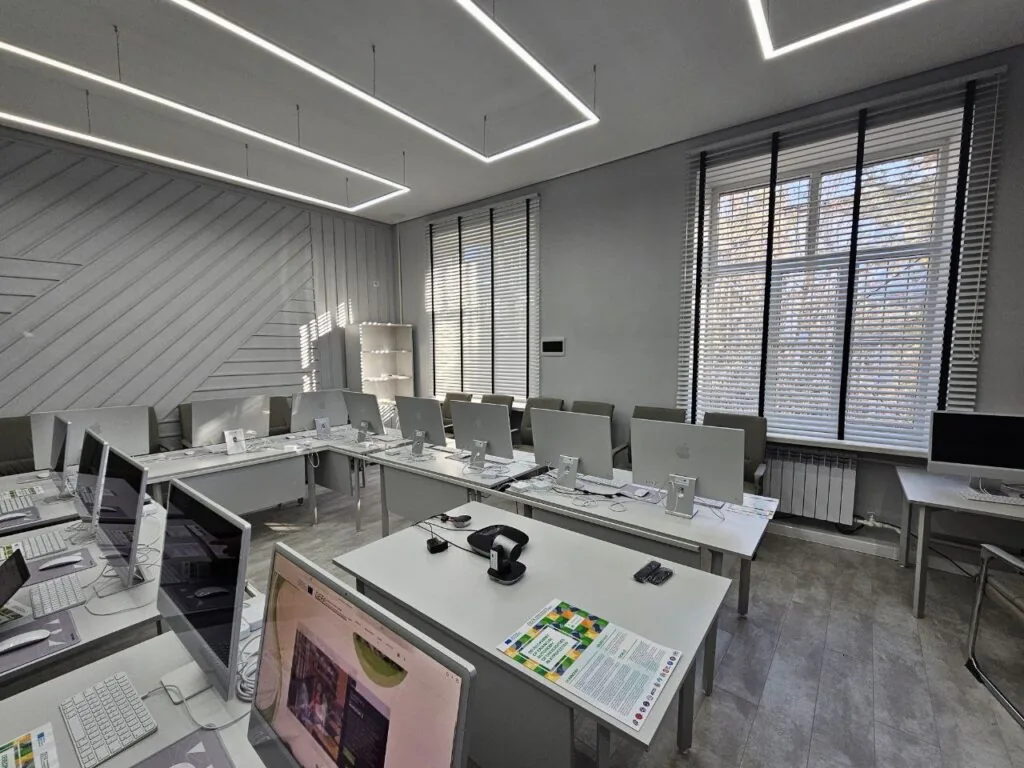
Several specialized laboratories operate at the university for teaching and practical work with hardware:
- The Educational and Research Laboratory "Computer Circuit Design." It is designed for conducting laboratory sessions on the courses "Computer Circuit Design," "Computer Architecture," and "Computing Systems." It features equipment based on integrated circuits, as well as the Educational and Research Sets "Fundamentals of Digital Technology" and "Control and Operational Automata."
- The Educational and Research Laboratory "Microprocessors and Microcontrollers," combined with a computer classroom. It was created to support laboratory practices for the courses "Microprocessors and Microcontrollers" and "Microprocessor Systems," as well as for solving problems related to the development of microprocessor control systems during Independent Work (UIR), Student Scientific Research (NSR), Research Work (NR), and course and diploma projects. The laboratory is equipped with universal laboratory stands "Microcontrollers and Microprocessors," developed by students and faculty of the department and integrated into the educational process.
- The Educational and Research Laboratory of Network Technologies, combined with a computer classroom. It uses Packet Tracer, a network data transmission simulator released by Cisco Systems. It allows users to create functional network models, configure routers and switches, and interact between multiple users. Packet Tracer is primarily aimed at participants of the Cisco Networking Academy Program as a free educational resource helping them learn the basic concepts of Cisco Certification.
Educational laboratory stands developed by faculty and students of the ICT Department are used in the educational process.
The laboratories require serious modernization and equipment upgrades.
Educational process and student projects
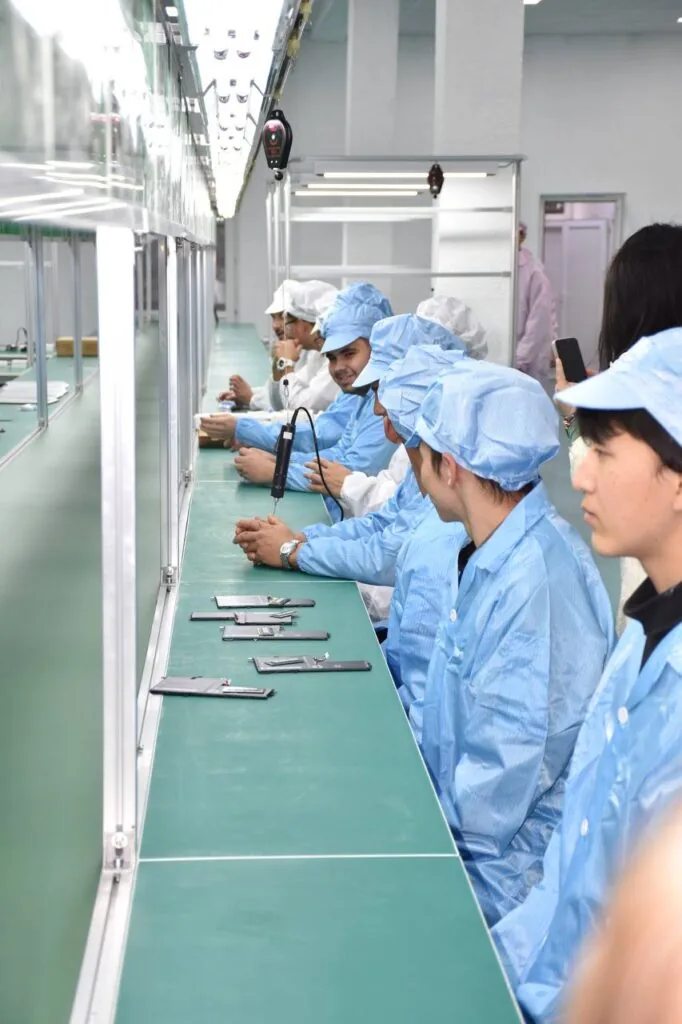
Hardware program students study disciplines such as electrical engineering, electronics, circuit design, computer architecture, computer peripherals, microprocessors and microcontrollers, embedded systems, and FPGAs.
Students have the opportunity to participate in grants, competitions, and startups, which helps them develop practical skills and implement their own projects.
The university collaborates with companies such as D-Link and Samsung, providing students with access to modern technologies, internships, and joint research.
Future and prospects
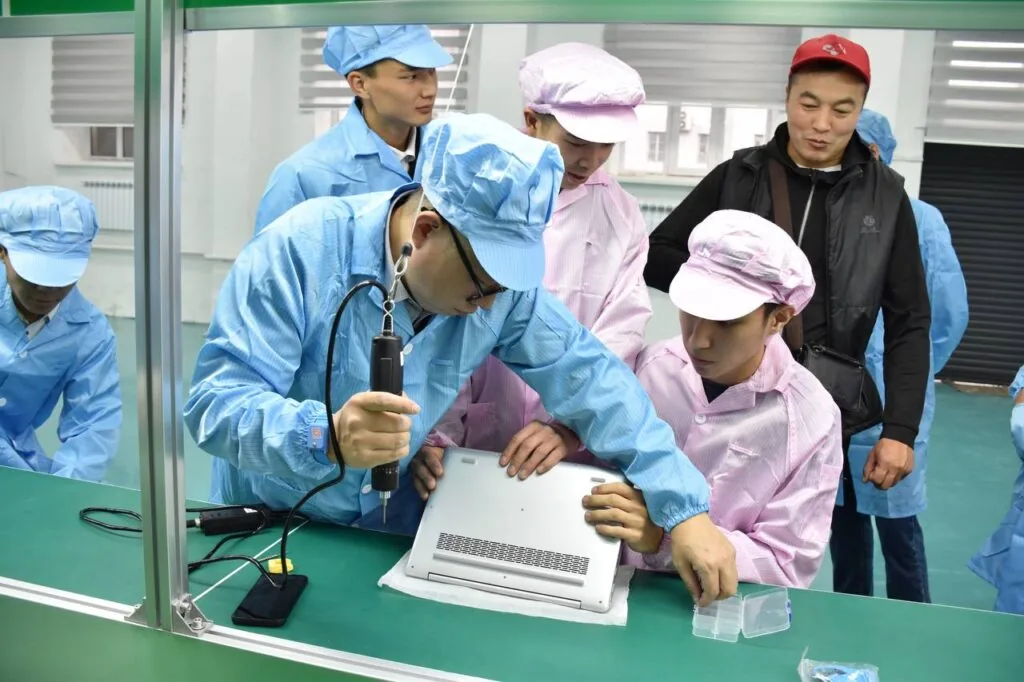
The university's near-term plans include creating new laboratories, including an "Internet of Things" laboratory with the support of Samsung, as well as an FPGA laboratory. This will allow students to master modern technologies and gain practical skills in promising fields.
University graduates successfully apply their knowledge in real-world conditions, finding employment in hardware-related companies. They engage in:
— assembly, configuration, and repair of computer equipment
— design of microcontroller-based control systems
— development, testing, and debugging of electronic circuits for digital devices
— creation of digital devices based on FPGAs
— design, configuration, and installation of local area networks.
KSTU graduates are in demand in the industry and successfully establish themselves in the development, design, and maintenance of hardware solutions, contributing to the growth of high-tech sectors.
The Tech on Telegram Follow The Tech on Telegram
Keep up with the latest technology and startup news.
Related reading







More from this author

News
zypl.ai begins operations in Japan and focuses on next-generation risk models
Mansur Ismagulov

News
Elon Musk's net worth has exceeded $700 billion for the first time
Mansur Ismagulov

Article Interviews
"Central Asian countries should build a joint ecosystem," — Bekhzod Ismoilov on the development of AI in the region
Mansur Ismagulov

Article Interviews
Bloom's Taxonomy and Engineering Levels: A Practical Growth Model
Mansur Ismagulov

Article Useful
How the IT industry in Azerbaijan developed in 2025: key events
Mansur Ismagulov

News
Tajikistan has become a new member of the regional innovation alliance Central Asian Innovation Hubs.
Mansur Ismagulov