How a Kazakh startup is changing the rules in the construction industry: the story of Armeta
How did the Kazakh startup Armeta manage to get into one of the most prestigious global accelerators — Alchemist Accelerator?
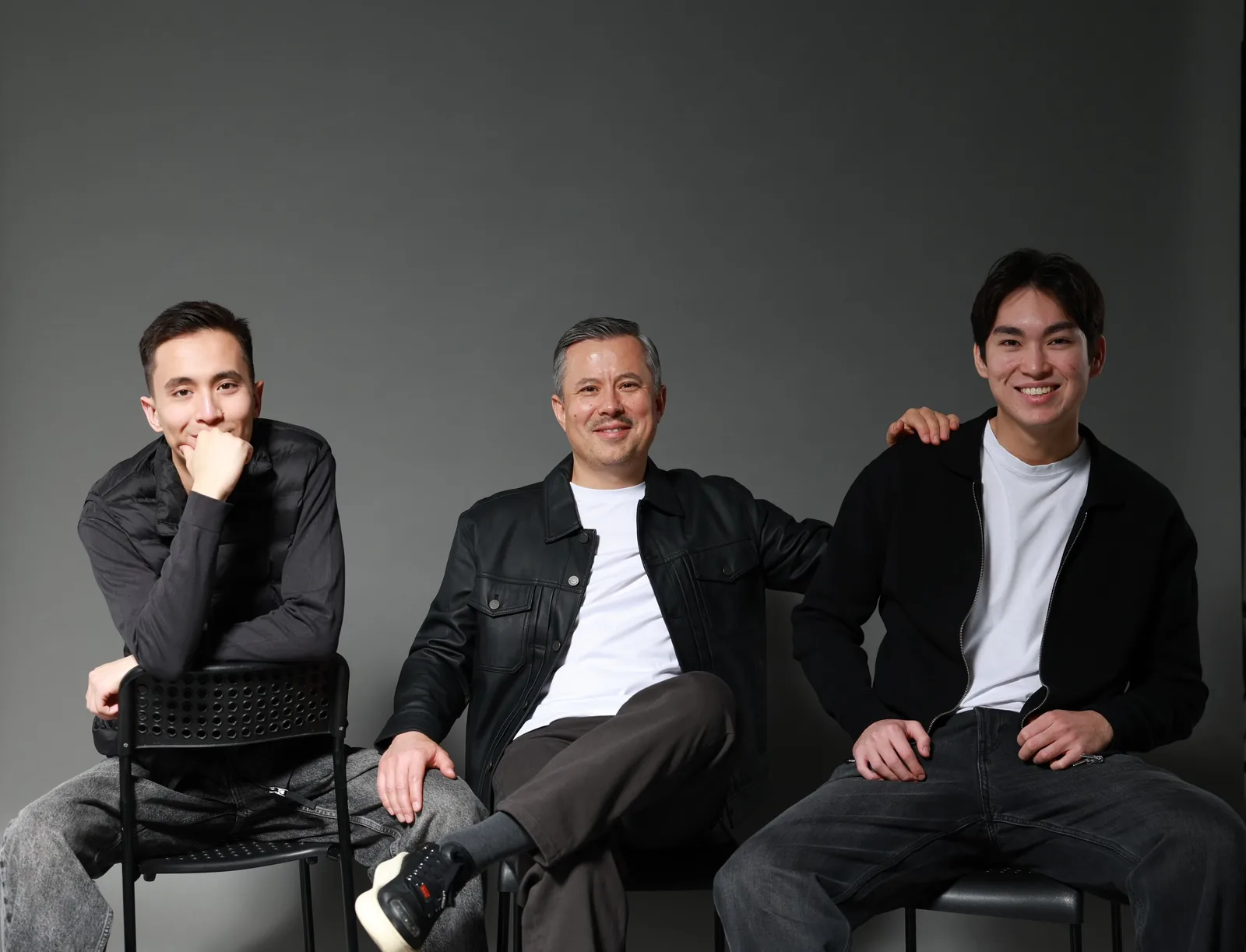
Exclusive for The Tech, the team shares how they are building an AI platform capable of changing the rules of the game in the construction industry and bringing Kazakhstani technology to a global level.
Temirlan Rakhmetzhanov, City — San Francisco, Co-founder and CEO of Armeta, LinkedIn
Sanzhar Rakhmetzhanov, City — Astana, Co-founder of Armeta, LinkedIn
Nuraly Baktygaliyev, City — Astana, Co-founder & CTO of Armeta, LinkedIn
How It All Began
Temirlan: I am the co-founder and CEO of Armeta. Initially, we formed in the US and conducted our operations there. Later, we were invited to our homeland — the Republic of Kazakhstan — to develop projects here. Armeta is an artificial intelligence-based platform that automates the process of expert evaluation and approval of construction projects.
Sanzhar: I am a co-founder of Armeta. My journey in the industrial-construction business has lasted nearly 25 years. I started in investment companies, and then in 2013, together with partners, I created my own engineering and technology company, whose focus remained unchanged — we only expanded into related industries.
Our business covers industrial and civil design, oilfield services, and IT. Previously, I was involved in mechanical engineering but later exited that project. Over these years, we have accumulated significant experience and knowledge, which allowed us to create the Armeta startup.
I often worked abroad — in Europe, the US, Asia, and the CIS — which gave me an understanding of international engineering and construction practices. Our experience was formed not only in Kazakhstan and Central Asia but also at the international level — we know how engineering and EPC companies operate. In Kazakhstan, three enterprises successfully operate, which I created jointly with international corporations: the French company Idemia in the field of information technology, the French company Technip Energies in the field of gas chemical technologies, and the Italian company Maire Tecnimont, specializing in chemical and energy solutions.
Temirlan: I studied in Germany in the field of industrial engineering and business management and joined my father’s group of companies four years ago, undergoing training in all divisions — project, industrial, and IT.
The construction industry remains conservative and under-digitized. Decisions are mainly made by mature specialists, while young people work primarily in junior positions. Many business processes are manual, using outdated approaches and information solutions. This opens up a huge window of opportunity for IT businesses, especially artificial intelligence.
Nuraly: I am the third co-founder and CTO of the company, responsible for technical management and strategy. I coordinate the activities of the entire AI, ML, and software engineering team. I graduated from a university in the United Kingdom with honors in Computer Science.
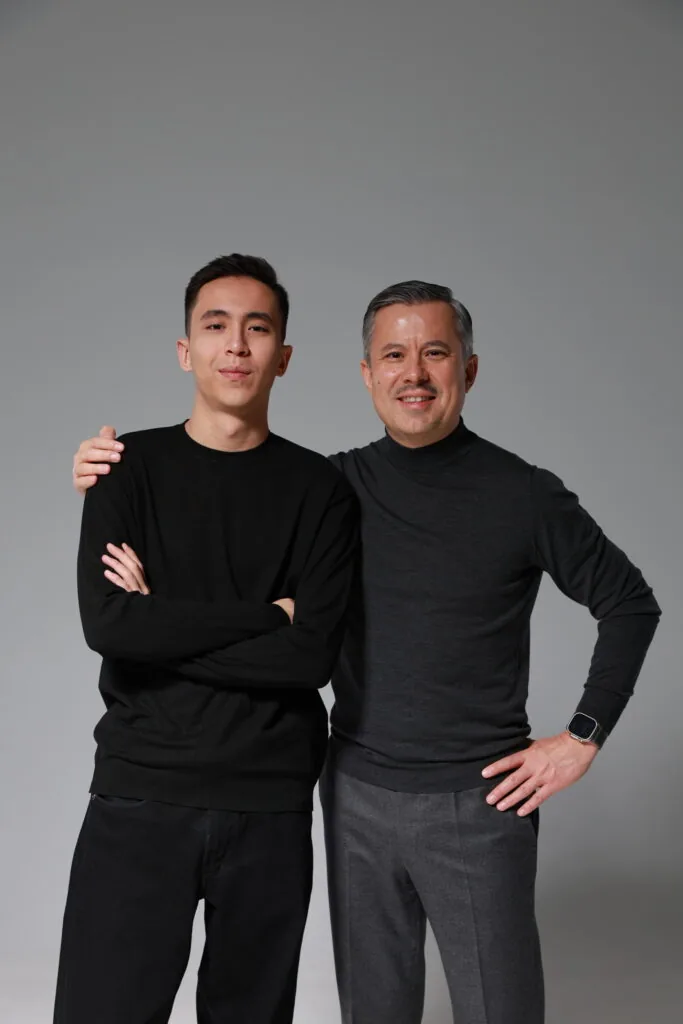
The Team
Nuraly: We have assembled a strong and ambitious team of engineers with practical experience in implementing AI solutions, as well as graduates and students from Nazarbayev University, Astana IT University, and other universities. Based in Astana, we are developing the local community and supporting Kazakhstani talent. Our hackathon starts next week, and soon interns will join us and joint educational programs will begin.
Our plans include creating our own R&D centers in Doha, Tashkent, and San Francisco. Today, the team consists of 26 people.
Target Audience
Sanzhar: We primarily target government agencies, governments, and large corporations.
Initially, we did not have the idea of a platform — we started with point AI solutions. The first product, an AI assistant, helped engineers and designers get answers to technical questions, generate documents, and perform calculations. With it, we even spent several months in Silicon Valley.
The next product learned to recognize metadata in P&ID (Piping and Instrumentation Diagram) drawings. During the work, it became clear that clients — states and large companies — want a comprehensive platform approach.
Thus, we identified a wide range of problems with engineering documentation and design estimates among government agencies and large companies with many contractors. The results of contractors' work are checked by client engineers or state experts. This led to the understanding that the task needed to be solved comprehensively, and we moved from point solutions to developing the Armeta AI platform.

Incubation Programs
Temirlan: Among the world's top 10 accelerators in terms of "unicorn" exits, most are located in the US, especially in California. One of them is Alchemist Accelerator, which became our choice. Alchemist is a leader among accelerators for B2B startups and DeepTech, which completely aligns with our field.
We applied to other programs as well: we started a dialogue with some, while others rejected us immediately — it all depends on the alignment of interests between the startup and the accelerator. For DeepTech startups, Alchemist turned out to be ideal.
Sanzhar: Our project is at the intersection of B2B and B2G. Alchemist Accelerator is a world leader among accelerators for such startups. They particularly value projects in robotics, semiconductors, space technologies, new materials, chemistry, and pharmaceuticals. The founder of the accelerator is Ravi Belani, a lecturer at Stanford University.
Our journey with accelerators was amusing: first, there were rejections due to misaligned interests, then a wave of approvals followed. In the end, we had to stop the process — there were too many offers. We even declined a top-5 accelerator and chose Alchemist, quickly agreeing on the terms.
Now the winter batch has begun — the hottest time of the acceleration season, and we have entered the active phase of startup selection.
Challenges
Sanzhar: Arlan Rakhmetzhanov, my middle son, is the founder of the well-known startup Nozomio — a pioneer in accelerators and venture funds in our family: he led all processes when applying to accelerators and attracting initial investments, while I acted as an advisor, providing practical recommendations based on my life experience. Over the past six months, he has completed two rounds — Pre-Seed and Seed — gone through acceleration at Y Combinator, and attracted $7.5 million in venture capital. Now he acts as our advisor. So we know the path from a practical perspective.
Temirlan: When I flew to San Francisco in early summer, I already had basic knowledge, but the path was not easy. Venture investors ask many specific questions: strategy for entering new markets, actions in the US, clients, specific decision-makers, ways to "open doors," project economics, metrics, team, developers — it’s a real interrogation.
It is especially difficult for DeepTech startups in the construction industry — one of the most conservative sectors. Funds investing in construction tech approach such projects meticulously: a startup should not just be hype-driven; it must genuinely bring value and solve specific industry problems. Most AI startups are bubbles, so finding a working project is not easy. Everything is evaluated: the problem solution, team, partners, sales strategy.
For those just starting their startup journey, it is important to move quickly and not stand still. To stay ahead of others, you need to work harder than everyone else, because while you are sleeping, someone else is already moving forward. At the same time, it is important to approach everything fundamentally, not superficially — especially in exact sciences and DeepTech.
You cannot simply choose a technology stack and superficially study the development methodology. You need to understand everything deeply: from the quality of data for training models to the context and the technology stack itself.
Achievements
Sanzhar: I am proud of doing business with my eldest son.
Temirlan: I am proud of my team. Working 24/7 is usually exhausting, but the team energizes me, and fatigue disappears. It motivates me to new achievements.
I am especially proud that we are doing this together with my father and the entire team — developing infrastructure in the country and abroad, glorifying our homeland.
Sanzhar: We have assembled a team that works synchronously and covers all necessary areas. This is important because many startups entering the construction industry do not understand its specifics. They may be excellent AI and ML engineers, have experience in large companies, but when faced with the practice of the construction industry, they get lost. This background leads to many failures.
Nuraly: Our strength is the combination of domain expertise and advanced technologies. We create our own fundamental AI models trained on a large array of engineering and technological information.
We are constantly at the forefront of technology: the office in San Francisco monitors innovations that we quickly integrate into the development process. We conduct numerous experiments daily — testing technologies, selecting those that work, and continuing to develop them. This approach allows us to be effective and innovative.
Plans
Sanzhar: Today we have a presence in three countries — the US, Kazakhstan, and Qatar. In Qatar, we are opening an office and registering a company, as our first investor is an American-Qatari venture fund. Details are currently confidential, as the Pre-Seed round has not yet closed.
We are scaling up, starting with Kazakhstan. The first pilot is cooperation with the state expertise of the Ministry of Industry and Construction, which conducts expertise of large industrial and civil projects and issues conclusions. Currently, there is a consolidation of permitting processes, and we want to become a strategic partner of the MIC in automating the expertise of construction projects using our AI platform.
Next, we plan to offer solutions to large corporations and operators: "Samruk-Kazyna," "KazMunayGas," "QazaqGaz," "NCOC," "KPO," "TCO," and others. We also intend to add new solutions to the current platform and offer them to other government agencies.
Simultaneously, we are starting the registration of companies in Azerbaijan, Saudi Arabia, the UAE, and Uzbekistan. In the near future, we plan active commercial activities. We were invited to these markets through the Alchemist accelerator, our first investor, and our own historical contacts.
The US remains a priority: an office in San Francisco, scaling in industrial states — California, Texas, Illinois.
The strategy for the next two to three years is to offer the platform and product line to both government agencies and large corporations in the oil and gas, mining and metallurgy, energy, and infrastructure sectors.
The Tech on Telegram Follow The Tech on Telegram
Keep up with the latest technology and startup news.
Related reading






More from this author

Article Useful
How to protect your accounts from hacking: 8 settings you should check today
The Tech

Article Useful
500 Global: How the Accelerator Works and Who Can Receive Investments
The Tech

Article Interviews
Game Development in Central Asia: Arkady Moldavski on Developing Reverb and the Growth of the Industry
The Tech

Article Useful
Google, Tesla, BlackRock, and the IMF: Where to Apply for an Internship in Fall 2026
The Tech

News IT
Tesla unveiled the flying electric car Roadster
The Tech

News IT
Intero Biosystems startup won the Startup Battlefield at TechCrunch Disrupt 2026
The Tech