How a Kazakh woman created a startup for translating content into 300 languages and gained recognition on Product Hunt
Diana Safina and her team are building a technology that not only translates content into hundreds of languages but also helps preserve the cultural heritage of small ethnic groups.
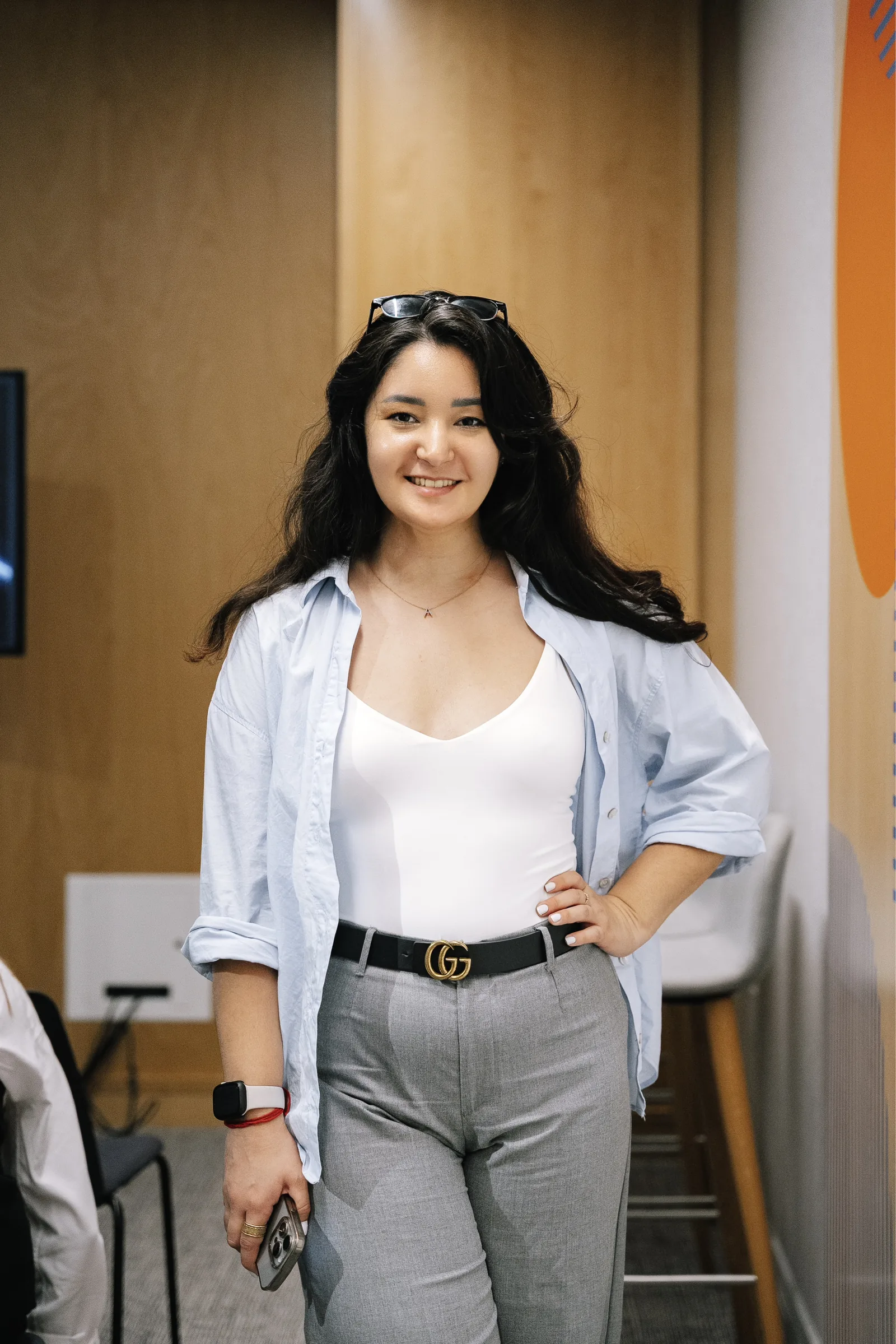
Diana Safina, City — San Jose, Co-founder of Algebras AI, Co-founder Mathshub, CEO Mathshub AI, linkedin
How It All Began
I am a serial entrepreneur and the founder of Algebras, a platform for content localization in over 300 languages. In the startup, I am responsible for business strategy, service development, and sales.
Initially, we were a female-founded startup, and I built the company together with my friend Aira Mongush from university. Previously, we created projects in the education sector, and then we noticed how important it is to receive education in one’s native language and how difficult and expensive it is to translate courses into other languages.
The technology emerged about three years ago. It all started with a personal situation: our CEO’s husband faced difficulty translating a phrase into the Tuvan language—the language of one of the indigenous peoples of Siberia. He could not read it correctly, and no online dictionary conveyed the true meaning of the phrase. Despite years of work in the AI field, there was no tool capable of translating his native language.
This incident became more than just a personal episode; it pointed to a much larger problem: entire linguistic worlds remained outside the digital age. Today, our translator is used by approximately 80,000 people.
We noticed that Turkic languages are poorly supported by modern models, and there is significant potential for work here. Since then, we have been developing translation technologies and helping companies enter new markets.
Startup Launch
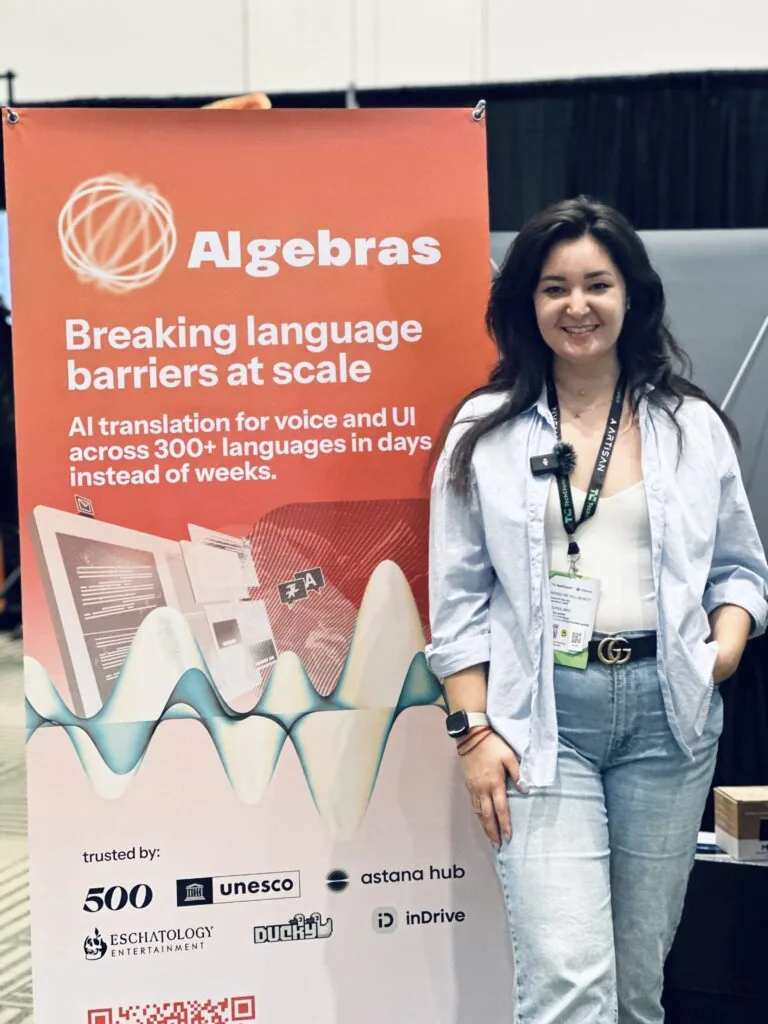
Our startup was founded in 2024, and we began active work in the middle of last year. We launched on Product Hunt with a product that translates websites and applications in just a few minutes. It is enough to add a small piece of code, and all content is translated with cultural adaptation, so the site looks natural in another language. We also translate video content, preserving the naturalness and style of speech.
On Product Hunt, our product received “Product of the Day,” and by the end of the year, we launched video localization: now you can translate videos without hiring actors, directors, or studios, while preserving the naturalness of speech and emotions.
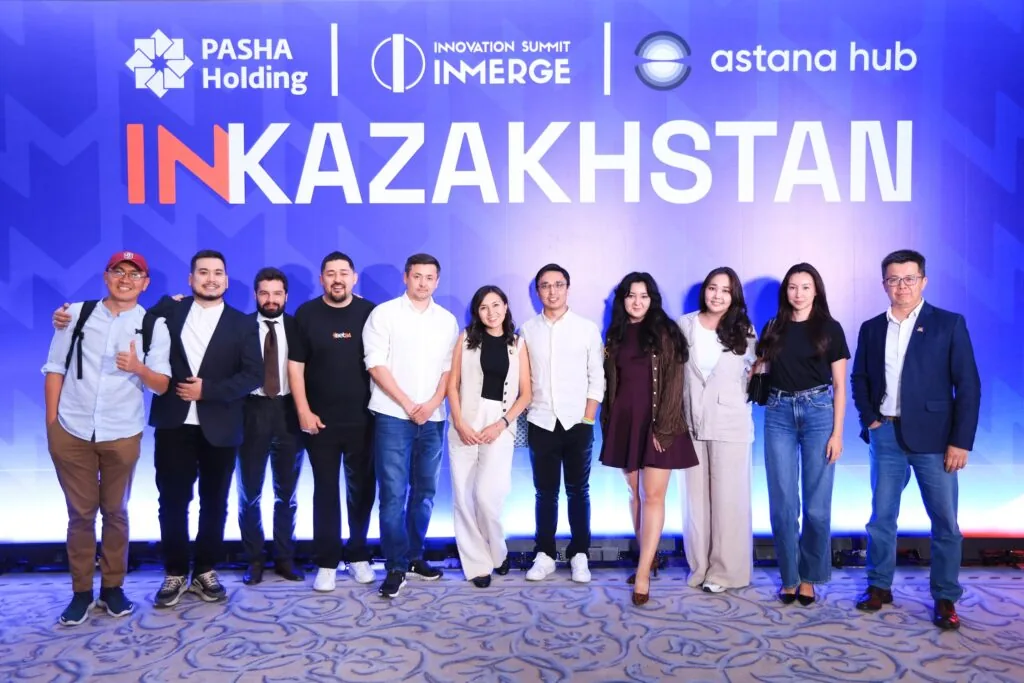
We are also proud that Astana Hub believed in us early on, accepting us into the Seed Money program in 2024. The project received a grant of 10 million tenge, which allowed us to complete the platform, hire developers in Kazakhstan, and start sales. One of our first clients was the company inDrive, for whom we translated a social project into more than 20 languages.
Target Audience
To date, our web platform is used by approximately 1,000 users. Our main focus is on the B2B segment. We have about 15 enterprise clients, including inDrive, European companies, including major game studios such as PlayDucky and Eschatology Entertainment, educational projects like Evolve AI, as well as advertising agencies and startups, including Mama Space.
Incubation Programs
We have participated in several startup acceleration programs. Among them are 500 Global’s Eurasian branch, where we received our first investment of $100,000 and expanded our contacts in relevant industries.
Additionally, we participated in the Tumaris Tech acceleration program and the online acceleration program of the Moscow State Institute of International Relations (MGIMO).
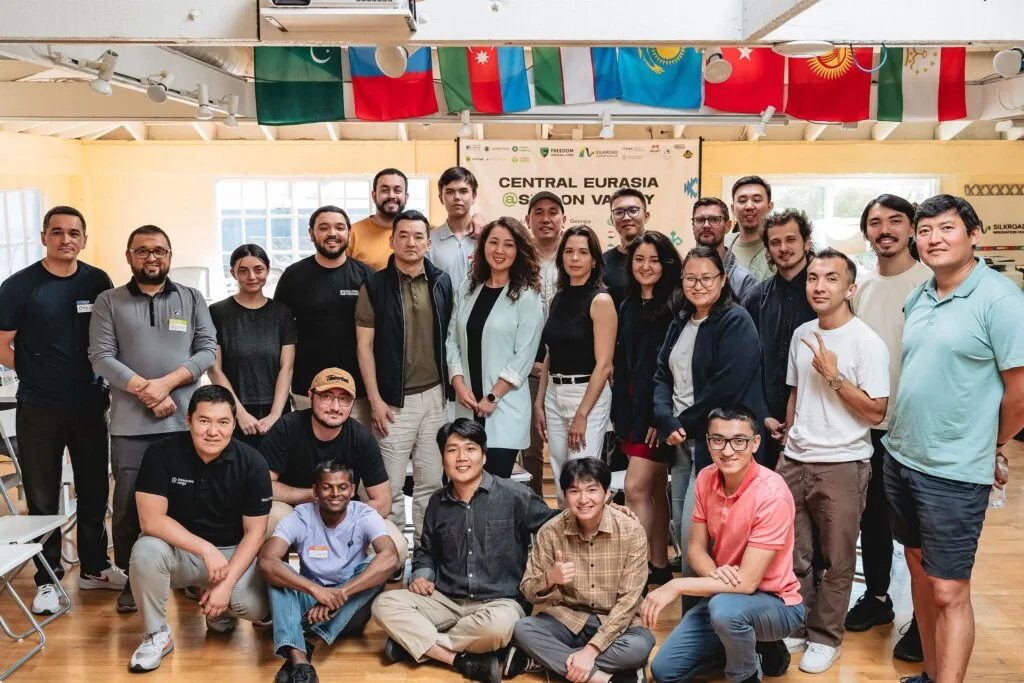
The most significant acceleration for us was the Silicon Valley Residency in California, which we completed last year. The program was conducted jointly with Alchemist X, a major American fund and accelerator. This acceleration gave us the most powerful growth: we immediately began working directly with potential clients, gained practical experience, and signed new contracts. It became a key stage in the development of our startup.
Challenges
Life as a startup founder is exciting; every day is different from the previous one. I sometimes compare running a startup to motherhood: every day brings new events, crises, and “fires,” and you need to make decisions—you cannot just wait for everything to resolve itself.
In the beginning, it was difficult to understand the target audience. With the help of Astana Hub, we assessed the product’s potential, and the acceleration at 500 Global helped us build a strategy. The program was intensive, requiring relocations, planning, and complete dedication.
At that time, we had not yet received investments, and it was not easy to devise a marketing strategy. The market already had translators using GPT and OpenAI, and sometimes there was anxiety that large technologies might “eat up” startups. Our platform is independent of these models, which gives us an advantage.
We pay special attention to the cultural adaptation of translations. Google Translate often provides literal and blunt translations, especially for Asian and Turkic languages. We take cultural features into account so that the text sounds natural and literary, avoiding aggression and bluntness. For example, we know which words or expressions are inappropriate in Kazakhstan, China, Japan, or the Emirates.
Achievements
Recently, I heard the opinion that with the advent of AI models and translation technologies, small ethnic groups may lose their cultural heritage. It sounds harsh, but if you think about dialects and languages, such as Bashkir, Tatar, or Tuvan, without preserving data—books, songs, texts—their languages could indeed gradually disappear. The same applies to Kazakh and Uzbek languages.
When we created a translator for the Tuvan language, UNESCO took notice of us, as it supports the preservation of languages of various ethnic groups: Asian, Arabic, and Turkic. We continue our work to preserve the culture of peoples through translation technology.
Thanks to our model, translators for Tatar and Bashkir have appeared, and translation into Kazakh, Uzbek, and others has improved. This is one of our first major victories.
Among other achievements are two wins on Product Hunt, the launch of a joint project with inDrive, recognition by Azerbaijani media for the developed translation technology, and high user ratings, who note a significant difference between our platform and other translators.
To date, we continue to attract investments: accelerators trust us, and by the end of February, we plan to conduct a final Seed round; we are currently in negotiations with one Uzbek fund.
Recommendations
I was lucky with my team—this is already my third project with our CEO, Aira Mongush. Our strength is our ability to listen to each other and openly share doubts. Transparent communication is one of our core values. It is wrong to stay silent or hide problems.
The second piece of advice is not to be naive. Success does not come in a second: it requires conversations with people, product testing, and patience. There are no stories where someone became a millionaire overnight.
The third piece of advice is discipline and belief in the product/project. It is important to continue explaining the product to people, writing emails, and moving forward despite rejections. With the appearance of our CTO Dima Pukhov, belief in the product has only strengthened.
People and communication are no less important. Despite the development of AI and GPT, human relationships remain at the core of any processes. The ability to build dialogue and value people opens virtually boundless opportunities.
And finally, community. Women’s communities such as Central Asian Ladies Initiative and Sisters — Female Founders Initiative, as well as various hubs and accelerators, provide support, useful advice, and valuable contacts. It is important to find people who are ready to help and support you.
Plans
We want to continue developing voice localization. Currently, we translate video and audio into more than 12 languages. However, working with voice is more complex than with text, so our goal is to increase the number of supported languages.
My personal dream is to make education more accessible for everyone, collaborating with schools and translating educational materials into the necessary languages.
Currently, we are moving to the USA and hope to establish cooperation with major game studios such as Epic Games and Riot Games. There is already interest, and we believe we can bring negotiations to contracts.
The Tech on Telegram Follow The Tech on Telegram
Keep up with the latest technology and startup news.
Related reading






More from this author

Article Useful
How to protect your accounts from hacking: 8 settings you should check today
The Tech

Article Useful
500 Global: How the Accelerator Works and Who Can Receive Investments
The Tech

Article Interviews
Game Development in Central Asia: Arkady Moldavski on Developing Reverb and the Growth of the Industry
The Tech

Article Useful
Google, Tesla, BlackRock, and the IMF: Where to Apply for an Internship in Fall 2026
The Tech

News IT
Tesla unveiled the flying electric car Roadster
The Tech

News IT
Intero Biosystems startup won the Startup Battlefield at TechCrunch Disrupt 2026
The Tech