How Kazakhstan is implementing its national strategy for AI workforce development
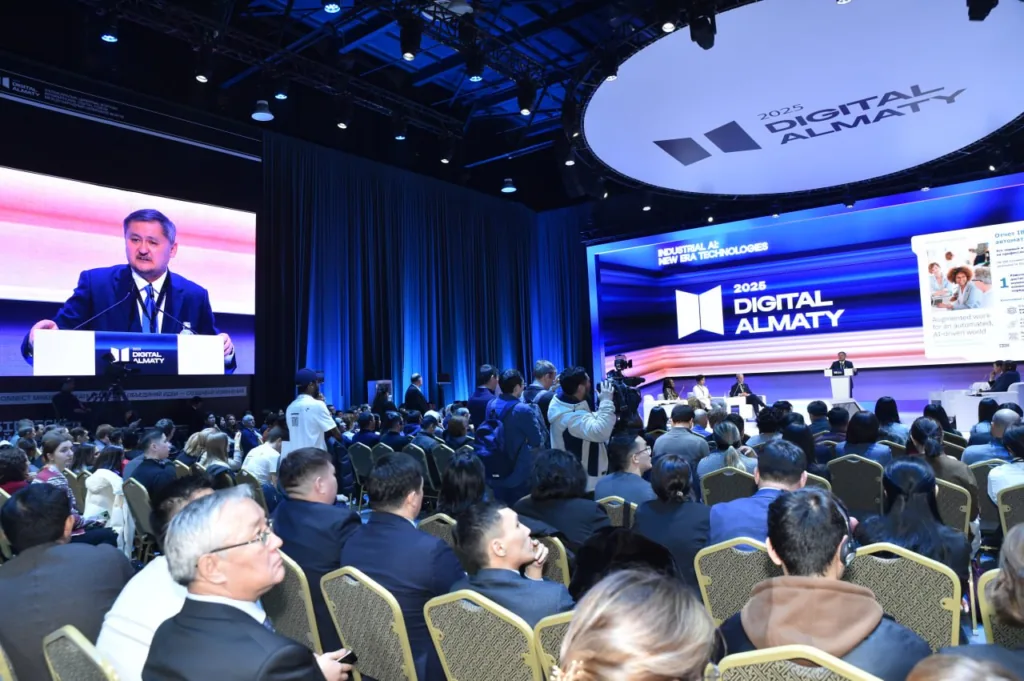
At the panel session of Digital Almaty titled "National Education Strategy: Preparing AI Workforce," innovative approaches to integrating artificial intelligence into educational systems and the labor market were presented. Particular attention was drawn to the AI-Sana initiative—an educational program aimed at developing AI specialists in Kazakhstan.
Author - Mansur Ismagulov
The Tech AI
Get the key points in seconds - a short summary from The Tech AI.
The Minister of Science and Higher Education of the Republic of Kazakhstan, Sayasat Nurbeck, announced the launch of the AI-Sana program, which will train 50,000 students in AI at 20 universities. The project is funded by a state fund of $1 billion, will reach 680,000 students through a mandatory course from Google, and will attract 100,000 people to form 1,000–1,500 teams by the end of the year. The program aims to integrate Kazakhstan into the global AI ecosystem with the support of partners such as Huawei, NVIDIA, and other industry leaders.
Saiyat Nurbek, Minister of Science and Higher Education of the Republic of Kazakhstan
Dr. Lee Kai-Fu spoke about a company that reduced the number of designers from 700 to 30, replacing them with Prompt Engineers—specialists who formulate tasks for AI. This confirms that artificial intelligence is changing even creative professions.
Last year was a turning point for technology: language models such as ChatGPT showed that AI will not replace people, but will significantly increase the productivity of those who use it. Ignoring these changes leads to a loss of positions in the labor market.
Since 2017, Finland has successfully trained its population in AI skills. This experience inspired us to launch an educational program that is already operating in 20 universities. A joint course with Google will become mandatory for 680,000 students in Kazakhstan, increasing their competitiveness.
We cooperate with global technology leaders: Huawei, NVIDIA, Coursera. Kazakhstan was the first in the world to integrate online courses into the credit system of education. To develop AI in the country, supercomputers are being created, and the National Artificial Intelligence Center will bring together specialists and researchers.
By the end of the year, it is planned to engage 100,000 people and create 1,000–1,500 AI teams. The project is funded from a state fund in the amount of $1 billion and is focused on education, agriculture, and ecology.
AI is not just a technology, but a tool for transforming the economy and society. Our goal is to make it accessible to everyone.
Dr. Kim chose Kazakhstan for work due to the high quality of human capital, despite more favorable conditions in Saudi Arabia. He visited 20 universities, including private and national higher education institutions, and noted that Kazakh students are open, motivated, and energetic.
An example of a new approach is the company DeepSeek, which does not hire employees with more than two years of experience, believing that young specialists are ready to find non-standard solutions. This helped the company make a breakthrough in the development of large language models and multi-layered visual technologies.
For universities, the AI-Sana program is not just training, but also an opportunity to earn money: startups created by students in the field of AI can attract serious funding. An important aspect is the division of intellectual property between universities and students, which will allow them to enter the international market.
Dr. Kim not only brought his unique program, but also attracted international investors interested in specialists with industry knowledge and understanding of AI. While the world is preparing engineers in the field of artificial intelligence, Kazakhstan strives to train professionals who will be able to apply AI in various spheres of business and economy, in order to prepare for upcoming changes.
Oxford Insights released a new edition of the Oxford AI Readiness Index, which has become an important benchmark for countries when developing national policies in the field of artificial intelligence. This index is already used for comparisons at the national level. For example, the Prime Minister of Uzbekistan recently noted significant progress of the country in the ranking.
The main challenge for countries is the speed of change. Less than two years have passed since the appearance of ChatGPT, and new improved models have already emerged, more complex and multi-layered algorithms, the concept of Artificial General Intelligence is being discussed. In such a dynamic environment, it is difficult to predict the future and build long-term strategies.

Paul Kim, Director of the Center for Future Education, BIEG China, USA
A large-scale AI-Sana program for the development of AI has been launched in Kazakhstan, aimed at training specialists and creating a full-fledged ecosystem. The basis of the program is partnership with universities, where students will be able to receive credits for completing courses. It is planned to train 50,000 students who will work with real cases from various fields, such as agriculture, logistics, manufacturing, and mining.
The AI-Sana program is divided into several stages. In the first stage, students will undergo pre-acceleration, during which they will develop a mobile product, test it, and work out a business model. Then the best teams will move to the acceleration program, where they will work with experts, mentors, and investors from Silicon Valley and other countries. The program provides access to a global network of specialists and venture capitalists.
Special attention is paid to supporting women entrepreneurs, which is implemented through partnership with the TechnoWomen organization. Another important feature of the program is the active use of generative AI tools in the educational process. Even students without programming experience will be able to start learning, using AI to solve tasks, edit code, and analyze data. Over time, this will allow them to better understand technologies, develop their own solutions, and implement innovations.
The program is designed not only to prepare a new generation of specialists, but also to integrate Kazakhstan into the global artificial intelligence community, creating two-way interaction: attracting international experts and investors to the country, as well as bringing Kazakh developments to the world market.
The Tech on Telegram Follow The Tech on Telegram
Keep up with the latest technology and startup news.
Related reading







More from this author

News
zypl.ai begins operations in Japan and focuses on next-generation risk models
Mansur Ismagulov

News
Elon Musk's net worth has exceeded $700 billion for the first time
Mansur Ismagulov

Article Interviews
"Central Asian countries should build a joint ecosystem," — Bekhzod Ismoilov on the development of AI in the region
Mansur Ismagulov

Article Interviews
Bloom's Taxonomy and Engineering Levels: A Practical Growth Model
Mansur Ismagulov

Article Useful
How the IT industry in Azerbaijan developed in 2025: key events
Mansur Ismagulov

News
Tajikistan has become a new member of the regional innovation alliance Central Asian Innovation Hubs.
Mansur Ismagulov