How AI is changing business in Kazakhstan: results of Kazakhstan Growth Forum '26
The Tech AI
Get the key points in seconds - a short summary from The Tech AI.
The Kazakhstan Growth Forum '26, held on September 16 in Almaty, discussed the gap between AI investments and business readiness. Global AI investments reached $1.8 trillion in 2025, with only 29% of companies prepared to compete. Forum participants reviewed technology implementation cases and presented the Centras 500 rankings and market leaders.
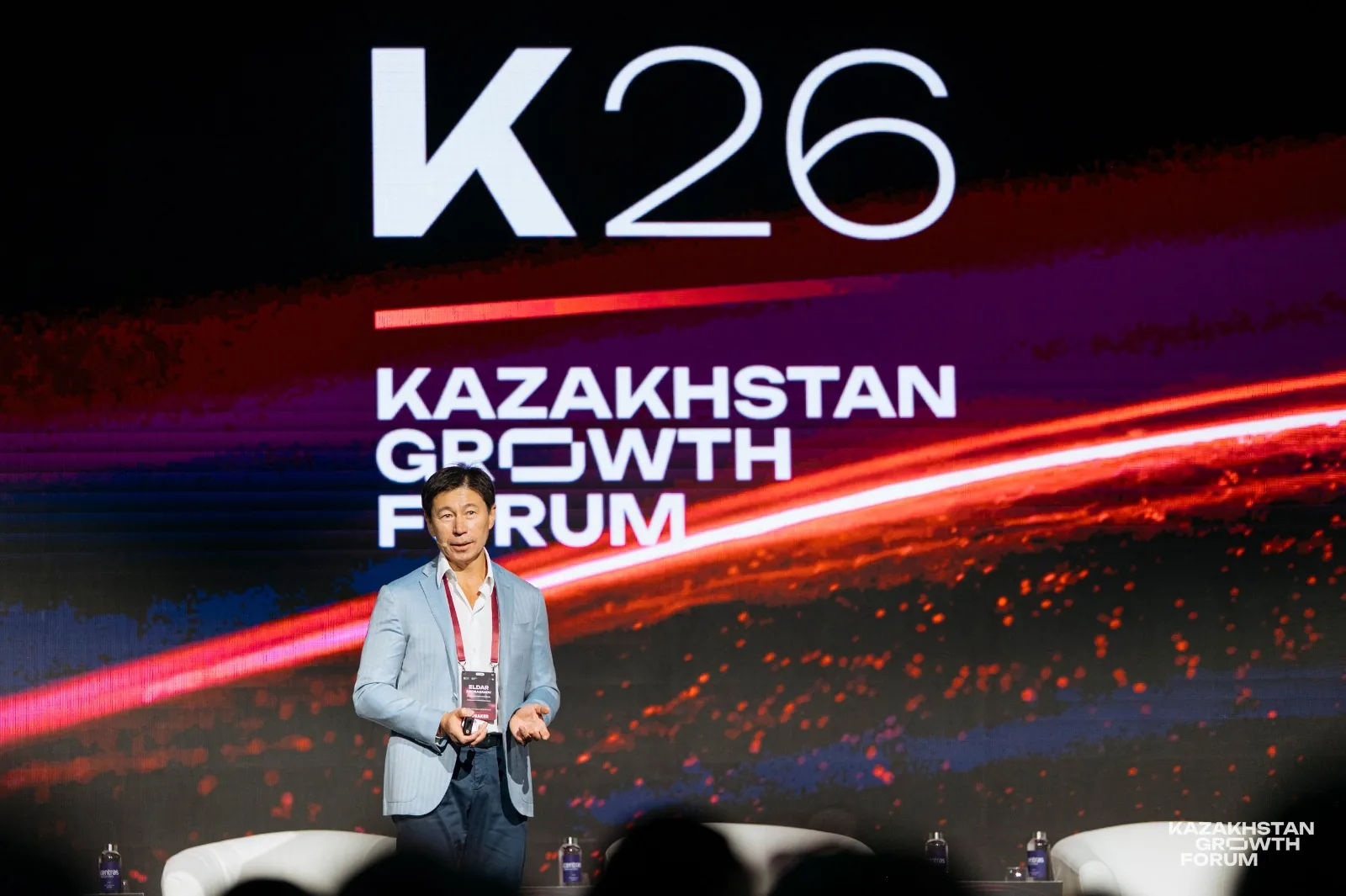
The key leitmotif of the Kazakhstan Growth Forum '26, held on September 16, was the gap between artificial intelligence experiments and their real impact on the economy. More than 400 experienced business leaders, global analysts, and influential top managers gathered at The Ritz-Carlton Almaty to jointly achieve a breakthrough—first in minds, and then in practice.
A Challenge for All
The task is, in fact, of global scale. As Gartner analyst Arup Roy noted at K26, global AI investments reached $1.8 trillion in 2025, comparable to Australia's GDP, and are projected to reach $4.7 trillion by 2029. Meanwhile, 80% of CEOs understand that AI will fundamentally transform their industries, but only 29% consider their companies ready to compete.
Something similar is happening in Kazakhstan—businesses are adopting innovations extremely slowly. According to KGF Chairman Eldar Abdrasakov, only a few companies have revised their strategies up to 2030 taking into account the factor of Authentic AI. The speaker urged paying special attention to business context in system prompts and building internal algorithmic ecosystems instead of relying entirely on third-party language models.
McKinsey partner Dulatbek Ikbaev went further, stating at the forum that AI is reshaping the very architecture of companies. The uptime of AI agents doubles every four months, compared to seven months in 2019, leading to the emergence of agent-based organizations where humans set strategy and agents handle operational workload. According to him, 75% of existing corporate roles will be revised.
Exemplary Practices
The panel discussions at K26 aimed to get to the bottom of things and find cases that companies interested in effective AI implementation can rely on.
As Bagdat Musin noted, the "Kazakhtelecom" he leads is aiming for the status of the #1 player in the region in terms of AI infrastructure. The first domestic supercomputer showed a stunning result—70% of its resources were purchased by businesses two years in advance even before the official launch.
"Astana Motors," according to Nurlan Smagulov, scaled its presence in Central Europe over nine months, managing processes from Almaty, including with the help of AI. That is, this technology helps not only to optimize internal processes but also to enter external markets.
AI also changes the user experience, as Mikhail Lomtadze, head of Kaspi, told: "Any service or technology is evaluated by whether users return. In the case of implementing our AI assistant, we see a phenomenal result: users not only try the innovation, they change their behavior."
Analysis of Leaders
The Centras 500 rating, presenting the 500 largest companies in Kazakhstan, presented at K26 drew attention to a paradox: behind record industry indicators stand individual players. The top 20 companies account for 54% of the total revenue of the rating, and the top 10—41%.
The economy is highly concentrated, with more than half of the companies in the rating effectively losing out to inflation in terms of revenue growth, and every third company showing a decline even in nominal terms.
The question arises: who are the leaders showing the best results? The answer lies in the top 1000 C-Level executives rating, which the KGF team also presented at the forum.
The rating represents an extended assessment of professionals across five indicators: knowledge, managerial role, entrepreneurial spirit, leadership, and effectiveness. You can view the managerial elite here.
Another perspective from Centras Group on the domestic business environment is the VoE platform, Voice of Experts, which complements customer analytics and the C500 financial ranking.
At K26, the authors of the study explained through cases why it is practically impossible to create a consumer product with high purchase frequency outside the perimeter of ecosystems in Kazakhstan, and also talked about the difference between a product and brand trust as assets.
Awards and Recognition
The climax of the forum was the awarding of annual prizes:
CEO of the Year
LEADERSHIP — Saule Zhakaeva, Citi Bank
EXCELLENCE — Dmitry Botanov, Kolesa Group
PERFORMANCE — Timur Kaltaev, RG Brands
Deal of the Year — Kaspi.kz
Transformer of the Year — Higgsfield
Shark Tank and Ideation as Drivers of Breakthrough
This year, the forum introduced new formats to bring promising entrepreneurs and bold ideas to light.
Thus, on the main stage of K26, a session "SHARK TANK IN ACTION: GAMECHANGERS" took place with the support of MOST Holding. Eight innovative companies presented pitches and underwent a rigorous review by business titans.
Participants received mentoring support, business contacts, and the opportunity to enter the ecosystem of next-generation entrepreneurs. This turned out to be not only an exciting show but also a real chance for young entrepreneurs to gain recognition and become part of the community shaping the future of the economy.
Another experimental format of K26 was the strategic Ideation session "Agents Versus Humans." Here, top managers and business owners split into teams and spent two hours searching for solutions to the most pressing questions: will agents replace people, in which professions will the greatest changes occur, and what new opportunities do AI agents open up.
Forum participants moved from passive listening to active creation: generating, filtering, and packaging breakthrough ideas that can be immediately tested in their companies.
Forum Partners
K26 thanks the partners whose expertise and support made the forum a truly institutional platform. Among them: RBC Bank, a fast-growing innovative bank; Centras Life, one of the oldest insurance companies in Kazakhstan; Philip Morris Kazakhstan, a global company with deep local expertise; Kazakhstan Stock Exchange, the country's main stock exchange; Smart Solutions, a leading provider of outsourcing and personnel management services; Centras Securities, an investment company leading in profitability; PwC, an international network of audit and consulting firms, one of the largest in the world in its industry; Beeline Kazakhstan, a key player in the telecom industry; Forte Bank, one of the systemically important banks in Kazakhstan; Centras Insurance, one of the largest technological companies in the Kazakh insurance market; Popeyes Kazakhstan, a leader in the local market in terms of localization, compliance with quality and food safety standards; SOS Medical Assistance, an assistance service providing a high level of professional service to corporations and individual clients.
Kazakhstan Growth Forum '26 confirmed its status as the main platform for professional dialogue between business and government. The main conclusion of the day: Kazakhstani business is no longer waiting for global trends to reach the region. Market leaders are themselves building world-scale data centers, implementing AI agents, and reshaping the customer experience. In this race, the winner will be the one who stops fearing change and makes the speed of intelligence their main business strategy.
The Tech on Telegram Follow The Tech on Telegram
Keep up with the latest technology and startup news.
Related reading




More from this author

Article Useful
How to protect your accounts from hacking: 8 settings you should check today
The Tech

Article Useful
500 Global: How the Accelerator Works and Who Can Receive Investments
The Tech

Article Interviews
Game Development in Central Asia: Arkady Moldavski on Developing Reverb and the Growth of the Industry
The Tech

Article Useful
Google, Tesla, BlackRock, and the IMF: Where to Apply for an Internship in Fall 2026
The Tech

News IT
Tesla unveiled the flying electric car Roadster
The Tech

News IT
Intero Biosystems startup won the Startup Battlefield at TechCrunch Disrupt 2026
The Tech