How the Ayan Group of Companies is turning supermarkets into marketplaces and developing its own IT ecosystem
Inna Borovikova, Director of Development at the Ayan Group of Companies, explains how traditional retail is transforming into an omnichannel platform where customers receive a unified service—from the supermarket to the mobile app.

Inna Borovikova, Development Director of the Ayan Group of Companies, Instagram
About herself and the Ayan Group of Companies
Today, my primary task is to identify growth opportunities for the business, implement technologies, and help the company adapt to a rapidly changing market.
The Ayan Group of Companies unites Ayan supermarkets, the Biofarm pharmacy chain, the Ayan dairy plant, its own production facilities, the AyanMarket marketplace, and the "Good Doctor" veterinary clinic. My role involves developing new directions, e-commerce, digital services, and technological solutions that enhance process efficiency and improve the customer experience.
A significant part of my work involves analyzing international experience. I study how retail, e-commerce, and technology companies are developing in different countries. Over the past few years, I have lived and worked in various countries, which has taught me to view business globally, seek out the best solutions regardless of their origin, and adapt them to our market.
Today, Ayan is more than just a classic retailer. The company is developing an omnichannel ecosystem that unites offline and online services around customers' everyday needs.
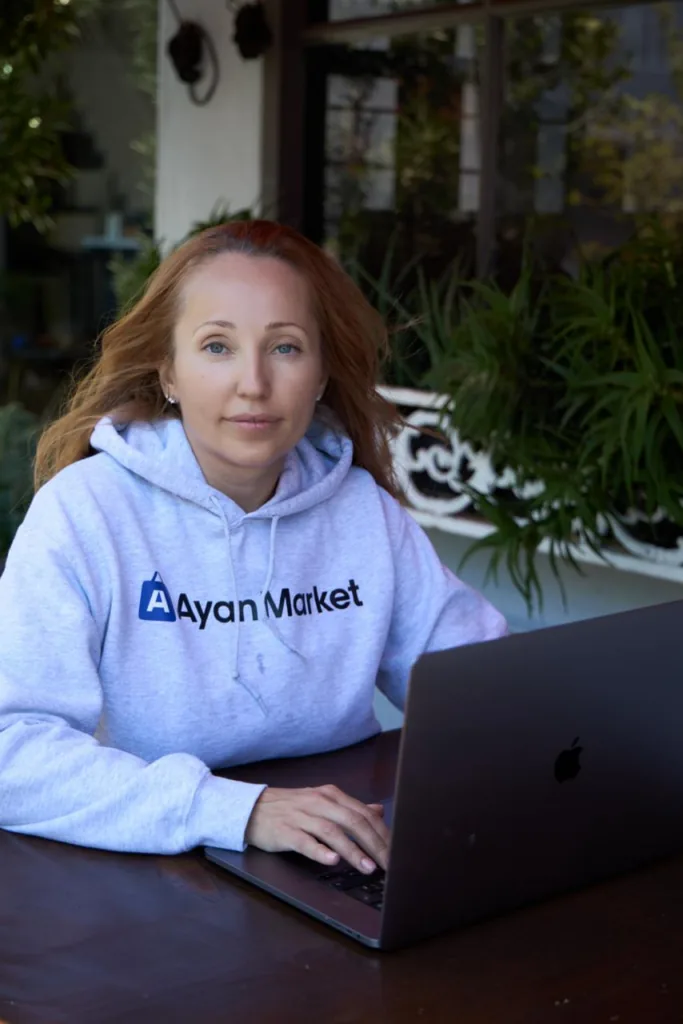
AyanMarket as a digital product
A key element of this transformation is AyanMarket, a quick-delivery marketplace that is viewed not merely as a standard trading platform, but as a full-fledged digital product. Through the service, customers can order groceries, ready-made meals, household items, health products, children's goods, and pet supplies with delivery within 60 minutes.
AyanMarket is becoming part of a unified ecosystem that also includes Ayan supermarkets, Biofarm pharmacies, and own-production facilities. For the customer, this means a single service and the ability to meet most everyday needs through one platform with a consistent customer experience.
From a technological perspective, AyanMarket is a platform for developing e-commerce, working with data, implementing artificial intelligence, and building an omnichannel model for customer interaction. The company's goal is to create a loyalty ecosystem where users receive all necessary services within a single digital space.
The key difference of this model lies in the deep integration of all ecosystem elements, which allows for controlling the customer experience at every stage of interaction. As a result, the company aims not only to develop delivery services but also to save the customer's most valuable resource—their time.
The target audience of the platform consists of people who value speed, convenience, and service quality: families with children, working professionals, young parents, pet owners, and anyone who regularly purchases essential goods.
Currently, about 200 partners and vendors operate on the platform in Astana, Karaganda, and Temirtau. We continue to expand our partner network, connect new product categories, and develop the platform's technological infrastructure. At the same time, we actively invite new partners to join the AyanMarket ecosystem.
Key partners of AyanMarket include Ayan supermarkets, the Biofarm pharmacy chain, local manufacturers, FMCG companies, distributors, and logistics services. In the technological sector, the company collaborates with Mindbox, is integrated with Yandex Delivery, and is preparing to launch a partnership with Wolt. Solutions in the fields of AI, data analytics, and automation are also being actively developed. Within the financial sphere, Airba Pay and Halyk Pay operate, and a cashback loyalty program of up to 20% is being launched in collaboration with Bereke Bank. AyanMarket is building a partnership model in which not only the platform itself but also its participants grow. The company invests in digital tools, marketing, logistics, and customer traffic, helping partners scale their businesses. Institutional partners include Astana Hub and the National Chamber of Entrepreneurs "Atameken."
Omnichannel and unified customer experience
For me, omnichannel is not just the presence of different sales channels, but a unified customer experience regardless of the interaction point with the company. It involves unified customer data, a loyalty program, personalized offers, and a consistent level of service across all channels.
Today, a customer can see a promotion in the mobile app, place an order via AyanMarket, use loyalty program bonuses at an Ayan supermarket, and then purchase health products at a Biofarm pharmacy. For them, all of this should be perceived as a single ecosystem, not as separate companies and services.
A unified customer experience is built on several key elements: a common loyalty program, a unified communication system, personalized offers, and the use of data to understand customer needs. We strive to ensure that regardless of the channel a person uses, they receive an equally high level of service.
Today, a customer can see a promotion in the AyanMarket app, use loyalty program bonuses at an Ayan supermarket, purchase health products at a Biofarm pharmacy, or arrange home delivery. For them, this must be a single service with clear rules, consistent quality levels, and a unified approach to service.
About data and AI
At AyanMarket, key decisions are made based on data and product metrics. The company analyzes customer behavior, demand, purchase frequency, marketing effectiveness, assortment, logistics, and the loyalty program. The resulting data is used for business development, improving operational efficiency, and enhancing the customer experience. Metrics help manage the product, marketing, and logistics, and identify new growth points in both offline and online channels.
A separate area of focus is the use of artificial intelligence. Today, we are actively implementing AI for analytics, process automation, and improving the quality of the customer experience. I am confident that in the coming years, data and AI will become among the main factors of competitiveness in retail.
AyanMarket is developing as a full-fledged digital product, using Product Development and Product Discovery approaches to quickly launch new features and test hypotheses based on data.
One of the recent technological solutions was the implementation of a WebView approach, which accelerated the launch of new services and updates. Simultaneously, the company is actively integrating AI tools into team workflows. ChatGPT, Claude, Perplexity, and GitHub Copilot help analyze data, conduct research, prepare reports, and accelerate decision-making.
AI is used in all key areas of the business. In logistics, it is used for forecasting workload and improving delivery efficiency. In marketing, it is used for data analysis, audience segmentation, content creation, and evaluating advertising campaigns. In customer service, it is used for personalizing communications and improving the user experience.

How the e-commerce market in Kazakhstan is developing
E-commerce in Kazakhstan is developing dynamically and is today one of the most interesting digital markets in the region. This is largely due to a high level of digitalization, the development of mobile services, and the rapid adoption of new technologies in everyday life.
A distinctive feature of the Kazakhstani market is that consumers quickly adapt to new digital products. Thanks to the development of superapps and digital ecosystems, people can solve a huge number of everyday tasks within a single application—from shopping and delivery to financial services and payments.
This is forming a completely new level of expectations. Today, it is no longer enough for a customer to simply buy a product online. They expect a user-friendly interface, fast delivery, personalized offers, service transparency, and the ability to receive all necessary services in one digital space.
For businesses, this means the need to constantly invest in technology, data, automation, and customer experience. Competition is shifting more and more from the price plane to the plane of convenience and speed.
In my opinion, in the coming years, the market will continue to grow actively, and the key drivers will be the development of omnichannel models, artificial intelligence, personalization, and ecosystem services. Companies that can minimize the distance between a customer's need and its solution will win.
In my opinion, today e-commerce in Kazakhstan faces five key challenges.
1. Territorial factor. Kazakhstan is one of the largest countries in the world by territory, so ensuring an equally high level of service and delivery in all regions requires significant investments in infrastructure.
2. Logistics and the economics of quick delivery. Customers increasingly expect same-day or even hourly delivery. At the same time, companies must simultaneously ensure speed, service quality, and the economic efficiency of the business model.
3. Personnel. The market needs specialists in IT, data analytics, product management, digital marketing, and customer experience. Competition for such personnel is constantly growing.
4. Customer trust. The buyer must be confident that they will receive high-quality goods, fresh products, and service that meets their expectations. Therefore, customer experience becomes one of the main factors of success.
5. Integration of technologies and data. Modern e-commerce is a complex ecosystem combining payments, logistics, CRM, loyalty programs, analytics, and personalization. The better these integrations work, the higher the business efficiency and service quality for the customer.
Today, competition is occurring less and less between individual companies and more and more between ecosystems.
The modern customer chooses not just a store, marketplace, or delivery service. They choose convenience, speed, service quality, and the ability to solve their everyday tasks in one space. This is why partnerships, integrations, and the ability of companies to unite different services around customer needs are becoming increasingly important.
Global leaders are already developing not as retailers, but as platforms that unite trade, finance, logistics, and digital services. In such a model, companies that create a convenient interaction environment between customers, partners, and services win.
The ecosystem approach allows for creating much greater value for the customer than a separate product or service. When retail, e-commerce, logistics, payment solutions, loyalty programs, and digital services are combined in one system, the customer receives a more convenient and seamless interaction experience.
I am convinced that in the coming years, the development of partnership ecosystems will become one of the key factors of business competitiveness. The winners will not be the largest companies, but those who can most quickly unite technologies, partners, and services around the customer.

The future of retail
Retail in Kazakhstan is in a stage of active growth. The country has already become one of the most digitalized in the region, with a high level of mobile service development and rapid technology adoption. Therefore, many global trends forming in the US and Chinese markets are gradually gaining strength in the local market.
A key direction is the transition to omnichannel models. The boundaries between online and offline are blurring, and customers expect seamless interaction with the brand through any channel convenient for them.
At the same time, buyer behavior is changing. They are becoming more rational and demanding: in addition to price and favorable offers, convenience, quality, health, and time savings are becoming increasingly important. As a result, the future of retail is forming around the balance between accessibility, service, and personalization.
Data, artificial intelligence, and automation will play a major role in the transformation of the industry. The importance of own production and private labels will also grow.
I would separately highlight the prospects for local manufacturers. Kazakhstan remains a family-oriented country with strong national traditions, so interest in local brands, local products, and domestic manufacturers will only grow. I believe that it is local companies that will become an important part of the ecosystems of the future.
About the transformation of physical stores
Physical stores will not disappear, but their role will change significantly. From points of sale, they are turning into part of the omnichannel ecosystem and customer experience.
The first trend is the development of neighborhood store formats. Convenience and speed are becoming key factors, so compact formats that meet everyday needs—groceries, ready-made meals, essential goods, and health products—will be in demand.
The second trend is a change in consumption models. The average check is decreasing, but purchase frequency is increasing: people are making large bulk purchases less often and buying what is needed here and now more often. One of the main drivers is ready-made food. Modern buyers value time more and more and are willing to pay for convenient solutions, so the role of own production, semi-finished products, and services that save time will only grow.
The third trend is related to the transformation of trading spaces. They are gradually becoming centers of everyday life, where, in addition to shopping, cafes, restaurants, sports, medicine, education, banking, and other services are available.
A successful physical store of the future is not just a trading point, but part of a person's everyday ecosystem, where goods and services for different life scenarios are combined.
At the same time, basic selection criteria remain: assortment, price, and quality. However, convenience, speed, and overall customer experience are added to them. Companies that can combine these elements into a single ecosystem will win.
Today, Kazakhstani companies have all the opportunities to become leaders in retail-tech. We are living in a period when technologies have become much more accessible, and the speed of innovation implementation has increased significantly.
I would like to separately note the role of Astana Hub. AyanMarket is a participant of Astana Hub, and we see firsthand what opportunities this opens up for technological projects. It is especially important for technology companies that Astana Hub helps build connections within the innovation ecosystem, find new solutions, exchange experience, and scale products. This creates a favorable environment for the development of retail-tech projects in Kazakhstan.
The Tech on Telegram Follow The Tech on Telegram
Keep up with the latest technology and startup news.
Related reading






More from this author

Article Useful
How to protect your accounts from hacking: 8 settings you should check today
The Tech

Article Useful
500 Global: How the Accelerator Works and Who Can Receive Investments
The Tech

Article Interviews
Game Development in Central Asia: Arkady Moldavski on Developing Reverb and the Growth of the Industry
The Tech

Article Useful
Google, Tesla, BlackRock, and the IMF: Where to Apply for an Internship in Fall 2026
The Tech

News IT
Tesla unveiled the flying electric car Roadster
The Tech

News IT
Intero Biosystems startup won the Startup Battlefield at TechCrunch Disrupt 2026
The Tech