WomenInTech. How women from Uzbekistan build careers in IT and manage startups
Two women from Uzbekistan — from Karakalpakstan and Tashkent — shared their journey in IT, career development in the tech industry, and experience working with startups. In our interview, they discussed how they entered the profession, what opportunities are currently available for women in the industry, and why education, self-confidence, and continuous growth have been key factors in their professional advancement.
The Tech AI
Get the key points in seconds - a short summary from The Tech AI.
Biybinaz Turemuratova, IT Park Karakalpakstan startup manager, and Sevinch Mavlonova, a student at New Uzbekistan University, share their experiences in IT. Turemuratova highlights the support of her family and region, as well as the importance of the English language. Mavlonova, a laureate of the Zulfiya Prize, emphasizes the need for self-belief and continuous learning to overcome stereotypes in cybersecurity and artificial intelligence.
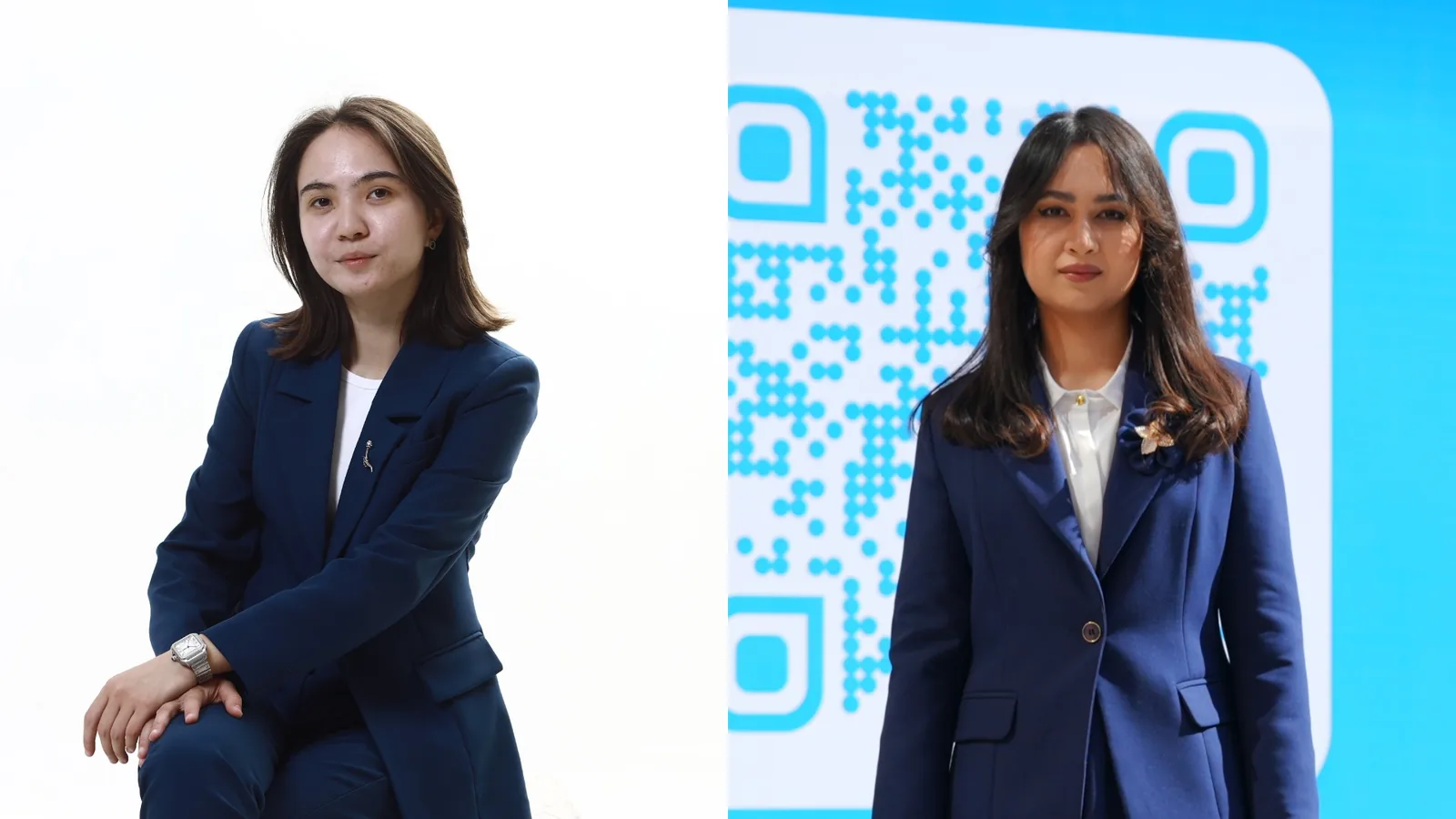
Bibinaz Turemuratova, city — Khodzheli, Head Startup Manager at IT Park Karakalpakstan, Instagram
About Me
I work as a startup manager at the IT Park branch in the Republic of Karakalpakstan. Previously, I served as the director of the IT company Data Soft Academy, which operates in two areas:
— The first area is software development and providing consulting services in the field of information technology. We developed software products for both the public and private sectors. We provided consulting services to private schools, including business process automation, implementation of SaaS systems, and call center automation.
— The second area of the company is an educational center. We trained girls and young people, winning a grant that allowed us to teach children from low-income families in the field of robotics for free. We also provided all necessary kits and equipment for training.
How I entered the IT profession
I started by enrolling in the branch of the Tashkent University of Information Technologies. The first obstacle in my career, when I was just becoming a programmer, was related to people trying to convince me not to attend this university.
The main argument was that it was mostly attended by boys: there could be at most two girls in one group. I was often discouraged and advised to choose another university or profession. But I stood my ground, and my family supported me. My own brother is also a programmer; he studied at this university and said, “It’s no big deal that 90% of the students are boys. Study where you want.”
During my studies, I no longer faced serious barriers. On the contrary, since there were fewer girls, the university administration actively supported us—giving us more opportunities to participate in competitions, receive scholarships, and develop.
At the same time, I studied English because I understood that as a programmer, I needed not only Russian but also English. In my second year, I obtained my IELTS certificate, which gave me access not only to Russian-language information sources but also to English-language ones. It became easier for me to communicate with people, use LinkedIn and other platforms, and reach an international level.
After I started working as an executive director and then as the head of my own company, there were no significant obstacles left. Our region is quite progressive in supporting women.
My family has always been supportive. Even when I stayed late at work, they would simply call to ask if everything was okay and when I would be back. There was no pressure or restrictions—on the contrary, there was care.
The more experience and connections I gained, the more I saw that the leadership of Karakalpakstan also supports the development of women in IT and various initiatives. Now, I practically do not see the barriers that were present at the beginning of my journey.
About stereotypes
The first stereotype is that girls marry early and then stop working: they go on maternity leave or their husbands do not allow them to work. This stereotype slightly hindered me because employers often asked personal questions. Sometimes they directly stated that they would take this into account when considering candidates for a position.
It is often believed that after marriage, a woman can no longer fully dedicate herself to work—there are household chores, followed by maternity leave. Therefore, such questions are asked in advance.
But if a candidate gives the “right” answer, for example, that marriage will not affect her work, obstacles usually do not arise.
Barriers for women in IT
Barriers are becoming fewer. When I was studying for my master’s degree and teaching artificial intelligence and expert systems at the university, I saw that at least 50% of the students in the groups were girls.
If we look at our region, many girls have a strong foundation in technical sciences—mathematics and physics. And if a person understands these basics well, it is easier for them to work with programming, algorithms, and solving logical problems.
In recent years, I have noticed that there are more and more girls in IT schools and courses. They understand that there are no real limitations. Stereotypes can be dispelled with results—girls can be good programmers, SMM specialists, project managers, leaders, and executives.
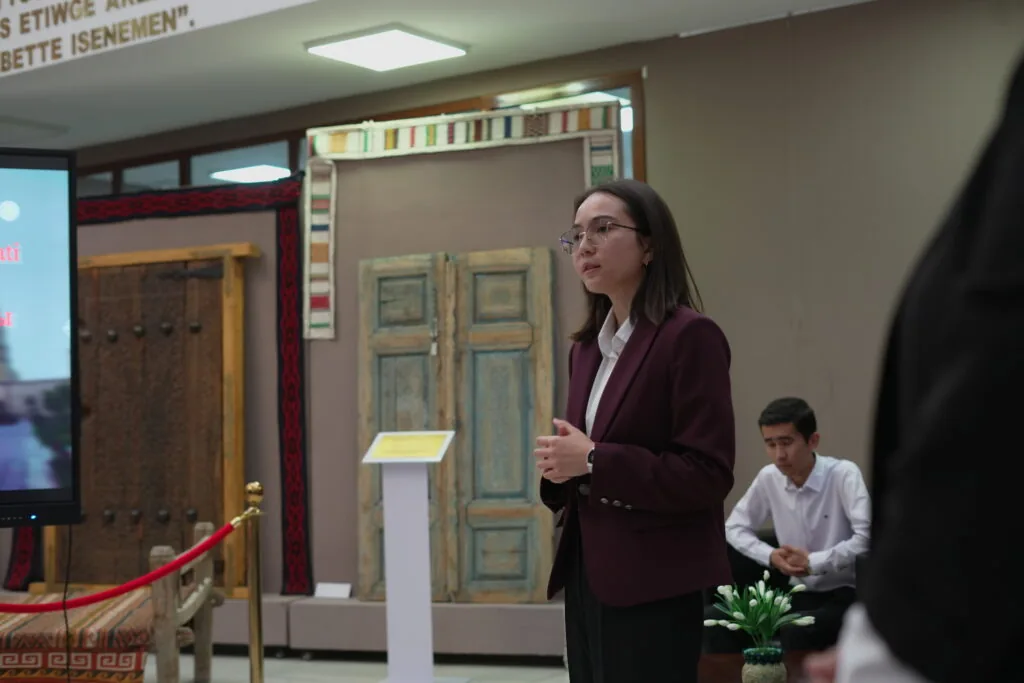
We try to hold meetings and seminars for girls. Recently, Kamola Shavkatovna, Deputy Advisor to the Minister of Digital Technologies of Uzbekistan, visited Karakalpakstan, met with girls interested in IT, and spoke about the fact that there are no limitations for them.
Today, one of the main tasks is to work not only with girls but also with their parents. Because not everyone fully understands that IT is a broad field: programmers, designers, analysts, and other directions.
It is important to explain that this is just as much a profession for girls as many others. They can master it, develop, earn well, and work remotely if necessary.
Recommendations for those just starting their journey
Study foreign languages, at least English. Any language opens access to the global community and up-to-date information about technologies. If you limit yourself to only local languages, information will reach you with a delay. Today, when technologies develop every day, it is important to follow news and sources like GitHub, where most of the documentation is in English.
The second recommendation is to believe in yourself and not be afraid of difficulties. When girls develop self-belief, it stops mattering what neighbors or acquaintances say, and stereotypes about “they won’t succeed” or “this is not for girls” begin to disappear.
For example, the general director of the company where I worked as an executive director was told that a girl would not cope: she would not be able to handle accounting, manage teams, and negotiate with distributors. He was advised to entrust me only with the educational center. But he trusted me—and the result was strong. We showed good performance in revenue and in all areas, after which the attitude toward leadership positions regardless of gender changed.
When you show confidence, “fire in your eyes,” and prove your knowledge, skills, and professionalism in practice—people start to perceive you differently. And, in my opinion, in a few more years, gender division in this field will completely disappear.
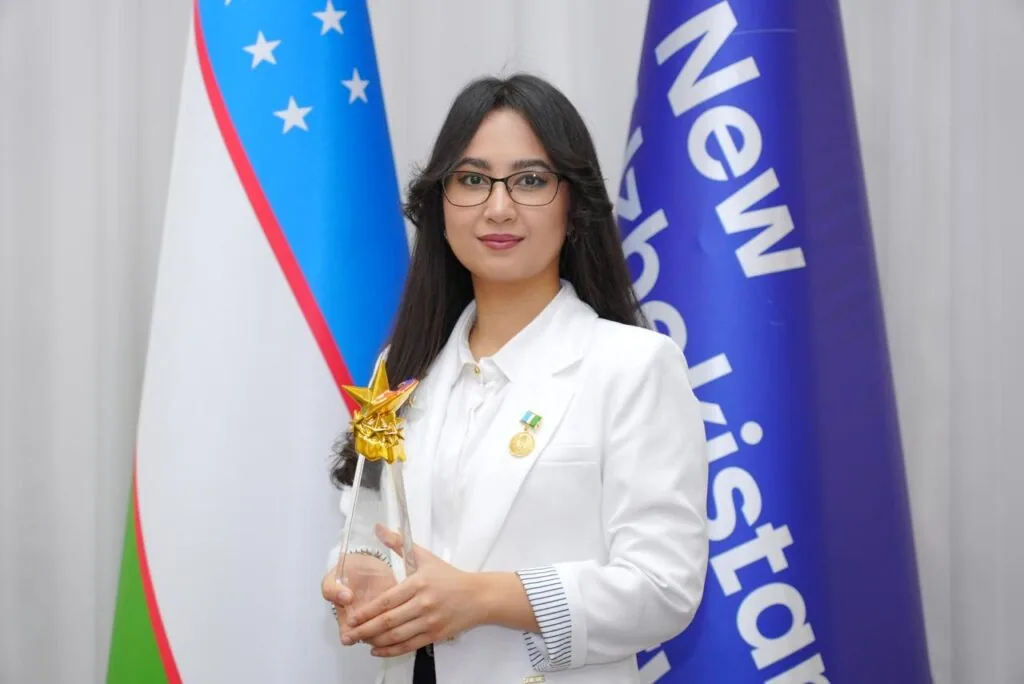
Sevinch Mavlonova, city — Tashkent, student at New Uzbekistan University, LinkedIn
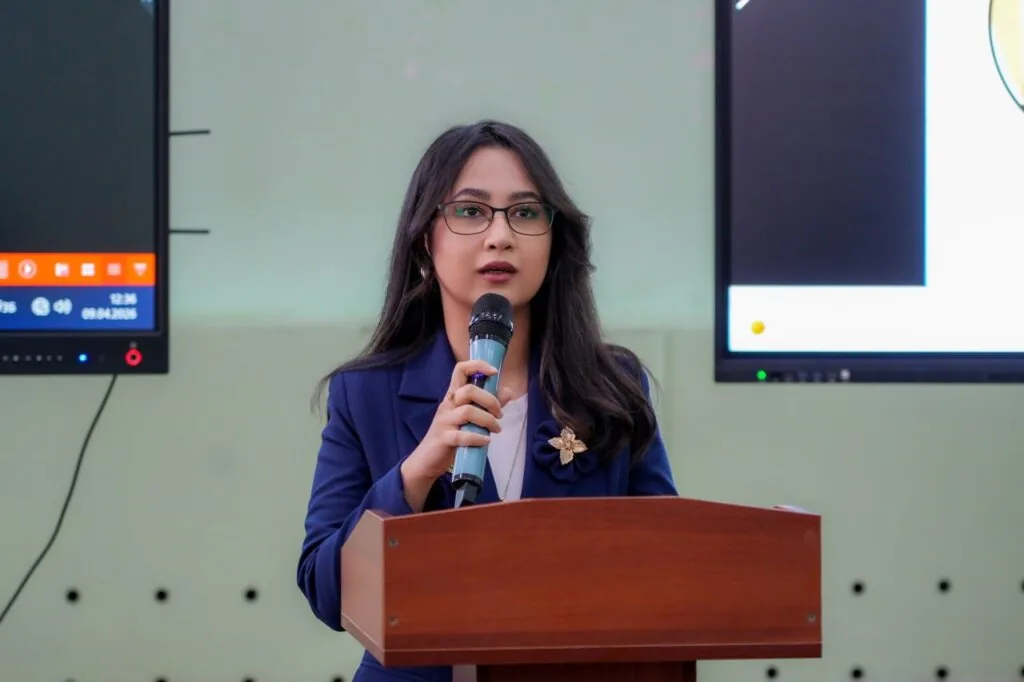
About Me
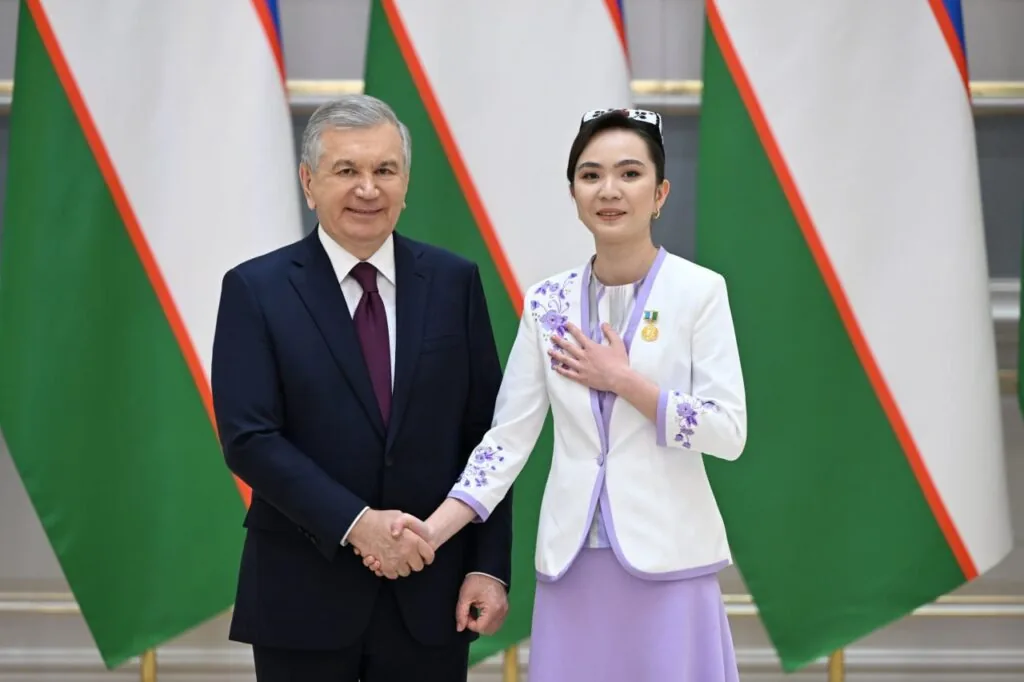
I am a second-year student majoring in “Cybersecurity” at New Uzbekistan University, a laureate of the State Prize named after Zulfiya in the field of digital technologies, and a winner of several international and republican competitions in the field of IT and innovations.
Today, I am actively developing in the fields of artificial intelligence, cybersecurity, and educational technologies. I am the founder of TEDxNewUU and work on projects aimed at youth development through technology and innovation.
For me, technology is not just a profession. It is a tool capable of changing people’s lives and opening new opportunities for entire generations.
How I entered the IT profession
My journey began long before university. Even in school, I was interested in studying foreign languages, chess, and public activity. Later, I became interested in technology and its impact on the future of society. I graduated from school with a gold medal, achieved high IELTS and SAT scores, and then enrolled at New Uzbekistan University on a grant. During this time, I managed to become a winner of the international program “Digital Generation of Girls,” visit MIT and Harvard University, and obtain international certificates in Harvard CS50, Apple Swift, and University of Maryland in cybersecurity.
Each stage of my journey taught me one thing: great opportunities come to those who are ready to constantly learn and step out of their comfort zone.
When I first encountered programming, I was amazed that a few lines of code could turn into a product that helps thousands of people. Later, I began studying cybersecurity and artificial intelligence. I was inspired by the thought that technology can not only automate processes but also ensure fairer access to education, career development, and knowledge.
It was then that I realized I wanted to build my career in IT and create solutions that would benefit society.
About stereotypes
Sometimes you can hear the opinion that technology, programming, or cybersecurity are predominantly male professions.
But my experience showed the opposite.
In technology, success is determined not by a person’s gender, but by their knowledge, discipline, persistence, and desire to develop.
I always tried to view such stereotypes not as an obstacle, but as additional motivation to show results and inspire other girls to believe in their own potential through my example.
Barriers for women in IT
In my opinion, one of the main difficulties is a lack of self-confidence and the absence of role models.
Many talented girls underestimate their abilities and do not apply for competitions, grants, or leadership programs, believing that they are not yet ready enough.
I also had to deal with doubts and fear of failure. But I realized an important thing: growth begins exactly when we decide to try. Therefore, I participated in competitions, spoke at conferences, became part of international programs, and took on leadership roles even when I did not feel completely ready. Today, as an ambassador for Women in Tech Uzbekistan, I try to help other girls see the potential in themselves that they sometimes do not notice themselves.

Recommendations for those just starting their journey
Do not be afraid to start before you feel ready. There is no perfect moment.
Invest in knowledge. The world is changing extremely quickly, and the ability to constantly learn becomes more important than any diploma.
Do not limit yourself with boundaries.
Once, I was an ordinary schoolgirl from Tashkent and did not imagine that I would be able to speak at international platforms, visit MIT and Harvard, or become a laureate of the state prize.
Great achievements begin with small steps. The main thing is to have the courage to take the first step and keep moving forward, even when the path seems difficult.
The Tech on Telegram Follow The Tech on Telegram
Keep up with the latest technology and startup news.
Related reading






More from this author

Article Useful
How to protect your accounts from hacking: 8 settings you should check today
The Tech

Article Useful
500 Global: How the Accelerator Works and Who Can Receive Investments
The Tech

Article Interviews
Game Development in Central Asia: Arkady Moldavski on Developing Reverb and the Growth of the Industry
The Tech

Article Useful
Google, Tesla, BlackRock, and the IMF: Where to Apply for an Internship in Fall 2026
The Tech

News IT
Tesla unveiled the flying electric car Roadster
The Tech

News IT
Intero Biosystems startup won the Startup Battlefield at TechCrunch Disrupt 2026
The Tech