How a girl from Tashkent created an AgriTech startup that helps farmers find buyers
How the founder's personal experience led to the creation of a startup, why the team started with manual deliveries, and how Fermopolis today uses AI to develop the agricultural market — read more in our article.

Navruza Tulkunova, City — Tashkent, CEO & Founder, Instagram
How It All Started
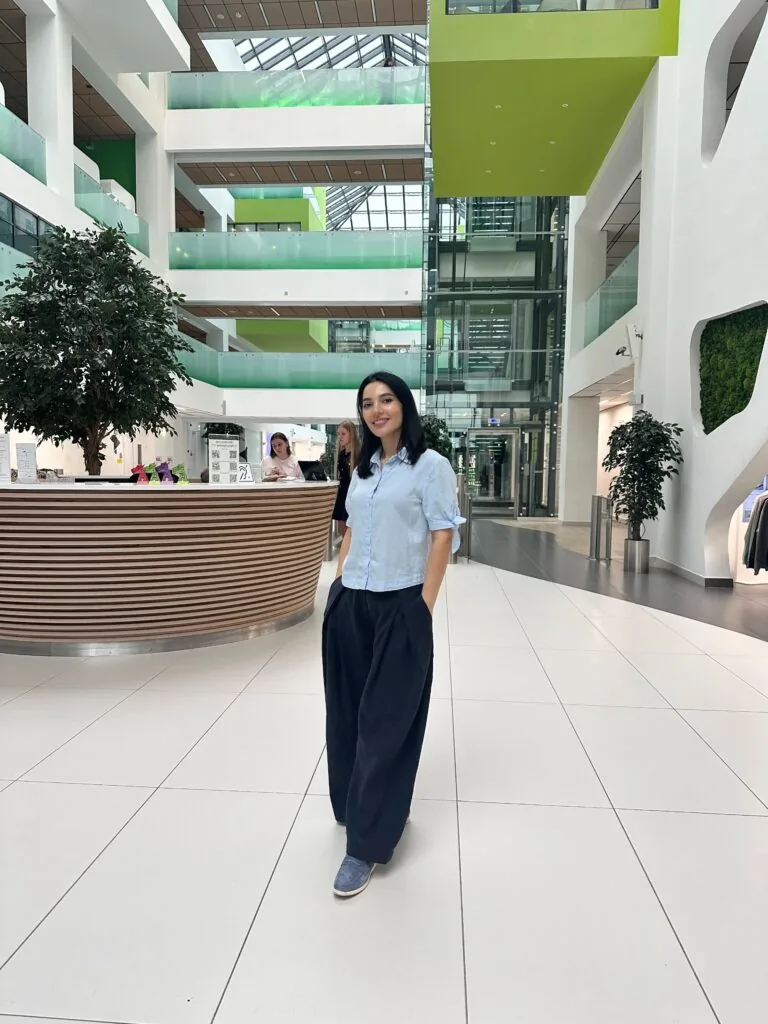
It all began after I graduated from the University of Westminster with a bachelor’s degree and moved to Innopolis to pursue a master’s degree in Computer Science. I am originally from Tashkent, where we are accustomed to a wide selection of fresh fruits and vegetables. Therefore, in Innopolis, I quickly noticed the contrast. To find quality products, it sometimes took several hours—searching for a place, traveling there, and only then making a purchase.
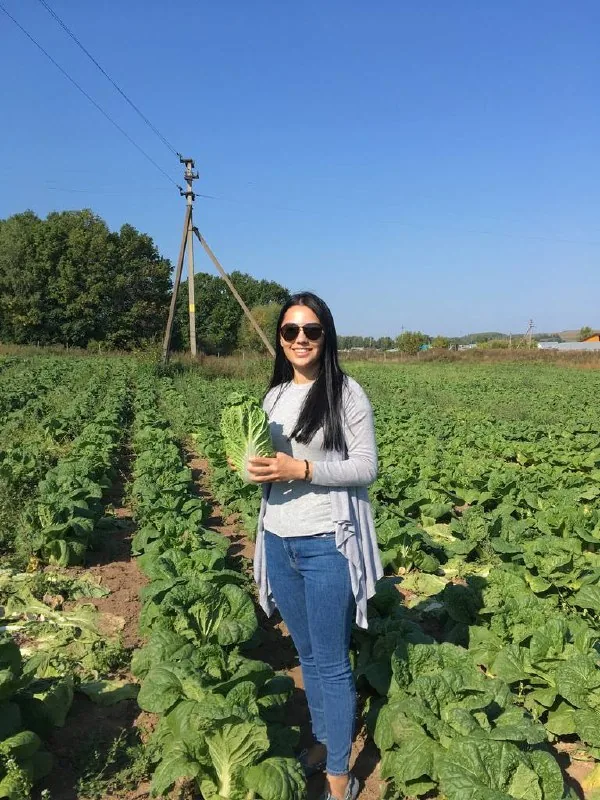
At some point, I became curious about where local farmers sell their produce. I started visiting farms, getting to know the farmers, and communicating with them. Gradually, I realized that the problem exists not only for buyers. Farmers also face difficulties: finding buyers, dependence on intermediaries, uncertainty of demand, and the risk of selling their harvest at a loss.
Their personal stories particularly touched me. Many told me that their families have been engaged in agriculture for several generations—50–60 years or even longer. But despite their experience and hard work, they often have to sell their harvest to intermediaries for practically nothing. Some admitted that they no longer know how to continue working.
Then I realized that this problem needed a real solution. Thus, the idea of Fermopolis was born—to apply modern technologies to a problem that exists far beyond the IT sphere: to change how farmers sell their products and interact with buyers. At first, we wanted to create a platform that would allow them to find each other directly. But as we communicated with farmers, it became clear that the market needed more than just another marketplace.
Today, I continue to engage in scientific research and hold a PhD in Computer Science and Engineering. Thanks to access to artificial intelligence and robotics laboratories, my team and I explore various AI approaches and implement the most promising solutions in Fermopolis. Our goal is to create a platform that not only connects market participants but also helps them make more informed decisions.
Startup Launch
From the very beginning, it was important to me not to build the product in a vacuum. Therefore, we did not immediately develop a complex platform but started by communicating with farmers, finding initial buyers, and testing the idea in practice. The first deliveries were organized almost manually, studying the interaction between parties and the real needs of the market. For us, it was more important to understand the users than to write a lot of code right away.
The first version of Fermopolis differed significantly from today’s. Many processes were performed manually, but this allowed us to quickly test hypotheses, receive feedback, and shape a product that solves real problems. Gradually, we realized that the task was broader than simply creating a platform for selling agricultural products.
For farmers, it is important not only to find a buyer but also to understand what to grow, when to sell the harvest, how to plan production, and reduce risks. Buyers, in turn, need reliable suppliers, transparency, and predictability of deliveries. Thus, Fermopolis began to transform from a marketplace into a digital ecosystem for the agricultural market.
At the same time, we were forming the team. Around Fermopolis, specialists in software development, artificial intelligence, project management, agri-export, logistics, and business development came together. Today, our MVP is launched and tested in real-world conditions, and the team continues to develop the platform and prepare it for scaling.
Target Audience
Fermopolis brings together several categories of users, but they are all united by one common task—to make the agricultural products market more transparent and efficient. First of all, these are farmers. We help them find buyers directly, reduce dependence on intermediaries, and plan sales in advance. Thanks to pre-orders and forward contracts, a farmer can understand even before the harvest who they will sell their products to and plan production more confidently.
The second category is consumers. Today, more and more people want to understand where the products on their table come from, who grew them, and how fresh they are. Fermopolis gives the opportunity to buy directly from farmers, receive quality products, and support local producers. A separate direction that we are currently actively developing is the B2B segment. This includes restaurants, cafes, hotels, stores, retail chains, processing enterprises, and exporters. For them, stable supplies, transparency, the ability to plan purchases in advance, and working directly with verified producers are especially important.
It is particularly important to me that the platform brings benefits to all market participants: the farmer is confident in demand, the buyer receives quality products directly, and the business can plan purchases in advance.
Incubation Programs
From the very beginning, it was important to me to seek not only funding but also opportunities to test the idea at an international level. Competitions and support programs allow you to get an independent assessment of the project, hear the opinion of experts, and understand how in demand the solution is in the market.
One of the most significant events of this year was Fermopolis’s participation in the international Road to TechCrunch Startup Battlefield 2026 competition. At the moment, we are preparing for the regional final, which will take place on August 12.
State support also played an important role. Fermopolis became the winner of the “START — Digital Platforms” program of the Foundation for Assistance to Innovations and received a grant for product development. In addition, we received a grant from the Ministry of Agriculture for research and development of technological solutions for the agricultural industry. At different stages, the project was developed through the team’s own investments and grant support, which were directed toward product development, hypothesis testing, pilot projects, and research.
At the same time, for me, the main value of such programs is the opportunity to communicate with investors, entrepreneurs, and industry experts. Therefore, we plan to continue participating in international competitions, accelerators, and support programs to develop Fermopolis and bring it to the global market.
Difficulties
The greatest difficulty lies in the fact that we are creating not just an IT product but trying to change the familiar model of interaction between farmers and buyers. When you start building a technological product, it seems that the main thing is to write good code. But quite quickly you realize that technology is only part of the solution. Farmers have been working for years according to familiar schemes, through intermediaries or regular buyers. To offer them a new approach, it is not enough to create a convenient application—you need to earn trust, show real advantages, and prove that the new model works.
On the other hand, it is also important for buyers to learn to trust direct purchases from farmers, place pre-orders, and build long-term relationships with producers. Therefore, we have to simultaneously develop technology, build logistics, communicate with users, and gradually change market habits. We talked a lot with farmers, launched small pilots, tested ideas, made mistakes, and improved the product again. It was this approach that allowed us to reach the Fermopolis that we are developing today.
Advice for aspiring entrepreneurs: do not fall in love with the solution—fall in love with the problem. The solution almost always changes. During the work on Fermopolis, our product changed significantly, but the problem remained the same.
And one more piece of advice—communicate with future users as early as possible. One honest conversation with a person for whom you are creating a product can give more understanding than any business plan.
Achievements
For me, a major achievement is the path from initial hypotheses and small pilots to a own marketplace that already works with real users. Victories in various support programs, competitions, and startup initiatives have become for the team confirmation that the project has potential not only at the local but also at the international level.
But, probably, the biggest achievement I consider our team. We managed to bring together specialists with different expertise—in software development, artificial intelligence, project management, agribusiness, and logistics. It is the combination of these competencies that allows us to look at the problem from different angles and create a product that the market needs.
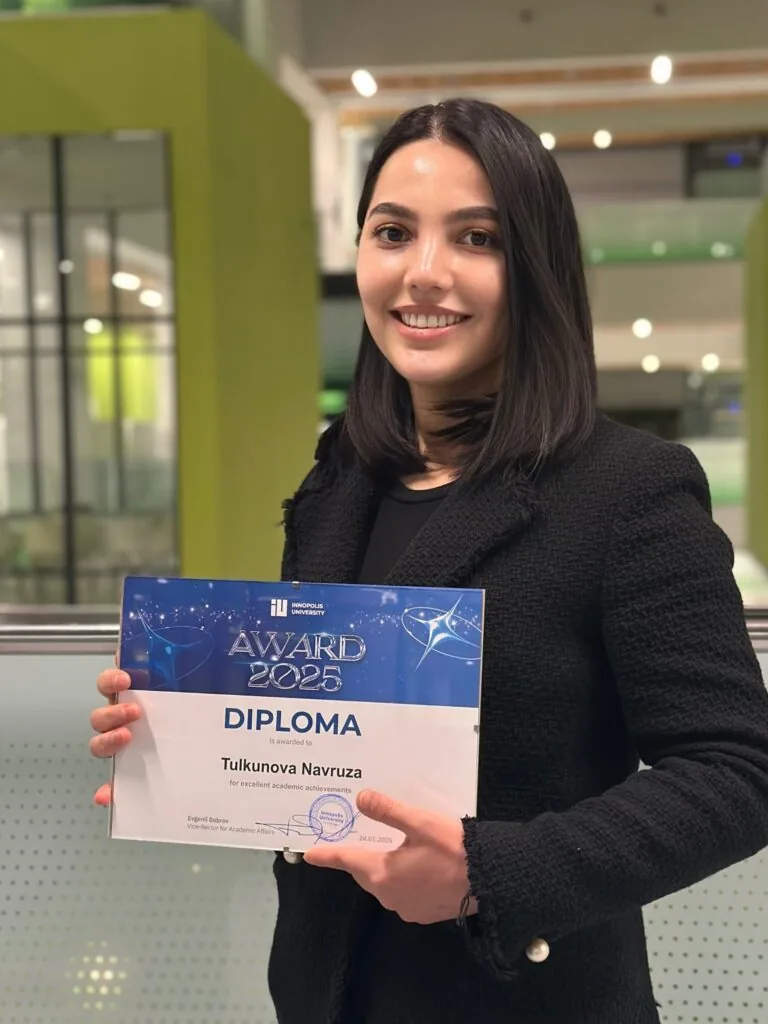
It is important to me that I managed to combine scientific activity and entrepreneurship. I continue to engage in research in the field of artificial intelligence and Computer Science. During my graduate studies, I annually became the best student-researcher at the university. Many ideas from our research and experiments find application in Fermopolis. It is especially valuable to see how scientific developments turn into a product used by real people. It is in this that I see my main achievement.
Plans
Currently, we are actively developing Fermopolis in Uzbekistan: expanding the network of farmers and buyers, adapting the platform to the local market, and building partnerships. At the same time, we are developing B2C and B2B directions, connecting restaurants, retail chains, processing enterprises, and wholesale buyers. Our goal is to create a unified digital ecosystem of the agricultural market.
A separate direction is artificial intelligence. We are developing AI tools for demand forecasting, recommendations for farmers, and automatic matching of buyer requests with manufacturer offers. In the coming years, we plan to scale Fermopolis beyond Uzbekistan and enter the international market.
But our main goal is not technology, but the opportunity to help farmers sustainably develop their business, earn a decent income, and enter new markets. It is for this that we are creating Fermopolis.
The Tech on Telegram Follow The Tech on Telegram
Keep up with the latest technology and startup news.
Related reading






More from this author

Article Useful
How to protect your accounts from hacking: 8 settings you should check today
The Tech

Article Useful
500 Global: How the Accelerator Works and Who Can Receive Investments
The Tech

Article Interviews
Game Development in Central Asia: Arkady Moldavski on Developing Reverb and the Growth of the Industry
The Tech

Article Useful
Google, Tesla, BlackRock, and the IMF: Where to Apply for an Internship in Fall 2026
The Tech

News IT
Tesla unveiled the flying electric car Roadster
The Tech

News IT
Intero Biosystems startup won the Startup Battlefield at TechCrunch Disrupt 2026
The Tech