How a girl from Tashkent creates AI for early diagnosis of thyroid diseases in women
In June 2026, the media and hub for entrepreneurs Femtech Force, together with partners, launched the CA Femtech Landscape Study — the first market research on women's health technologies in five Central Asian countries: Kazakhstan, Kyrgyzstan, Tajikistan, Turkmenistan, and Uzbekistan. The global Femtech market was valued at approximately $52 billion in 2023, and according to Statista, it is projected to grow to $117 billion by 2029. There is no data available for Central Asia; the region remains a white spot on this map. The essence of the study is to fill the data gap. We are collecting information on the demand of the internal markets of the region for Femtech solutions, who in Central Asia is already creating innovative solutions for women's health, and who helps bring these solutions to market and scale them.
The Tech AI
Get the key points in seconds - a short summary from The Tech AI.
FemTech encompasses technologies for conditions that disproportionately affect women. Thyroid cancer falls within this domain: women are three times more likely to be diagnosed (13.6 vs. 4.6 cases per 100,000). In Central Asia, late diagnosis is linked to a shortage of healthcare professionals and iodine deficiency characteristics not accounted for by AI models. Nargiza Zufarova created TAMES AI, trained on local data, which analyzes ultrasound images and laboratory results. The project is currently in the MVP stage, with a planned launch in 2026.
What is FemTech and why does thyroid cancer belong to it?
FemTech is a product, technology, company, or service for conditions that are unique to women or disproportionately more common, severe, or otherwise affect women. This category includes not only cycle trackers but also any area where female morbidity differs from male morbidity.
Thyroid cancer is the most common malignant tumor of the endocrine system. This diagnosis is made in women approximately three times more often than in men—13.6 cases per 100,000 versus 4.6—and the gap between genders is greatest during reproductive age.
In Central Asia, the diagnosis is often made late. There is a shortage of endocrinologists and radiologists in the region. However, staff shortages are not the only reason. Conventional AI models for diagnosis are trained on data from Europe and the US and do not account for the specifics of other regions. For example, iodine deficiency is a long-standing feature of the region that changes the disease picture. A model that has not seen such data may fail to detect dangerous changes in a woman from Central Asia.
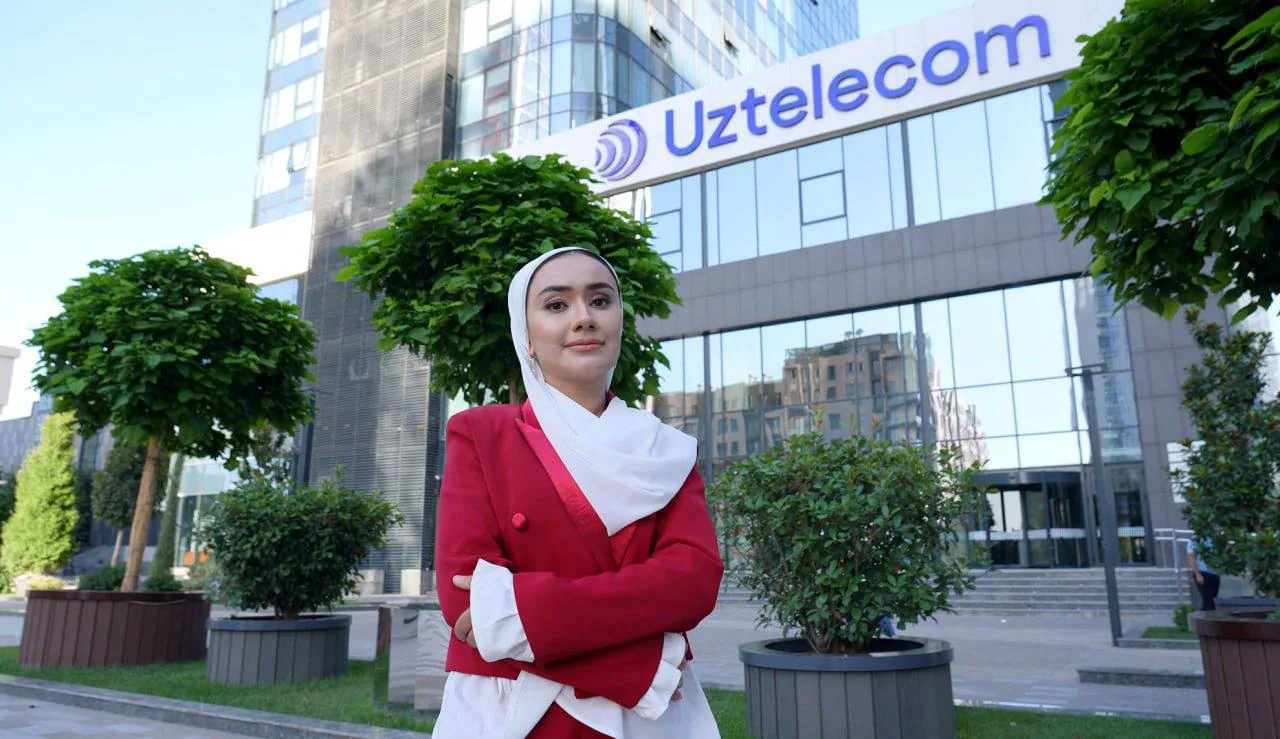
Nargiza Zufarova trains her TAMES AI model on local data—a platform that analyzes ultrasound images, laboratory results, and patient data to help doctors assess risk. In an interview with The Tech, she shared what surprised her about the patients' images from the region, how to explain the value of artificial intelligence to clinics, and what changes for a woman when a diagnosis is made on time.
Nargiza Zufarova, city — Tashkent, founder of TAMES AI
How it all started
I was surprised by how strongly regional context influences medical data. Many Western AI models for diagnosing thyroid diseases are trained on data from Europe and the US, where environmental conditions, diet, and risk factors differ significantly from our reality.
One of the important factors for our region is iodine deficiency. In Central Asia, especially in Uzbekistan and Tajikistan, there is historically a higher risk of iodine deficiency due to geography: these are continental territories far from the seas, where natural intake of iodine through food and the environment is lower than in Europe. Differences in climate, water quality, soil composition, and diet form their own disease patterns. Patients from regions with different levels of iodine provision present with different forms and stages of the disease, which requires more careful analysis.
I do not believe that thyroid diseases in women from Central Asia differ completely from European cases. However, certain regional features may be underrepresented in foreign datasets. Therefore, when developing TAMES AI, I paid attention not only to algorithms but also to the quality of local medical data: I conducted comparative analysis to understand which signs are characteristic specifically of our population.

Practical value for clinics
When we talk to clinics about TAMES AI, we do not emphasize that it is a new technology or artificial intelligence. It is important for us to demonstrate practical value: how exactly the system helps the doctor, the clinic, and the patient.
First: quality and speed of diagnosis. Doctors have to analyze an increasing number of ultrasound examinations, and the workload is growing. Our system works as a decision support tool, a Clinical Decision Support System: it helps draw attention to suspicious areas, assess risk, and make an informed decision.
Second: reducing the risk of missing a disease at an early stage. Artificial intelligence helps identify signs that are less obvious under high workload or in complex cases.
Third: clinic efficiency. The project allows standardizing the analysis of examinations, storing medical data in a structured format, and creating a unified database for patient monitoring.
We explain to clinics that they are paying not for technology for technology's sake, but for a tool that helps doctors make more accurate decisions.
What changes for a woman when a diagnosis is made on time
When a diagnosis is made on time, not only the woman's medical prognosis changes. Her quality of life, emotional state, and confidence in the future change as well.
Early diagnosis makes it possible to start treatment at a stage when the disease is still well controlled. In many cases, this means less complex treatment, fewer complications, and a higher chance of maintaining a normal lifestyle. With a late diagnosis, the patient faces difficult treatment, additional stress, and uncertainty, and this affects not only physically: fear for one's health, worries about children and family, and loss of a sense of control over the situation.
Behind every ultrasound image is a person whose life can change thanks to a timely decision by the doctor. It is important to me that women in Central Asia have access to modern early diagnostic tools: early detection is an opportunity to preserve health, family, and life plans.
What stage is the project at and what's next
TAMES AI was launched in 2026; currently, it is a prototype at the MVP stage, and the product is still under development. The platform is adapted for Uzbek, Russian, and English languages. The business model is B2B subscription. The scientific foundation is being built: there is partnership with medical institutions, and clinical studies are underway right now.
Our team has not yet attracted investment, and we are currently actively seeking this opportunity.
The material was prepared as part of the CA Femtech Landscape Study by Femtech Force. If you are creating solutions in the field of women's health for women, doctors, and the healthcare system—from BioTech and MedTech to digital health, including social projects with monetization potential—fill out the research questionnaire at this link.
The Tech on Telegram Follow The Tech on Telegram
Keep up with the latest technology and startup news.
Related reading






More from this author

Article Useful
How to protect your accounts from hacking: 8 settings you should check today
The Tech

Article Useful
500 Global: How the Accelerator Works and Who Can Receive Investments
The Tech

Article Interviews
Game Development in Central Asia: Arkady Moldavski on Developing Reverb and the Growth of the Industry
The Tech

Article Useful
Google, Tesla, BlackRock, and the IMF: Where to Apply for an Internship in Fall 2026
The Tech

News IT
Tesla unveiled the flying electric car Roadster
The Tech

News IT
Intero Biosystems startup won the Startup Battlefield at TechCrunch Disrupt 2026
The Tech