To Bank 5.0 — How AI, FinTech, and Quantum Technologies Are Changing the Future of the Banking Industry
Author - Mansur Ismagulov
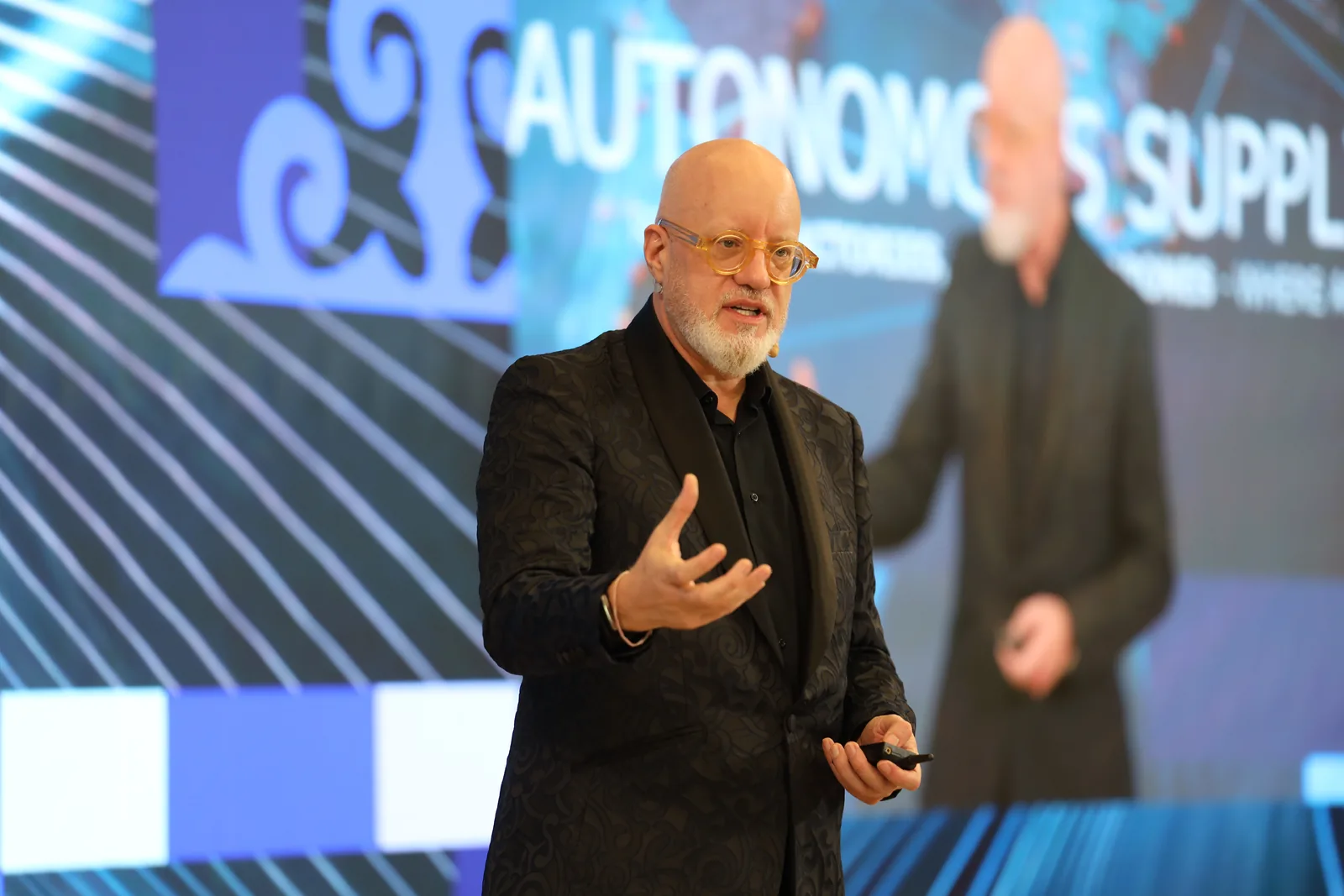
Renowned futurist, entrepreneur, and bestselling author Brett King presented his vision of the future of the financial sector at Astana Finance Days 2025. The world stands on the brink of large-scale technological and economic transformations that will radically change the banking industry.
Brett King, futurist, entrepreneur, and author of global bestsellers
The Evolution of the Banking System
The development of banks can be divided into several generations:
Bank 1.0 — traditional banks, with a history dating back to the Medici era, featuring branches and classic products.
Bank 2.0 — the era of self-service: ATMs, call centers, and internet banking in the 1990s.
Bank 3.0 — digital banks, emerging after the advent of smartphones.
Bank 4.0 — embedded banking services, where artificial intelligence is part of every process.
Today, humanity is entering the era of Bank 5.0 — algorithmic, autonomous banking, where AI and smart contracts will become the foundation of financial operations.
AI, the Quantum Day, and the Autonomous Economy
In the next five years, the world will experience what is known as the "Quantum Day" — the moment when quantum computers replace classical technologies, providing a colossal increase in computing power.
Over the next decade, the world will focus on autonomous technologies: factories, logistics, and even food delivery will become fully automated.
The strongest economies will be those that implement artificial or collaborative intelligence at an industrial level. In terms of automation, China is already ahead of the United States by approximately 10 years and is likely to become the world's first fully cashless economy.
New Financial Architecture
The next generation of financial systems will require a new architecture — digital currencies, stablecoins, and smart contracts. Today, the global volume of stablecoin transactions already exceeds the turnover of Mastercard and Visa.
Traditional banks are rapidly restructuring. JPMorgan Chase has acquired 40 FinTech companies since 2021 and invests approximately $18 billion annually in digital transformation. Nevertheless, FinTechs are growing much faster: the 20 largest companies in this sector serve 4.1 billion customers, while the largest banks serve only 2.7 billion.
The Future of Finance
Brazil's Nubank attracted 57% of the country's adult population in just 10 years with a minimal customer acquisition cost, and Revolut may soon become the largest bank in Europe.
A key trend in the coming years will be the development of AI agents, which will be able to act on behalf of the client: booking tickets, processing loans, and selecting financial products in real time.
Bank 5.0 — A New Era
By the mid-2050s, half of the world's largest economies may be managed by artificial intelligence without human intervention. To survive, banks will need to become technologically and culturally flexible: integrating AI, digital currencies, and smart contracts into their operations.
If banks do not restructure, they will be replaced by technology companies.
The Tech on Telegram Follow The Tech on Telegram
Keep up with the latest technology and startup news.
Related reading







More from this author

News
zypl.ai begins operations in Japan and focuses on next-generation risk models
Mansur Ismagulov

News
Elon Musk's net worth has exceeded $700 billion for the first time
Mansur Ismagulov

Article Interviews
"Central Asian countries should build a joint ecosystem," — Bekhzod Ismoilov on the development of AI in the region
Mansur Ismagulov

Article Interviews
Bloom's Taxonomy and Engineering Levels: A Practical Growth Model
Mansur Ismagulov

Article Useful
How the IT industry in Azerbaijan developed in 2025: key events
Mansur Ismagulov

News
Tajikistan has become a new member of the regional innovation alliance Central Asian Innovation Hubs.
Mansur Ismagulov