The IT community from Central Asia: Women in Cybersecurity

How a small Telegram chat grew into a professional community of women in cybersecurity, uniting participants from different countries today, helping build careers, and addressing the critical shortage of mentorship in the industry. Read more in our interview.
Saltanat Mashirova, City — Dubai, Founder Women in Cybersecurity Kazakhstan, LinkedIn
About Me
My specialization is cybersecurity in a narrow field: critical infrastructure, Operational Technology/Industrial Control Systems.
I started my career after completing my bachelor’s degree at KazNU in an engineering field, then obtained a master’s degree from the University of California, Irvine. I worked in various organizations, including Samruk-Kazyna, the AIX (Astana International Exchange), STIA, and Honeywell.
At that time, cybersecurity as a distinct field was just beginning to take shape. The main focus was on computing technologies and IT, and specialists were often referred to as programmers. I started as an engineer, then moved into IT, and these fields existed in a mixed state back then.
Roughly around 2015-2016, cybersecurity began to emerge as a separate industry, after which I transitioned into information security and developed in this area, obtaining relevant certifications.
Currently, I live in Dubai and work as a Senior Manager for OT Security at CPX. Previously, I worked at Honeywell, where I held the position of Global Director for OT/ICS Cybersecurity Products. Later, I moved to a more local role, as the global position involved frequent business trips, and maintaining a balance between career and family was important to me.
I also served as an advisor to the Singaporean government on critical infrastructure issues and am one of the co-authors of Singapore’s critical infrastructure cybersecurity strategy. Currently, a master plan for 2024-2028 is being implemented, developed with my participation. In addition, I participate in various government projects in different countries and have received international awards, including inclusion in the top 10 worldwide Hall of Fame, Cybersecurity Woman of the World, and others.
I started my career in Kazakhstan during a period when cybersecurity was just forming as an industry. There were very few women in this field, and balancing professional and family roles required constant effort.
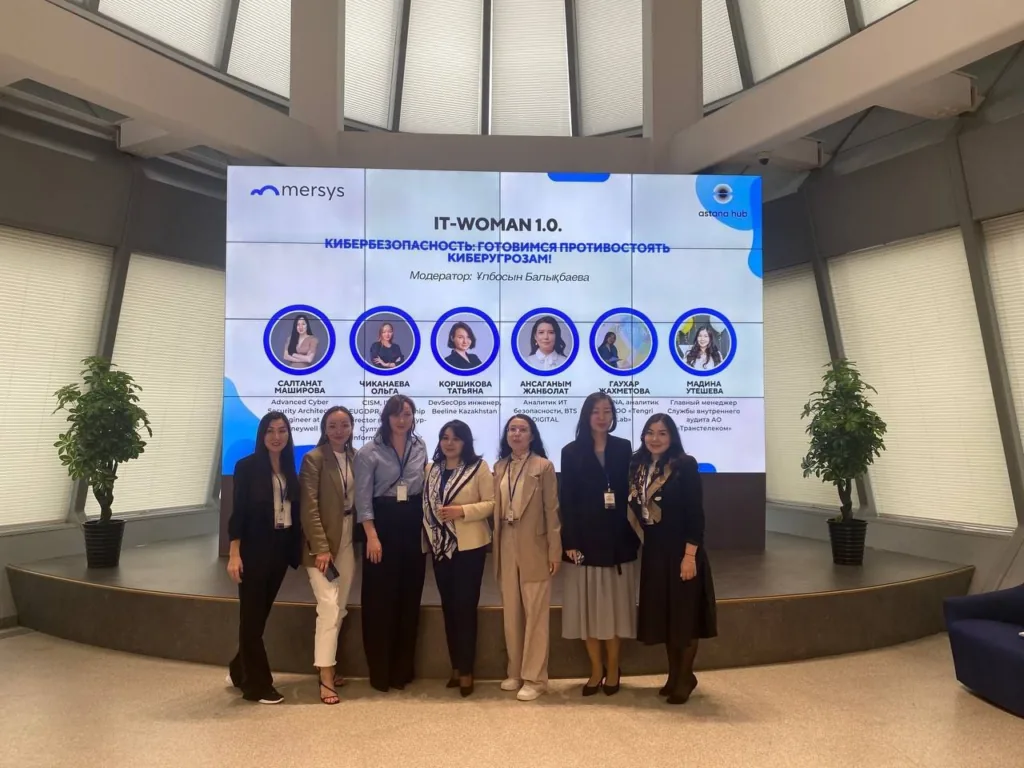
About the Community
At some point, I faced a lack of female mentorship: while preparing for certifications, including CISSP, there was a shortage of women with relevant experience to turn to for support.
Over time, it became clear that this was a systemic issue, and there was a need for a community to share experiences and provide support. International experience showed that such communities exist, but locally, they did not.
Thus, a Telegram chat emerged, which grew from a few people to over 100 participants. In 2021, the community took on a more structured format.
Initially, the focus was not on commerce or sponsorship — practical support was what mattered. We started with offline meetups and free meetings with speakers. These became networking hubs, and many participants continue to communicate to this day.
Later, online webinars, Telegram channels for certifications, job vacancies, and career opportunities were added. Gradually, an ecosystem of mutual support formed: participants began sharing job openings, recommending each other, and helping with employment.
Support for certification preparation, including CISSP and CISA, is also actively developing.
Currently, the community has over 140 members. There are thematic areas: job vacancies, cloud, success stories, certifications, and resume assistance.
The community has strong potential: its members are motivated and strong professionals. In cybersecurity, diversity in experience, age, gender, and background is particularly important, as threats know no borders and require different types of thinking.
I always invite everyone to join — students, beginners, and experienced professionals. However, one of the key problems is shyness: often, people are afraid to ask questions or seek help, even when it is genuinely necessary. Women, in particular, tend to hold back, so it is important to create an environment where one can freely talk about difficulties, ask questions, and openly discuss career paths.
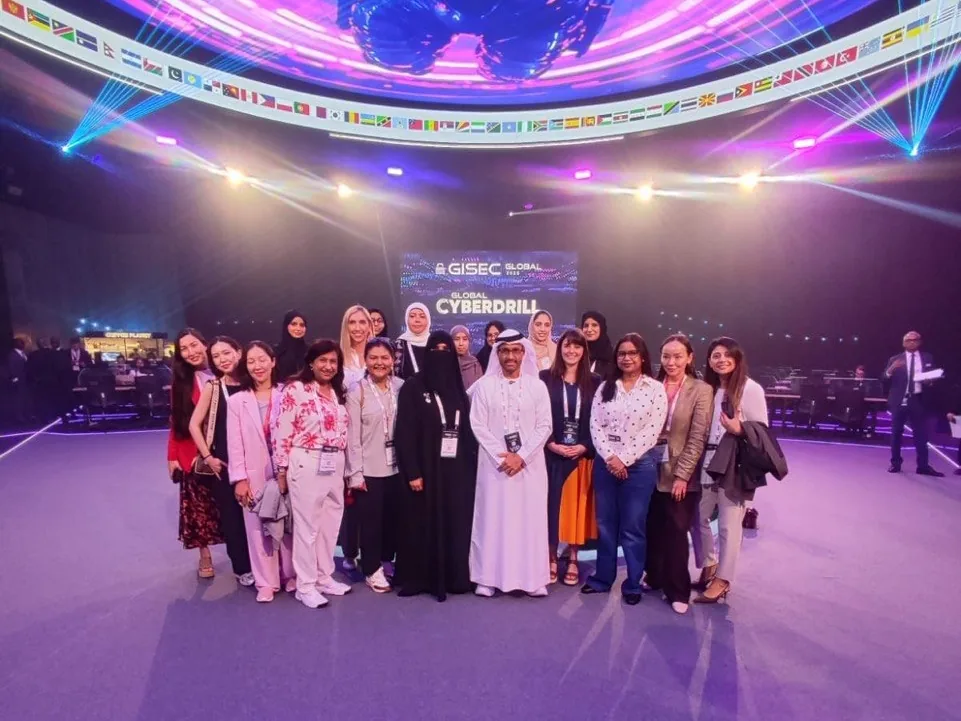
Community Members
The target audience of the community is girls and women from Central Asia, but the geography can expand, as the common language and professional context allow for easy interaction.
The main audience consists of girls and women interested in cybersecurity or just starting their path in this field: female students, schoolgirls, as well as professionals at various career stages, including experienced members.
There are also members of different ages, including older women who continue to develop professionally.
It is worth noting separately that the community collaborated and held offline meetings and events in Kazakhstan, bringing together women working in cybersecurity. At the current stage, community management is gradually being transferred to other members to ensure continuity. This is a volunteer model where responsibility is distributed and passed on, forming a kind of chain of community development.
Joining the community happens by invitation. You need to write directly, briefly introduce yourself and your activities, after which you receive a link to the Telegram chat.
Events for Community Members
The main format of events is online webinars. In addition, there are more informal meetings: participants arrange and gather, for example, for breakfasts, where they discuss both professional topics and personal issues. Various topics are raised at such meetings — from soft skills development to career growth, management, and work-life balance. Offline events are held but require more organization.
Unlike more formalized communities, there is no rigid structure or restrictions here — the format remains open and flexible. At the same time, webinars are considered the most effective format, as well as publishing interviews and materials from community members.
We even find that attendance at online webinars is often higher among men than among women. However, any events are open to everyone. Nevertheless, we consciously focus on female speakers because for the audience, this is an important role model: if she could do it, so can I. Men also participate actively, including through professional connections and collaborations in the industry, including experience interacting within the ISAC Astana Chapter.
How the Community Helps with Development
Participants share information about scholarships, educational programs, and development opportunities. Many have already received international scholarships and continue to share this experience within the community. The main effect of the community lies not only in the transfer of knowledge but rather in motivation and direction of development. Often, the problem is not a lack of information — there are enough resources available — but a lack of understanding of where to move and how to structure the path.
The community helps form this direction: participants can focus on different specializations — pentesting, risk analyst, AppSec, InfoSec, CISO, and other areas — and reach out to people with relevant experience. Thus, the key value lies in motivation, networking, and access to real experience, which helps build a career path more consciously and structured.
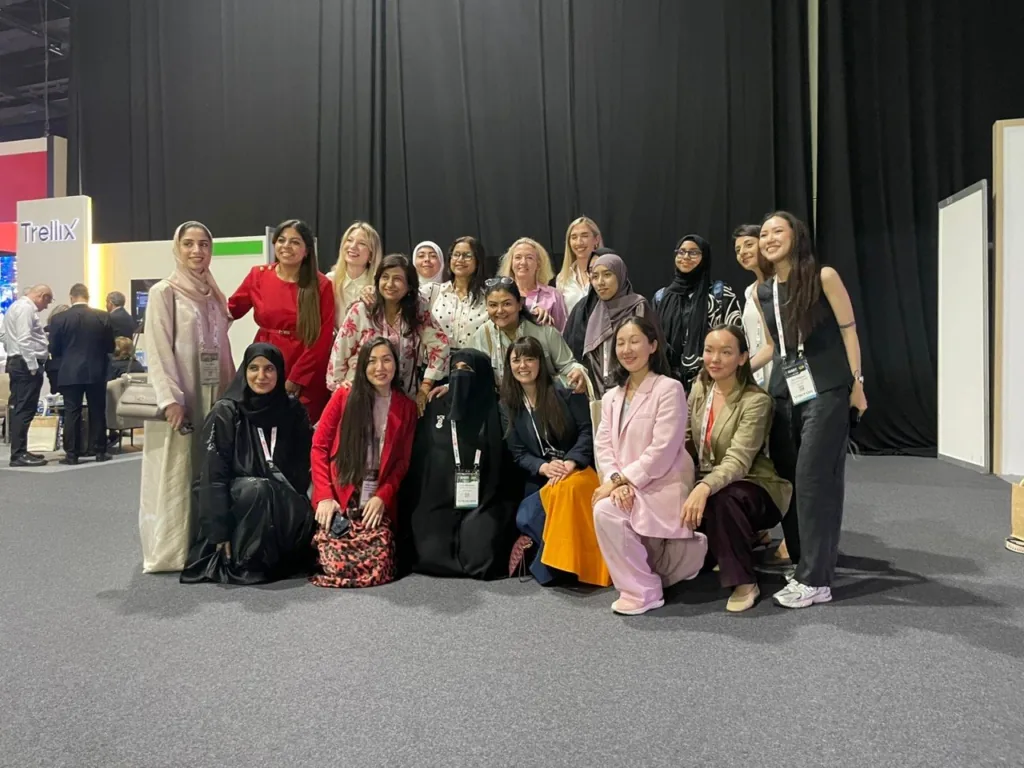
Successful Projects
Interaction between communities occurs through international meetings. For example, at GISEC, we met with women in cybersecurity, as well as representatives from the UAE, including the Cyber Security Council at the government level. There were also meetings with participants from the UK and other countries.
If we talk about cases and successes, at the very beginning, when the community was just forming, there were practically no girls with strong technical certifications and professional profiles. At that time, such specialists were extremely rare. Now the situation has changed significantly: a large number of certified specialists have appeared, especially in areas like CISSP and other technical tracks. This became possible thanks to mutual support within the community, where participants helped each other prepare for certifications and develop.
Also, many participants received international scholarships and moved to local and international companies. A particularly important result was career growth: many came at early career stages, and now hold high positions, including CISO roles and other leadership positions. This growth can be observed directly within the community.
Personal stories are worth noting separately. There are participants who came in a state of uncertainty and then managed to get employed by foreign companies and completely change their career trajectory. There are quite a few such cases.
Over time, the community went beyond purely professional interaction. Participants became not only colleagues but also a close circle of communication. Strong emotional and social support emerged: people began sharing personal experiences, family issues, children, stress, and life situations. As a result, an environment formed where participants support each other not only professionally but also personally.

Plans
Currently, the plans primarily involve strengthening the international direction. Since I myself am in a global professional environment and participate in international communities, the operational part is now mainly handled by Dinara, Dana, and Olga, while I connect at the level of approving key decisions.
One of the priorities is integration into Global Women in Cybersecurity WiCyS. The application process is already underway, with the goal of expanding the network and giving participants access to international opportunities.
We also plan to develop the webinar format and strengthen local small groups in cities — meetings in the format of breakfasts or dinners.
If we talk about possible support from partners or media, we consider funding for certifications to be the most useful help. International cybersecurity certifications are expensive in dollar equivalents, and there are many talented girls who cannot afford them. In some countries, such initiatives are already supported at the state level — for example, through payment for the top 10 certifications for participants.
Overall, community events and activities are primarily aimed not at events per se, but at access to knowledge, motivation, and participant development.
For collaboration, you can write to LinkedIn.
The Tech on Telegram Follow The Tech on Telegram
Keep up with the latest technology and startup news.
Related reading






More from this author

Article Useful
How to protect your accounts from hacking: 8 settings you should check today
The Tech

Article Useful
500 Global: How the Accelerator Works and Who Can Receive Investments
The Tech

Article Interviews
Game Development in Central Asia: Arkady Moldavski on Developing Reverb and the Growth of the Industry
The Tech

Article Useful
Google, Tesla, BlackRock, and the IMF: Where to Apply for an Internship in Fall 2026
The Tech

News IT
Tesla unveiled the flying electric car Roadster
The Tech

News IT
Intero Biosystems startup won the Startup Battlefield at TechCrunch Disrupt 2026
The Tech