IT Community of Central Asia: Dushanbe Clubs
In Dushanbe, the youth community Dushanbe Clubs is developing, where schoolchildren and students study artificial intelligence, programming, and create their own projects. Its founder, Mukhammadali Kurbanov, told The Tech how the initiative came about, what participants are taught, and why motivation is more important than experience.
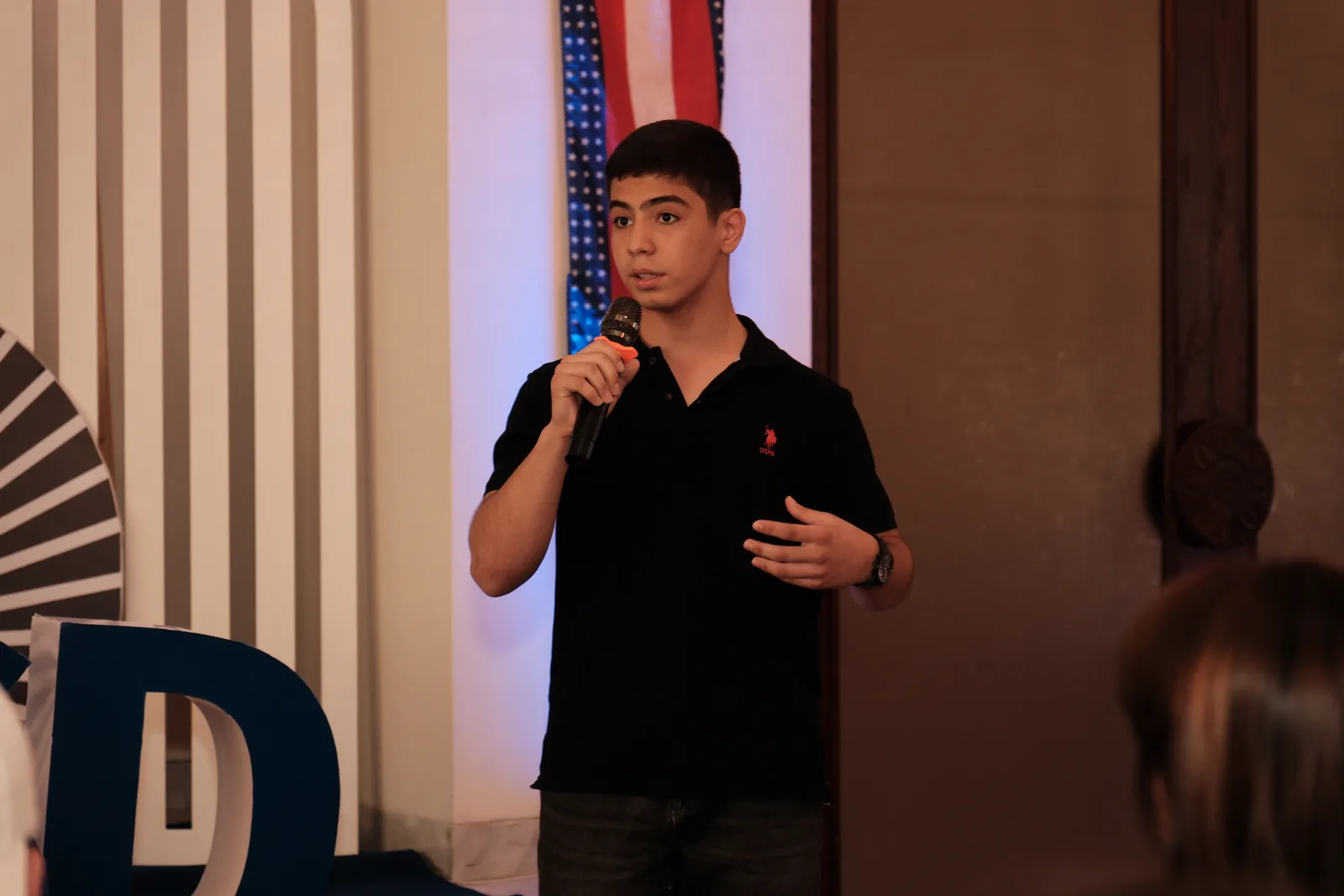
Muhammadali Kurbanov, city — Dushanbe, Founder of Dushanbe Clubs, Instagram
About the community
Dushanbe Clubs is a youth community that I founded in November 2025. I decided to reach out to TechnoHub, where I had previously studied. I met with the director, presented a work plan for the first month, and we were granted permission to conduct classes, develop the community, and create our own projects.
Today, Dushanbe Clubs brings together school students and university students who develop technological and social projects aimed at solving real-world problems.
The community has two main directions. AI Club focuses on projects in the field of artificial intelligence, programming, and digital technologies. Global Challenge Club is dedicated to social and environmental initiatives related to climate change, environmental pollution, nature conservation, and sustainable development.
The main goal of the community is not just to study technologies, but to use them to solve pressing issues in Tajikistan, Central Asia, and the entire world. We create projects with real practical impact that help participants build strong portfolios for admission to foreign universities while simultaneously benefiting society.
In my opinion, good grades and volunteer certificates are no longer enough today. Universities are increasingly paying attention to projects with real impact, and in Tajikistan, there are currently few opportunities to create such projects. This is exactly why I decided to create a community where school students can work on such initiatives, gain practical experience, and develop their skills.
Currently, many Dushanbe Clubs projects have already attracted the attention of international organizations, including Deutsche Gesellschaft für Internationale Zusammenarbeit, and some of them have been presented on international platforms. For example, the Glaciers project, dedicated to glacier conservation, was presented to the Minister of Foreign Affairs of Kazakhstan at the opening of Freedom IT Hub.
Community Members
The main audience of the community is students in grades 9-10, as they still have enough time to build a strong portfolio before university admission. However, anyone can join. We do not limit participants by age — for us, motivation, interest in technology, and the desire to create projects that can improve people's lives are much more important.
To become a member of Dushanbe Clubs, you need to fill out an application via Google Forms on the community's Instagram page. My team and I from Freedom IT Hub evaluate not only skills but also motivation. If you have no experience yet but want to grow, we invite you to a two-week internship. During this time, the participant gets familiar with the community's work, completes real tasks, and we assess their engagement. The best interns become part of the team.
Activities for Community Members
One of the main activities of the community is weekly Meeting Sessions, held every Saturday. At these meetings, all club participants gather to discuss progress on their projects, share results, talk about difficulties encountered, and receive feedback. Participants also actively propose their own ideas. Many take the initiative to organize hackathons, thematic events, and joint meetings with other youth communities and educational organizations.
One of the key partners of the community is American Space. Thanks to this collaboration, many participants became familiar with Dushanbe Clubs and joined our community.
The idea for cooperation with American Space came to me. I proposed launching a joint educational program to attract new participants and introduce young people to modern technologies. Later, our course on artificial intelligence became part of the Makerspace Bootcamp program within American Fest. At the festival, we talked about Dushanbe Clubs, showcased the community's projects, and I shared the story of the club's creation and development.
As part of the partnership, I conducted a basic course on artificial intelligence for Makerspace program participants as the founder of Dushanbe Clubs. After the training, many participants became interested in the community's activities, submitted applications, and joined our club. Thanks to this partnership, a significant portion of current participants joined through American Space.
How the Community Helps with Development
One of the main directions of Dushanbe Clubs is helping participants develop skills and launch their own projects. For me, the desire to learn is more important than prior experience. If a person has no knowledge in programming or working with AI but has motivation, I help them acquire the necessary skills.
Currently, there are several participants in the community who joined with virtually no experience. For them, I conduct additional classes on programming, artificial intelligence, and project development. We also support new initiatives. For example, one participant is currently working on a project about Tajikistan's mineral resources, including information about deposits, reserves of minerals, and possible methods of extraction.
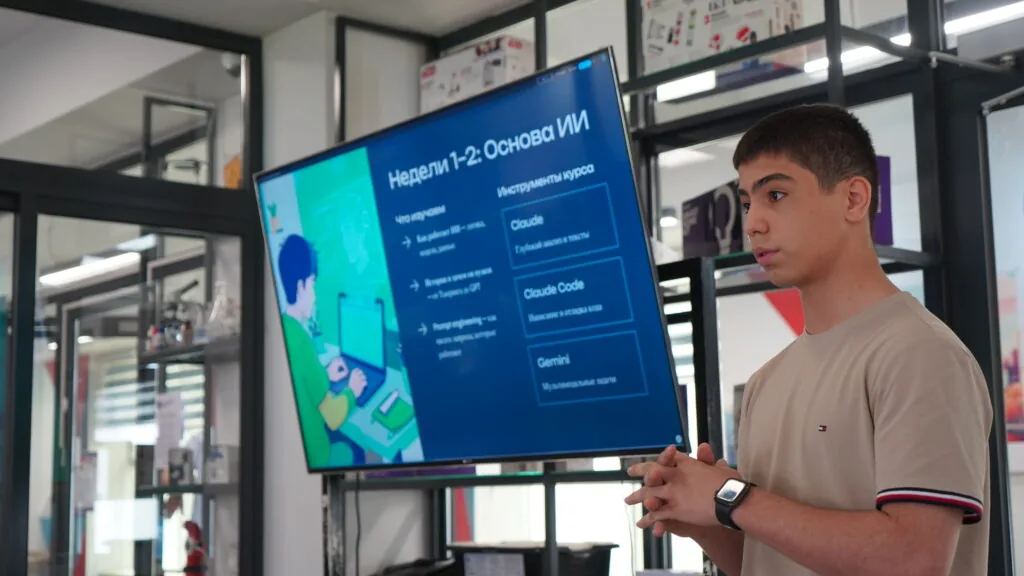
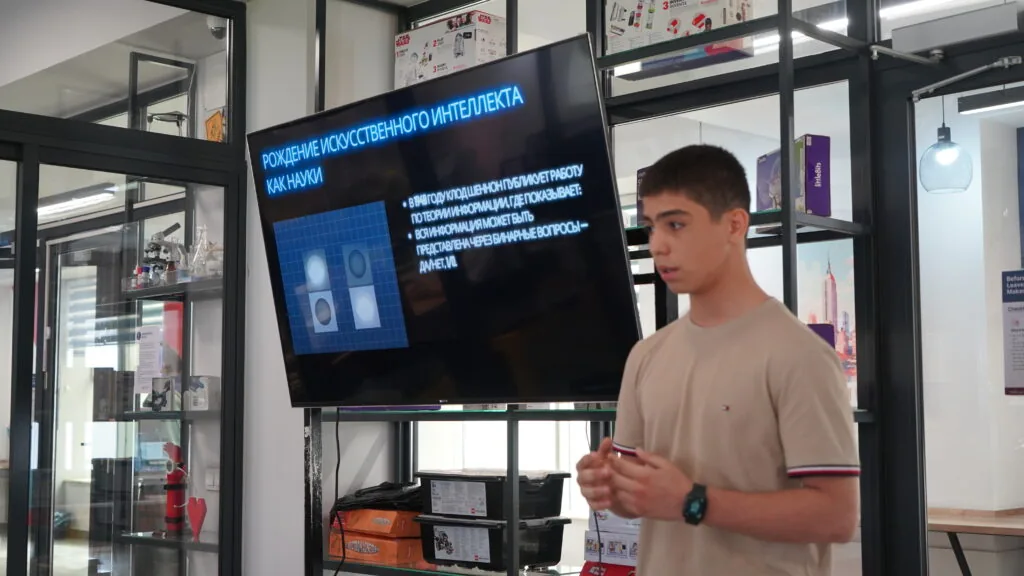
As part of the partnership with American Space, I became a mentor for the Makerspace Bootcamp program, where I taught over 20 school students the basics of artificial intelligence. During the course, participants became familiar with the history of AI development, studied modern tools, including ChatGPT, Google AI Studio, Codex, Lovable, and other AI services.
The main goal was not only to introduce them to technologies but also to help them create their own project. As a result, each participant presented their development aimed at solving social issues or having the potential to become a startup. The projects were evaluated by representatives of American Space and invited experts.
One of the most interesting projects was a library for Python that allows writing code in the Tajik language. Familiar commands are replaced with Tajik equivalents, making programming more accessible for beginner developers.
Additionally, I am a member of YPAG, Young People Advisory Group, under UNICEF. Through this program, young people propose ideas and recommendations for implementing social projects. Thanks to this, I participated in the national forum on water resources issues in Tajikistan, where I discussed with representatives of the UNICEF WASH program the involvement of school students in solving problems related to pollution and water scarcity.
In my opinion, one of the main problems today is the lack of relevant data and research. To create useful projects, modern statistics are necessary, so it is important to develop scientific research, update data, and attract specialists who will help create solutions based on reliable information.
Successful Projects
We already have more than 10 successful projects, but I would like to highlight the five most significant ones.
The first project is Glaciers. This is a social project about glaciers and the consequences of their melting, the idea for which I developed myself. We created an interactive simulator that shows what melting and destruction of glaciers can lead to, as well as explains how they form and why it is important to preserve them. It was this project that helped us obtain residency at Freedom IT Hub. After getting to know it, the hub's management invited us to present the project to the Minister of Foreign Affairs of Kazakhstan at the opening of Freedom IT Hub.
The second project is Aelis. This is an educational platform with artificial intelligence for students, parents, and teachers. In addition to electronic diary functions and tracking academic performance, users can upload educational materials, such as PDF books, and AI automatically creates tests, helps prepare for exams, explains complex topics, and answers questions on school subjects. The platform also allows teachers to quickly create assignments and online exams.
The third project is Ocean Guard. It is dedicated to the problem of ocean pollution and its impact on the global ecosystem. The project presents data on the scale of pollution in different regions of the world, as well as explains why ocean conservation is crucial for the environment.
The fourth project is AquaMap. It is dedicated to water accessibility in Tajikistan. The project shows which regions face water shortages, where the situation remains stable, and highlights high-risk zones. This project has already attracted the interest of the German organization GIZ. As part of further development, we plan to use satellite data to obtain the most accurate information about water resources and, in the future, create an early warning system for possible floods and other risks.
The fifth project is Go Tajikistan Guide. This is a digital guide to Tajikistan for tourists. The application collects the country's main attractions, cafes and restaurants, national markets, shops with traditional clothing and souvenirs, and other places that may be useful to travelers.
The first partner of the community was TechnoHub, which provided us with premises, computers, internet, and everything necessary for work. Later, we participated in Idea Battle, where we presented the Glaciers project, after which we received residency at Freedom IT Hub. Currently, our community is a resident of two locations simultaneously.
We also cooperate with American Space and the Muzafar foundation, with whom we participated in an environmental tree-planting action. In addition to technological projects, we strive to implement socially beneficial initiatives and participate in volunteer events.
Plans
In the future, we want to organize our own hackathon jointly with Freedom IT Hub, specifically aimed at school students, so they can create their first projects within one or two days. We also plan to conduct a charitable initiative similar to our partnership with the Muzafar foundation. Another important task is to make our classes and weekly meetings more structured and organized. In addition, we want to gather all the most promising projects of participants and start actively presenting them to various organizations to find funding and further development.
The Tech on Telegram Follow The Tech on Telegram
Keep up with the latest technology and startup news.
Related reading






More from this author

Article Useful
How to protect your accounts from hacking: 8 settings you should check today
The Tech

Article Useful
500 Global: How the Accelerator Works and Who Can Receive Investments
The Tech

Article Interviews
Game Development in Central Asia: Arkady Moldavski on Developing Reverb and the Growth of the Industry
The Tech

Article Useful
Google, Tesla, BlackRock, and the IMF: Where to Apply for an Internship in Fall 2026
The Tech

News IT
Tesla unveiled the flying electric car Roadster
The Tech

News IT
Intero Biosystems startup won the Startup Battlefield at TechCrunch Disrupt 2026
The Tech