Islamic fintech in Central Asia: how the market attracts millions of dollars in investments
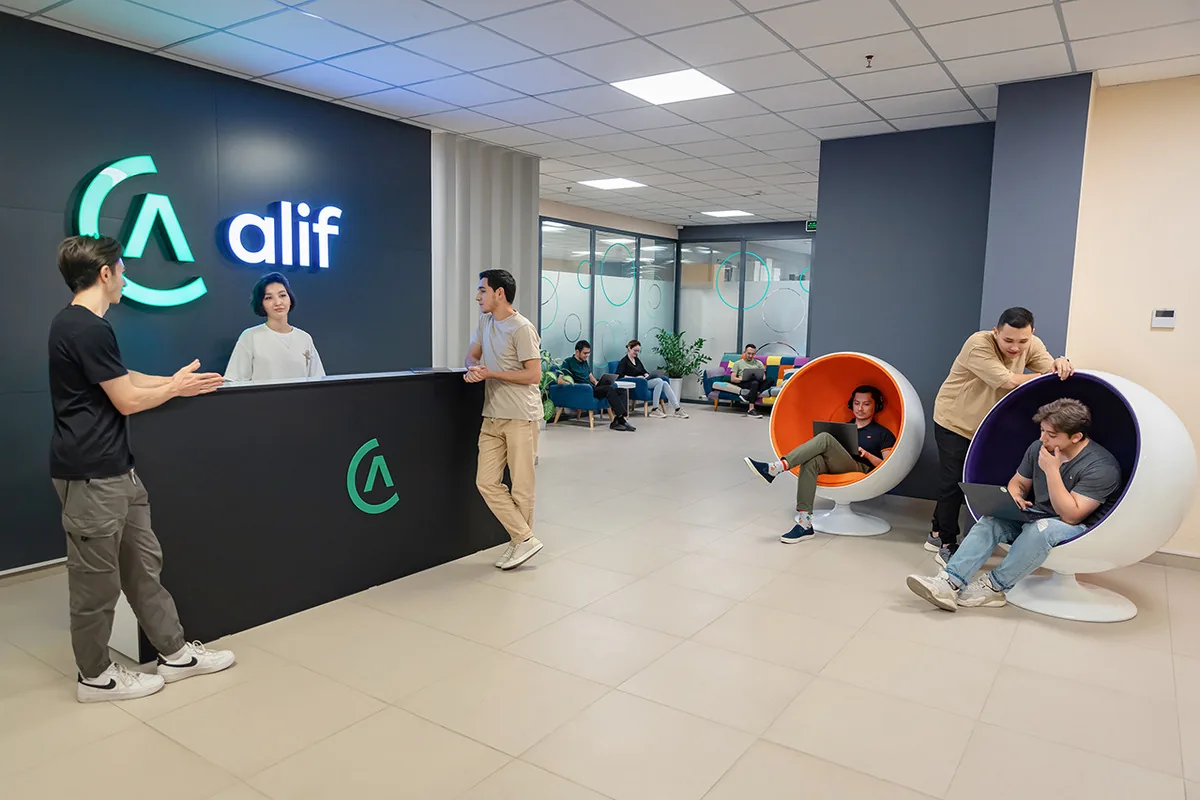
Just 10 years ago, “Islamic fintech” sounded like a niche term for a narrow circle of Gulf bankers. Today, it is one of the fastest-growing segments of the global financial industry — and Central Asia has unexpectedly become one of its growth points, where local startups are attracting millions of dollars from international funds and development banks.
What is Islamic fintech in simple terms
Islamic fintech refers to financial technologies built according to Sharia rules. Its foundation rests on several key prohibitions and principles:
Riba — the prohibition of interest on loans. Money cannot be “sold” with a markup for time; instead of interest rates, partnership and trade schemes are used.
Gharar — the prohibition of excessive uncertainty in transactions. For example, selling something that does not yet exist without a clear assessment of risk.
Maysir — the prohibition of gambling and speculative schemes for earning money.
Haram sectors — money must not finance alcohol, tobacco, weapons, gambling, and other spheres prohibited by Sharia.
Instead of interest-based credit, Islamic fintech uses alternative instruments:
— Murabaha — the company openly shows the client the purchase price of the goods and its markup — this is exactly how Uzbek startup IMAN works
— Nasiya / Installment — purchasing goods on installment without hidden interest, a key product of Tajik-Uzbek fintech Alif
— Sukuk — an analogue of bonds, where the investor receives a share of a real asset or project, rather than a fixed interest rate
— Takaful — Islamic insurance based on mutual assistance among participants, rather than traditional insurance premiums
— Sharia screening — technology for checking stocks and assets for compliance with Islamic norms before an investor can purchase them.
How big is the market: figures, not just fluff
According to the annual Global Islamic Fintech Report 2025/26, prepared by DinarStandard and Elipses jointly with Salaam Gateway and the Islamic Development Bank Institute, the global Islamic fintech market reached $198 billion in 2024/25 and is expected to grow at an average annual rate of 11.5%, reaching $341 billion by 2029. The ecosystem includes 484 Islamic fintech companies in 41 countries and 13 sectors, with 80% of companies concentrated in just 10 countries — including Saudi Arabia, Malaysia, Indonesia, and the UAE.
Another study, by Grand View Research, values the market even higher: $222.97 billion in 2025, with a forecast growth to $619.2 billion by 2033 at a compound annual growth rate of 13.8%. The discrepancy in figures is explained by different calculation methodologies, but the trend direction is the same — double-digit annual growth.
For Central Asia itself, estimates are more modest but growing. According to Salaam Gateway, the regional Islamic finance market could grow from $2.5 billion in 2028 to $6.3 billion by 2033, while other regional estimates suggest that the potential volume of Islamic financial assets in Central Asia could reach $10 billion on the 2030-2035 horizon, if regulators and the market develop synchronously.
Startups that have already attracted millions
Alif — the Central Asian “unicorn” of Islamic fintech
Founded in 2014 in Tajikistan, Alif has grown from a microcredit organization into a full-fledged bank with more than 4.4 million clients in Tajikistan, Uzbekistan, and Pakistan. Key products include the Alif super-app with payments, transfers, and the Alif Shop marketplace, as well as the BNPL service Nasiya.
Investment history:
— In 2021, Alif closed one of the largest FinTech rounds in Central Asia — $8 million in equity and $50 million in debt financing, with a company valuation above $100 million
— In 2024, it attracted $20 million from the American fund Accial Capital
— In 2025, it received $3 million from the Islamic Trade Finance Corporation, part of the Islamic Development Bank Group
— Over four years, the company’s digital transactions grew 30-fold, and monthly turnover exceeded $1 billion.
Ayan Capital — Alif’s “spin-off” that grew in London
Founded in 2023 by former Alif team members, including CEO Abdullo Kurbanov, London-based Ayan Capital specializes in halal auto-financing for Uber, Bolt, and other platform drivers in the UK. Over two years, the company has progressed from a Seed round to significant institutional financing:
— 2024 — Seed round of £2.3 million
— December 2024 — an additional £2.8 million in equity from Cur8 Capital
— 2025 — debt financing of £25 million from Partners for Growth
— 2026 — a round of $4 million, in which Uzbek IT Park Ventures invested $1 million.
The company also obtained a license from the UK regulator FCA for consumer lending — a rare level of regulatory recognition for Islamic fintech in a non-Islamic market.
IMAN — Uzbek super-app with ambitions for a billion users
Registered in the DIFC, startup IMAN, founded by Rustam Rakhmatov and Mark Zubov, combines IMAN Invest and IMAN Pay products and operates on the Murabaha principle. The funding round attracted both Kazakhstani business angels and international funds — Battery Road Digital Holdings, UMAY Angels Club, Uzcard Ventures, and others.
Tayyab and Tabys Islamic — Kazakhstan’s contribution
In Kazakhstan itself, two different approaches are noticeable. Tayyab — a digital Islamic fintech launched in 2021 by founders with a banking background — Daniyar Uspanov and Ivan Kamensky — completed acceleration at Startupbootcamp in Dubai and offers Islamic debit cards along with services for Muslims.
Tabys Islamic from Teniz Capital is a more institutional product: a mobile application with approximately 1,500 securities that have passed Sharia screening using the Ailat methodology based on international AAOIFI standards, operating under the DIFC jurisdiction.
Despite growing interest in Islamic finance, this segment remains underdeveloped in Kazakhstan. The only Islamic bank in the country is Zaman Bank.
The Tech on Telegram Follow The Tech on Telegram
Keep up with the latest technology and startup news.
Related reading




More from this author

Article Useful
How to protect your accounts from hacking: 8 settings you should check today
The Tech

Article Useful
500 Global: How the Accelerator Works and Who Can Receive Investments
The Tech

Article Interviews
Game Development in Central Asia: Arkady Moldavski on Developing Reverb and the Growth of the Industry
The Tech

Article Useful
Google, Tesla, BlackRock, and the IMF: Where to Apply for an Internship in Fall 2026
The Tech

News IT
Tesla unveiled the flying electric car Roadster
The Tech

News IT
Intero Biosystems startup won the Startup Battlefield at TechCrunch Disrupt 2026
The Tech