Investors vet you even before the deal: what they look for in founders
Therefore, reputation management doesn’t start with media publications. It is first built within the community—through relationships with clients, the team, partners, and investors. This niche reputation either strengthens the public image or comes into conflict with it.
The Tech AI
Get the key points in seconds - a short summary from The Tech AI.
At Almaty Hub, a meetup took place with the participation of PR strategist Nastya Nemtsova, former PRD Murat Abdrakhmanov, and MA7 Ventures. The speaker presented the results of an investor survey (Murat Abdrakhmanov, Bakht Niyazov, Alim Khamitov, and others) on gathering information about founders. The research highlighted the importance of niche reputation, systematic communications, and the use of AI for analyzing digital footprints.
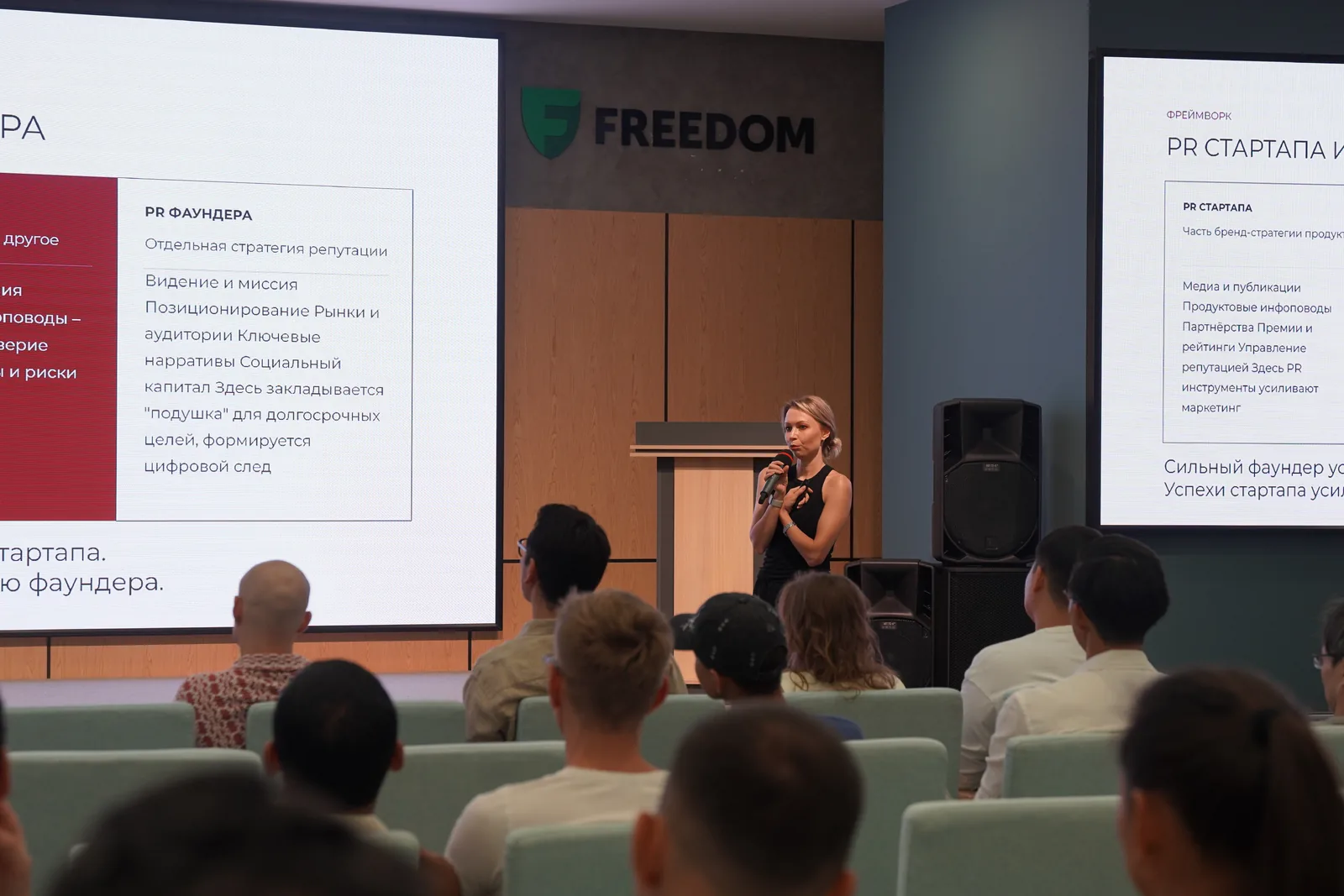
Almaty Hub hosted a meetup with PR strategist Nastya Nemtsova, ex-PRD Murat Abdrakhmanov, and MA7 Ventures. At the meeting, the speaker worked with founders to address the proper construction of public reputation and presented the results of an investor survey on how and where they gather information about founders that actually influences deal decisions.
Key topics of the meetup included long-term strategy and systematic communication, as well as the understanding that public reputation cannot be built in isolation from “niche” reputation—meaning reputation within the professional community.
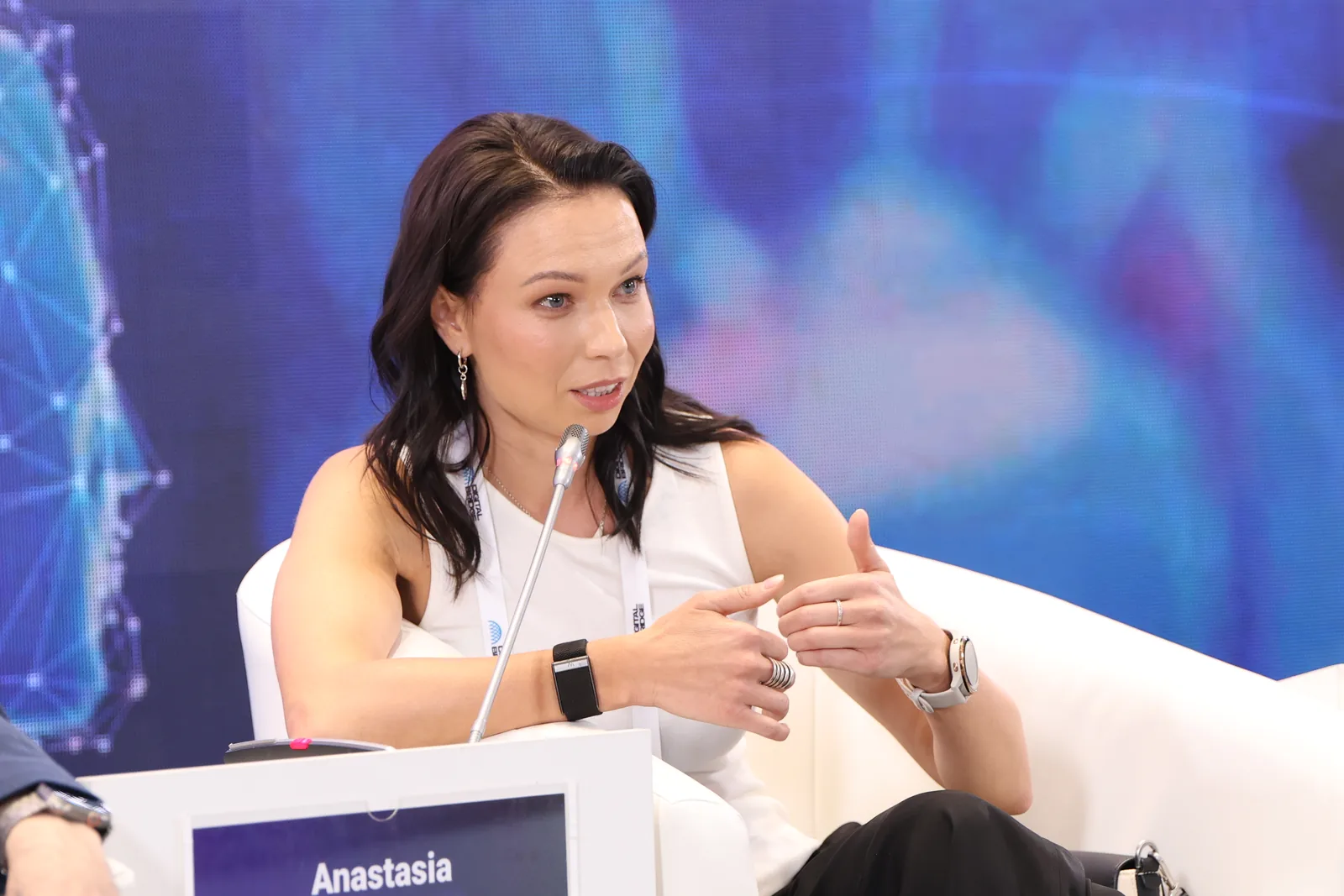
Anastasia Nemtsova, PR Strategist
You can learn about any startup and founder with literally one handshake. Therefore, a founder has two tasks: ensure their name appears in the right circles at the right time, and ensure that behind that name stands a good reputation within the community plus media verification of their professional background.
The speaker’s research involved investors, including Murat Abdrakhmanov, Bakht Niyazov, Alim Khamitov, Aslan Sultanov, Dalerkhon Nodirov, Dana Kunanbaeva, Mirat Akhmetsadikov, Yelzhan Kusekbayev, and Inkar Ospanova.
The survey aimed to clarify what information about reputation investors collect before or immediately after a personal meeting with a founder, what tools and sources they use for this, and which independently found facts can truly influence the decision to make a deal.
The pitch is only the beginning. After that, the investor goes to the market
One of the most noticeable patterns from the survey is that information provided by the founder to the investor remains just one of the sources.
Investors ask other founders, clients, employees, previous and potential co-investors about the person, and look for people who have worked with them before. On the small Central Asian venture market, this approach is particularly strong.
Murat Abdrakhmanov, Venture Investor and Founder of MA7 Ventures
We check Founder-market fit: whether the claimed experience matches reality. This is done through networking as well. Positive signals about a person’s potential: if participation in STEM olympiads, leadership, and the founder’s public activities are visible in the public sphere.
Investors also look at the founder’s previous experience: how they built relationships with the team and co-founders, how they parted with partners, and whether they fulfilled their obligations. In some interviews, more personal reputation signals were mentioned, such as the founder’s relationships within their family.
All this makes public reputation just one part of the overall structure. A founder must recognize not only their public reputation but also their niche reputation: relationships within the professional community.
Additionally, according to the speaker, investor market behavior is changing, and now funds and investors work not only with incoming streams of startups but also proactively reach out to them:
Alim Khamitov, Managing Partner at MOST Ventures
I myself found several companies through the public sphere, started following the founders, and then reached out to them. Several of my recent investments started exactly this way. For me, media presence is not about the number of subscribers. I look at how well a person actually understands their industry, what they have done before, what results they have achieved, and how consistent they are in what they say and do. In this sense, a founder’s public presence becomes another data source for investors.
Investor relations starts before the round and does not end after it
Another theme that repeated in interviews was the weak culture of systematic communication between founders and investors.
Six out of ten investors stated that investor relations on the local market has not yet become a stable practice.
Moreover, the first impression can be formed even from a cold message.
Yelzhan Kusekbayev, Venture Investor and Partner at MA7 Ventures
Even how a founder writes a cold message matters. There should be information about the main points right away, concise: who the founder is, what their achievements are, and what they are doing now. I pay attention to whether the founder is sending cold messages in a current manner or if they are stuck in the past.
It is also important what happens next—in communication and investor relations after the deal.
Aslan Sultanov, Founder and Managing Partner at White Hill Capital
Our investor relations culture is only forming. I know of isolated cases of systematic communication. At the same time, foreign founders regularly send updates; they do not need to be reminded.
Several investors separately emphasized the importance of transparency when things do not go according to plan. The problem is not the existence of difficulties themselves, but when an investor learns about them too late and can no longer help.
For a founder, this implies an important shift in perspective: investor relations is not just activity during fundraising. It makes sense to build relationships with investors before money is needed and to maintain them after the deal—through regular short updates, honest communication about problems, and competent media presence in the public sphere.
In a market where such a culture does not yet exist, systematicity itself becomes a reputational advantage.
You don’t necessarily have to be media-savvy. But it is desirable to be professionally verifiable
Opinions among investors regarding media presence differ.
For some participants in the study, the absence of a digital footprint raises additional questions. Others are calm about this: a domain expert founder can well be focused on the product and almost absent from the public sphere.
Bakht Niyazov, Founder of Justart VC Studio and Venture Investor
Data reliability and recognizability are not the same thing. You cannot validate a founder’s professionalism based on whether they are present in the media or not. Domain expert founders, whom we seek, are often non-public. This does not mean that competent media presence would hinder them, but their focus is usually elsewhere.
At the same time, LinkedIn regularly appears in investors’ answers as a basic professional source. Through it, they look at the current role, previous companies, achievements, professional network, and how the project is developing.
One investor formulated this as the “founder’s homework.” In another interview, regular professional presence on LinkedIn was linked to readiness to work in the global market.
Mirat Akhmetsadikov, Co-founder of the MOST ecosystem and CEO of MOST Finance
If I see that a founder posts news on LinkedIn, this is a positive sign for me—he is preparing for the global market.
This leads to an important distinction: a founder does not necessarily have to be media-savvy, but it is desirable to be professionally verifiable.
The task is not to constantly produce content. It is important that a person hearing a founder’s name for the first time can quickly understand what they are building, what their experience is, and what confirms their claimed expertise.
Instagram also becomes part of the professional impression
Instagram is the second social network that regularly appeared in interviews, but the attitude toward it is significantly more contradictory.
Investors notice not only the founder’s posts but also their comments, reactions to events, and interactions with other people. This often happens without any intentional background check: a person is simply already in the general information field, and their communication style is visible.
At the same time, several investors are wary of excessive publicity if it creates the impression that the founder’s attention has shifted from the product to their own media presence. On the other hand, some investors note that an active blog looks appropriate if it is directly related to the product and helps the business grow.
Thus, the question for a founder is not “can I run a personal Instagram?” but rather what signal their public behavior creates regarding their priorities.
Now this digital footprint is also collected by AI
Several investors shared that they already use their own AI agents, ChatGPT, or Claude for researching startups and founders.
Murat Abdrakhmanov has his own AI agent that participates in preparing investment memos and collects additional information about the company and the market. Currently, this is his only entry point; he usually does not look at other sources. Additional information, if needed, is gathered through personal connections.
Murat Abdrakhmanov, Venture Investor and Founder of MA7 Ventures
PR helps heat up the market: to make people know about the startup even before contact. And the public footprint is now important not only for people—it is collected and interpreted by investors’ AI tools.
For everyone involved in public reputation, a new reality has existed for two years. Previously, public information existed primarily for the person who would find it. Now, the first “reader” could be an algorithm.
Therefore, it is becoming important not so much the number of mentions, but the consistency and reliability of public data: current roles, previous experience, achievements, company descriptions, and expertise should not contradict each other across different open sources.
AI makes the existing digital footprint significantly easier to collect and analyze.
Public reputation does not replace niche reputation
The main conclusion of the research is not that every founder urgently needs a personal brand now.
Rather, the opposite: interviews show the limitations of such an approach.
The venture environment remains insider-driven. An investor might see a founder on LinkedIn, read about them in the media, or receive information via AI, and then write to an acquaintance asking: “Did you work with him? How is he, really?”
Publicity in this structure works not instead of niche reputation, but on top of it.
When a founder already has strong relationships with clients, industry colleagues, investors, and the professional community, public communications help scale existing trust.
This is why reputation work is not an attempt to create as many news hooks as possible before the next round. Rather, it is the accumulation of a professional digital footprint, where each communication should become part of a single reputation strategy.
The Tech on Telegram Follow The Tech on Telegram
Keep up with the latest technology and startup news.
Related reading




More from this author

Article Useful
How to protect your accounts from hacking: 8 settings you should check today
The Tech

Article Useful
500 Global: How the Accelerator Works and Who Can Receive Investments
The Tech

Article Interviews
Game Development in Central Asia: Arkady Moldavski on Developing Reverb and the Growth of the Industry
The Tech

Article Useful
Google, Tesla, BlackRock, and the IMF: Where to Apply for an Internship in Fall 2026
The Tech

News IT
Tesla unveiled the flying electric car Roadster
The Tech

News IT
Intero Biosystems startup won the Startup Battlefield at TechCrunch Disrupt 2026
The Tech