Investing in Women's Business: What Was Discussed at the Female Founders Forum Tajikistan 2026
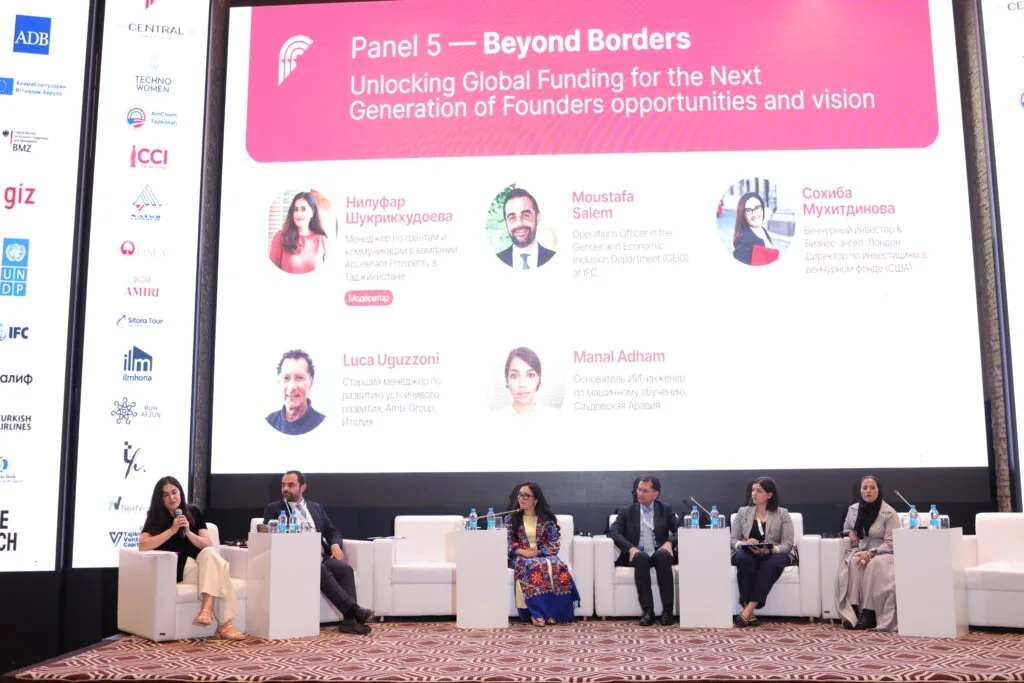
At the first Female Founders Forum Tajikistan 2026 in Dushanbe, a panel discussion on women entrepreneurs' access to international capital took place. Speakers from London, New York, the UAE, and the World Bank discussed what makes a founder from Central Asia investable and why Nature Water is not bureaucracy, but a passport to the global market.
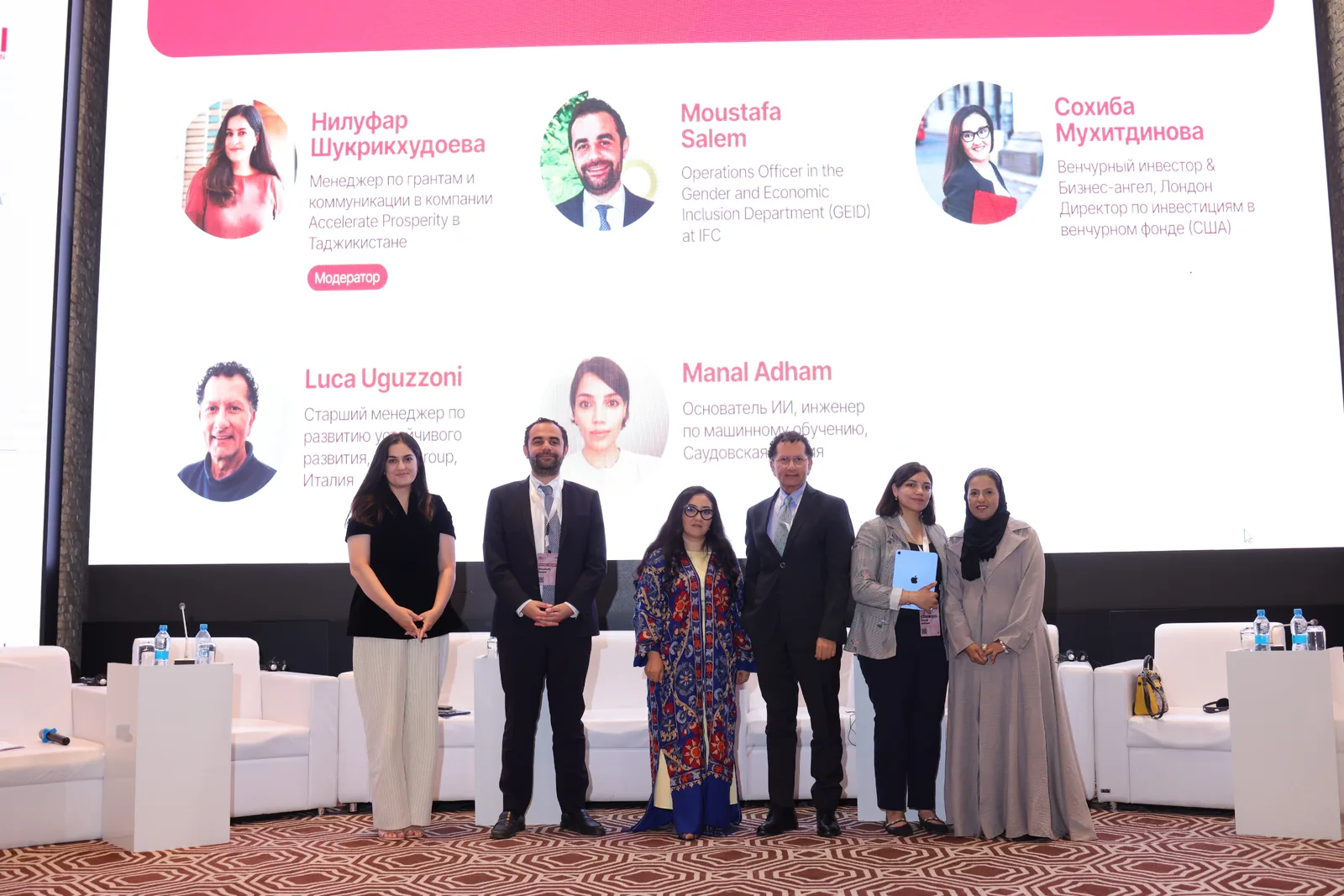
Manal Adham, founder of Saudi Global Network, UAE
The funding gap for women-led businesses in developing countries today stands at $1.7 trillion. Of all venture capital deployed in 2024, only two percent went to women-led teams. Meanwhile, companies founded by women generate $0.78 in revenue for every dollar invested, compared to $0.31 for male-founded companies. The issue is not talent, but access.
Immigrant founders consistently outperform local founders by 30-40%—a fact confirmed by real portfolios, and part of today’s funds are actively seeking exactly such individuals.
Investors most often reject for two reasons: the founder is building a business outside their area of expertise or is running three projects simultaneously. Both signals are read the same way—there is a lack of focus.
Venture capital is not suitable for everyone. The longer you build without an investor, the higher the valuation at entry. Venture capital has a downside: the board of directors can replace the founder, and this does happen. Mango, one of the world’s largest brands, remains a fully family-owned business without external investors. Alternatives exist: government programs, impact funds, and bootstrapping.
Luca Uguzzoni, Senior Manager for Sustainability at Ambi Group, Italy
For those looking toward the Gulf countries, the logic is simple: show demand, and the money will follow. Asking for funding without real customers does not work. Everyone asks for money; only a few demonstrate that their product is needed by the market.
AI raises the bar, it does not lower it. Saying “we have AI” is like saying “we have internet.” This is now the norm, not a differentiator, which is why investors are scrutinizing traction even more closely.
Strategic partnerships are sometimes more valuable than direct funding. One partner opens the door to the next client, who becomes a broker, bringing in more through them. One right contract can restructure a business for the next five years—without diluting equity.
ESG is often perceived as bureaucracy. In reality, it is the language spoken by international investors and buyers. Perfection is not expected; progress and a clear plan are.
A separate topic is climate finance. Climate business is not just about solar panels: it includes reducing food waste, energy efficiency, and resource management. This is particularly relevant in Central Asia, where water scarcity and climate resilience are already on government agendas. Three steps for such startups: define the problem, measure the impact, and link it to a business model with clear growth potential.
Dr. Mariam Alshenasi, UAE
My family is from Turkey, and through generations, from my great-grandmother to me, women have worked with land, agriculture, trade, and gold. What women in my family did back then was a huge contribution that often goes unnoticed.
Therefore, when we talk about supporting women in business, whether small, medium, or large, it is not about business being mandatory for everyone. It is about financial independence as a tool. A woman who can support herself is able to make decisions without pressure and avoid risks driven by dependence on others’ money.
At the same time, I do not believe in creating opposition. Business should not be made a mandatory condition for women. They have the right to choose, but responsibility toward family, father, brother, does not disappear, and it should not be ignored. Financial support works both ways: “my money is my money, and your money is also my money,” and there is no contradiction in this.
My father was always focused on importing goods into the country. I disagreed with this, believing that we should work on exports. Today, this is already a reality in the UAE: the country can export, and with government support, business families are increasingly returning to this model.
The Tech on Telegram Follow The Tech on Telegram
Keep up with the latest technology and startup news.
Related reading




More from this author

Article Useful
How to protect your accounts from hacking: 8 settings you should check today
The Tech

Article Useful
500 Global: How the Accelerator Works and Who Can Receive Investments
The Tech

Article Interviews
Game Development in Central Asia: Arkady Moldavski on Developing Reverb and the Growth of the Industry
The Tech

Article Useful
Google, Tesla, BlackRock, and the IMF: Where to Apply for an Internship in Fall 2026
The Tech

News IT
Tesla unveiled the flying electric car Roadster
The Tech

News IT
Intero Biosystems startup won the Startup Battlefield at TechCrunch Disrupt 2026
The Tech