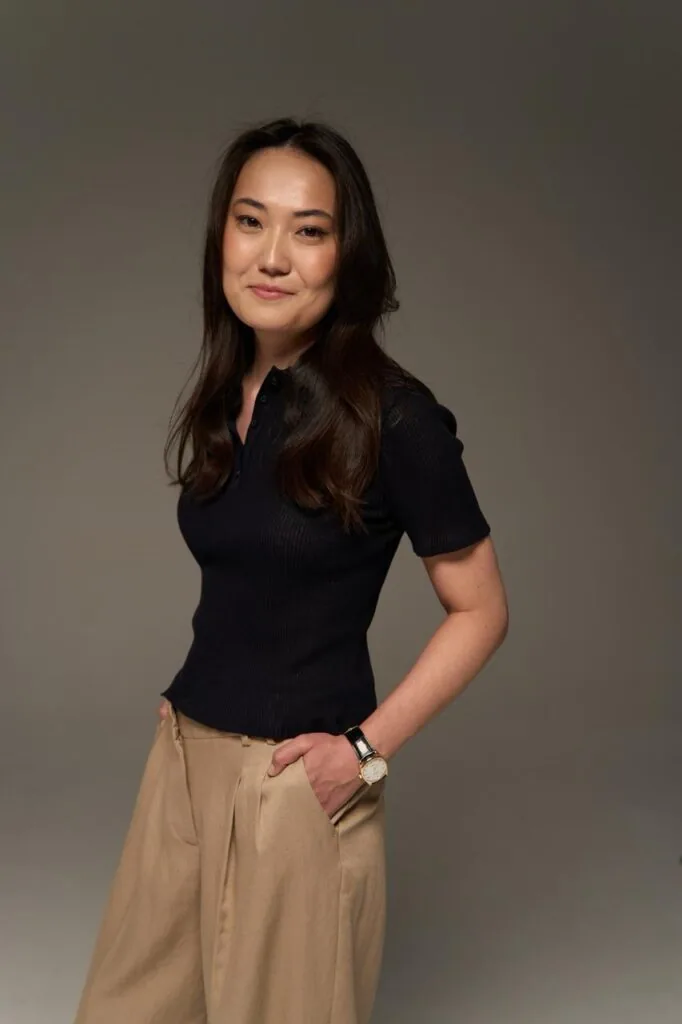
Inkar Ospanova on how to choose startups and where to begin a woman's journey in venture capital
Why are women still underrepresented among those making investment decisions in the venture capital industry, what qualities help female entrepreneurs achieve success, and how to start a career in VC — The Tech spoke with Inkara Ospanova about this.

Inkar Ospanova, City — Almaty, Investment Director | Venture Capital & Private Equity, Instagram, LinkedIn
About Me
My journey into venture capital began through traditional finance. After graduating from university in the US, I returned to Kazakhstan and started my career as an investment analyst at an investment bank, where I supported M&A deals in the oil, gas, and mining sectors. Later, after obtaining my Level I CFA designation, I moved to a private equity fund specializing in technology, media, and telecommunications, where I realized that I wanted to focus specifically on technology investments.
Subsequently, our team was offered the opportunity to relocate to Abu Dhabi to build a venture fund from scratch, with a volume of over $100 million, investing in technology companies in emerging markets. We built the fund almost entirely from the ground up—from interacting with regulators to establishing investment processes.
A few years later, I returned to Kazakhstan with the desire to develop the venture ecosystem in Central Asia. I worked for a time at the National Investment Corporation of Kazakhstan, where I was responsible for the portfolio of direct and venture investment funds and had the opportunity to study best global practices in fund management from the US, Europe, and Asia.
Then I joined MOST Ventures, the first licensed venture fund of the Astana International Financial Centre (AIFC). At that time, in 2021, the fund had about five investments and less than $5 million under management. We built the team, processes, and investment strategy almost from scratch. By the time I left, the fund managed two funds, had over 40 investments, and was preparing to launch a third.

Key Challenges and Lessons in Venture Capital
The biggest challenge was that the venture industry in Central Asia was just beginning to form. We were one of the first professional teams, so many processes had to be created from scratch, adapting global experience to the realities of the region.
An equally important task was working with investors. Many expected quick and guaranteed returns, so we had to explain that venture capital involves long-term, high-risk investments with a horizon of seven years or more.
For me personally, the main lesson was learning to find balance. During due diligence, one should not make decisions based on emotions—it is important to thoroughly check the market, team, product, and legal aspects. However, dragging out the process is also not an option, as strong startups may go to other investors. The same balance is needed after the investment: analytics are important, but building trusting relationships with founders is equally crucial.
Another important takeaway concerns the role of women in the industry. Women are often highly qualified but frequently underestimate themselves and are less likely to voice their opinions. I had to overcome this myself. Therefore, my main advice is not to be afraid to speak up and confidently convey your ideas. It is not enough to be a professional—it is important that others know it as well.
On Investments
In the last five years, I have mainly worked with early-stage investments—pre-Series A. Typically, this involves initial checks of around $200,000, so I always paid attention to projects that did not require large capital investments.
For example, I rarely considered deeptech projects, as they require significant investment and have a long path to commercialization. I approach EdTech with caution: in this sector, the sales cycle is long, monetization is complex, especially in our region, and there are not yet many truly successful global cases.
At the same time, I see great potential in fintech and logistics. In FinTech, I am particularly interested in solutions for underserved customer segments and small and medium-sized businesses—for example, short-term financing services or products that help companies cover cash flow gaps. This is an important segment for the economy.

Logistics also remains a promising area. It is a huge market that is still not sufficiently digitized, so there are many opportunities for technological solutions.
As for artificial intelligence, it is now difficult to single it out as a separate category. AI is becoming part of almost every industry, so its use is already perceived as a natural component of modern products.
Overall, I am interested in markets where demand is already established, but competition remains relatively low.
Women in the World of VC
Working in the venture industry, I have encountered stereotypes about women investors more than once.
The most common one is the belief that women are too emotional for investing. But in my view, empathy is an advantage. It does not contradict analytical thinking; rather, it helps better understand founders, build trusting relationships, and make more balanced decisions.
Another stereotype relates to leadership roles. Many funds talk about gender balance, but if you look at who actually makes investment decisions, there are still few women in such positions.
As Sheryl Sandberg writes in her book Lean In, women are more often evaluated based on their achieved results, while men are evaluated based on their potential. I have also encountered situations where I was automatically perceived as the person who would take notes or handle organizational matters, rather than make decisions.
Over time, I realized: if you have an idea or an opinion, you need to voice it. It is not enough to simply do your job well—it is important that your voice is heard.
When it comes to women entrepreneurs in our region, I would highlight three strong points:
The first is persistence. Many go through serious family, social, and cultural obstacles but continue to develop their projects.
The second is high ethical standards and responsibility. In my practice, I have not met female founders who treated investors' money irresponsibly. They understand the level of trust and take their obligations seriously.
The third is adaptability. Many know how to turn their own problems into business ideas, adapt quickly to changes, and are not afraid to create new products.
This is why, in my opinion, women entrepreneurs in our region are distinguished by persistence, responsibility, and flexibility.
How to Start a Path in Investments
If we talk about direct investments, entry into venture usually begins with $25,000–50,000. At the same time, it is important to remember that venture is a high-risk asset class with a long investment horizon. There is an informal rule: invest no more than 5-10% of your capital in venture.
My main advice to beginner investors is to diversify risks. Instead of investing the entire sum in one startup, it is better to invest through a venture fund, where capital is distributed among dozens of companies. Another good option is to join an investment syndicate together with more experienced business angels.
If you want to invest in a specific startup, do not make a decision based solely on emotions. It is important to study the market, product, financial performance of the company, and talk to experienced investors who have already analyzed this deal.
Professional communities, meetups, demo days of accelerators, and networking events help with immersion in the venture industry. It is there that you can meet founders, investors, and other market participants. In our ecosystem, personal connections still play a major role.
Today, there are many opportunities for learning—books, podcasts, films, entrepreneur stories, and professional communities. The main thing is to keep learning and developing your network.
When evaluating startups, I look at the market. Even a strong team will not build a large company if the market is too small or not yet ready for the product.
The second factor is the team. Founders should have complementary competencies and relevant experience. I also always conduct a reference check—talking to former colleagues, clients, and partners to better understand the reputation of the founders.
The ability to sell is no less important. Even an excellent product will not become a successful business if the team does not know how to attract customers. And, of course, the honesty and openness of founders matter greatly. If an entrepreneur answers questions transparently and is willing to share information, it builds trust. If they avoid answers or shun specifics, it is a serious cause for concern.
Recommendations
My main advice is to start acting. Do not be afraid to take the first steps and pay too little attention to the opinions of others.
The venture industry in Central Asia is still young, and this is its advantage. Today, there are more opportunities than barriers here, and many rules are only being formed.
I often receive messages from girls who worry about the lack of financial education. But this is not necessary at all. I have met people with excellent diplomas and certificates who could not evaluate a startup, and vice versa—specialists from other fields who quickly mastered venture.
In this industry, curiosity, the ability to learn quickly, and a deep understanding of business, the market, and numbers are much more important. Today, there are all the opportunities for this: books, podcasts, articles, films, and communication with experienced investors.
Emotional intelligence and networking are no less important. Venture is primarily a business built on people. Many opportunities arise precisely due to acquaintances and the professional community.
And, perhaps, my main lesson is that it is not enough to simply do your job well. If you do not talk about your achievements, do not speak out, do not share your experience, and do not make yourself known, no one will do it for you. Do not be afraid to take your place and be visible.
I am pleased that today more and more women with diverse professional backgrounds are entering venture. This makes the industry stronger and more diverse. I hope that over time, more initiatives similar to the American All Raise will appear in our region, helping women build careers in venture capital and develop their own startups.
The Tech on Telegram Follow The Tech on Telegram
Keep up with the latest technology and startup news.
Related reading






More from this author

Article Useful
How to protect your accounts from hacking: 8 settings you should check today
The Tech

Article Useful
500 Global: How the Accelerator Works and Who Can Receive Investments
The Tech

Article Interviews
Game Development in Central Asia: Arkady Moldavski on Developing Reverb and the Growth of the Industry
The Tech

Article Useful
Google, Tesla, BlackRock, and the IMF: Where to Apply for an Internship in Fall 2026
The Tech

News IT
Tesla unveiled the flying electric car Roadster
The Tech

News IT
Intero Biosystems startup won the Startup Battlefield at TechCrunch Disrupt 2026
The Tech